Chapter 1
When DNA Decides Your Destiny
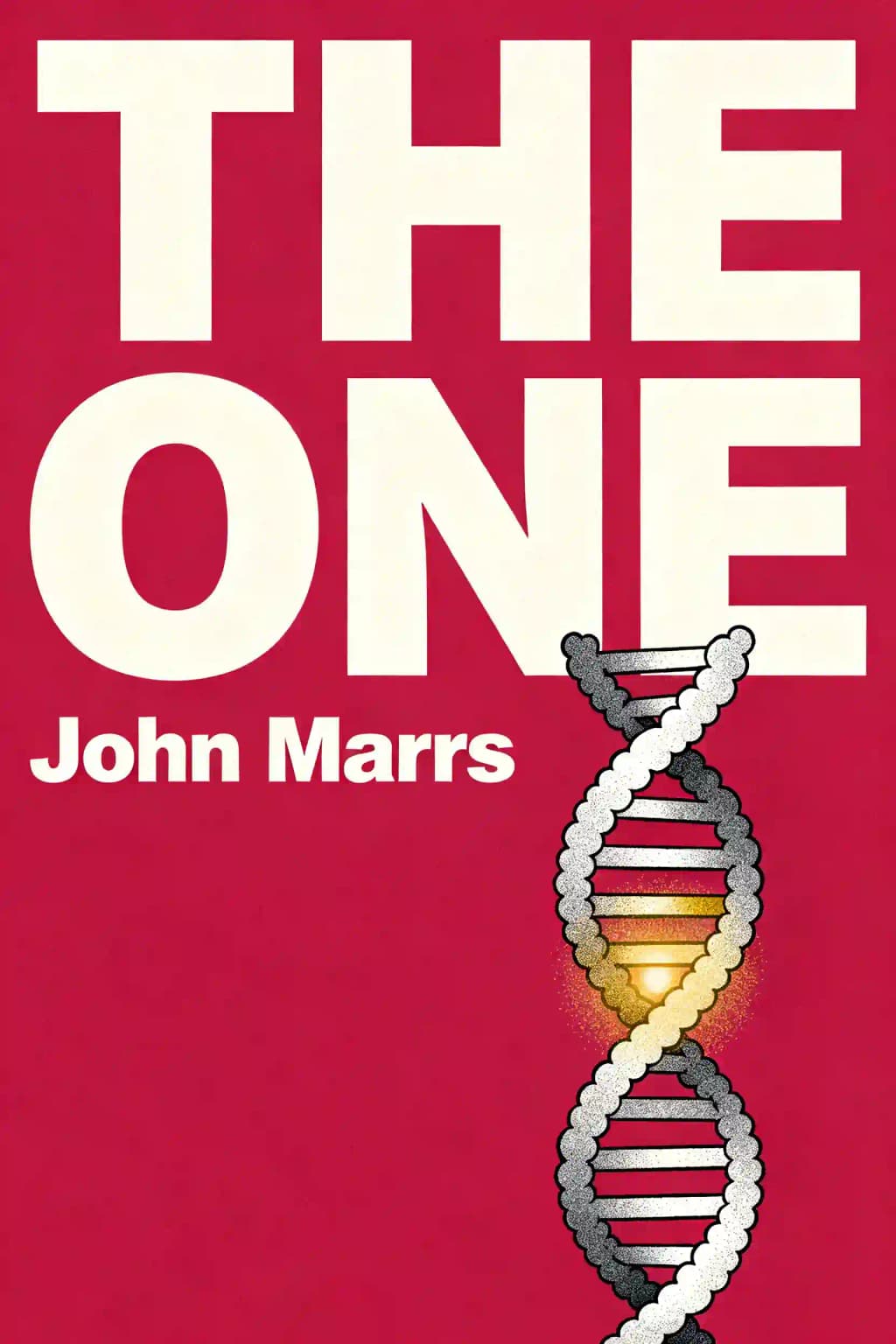
In a world where technology constantly evolves, few innovations have transformed human relationships as profoundly as Match Your DNA. This groundbreaking service promises something humans have sought since time immemorial: the certainty of finding your perfect partner. The premise is deceptively simple-a single gene determines who you're destined to love with overwhelming biological certainty. John Marrs' electrifying thriller explores this concept through multiple interconnected storylines, asking the ultimate question: what happens when science attempts to quantify love? The novel has captivated millions worldwide, including celebrities like Reese Witherspoon who featured it in her book club, and inspired the Netflix series "The One." Its exploration of genetic determinism versus free will resonates deeply in our age of advancing biotechnology, where the line between scientific progress and ethical boundaries grows increasingly blurred.
Chapter 2
The Science of Soulmates: A Perfect Match or Perfect Nightmare?
The foundation of Marrs' narrative rests on a revolutionary scientific discovery - a specific gene that, when matched with its perfect counterpart in another person, creates an undeniable, overwhelming connection. This fictional technology, developed by brilliant scientist Ellie Stanford, works with near-perfect accuracy through a sophisticated DNA analysis process that identifies complementary genetic markers. When two matched individuals meet, they experience an immediate, powerful attraction described as "fireworks," "lightning," or "a thousand small explosions." The biological imperative proves so strong that existing relationships crumble in its wake, with matched couples often abandoning spouses and families to pursue their genetically perfect partner, sometimes within hours of their first meeting.
What makes this premise so compelling is how it transforms something inherently unpredictable - love - into a scientific certainty. The technology boasts a 92% success rate for immediate connection, with the remaining 8% experiencing delayed reactions due to psychological barriers or deep-seated emotional trauma. This scientific precision eliminates the uncertainty of traditional dating, replacing it with DNA-determined destiny. The process involves a simple cheek swab, but its implications reach deep into the foundations of human relationships, challenging centuries of romantic ideals and social structures.
As we follow the characters' journeys through this brave new world of algorithmic romance, we begin to question whether this certainty is a blessing or a curse. Is love truly reducible to genetic compatibility? What about choice, shared values, life goals, or the slow-burning connections that develop over time? The novel explores these questions through various perspectives: newly matched couples experiencing euphoric connection, abandoned spouses grappling with loss, and singles anxiously awaiting their results. Some characters embrace the technology as a solution to loneliness, while others resist it as an affront to free will.
The technology's dark side emerges gradually through cascading societal effects - broken families, abandoned children, workplace disruptions when colleagues are matched, and the commodification of human connection. Dating apps become obsolete, marriage counselors shift to "match transition specialists," and new industries emerge around managing the fallout of genetic matching. Perhaps most disturbing is how it eliminates the element of choice in love, replacing it with biological determinism. As one character reflects, "How can you fight genetics?" This question haunts the narrative, challenging our understanding of what love truly means in a world where science claims to have solved its mystery.
The novel further explores the psychological impact through support groups for "match widows" - those left behind when their partners find their genetic soulmates. These gatherings reveal the human cost of perfect matching: decades-long marriages dissolved in moments, children struggling to understand why a parent suddenly left, and individuals questioning every genuine connection they've ever had. The technology creates a society divided between the matched and unmatched, with some people refusing to be tested for fear of disrupting their current happiness, while others desperately seek their perfect match, convinced that nothing else will ever be enough.
Chapter 3
When Death Interrupts Destiny: Mandy's Desperate Search
Mandy's story begins with both hope and heartbreak. At thirty-seven, divorced and longing for a family after multiple miscarriages, she discovers her DNA Match is Richard Taylor, an athletic personal trainer who seems worlds apart from her quiet life. Before they can meet, however, she learns Richard has died in a hit-and-run accident. Driven by a connection she can't explain, Mandy attends his memorial service, seeking closure for a relationship that never had the chance to begin.
"I'm more deeply in love with a dead man than I could have ever thought possible," Mandy realizes as she holds Richard's scarf, breathing in his scent in his childhood bedroom. This moment captures the novel's exploration of how powerful the Match connection can be-transcending even death itself. When Richard's mother Pat tells her, "You have lost exactly the same thing as us," it validates Mandy's grief for someone she never knew.
As Mandy grows closer to Richard's family, particularly his mother Pat and sister Chloe, she finds unexpected comfort in their shared loss. They share stories of Richard's life-his battle with testicular cancer at seventeen, his adventurous spirit, his role as "man of the house" after his father's death. Through these stories, Mandy builds a relationship with the man she was destined to love but never met.
The storyline takes a shocking turn when Mandy discovers Richard isn't dead at all but lies in a vegetative state in a nursing home, abandoned by his family. More disturbing still, Pat and Chloe submitted Richard's DNA to Match Your DNA without his consent, specifically to find someone to bear his child. When Mandy becomes pregnant through artificial insemination, Pat's obsession with having Richard's baby turns sinister, culminating in her kidnapping Mandy's newborn son.
Mandy's journey illustrates how the promise of perfect love can lead to desperation and delusion. Pat's manipulation of the Match system-using it not to connect people but to create a child-reveals how even the most advanced technology can be corrupted by human desires and obsessions. When Mandy finally reunites with her son Thomas and brings him to meet his unconscious father, Richard's fingers move to hold his son's hand-a moment of connection that transcends the scientific explanation of their Match.
Chapter 4
A Serial Killer's Perfect Match: Christopher and Amy
Perhaps the most chilling storyline follows Christopher, a methodical serial killer who targets women through dating apps. With cold precision, he strangles his victims with cheese wire, photographs their bodies, and leaves his signature stencil mark-a man carrying a child across water-at each crime scene. His goal is to kill exactly thirty women, a mission he pursues with disturbing dedication.
"I kill for the fun of it," Christopher thinks to himself, "because nobody has ever done it like this before." His psychopathic tendencies manifest in his complete lack of empathy, viewing his victims not as innocent women but as "volunteers" who offered their phone numbers on dating apps.
The narrative takes an unexpected turn when Christopher receives his DNA Match notification for Amy Brookbanks. Their meeting is fraught with irony-Amy is a police detective investigating Christopher's murders without knowing her perfect match is the very killer she's hunting. Despite his psychopathic nature, Christopher finds himself genuinely drawn to Amy, experiencing emotions he's never felt before.
"For the first time in his life, he cared about somebody else's pleasure more than his own," the narrator observes about their relationship. Christopher begins to imagine a future with Amy-marriage, a house in the countryside, even children-desires he never previously experienced. His killing spree becomes increasingly burdensome rather than pleasurable, as he struggles to balance his relationship with Amy and his murderous compulsions.
This storyline explores a fascinating question: can even a psychopath experience true love through a DNA Match? Christopher researches this very question, finding that "psychopaths may be capable of loving their DNA Match as deeply as non-psychopaths," giving him hope that despite his malicious tendencies, he might possess some normality.
The relationship reaches its climax when Amy discovers Christopher's true identity. In a devastating confrontation, she questions whether their connection is real or if Christopher is simply manipulating her. When news breaks that millions of Match Your DNA results may have been falsified, Amy makes her choice-wrapping Christopher's own murder weapon around his neck while he stares into her tearful eyes, finding "a strange calm" as everything goes black.
Chapter 5
When Your Match Isn't Who You Expected: Nick's Journey
Nick's story begins with comfortable certainty-he's happily engaged to Sally, his partner of four years, and dismisses the idea of DNA matching as unnecessary. When Sally insists they take the test for "added security," Nick reluctantly agrees, never expecting the results to upend his life.
The test reveals Nick isn't matched with Sally at all-his perfect match is Alexander, a male physiotherapist from Birmingham. This revelation is particularly shocking to Nick, who has never questioned his heterosexuality. "At twenty-seven, I'd surely know if I was gay or bisexual," he insists, convinced the test must be wrong.
When Nick meets Alexander under the pretense of needing physical therapy, he experiences an undeniable connection that challenges everything he thought he knew about himself. "When their eyes met, Nick felt something shift inside him," the narrator describes, capturing the moment Nick's certainty about his identity begins to crumble.
What follows is a poignant exploration of identity, as Nick struggles to reconcile his growing feelings for Alex with his commitment to Sally and his understanding of himself. Their relationship develops through stolen moments and deep conversations, with both men discovering common interests despite their different backgrounds. The physical aspect of their relationship evolves gradually, with Nick finding himself surprised by the "incredible sensations" he experiences with Alex.
The storyline takes another dramatic turn when Sally reveals she's pregnant, presenting Nick with an impossible choice-follow his Match to New Zealand or stay and raise his child with Sally. This dilemma captures the novel's central tension between biological destiny and personal responsibility. Nick's torment is palpable as he contemplates his options from a ninth-story hotel window, unscrewing it fully as he makes "a decision from which there was no going back."
The final twist in Nick's story comes after Sally's tragic death in childbirth, when he discovers the baby isn't biologically his but the result of Sally's affair with their friend Deepak. Despite this revelation, Nick chooses to raise Dylan as his own, eventually bringing him to New Zealand to reunite with Alex. This choice represents a triumph of chosen love over both biological connection and DNA matching-Nick loves a child who isn't his and chooses Alex despite the upheaval this match has caused in his life.
Chapter 6
The Architect of Destiny: Ellie's Creation and Downfall
Behind the Match Your DNA technology stands Ellie Stanford, a billionaire scientist whose discovery of the matching gene transformed human relationships worldwide. Living in a minimalist London townhouse with round-the-clock security, Ellie has prioritized business success over personal connection, becoming a reluctant public figure in the process.
When she receives notification of her Match-Timothy Hunt, a systems analyst from Leighton Buzzard-Ellie approaches the relationship with scientific curiosity rather than emotional openness. She hides her true identity from Tim, pretending to be a personal assistant rather than revealing herself as the creator of the very system that matched them.
Their relationship develops gradually, with Ellie noting that while she didn't experience the immediate "fireworks" reported by most Matches, she feels increasingly drawn to Tim's unpretentious nature and genuine warmth. As they grow closer, Ellie begins to lower her defenses, even introducing Tim to her family and accepting his heartfelt marriage proposal.
The devastating twist comes when Ellie discovers "Tim" is actually Matthew Ward, a man with a vendetta against her and her company. His mother, a lab assistant in Ellie's early research, had been matched with a pedophile after Ellie's test separated her from Matthew's father. The match led to alcoholism and eventually death in a house fire.
Matthew reveals he hacked Ellie's system, falsified their match, and corrupted her entire database-creating approximately two million false matches to destroy her life's work. "I told you I was going to destroy you," he tells her, "and I never make promises that I can't keep."
In a moment of rage, Ellie kills Matthew with a crystal decanter, watching coldly as he bleeds out on her rug. The murder is livestreamed across the internet, exposing Ellie's crime to the world. More damning still, Matthew's revelations about Ellie's unethical practices-collecting DNA without permission, bribing government employees for database access, and matching people with sex offenders and even dead children-destroy her reputation.
Seventeen months later, Ellie remains in the same office where the murder occurred, her company facing bankruptcy from lawsuits. When asked if she'll offer re-tests to those potentially mis-matched, she coldly refuses, telling her assistant that "people will have to follow their instincts." This final decision represents a profound irony-the woman who built her empire on replacing instinct with scientific certainty now tells people to trust their feelings instead.
Chapter 7
The Deception of Distance: Jade's Australian Adventure
Jade's story explores how the Match Your DNA system can be manipulated across vast distances. Working a dead-end hotel reception job in Sunderland, England, Jade believes she's found her perfect match in Kevin, an Australian farmer she's never met in person. Their seven-month relationship has consisted entirely of texts, calls, and a handful of photos, with Kevin always finding excuses to avoid video chats.
Encouraged by friends, Jade makes the impulsive decision to fly to Australia and surprise Kevin. Upon arrival, she's met with a shocking rejection-Kevin tells her she "shouldn't have come" and hangs up. When she confronts him at his family farm, she discovers the truth: Kevin is dying of stage four lymphoma, with only months to live. The photos he sent were from before his diagnosis, and he avoided video calls to hide his deteriorating condition.
Despite her initial anger at his deception, Jade decides to stay and get to know Kevin in his final days. Their relationship develops into a deep friendship rather than the passionate love promised by Match Your DNA. "I loved him, but I wasn't in love with him," Jade later admits, questioning whether the matching system truly worked for them.
The storyline takes another dramatic turn when Jade experiences overwhelming attraction to Mark, Kevin's brother. After Kevin's death, Mark reveals the truth-he intercepted Kevin's negative Match results and substituted his own positive Match with Jade to give his dying brother hope and happiness. This deception raises profound questions about the ethics of the matching system and whether knowledge of a match creates a self-fulfilling prophecy.
Despite feeling betrayed by Mark's deception, Jade eventually forgives him, recognizing that both of them put Kevin's happiness above their own. Their story concludes with Jade and Mark embarking on a journey around Australia's east coast together, with Jade promising Kevin's mother that "neither of us are leaving this family anytime soon." This resolution suggests that while DNA matching may identify potential partners, genuine connection requires honesty, shared values, and mutual choice.
Chapter 8
When Systems Fail: The Collapse of Certainty
Throughout the novel, characters place enormous trust in the Match Your DNA system, believing its scientific basis makes it infallible. The system promises certainty in an uncertain world - a guarantee that love can be quantified, measured, and predicted with laboratory precision. This faith reflects humanity's deeper desire to eliminate risk from matters of the heart, with many characters treating their match percentages like divine prophecy. The revelation that Matthew has corrupted the database, potentially creating millions of false matches, shatters this certainty and forces everyone to question connections they once took for granted.
For Amy, this news arrives at the critical moment when she's confronting Christopher about his murders. The possibility that their match might be fake creates a psychological escape hatch, allowing her to distance herself emotionally from him and making the decision to kill him easier. The scene highlights how people can use scientific "facts" to justify their emotional needs - when the science supports their desires, they embrace it; when it conflicts, they find ways to dismiss it. For others, like Nick and Alex, the news has little impact - their connection feels too genuine to doubt, regardless of whether science confirms it. Their relationship demonstrates how authentic bonds transcend statistical validation.
The system's failure reveals a deeper truth: human connection can't be reduced to genetics alone. While the matching gene may create powerful attraction, lasting relationships still require compatibility, shared values, and mutual choice. The novel explores this through multiple relationships that succeed or fail despite their match status - from perfectly matched couples who implode to seemingly incompatible pairs who build lasting bonds. As Susan tells Jade when encouraging her to reconcile with Mark: "If you've got the opportunity to love someone as much as they love you, then grab it with both hands and hold on to it for dear life." This advice emphasizes that love remains a choice, even in a world of genetic matching.
The novel concludes with Ellie refusing to offer re-tests to those potentially mis-matched, telling her assistant that "people will have to follow their instincts." This statement operates on multiple levels - representing both a cynical abdication of responsibility and a profound truth about human nature. It suggests that perhaps instinct and choice were always more reliable guides to love than scientific certainty. The collapse of the matching system forces characters to confront an uncomfortable reality: there are no guarantees in love, no foolproof systems, and no shortcuts to genuine connection. What remains is the age-old challenge of trusting one's heart while accepting the inherent risks of loving another person.
Chapter 9
Beyond the Gene: Love as Choice in a Determined World
At its heart, "The One" explores the tension between determinism and free will in human relationships. The Match Your DNA technology represents determinism in its purest form-the belief that our choices, even in love, are predetermined by our genetic makeup. Yet throughout the novel, characters repeatedly demonstrate the power of choice in defining their relationships.
Nick chooses to raise Dylan despite learning the child isn't biologically his. Jade chooses to marry Kevin knowing he isn't her true match, prioritizing his happiness in his final days. Mandy chooses to have Richard's baby and build a relationship with his unconscious form despite never having met him when he was well. These choices affirm that love transcends biological imperatives, existing in the realm of human decision and commitment.
Even the novel's darkest relationship-between Christopher and Amy-illustrates this principle. Despite their perfect genetic match, Amy chooses to kill Christopher rather than accept a connection with someone whose values are so fundamentally opposed to her own. Her decision represents the ultimate assertion that character and choice matter more than genetic compatibility.
The collapse of the Match Your DNA system forces characters and readers alike to reconsider what truly constitutes a perfect match. Is it the immediate attraction promised by genetics? Or is it the slower, more complex connection that develops through shared experiences, values, and choices? As the characters navigate their relationships in the wake of this uncertainty, they discover that perhaps love was never meant to be reduced to scientific certainty-that its mystery and unpredictability are essential to its power.
In a world increasingly defined by algorithms that claim to predict our preferences and match us with ideal partners, "The One" offers a powerful reminder that human connection remains fundamentally unpredictable, shaped as much by our choices as by our biology. The novel's ultimate message isn't that technology can't help us find love, but that even the most advanced science can't eliminate the need for human judgment, empathy, and the courage to choose love every day.
Chapter 10
When Fate Meets Free Will: The Ethical Implications
The ethical questions raised by Match Your DNA technology extend far beyond individual relationships. As Tim challenges Ellie about her invention, he raises concerns about matching people with genetic disorders or the responsibility she bears for broken relationships. Ellie's cold response-comparing herself to gun manufacturers who aren't responsible for shootings-reveals her unwillingness to accept accountability for the social consequences of her discovery.
The novel explores how scientific advancement without ethical oversight can lead to exploitation and harm. Ellie's unethical early practices-collecting DNA without permission, bribing officials for database access, and matching people with sex offenders-demonstrate how easily technology can be corrupted by ambition. Pat and Chloe's submission of Richard's DNA without his consent shows how even family members can abuse such systems for their own purposes.
Perhaps most disturbing is Christopher's use of dating apps to identify victims, exploiting people's desire for connection to facilitate his murders. His methodical approach-using dark web software to track victims through their phone numbers-highlights how technology designed to bring people together can be weaponized by those with malicious intent.
Yet amid these cautionary tales, the novel also presents moments of genuine connection that transcend the matching system. Nick and Alex's relationship develops through conversation and shared interests rather than immediate physical attraction. Mandy forms a bond with Richard's family through shared grief rather than DNA compatibility. These connections suggest that while technology may facilitate initial meetings, meaningful relationships still require human investment and choice.
As our real world increasingly relies on algorithms to match us with partners, jobs, and content, "The One" offers a timely reminder to question the ethical implications of delegating such important decisions to technology. It challenges us to consider what might be lost when we reduce complex human connections to data points and genetic markers-and what might be gained by preserving the element of choice in our most important relationships.