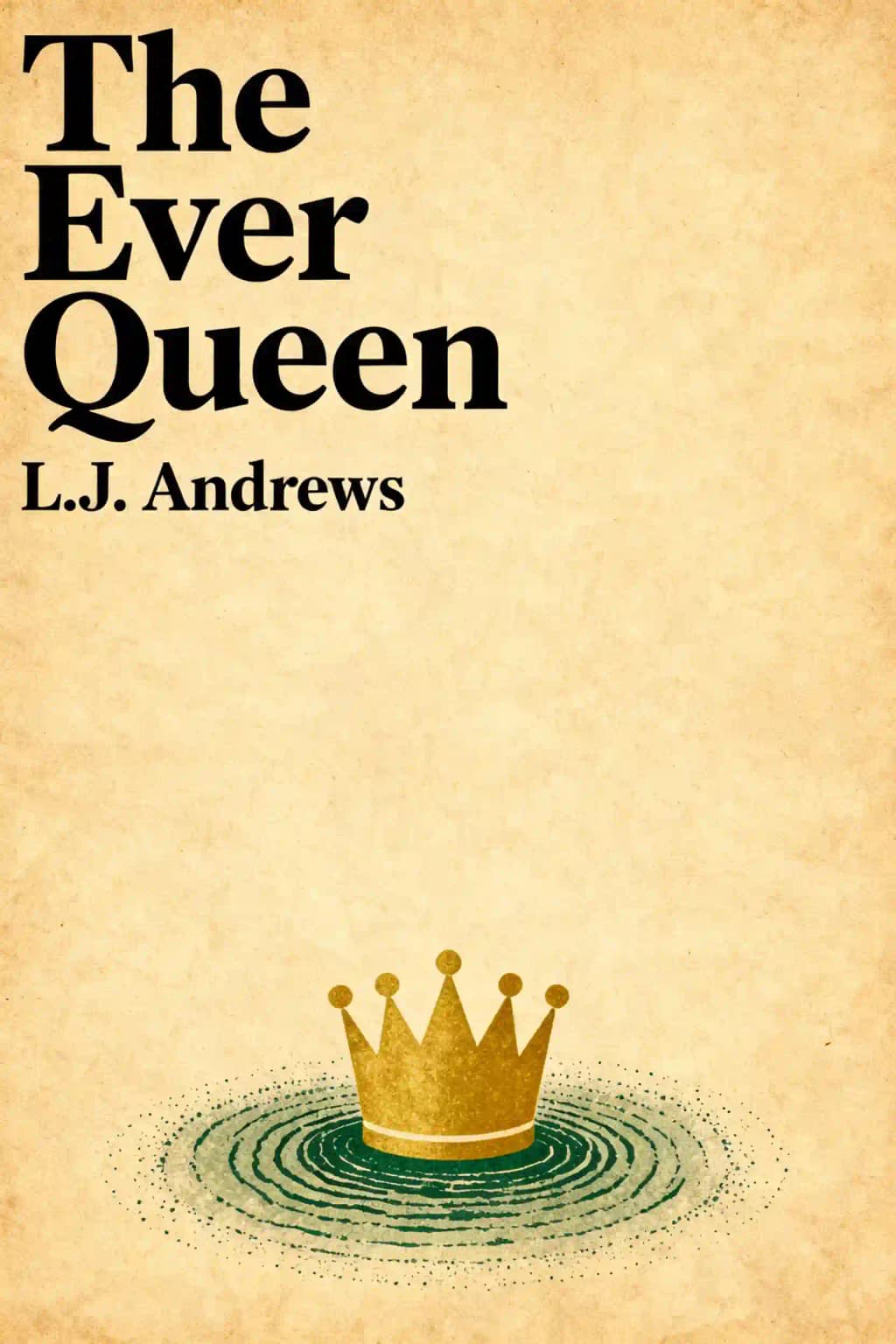
Chapter 4
Betrayal's Bitter Taste
The true depth of Larsson's betrayal unfolds like a poisonous flower, revealing layers of deception that stretch back generations. As Livia learns more about her captor's motivations, she discovers that Larsson Bonekeeper is not merely Erik's rival but his half-brother-the firstborn son of Thorvald, the previous Ever King, and a noble from the Ljosalfar elven clan.
Larsson's true power isn't in bones as his name suggests, but in stealing abilities through blood-each bone in his necklace a trophy from someone whose power he's claimed. His ambition has been brewing for decades, working tirelessly to break through wards his father placed against him, denying him his birthright as firstborn.
In a chilling display of cruelty, Larsson and his conspirators-Prince Arion of the elven and the sea witch Fione-perform a ritual to sever the heartbond between Livia and Erik. Despite Skadi's protests, they force her to use her shadow affinity to extract the magical connection from Livia's chest. The ritual leaves Livia physically and emotionally wounded, the bind rune that marked her connection to Erik now vanished.
"They had stolen our heartbond," Livia realizes in horror. This violation goes beyond physical harm-it's the theft of something sacred, an intimate connection that had sustained both Livia and Erik through their darkest moments.
Across the sea, Erik experiences this severance as a physical wound, blood pouring from a mysterious injury in his chest. Through the crimson, he glimpses flickers of gold like sparks of sunlight-the last remnants of their magical bond dissolving. The terrible emptiness that follows is worse than any physical pain, as he loses the constant reassurance that Livia exists somewhere in the world.
This act of magical violation represents the ultimate betrayal-not just of trust or loyalty, but of the most intimate connection between two souls. It forces both Erik and Livia to confront a haunting question: if their love persists even without the magical bond that first connected them, is it stronger or weaker than before? Can what was broken by magic be rebuilt by choice and determination alone?
Chapter 5
Alliances Forged in Adversity
The search for Livia creates unlikely alliances that would have seemed impossible just days earlier. Erik finds himself working alongside Aleksi, the earth fae prince he once considered an enemy, who now vouches for him before Valen and the earth fae court. "Be the warriors I admire and use your damn heads," Aleksi tells his people. "He is not here for blood and does not deserve to have his spilled."
This tentative trust expands when Valen Ferus himself offers a temporary truce to find his daughter. Despite their mutual hatred, they recognize their shared goal. "I call a truce, Bloodsinger. For now. Our ambitions align. I only wish to find my daughter," Valen declares, placing his axes beside Erik's cutlass in a symbolic gesture of alliance.
The alliance grows to include Jonas and Sander Eriksson, twin princes of the Alver clan, and Princess Mira of the fae clans-earth royals who risk treason to help find Livia. Their motivation isn't loyalty to Erik but love for Livia, yet this common purpose creates bonds that transcend political divisions.
Meanwhile, Livia forms her own unlikely alliance with Gavyn Seeker, who mysteriously appears in her chambers at Natthaven. Together they plan her escape, with Gavyn revealing his true nature as an assassin: "Trust the king's seeker, Livia. I'm well-versed in assassination." Though Livia ultimately cannot leave due to the blood spell binding her to the isle, she sends Gavyn to find Erik, determined to find her own way to break free.
These shifting alliances reveal how crisis can reshape longstanding enmities, creating space for new understandings. When faced with threats that endanger both realms, old hatreds begin to seem less important than shared survival. As Jonas later observes, "I've always had the compulsion to keep you fools safe. I wouldn't know what to do without any of you." His words reflect how quickly enemies can become family when united by common purpose and shared danger.
The evolving relationship between Erik and Valen particularly illustrates this transformation. From murderous hatred to grudging respect, their journey embodies the possibility of reconciliation even between the most bitter enemies. When Valen admits, "Strange, but the sea king almost grows on you," it signals a fundamental shift in how these two kingdoms might relate to each other in the future.
Chapter 6
The Price of Power
Throughout the narrative, power comes with devastating costs. Larsson's quest for the blood crown drives him to murder his own mother to break the final barriers between the elven and the Ever. His thirst for power corrupts everything he touches, transforming him from Erik's trusted friend into a monster willing to sacrifice anyone for his ambition.
Similarly, Prince Arion's pursuit of elven kingship leads him to torture, manipulation, and betrayal. He keeps Skadi essentially enslaved, threatening to "keep her numb" if she doesn't comply with his demands. His casual cruelty reveals how power without compassion becomes tyranny.
Even Erik, our protagonist, must confront the darkness his power brings. After capturing Lord Hesh, he orders Sewell to torture him, peeling away skin to reveal a magical symbol that will lead them to Livia. Though justified by necessity, these actions take a toll on Erik's soul. "For every moment he had you, I'd planned to make him suffer. His screams will become myths," he later tells Livia, revealing the monstrous rage that drives him.
Livia too discovers a capacity for violence she never knew she possessed. After killing Fione with the elven dagger, she reflects on how her gentleness has been replaced by a thirst for vengeance: "This thirst for vengeance was unfamiliar, robbing me of my former gentleness. As I once told Erik, love could draw out the most brutal pieces of the heart."
The novel doesn't shy away from showing how power can corrupt, yet it also offers counterexamples. Narza makes a significant sacrifice by binding herself to the earth fae through an ancient spell called neach-dai-a lifetime bond that compels her to protect them. This voluntary surrender of freedom for the greater good demonstrates how power can be channeled toward healing rather than dominance.
Similarly, when Livia discovers the House of Tides lord Joron has been letting his people eat darkened crops infected with blight, she uses her fury magic to heal the land rather than seeking revenge. Field after field, meadow after meadow, she restores life to the poisoned earth, demonstrating that true power lies in creation rather than destruction.
These contrasting approaches to power ask readers to consider: What price are we willing to pay for power, and what determines whether that power heals or destroys?
Chapter 7
Love Beyond Magic
At its heart, this story explores whether love can survive when stripped of magical bonds. When Larsson and his conspirators sever the heartbond between Erik and Livia, they believe it will destroy their connection. Instead, it reveals the true depth of their feelings.
"Bond or not, you are mine, and gods, I'm yours, love," Erik declares to the emptiness after losing their connection. Similarly, Livia realizes, "It has not changed how fiercely I love Erik Bloodsinger, but it has certainly changed the lines I would cross to reach him."
Their reunion after separation is electric with emotion. When Erik finally finds Livia on Natthaven's shore, they cling to each other with desperate relief. "Gods," Erik gasps, brushing her hair back, pressing his forehead to hers. "Hello, love. I promised I'd come for you." This moment affirms that their connection transcends magical bonds-it's a choice they make with every breath.
Later, in the intimacy of their chambers, Erik reassures Livia: "Whatever that bastard thinks he took from us, he failed. I belong to you, every wretched piece of me. I've no need for spells or bonds to prove it. I choose you, Livia Ferus. For much longer than my last breath."
This theme reaches its culmination in the epilogue, when Erik and Livia participate in a new heartbond ceremony presided over by Narza. Unlike their first bond, which happened by accident, this one is a conscious choice made before both their families. The ritual creates a new bind rune on their skin, replacing where the House of Kings mark once was-the seal of House Ferus now branded on their flesh, surrounded by ivy vines.
This evolution from magical accident to deliberate choice reflects the maturation of their relationship. What began as an unwilling connection has transformed into a love freely chosen and publicly declared. Their story suggests that the strongest bonds aren't those imposed by magic or circumstance, but those we choose to forge and maintain through conscious decision and daily recommitment.
Chapter 8
Healing Divided Realms
The novel builds toward a powerful vision of unity between long-divided peoples, exploring how deep-seated animosities can transform into bridges of understanding. This theme manifests most dramatically in the removal of the Chasm-the violent magical current that has separated the sea fae and earth fae realms for generations, serving as both a physical barrier and a symbol of their historical enmity.
With Skadi's unique affinity for darkness-inherited from her controversial lineage-and Tavish's rare ability to unthread ancient spells, they undertake the dangerous task of dismantling the magical barrier while preserving the natural boundary between realms. The process requires both technical skill and emotional trust, as each must rely on abilities that their respective societies once feared. When Gavyn emerges from the water shouting, "The Chasm is gone!" it represents not just a geographical change but the physical manifestation of the emotional and political barriers that have begun to fall throughout the story.
This physical transformation mirrors the personal journeys of key characters. Erik, once consumed by hatred for the earth fae after his father's murder, gradually opens his heart to accept House Ferus as his own family. His evolution from vengeful son to bridge-builder exemplifies the story's central message about breaking cycles of hatred. Valen, who killed Erik's father in the ancient conflict, faces his own past actions and now acknowledges Erik as family through his daughter-a connection that would have seemed impossible at the story's beginning.
The earth royals undergo their own transformation, moving from viewing sea fae as savage enemies to recognizing them as sophisticated allies with their own rich culture and traditions. This shift is particularly evident in the changing dynamics of council meetings, where sea fae voices gradually gain equal weight in discussions about the realms' shared future.
The novel doesn't present this unity as simple or immediate-a realistic choice that strengthens its message. Cultural differences remain evident in everything from diplomatic protocols to marriage customs. Suspicions linger, particularly among older generations who remember the bloodshed firsthand. Some, like Joron, view these changes as betrayal of their ancestors' sacrifices, highlighting the complexity of reconciliation.
Yet the story suggests that genuine connection across difference is possible when we recognize our shared humanity and face common threats. Small moments illuminate this truth: shared meals where traditional dishes from both cultures appear, children from both realms playing together in the shore waters, and warriors who once fought each other now training side by side.
This theme resonates deeply in our own divided world, offering hope that ancient hatreds need not determine future relationships. As Livia observes when watching the earth fae royals interact with the Ever Crew: "Strange, isn't it? Not so long ago, we'd wanted the lot of these sods dead and gone. Now, it's like they were... always here." Her observation captures the story's central hope-that what seems impossible in one generation can become natural in the next.
Chapter 9
Beautiful Monsters: Embracing the Darkness Within
Perhaps the most profound theme in "The Ever Queen" is the acceptance of darkness within ourselves and those we love. Both Erik and Livia must confront the monstrous aspects of their natures-his capacity for calculated violence, her emerging taste for vengeance.
Rather than rejecting these darker impulses, they acknowledge them as part of who they are. "You are a beautiful monster," Livia tells Erik, accepting both his tenderness and his terrible capacity for violence. Similarly, Erik embraces Livia's evolution from the gentle princess who once feared bloodshed to a queen willing to fight fiercely for her kingdom.
This mutual acceptance creates space for authentic love-not despite their darkness but inclusive of it. "Serpent? I would follow your darkness, every ugly truth, across the skies and seas," Livia vows. Erik responds in kind, loving both her light and the shadows that have emerged through their trials.
The novel suggests that true intimacy requires revealing our whole selves-the beautiful and the monstrous-and finding acceptance for both. When Livia tells Erik, "To me, you will always be the most beautiful of monsters," she's acknowledging that his capacity for violence exists alongside his capacity for love, and that she accepts the entirety of who he is.
This theme challenges the simplistic notion that people are either wholly good or wholly evil. Instead, it presents a more nuanced view where everyone contains multitudes-capacity for both cruelty and kindness, violence and tenderness. By embracing this complexity in themselves and each other, Erik and Livia model a love that is realistic rather than idealized, and all the more powerful for its honesty.
Chapter 10
A Kingdom United, A Future Unwritten
As "The Ever Queen" concludes, we witness the beginning of a new era for both the Ever Kingdom and the Earth Fae realms. With the Chasm's violent currents neutralized, travel between kingdoms becomes possible, opening opportunities for trade, cultural exchange, and deeper understanding.
The appointment of Celine Tidecaller as the new Lady of Blades and High Farer of the Ever Seas represents the changing power structures within the Ever Kingdom. Her immediate declaration that she "wouldn't wear dresses to revels and would speak her mind freely at the council table" signals a shift toward more inclusive leadership.
Meanwhile, the heartbond ceremony between Erik and Livia symbolizes the union of their realms on a personal level. As their blood mingles with that of both families, the magical seal that appears-the mark of House Ferus surrounded by ivy vines-represents the blending of sea and earth, the merging of two traditions into something new and stronger.
Yet the epilogue hints that challenges remain. Jonas Eriksson's decision to marry Skadi to neutralize the elven threat suggests ongoing political complexities. The reference to Skadi as potentially "a blade that might turn against us one day" reminds us that peace remains fragile, requiring constant vigilance and renewal.
This bittersweet ending acknowledges that building unity is an ongoing process rather than a single triumphant moment. The work of healing divided realms, like the work of maintaining love, never truly ends-it must be recommitted to each day through countless small choices and occasional grand gestures.
As Livia and Erik share their first silent communication through their new bond, thinking of "a thousand turns together just the beginning," we're reminded that their story-like the story of their kingdoms-continues beyond the final page. The future remains unwritten, full of both promise and peril, awaiting the choices they will make together.
Chapter 11
The Power of Stories to Bridge Worlds
The tale of the serpent and the songbird forms a beautiful motif throughout the novel, beginning with the stories Livia read to imprisoned Erik as a child and culminating in their lived reality. When they swim together under moonlight near the end of the book, Livia affirms that they have completed the tale she invented long ago of the serpent and songbird who "lived happily ever after."
This meta-narrative reminds us of the power of stories to shape reality-how the tales we tell ourselves and each other can create blueprints for possible futures. The childhood stories Livia shared with Erik planted seeds of possibility that eventually blossomed into their shared life and united kingdoms.
Similarly, the novel itself functions as a story that bridges worlds, inviting readers to imagine possibilities beyond ancient hatreds and seemingly unbridgeable divides. Through the journey of Erik and Livia, we glimpse how love might transcend boundaries of blood, history, and culture to forge new connections where none seemed possible before.
In a world increasingly defined by division, "The Ever Queen" offers a vision of unity that doesn't erase difference but embraces it-where sea fae and earth fae, serpent and songbird, can find common ground without losing their distinct identities. It reminds us that the most powerful magic may not be found in spells or enchantments, but in the simple yet profound act of choosing love over hatred, again and again, until new worlds emerge from the ruins of the old.