Chapter 1
When Strength Meets Faith: A Father's Enduring Legacy
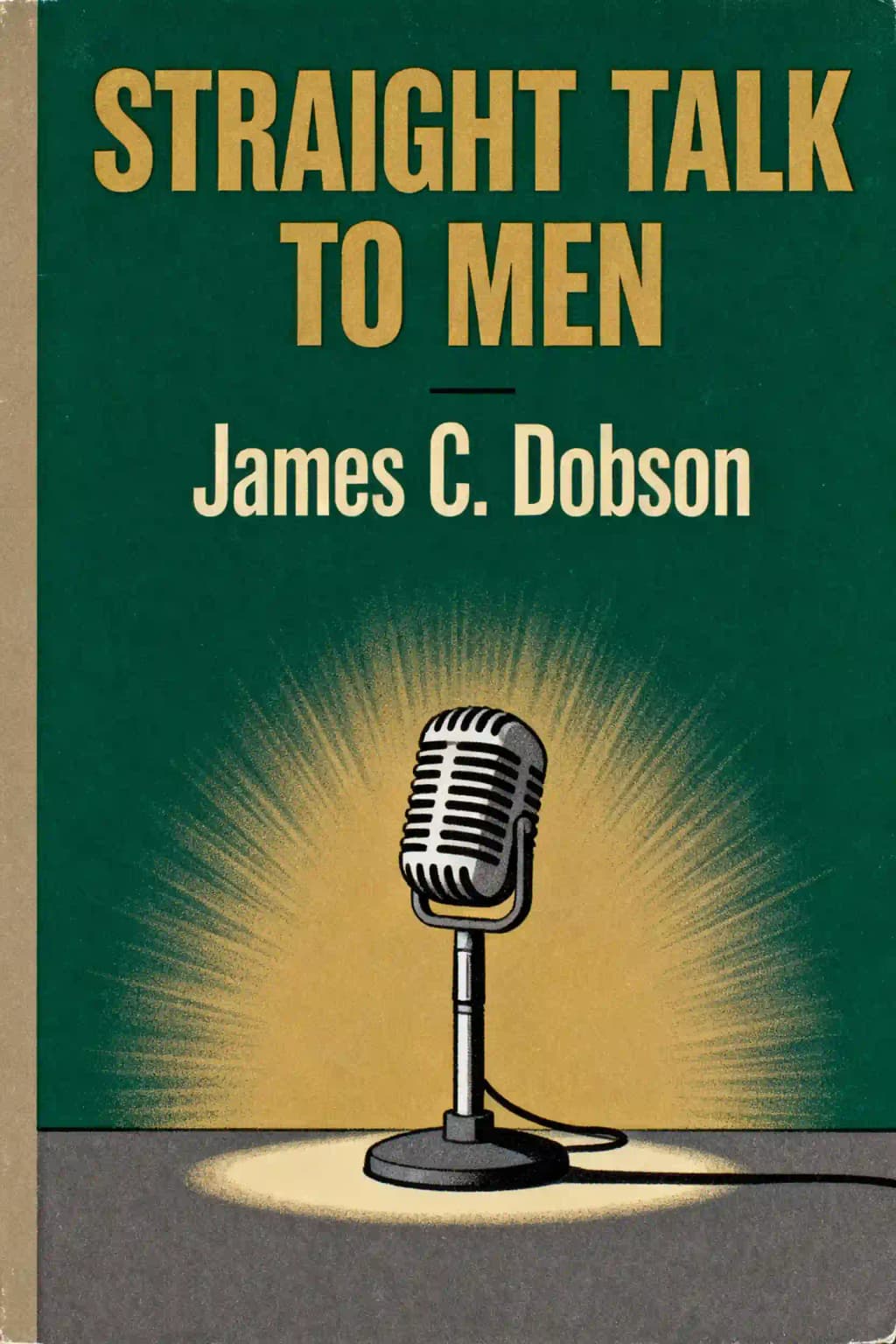
James Dobson's "Straight Talk to Men" has remained a cultural touchstone for Christian men seeking to navigate their roles as husbands, fathers, and spiritual leaders since its publication. The book emerged from Dobson's personal journey through midlife contemplation following his father's death and his own heart attack-a seven-year period of existential questioning that ultimately strengthened his core values. Unlike many self-help books that offer quick fixes, Dobson's work has endured because it addresses timeless questions about masculinity, family, and faith. The book has influenced millions of readers, including notable Christian leaders and celebrities like Tim Tebow, who cited it as formative to his understanding of Christian manhood. Its continued relevance speaks to how effectively Dobson captured the essential tensions between traditional masculine values and modern pressures facing men of faith.
Chapter 2
The Fleeting Nature of Life and the Search for Meaning
Mortality casts a long shadow across Dobson's reflections. At forty-four, he found himself calculating that he had already used 72% of his expected lifespan-a sobering realization for someone who still felt young at heart. This disconnect between our inner sense of youth and the reality of aging hit home when teenagers at a YMCA basketball game viewed him as ancient, despite his ability to score against their talented seventeen-year-old star. "You must have been sompin' in yo' prime!" the youth remarked, unknowingly wounding Dobson's self-concept.
The brevity of life became even more apparent through personal losses. Watching his mother decline with Parkinson's disease, Dobson had a final lucid conversation where he thanked her for her life of sacrifice and faith. Similarly, his father's sudden death at Sunday dinner-blessing the food one moment and gone the next-reinforced life's fragility.
These experiences led Dobson to question what truly matters. He observed how people seek various forms of immortality-through architecture, art, business, children, literature, politics, science, even cryonics-yet concluded all are ultimately flawed since they preserve only memory. After winning a Monopoly game and putting away the pieces, he realized how all earthly acquisitions must eventually "be returned to the box."
This perspective transformed his approach to parenting. Recognizing parenthood's fleeting nature, he prioritized time with his children over career advancement. When his son Ryan left for college, Dobson wrote a poignant letter describing the emotional impact of the empty nest. He urges parents of young children to maintain eternal perspective despite parenting's exhaustion, emphasizing there is "no more important task in living."
Through these reflections, Dobson establishes his core conviction: life's only true meaning comes through love for God and family, not material possessions or professional accomplishments. This foundation shapes everything that follows.
Chapter 3
The Essence of Masculine Identity
What defines a man? Dobson argues that society benefits when men fulfill their traditional masculine roles, particularly as providers and protectors. He cites sociologist George Gilder's observation that single men are less responsible and constitute a leading social problem, while women naturally desire stability. When a man commits to caring for a family, he becomes "the mainstay of social order," channeling his energies productively rather than selfishly.
This perspective leads Dobson to advocate for clear distinctions between maleness and femaleness in clothing, customs, and function. Boys and girls should understand they're equal in worth but different by design, with these differences celebrated rather than blurred. He sees hope in post-9/11 America's renewed appreciation for traditional masculinity, citing Peggy Noonan's column about the return of heroic male archetypes.
The foundation for Dobson's understanding of masculinity comes from his own father and grandfather. He shares the moving tribute he delivered at his father's funeral, expressing grief unmarred by regret or unresolved conflict. His happiest childhood memories were early morning hunting trips with his father when he was 10-13 years old. In those quiet forest moments watching nature awaken, a profound bond formed that made young Dobson want to emulate his father-adopting "his values as my values, his dreams as my dreams, his God as my God."
His grandfather, R.L. Dobson, was remembered as a man of absolute integrity who once gave away a business rather than partner with someone dishonest. Even 34 years after his death, his siblings spoke of him with profound respect during a family reunion. These two men-Dobson's father and grandfather-embodied the masculine qualities he aims to convey: strength tempered with vulnerability, integrity without compromise, and faith that shapes every decision.
True masculinity, in Dobson's view, is ultimately demonstrated through selfless love. He shares a powerful story about a father's unconditional love for his mentally disabled daughter. When others scorned her unusual behavior at a ski resort, repeatedly saying "Whomever," her father lovingly embraced her, demonstrating public acceptance. This moment profoundly affected Dobson, who had been feeling frustrated with his own children earlier that day. He realized that this kind of selfless love is what can heal troubled families and resolve parent-child conflicts.
Chapter 4
The Father's Crucial Role in Child Development
Dobson laments how many fathers are physically present but emotionally absent from their children's lives. He cites a shocking study revealing that middle-class fathers spent merely thirty-seven seconds per day interacting with their one-year-olds, while these same children watched thirty to fifty hours of television weekly. This emotional absence creates a vacuum in children's development.
Values, Dobson explains, aren't taught but "caught" through routine daily interactions. He illustrates this with an anecdote about his son Ryan misinterpreting a conversation about "dirty movies" to mean films where people spit on each other-showing how children absorb parental values through casual conversations rather than formal instruction.
The modern American lifestyle particularly harms children, with millions of "latchkey kids" coming home to empty houses. Dobson shares the poignant lyrics to "Cat's in the Cradle," which portrays a father repeatedly postponing time with his son until it's too late. He describes heartbreaking encounters with fatherless children: a boy desperately clinging to his hand after a church service, and a tearful little girl at an airport whose expected parent never arrived.
Dobson isn't immune to parental shortcomings. In 1969 while writing "Dare to Discipline," his workaholic lifestyle kept him away from home for seventeen consecutive evenings. His five-year-old daughter would cry as he left each morning. Despite his professional advancement, his father wasn't impressed and wrote him a powerful letter warning that raising devout Christian children requires parents' "deep travail of prayer and faith"-time that "cannot be given if it is all signed and conscripted and laid on the altar of career ambition." This message hit Dobson "like the blow from a hammer," making him realize that parental complacency could lead to spiritual failure despite outward religious devotion.
This realization led Dobson to view parenting as a spiritual relay race where "relay races are won or lost in the transfer of the baton" between generations. He considers evangelizing his children his "number one responsibility," stating that everything else appears "pale and washed-out" compared to this mission. Since 1971, he and his wife designated one day weekly for fasting and prayer specifically for their children's spiritual welfare, recognizing their need for divine assistance in parenting.
Chapter 5
Authority and Leadership in the Family
Dobson presents three vital principles about authority in the family. First, men bear primary responsibility for leadership in the home according to Scripture, being the ultimate decision-makers and accountable for family outcomes. Second, children naturally look to fathers as authority figures, as illustrated by his own children's inability to imagine him without authority even as a baby. Fathers must support mothers in discipline and make clear they stand united. Third, authority will inevitably be tested due to the human temperament's inherent resistance to external control, manifesting from infancy through adolescence.
This framework of authority faces challenges in modern society. Dobson warns about the Children's Rights Movement's agenda, which he believes doesn't merely want to weaken parental authority but eliminate it entirely. While protecting children from abuse is important, he argues that extreme elements of this movement threaten the very foundation of family structure and parental leadership.
For spiritual training specifically, Dobson presents a systematic "Checklist for Spiritual Training" built around five scriptural concepts: loving God with all your heart (teaching children about God's love, prayer, Bible reading, and faith); loving your neighbor (developing empathy, sharing, and avoiding gossip); doing God's will (learning obedience to parents as preparation for obedience to God); keeping God's commandments (developing honesty, Sabbath observance, and following conscience); and developing self-control (giving to God, controlling impulses, and working responsibly).
When fathers abdicate their spiritual responsibilities, Dobson strongly advises mothers to take initiative rather than wait passively. While some Christian leaders recommend women wait for their husbands to assume spiritual responsibility, Dobson disagrees when children are involved: "Every day that goes by without spiritual training is a day that can never be recaptured." He encourages mothers to take children to church, pray with them, and teach Bible reading, while maintaining respect for their husbands.
Chapter 6
The Marriage Relationship: Understanding and Connection
Dobson uses vivid analogies to illustrate the disconnect between husbands and wives, like his father unknowingly standing on a cat's tail while preaching-representing husbands who remain oblivious to their wives' emotional distress despite clear signals. He shares stories illustrating male obliviousness, including a gynecologist who failed to notice his own wife was five months pregnant.
Research shows contrasting satisfaction patterns in marriage: women's satisfaction typically peaks at marriage then declines through child-rearing years before rebounding after empty nest, while men's satisfaction follows the opposite trajectory. This creates dangerous misalignment in midlife when wives feel most dissatisfied while husbands are most engaged with work.
Dobson identifies eight ways frustrated wives cope with marital dissatisfaction: detaching emotionally and investing in outside work; developing anger toward men and society; remaining home in depression, becoming "a classic nagger"; seeking affairs; turning to alcohol or drugs; attempting suicide; rejecting motherhood responsibilities; or pursuing divorce. He emphasizes none of these mechanisms actually solve the underlying problems.
Directly challenging Christian husbands, Dobson notes that their traditional wives are "under attack" from modern culture that mocks their values about motherhood, biblical submission, and family priorities. He urges men to provide not just practical help but crucial emotional support-conversation, appreciation, recreation, and expressions of love. He criticizes "punkin eater" husbands who isolate their wives at home without meeting their emotional needs, arguing that while submission is biblical, it shouldn't extend to behaviors harmful to the marriage or family's wellbeing.
For wives with emotionally unavailable husbands, Dobson urges acceptance rather than pursuing divorce. He explains that many women become depressed contemplating divorce, weighing escape against consequences, but typically regret the decision when they face financial struggles, loneliness, and seeing their ex-husbands thrive. He identifies the true source of women's frustration as isolation from female support networks that historically sustained women. His advice: "You cannot depend on this man to satisfy all your needs"-instead, develop friendships with other women through activities and accept your husband's unchangeable characteristics.
Dobson concludes his discussion of marital relationships by sharing a surgeon's poignant story about a husband's love for his wife after her facial nerve was severed during tumor removal. When the wife asks if her mouth will always be twisted, and the surgeon confirms it will, the husband lovingly says he finds it "kind of cute" and kisses her by adapting his own lips to accommodate hers-demonstrating the divine beauty of unconditional love in marriage.
Chapter 7
Navigating Work, Family, and Life's Demands
Dobson describes "the straight life" as the demanding path of responsibility that includes mundane tasks like cleaning the garage after a 60-hour work week, attending church when you've heard every sermon before, and managing finances when money is tight. Working mothers face a "breathless assignment" balancing workplace and home responsibilities, while single parents face an even steeper uphill battle.
When the straight life becomes heavy, society now offers a new answer: abandon responsibilities and "grab all the gusto you can get," rather than the traditional response of persevering through difficulties. Dobson identifies four powerful voices that tempt people to abandon their responsibilities: the voice of pleasure (seeking enjoyment after years of sacrifice), the lure of romanticism (especially for wives craving excitement from busy husbands), the desire for extramarital sexual relations, and ego needs (the powerful desire to be admired by the opposite sex).
He warns that departures from the straight life typically begin with small, seemingly innocent steps before developing into full-blown affairs. Ultimately, those who chase these voices eventually establish another "straight life" elsewhere, discovering that "the grass is greener on the other side of the fence, but it still has to be mowed," often leaving a trail of rejected spouses and damaged children.
Examining the challenge of balancing work and family responsibilities, Dobson shares his personal struggle with overcommitment, describing a particularly overwhelming six-week period of speaking engagements, deadlines, and travel that left him utterly exhausted just as his wife Shirley was reaching her limit from managing the household alone. Their collision of needs resulted in a significant conflict when he returned home wanting rest while she expected him to take over family responsibilities.
From this experience, Dobson extracts three principles: First, all miscommunication results from differing assumptions-he expected time to rest before resuming family responsibilities, while she assumed he would immediately take over after her six weeks of solo parenting. Second, the hostility in many marriages is a direct expression of deep hurt between husband and wife-anger often stems from wounded spirits rather than deliberate cruelty. Third, overcommitment is the number one marriage killer-fatigue and time pressure undermine communication, prayer, sexual intimacy, and quality time together.
Chapter 8
Confronting Midlife Crisis and Finding Meaning
Dobson examines the pervasive phenomenon of male midlife crisis, backed by compelling research showing that an overwhelming 80 percent of executives between ages 34-42 experience significant midlife trauma. Through extensive clinical observation, he identifies four fundamental "enemies" that plague middle-aged men, each contributing to their psychological turmoil.
The first enemy is their aging bodies - a reality that manifests through progressive hair loss, notably declining physical stamina, weight gain, and diminished sexual appeal. Men often find themselves shocked by their reflection, struggling to reconcile their younger self-image with their current appearance. The second enemy is their professional life - many feel deeply trapped in careers they've grown to resent, while mounting financial obligations, mortgages, and children's education costs create golden handcuffs preventing escape. This career dissatisfaction often intensifies as they watch younger colleagues advance past them.
The third enemy involves family dynamics - men frequently resent their dependents' constant needs and demands precisely when they're most focused on their own desires and identity questions. This creates tension between their roles as providers and their personal aspirations. The fourth enemy is spiritual - men often blame God for their troubles, questioning their faith and weakening their spiritual foundation just when they need it most.
These pressures explain the dramatic personality changes wives frequently observe: "He seemed to change overnight from a stable, loving husband and father to an irresponsible rogue." Common manifestations include abandoning religious practices, inappropriate flirting with younger women, dramatic appearance changes (new clothes, hair dye, fitness obsessions), and impulsive purchases like sports cars or motorcycles. Dobson offers reassurance, emphasizing that like adolescence, midlife crisis is a temporary transition phase from which men will eventually emerge, though changed.
He identifies the root cause as "building your house upon the sand" - adopting materialistic worldly values rather than enduring biblical principles. Men who have prioritized career advancement and material success over family relationships and spiritual growth typically suffer most severely when questioning their life choices. Many workaholics experience painful epiphanies, realizing they've "frantically climbed the ladder of success, only to discover that it was leaning against the wrong wall," sacrificing irreplaceable family time and spiritual development for professional achievements that suddenly feel hollow.
Dobson presents a compelling cultural critique, arguing that Americans' extraordinarily high expectations for life create inevitable disappointment and disillusionment. He contrasts this with historical examples, noting how Germans during WWII maintained remarkable morale despite devastating bombings and destruction, while affluent Americans often become distraught over relatively minor setbacks because their expectations for life are unrealistically high. He specifically criticizes prosperity gospel teachings that promise trouble-free lives to Christians, emphasizing that Scripture actually promises tribulation in this world. Christianity, he argues, is fundamentally future-oriented, with ultimate relief and fulfillment coming only after death - a perspective that helps provide meaning during midlife struggles.
Chapter 9
The Spiritual Foundation of Masculine Identity
Dobson's profound reflection on a respected medical colleague's death became a pivotal moment that forced him to confront life's deepest questions. At the memorial service, he observed how even brilliant medical professionals, despite their vast knowledge of the human body, stood silent before the ultimate mystery of death. The colleague's entire life's work, achievements, and relationships were distilled into a brief eulogy lasting mere minutes, raising the haunting question: Is this all there is to our existence?
Christianity, Dobson explains, offers not just comfort but comprehensive answers to these existential questions. He carefully unpacks the theological concept of divine justice and love, explaining how these seemingly contradictory attributes create the framework for understanding salvation. When humans sinned, it created what Dobson calls "the divine dilemma": God's infinite love desired to forgive, but His perfect justice demanded satisfaction for sin. Jesus' sacrificial death resolved this tension, serving as both the expression of God's love and the fulfillment of His justice. As the only sinless one, Christ alone could bear humanity's punishment, becoming what theologians call the "perfect substitute."
The question of how a good man faces death finds its answer in King David's final counsel to Solomon. David's words, "know thou the God of thy father," carry particular weight coming from a man who had experienced both tremendous victories and devastating failures. This advice transcends mere intellectual knowledge about God, emphasizing instead the vital importance of personal relationship. David understood that theoretical knowledge of God's attributes means little without the transformative power of intimate fellowship with Him.
Dobson's personal narrative becomes especially poignant when he shares about his father's final year. His father's chosen epitaph - "He prayed" - reflects a lifetime of spiritual devotion distilled into its essence. In the months before his passing, his father received remarkable spiritual experiences, including specific divine guidance about his wife's future care and a transformative vision where Jesus conducted a life review. In this vision, Jesus examined his life's actions, motives, and choices before declaring him "acceptable" for eternity - a moment that brought profound peace.
This experience fundamentally altered Dobson's perspective on mortality. While he maintains a healthy desire to live and fulfill his earthly purposes, death no longer looms as the ultimate tragedy. He envisions it instead as a homecoming, where his father will serve as heavenly usher, introducing him to the Lord he's served since childhood. This hope shapes his current priorities: striving to be the husband and father God desires, maintaining his father's legacy of prayer and faithfulness, and working to ensure his family remains spiritually united for their eventual heavenly reunion.
The section concludes with Dobson's practical application: living with eternal perspective transforms daily choices and relationships, particularly in how men lead their families. This spiritual foundation provides not just comfort about death, but purpose and direction for life.
Chapter 10
Embracing Emotion and Sensitivity as Strengths
Dobson shares his father's profound connection with animals, particularly dogs, to illustrate how emotional sensitivity enhances a man's character rather than diminishing it. His father's natural empathy and willingness to form deep emotional bonds challenged traditional masculine stereotypes while demonstrating the richness such openness brings to life.
The story begins with Penny, a toy terrier who became more than just a pet - she was an integral part of the family for seventeen years. The depth of his father's attachment was evident in their daily routines: morning walks regardless of weather, shared quiet moments in his study, and the way Penny seemed to intuitively understand his moods. When Penny developed terminal cancer in her later years, his father faced an emotionally devastating decision that many pet owners dread. The process of deciding to end Penny's suffering revealed both his father's tremendous capacity for love and his moral courage. A compassionate veterinarian, who had faced similar decisions with his own pets, helped guide him through this difficult choice, showing how shared emotional experiences can create meaningful connections between men.
Nine years after Penny's death, despite his wife's understandable hesitation about facing another inevitable loss, Dobson's father found himself drawn to Benji, a severely neglected toy terrier in a run-down pet shop. The dog's condition was pitiful - matted fur, visible ribs, and various health issues from neglect. Yet something in the animal's sad eyes and gentle, trusting lick spoke directly to his father's heart. This moment of connection exemplified how emotional sensitivity can lead to acts of profound compassion and courage.
The transformation of Benji under his father's care became a testament to the power of nurturing. Through consistent attention, medical care, and unwavering affection, the sickly dog blossomed into a devoted companion. Benji's gratitude manifested in countless ways: following his savior from room to room, waiting eagerly by the door for his return, and showing unconditional love that touched everyone who witnessed their bond.
After Dobson's father passed away, Benji's continued devotion became particularly poignant. The dog maintained his routine of waiting by the door and would spend hours curled up in his deceased master's clothes when Dobson packed them away. This enduring loyalty demonstrated the depth and authenticity of the connection that his father's emotional openness had made possible.
Through these experiences, Dobson powerfully illustrates that men who allow themselves to experience and express deep emotions may indeed be more vulnerable, but this vulnerability becomes a source of strength rather than weakness. Their sensitivity enables richer relationships, deeper connections, and more meaningful life experiences. The ability to form such profound bonds, far from compromising masculine identity, actually enhances it by allowing men to access the full spectrum of human experience and emotion.