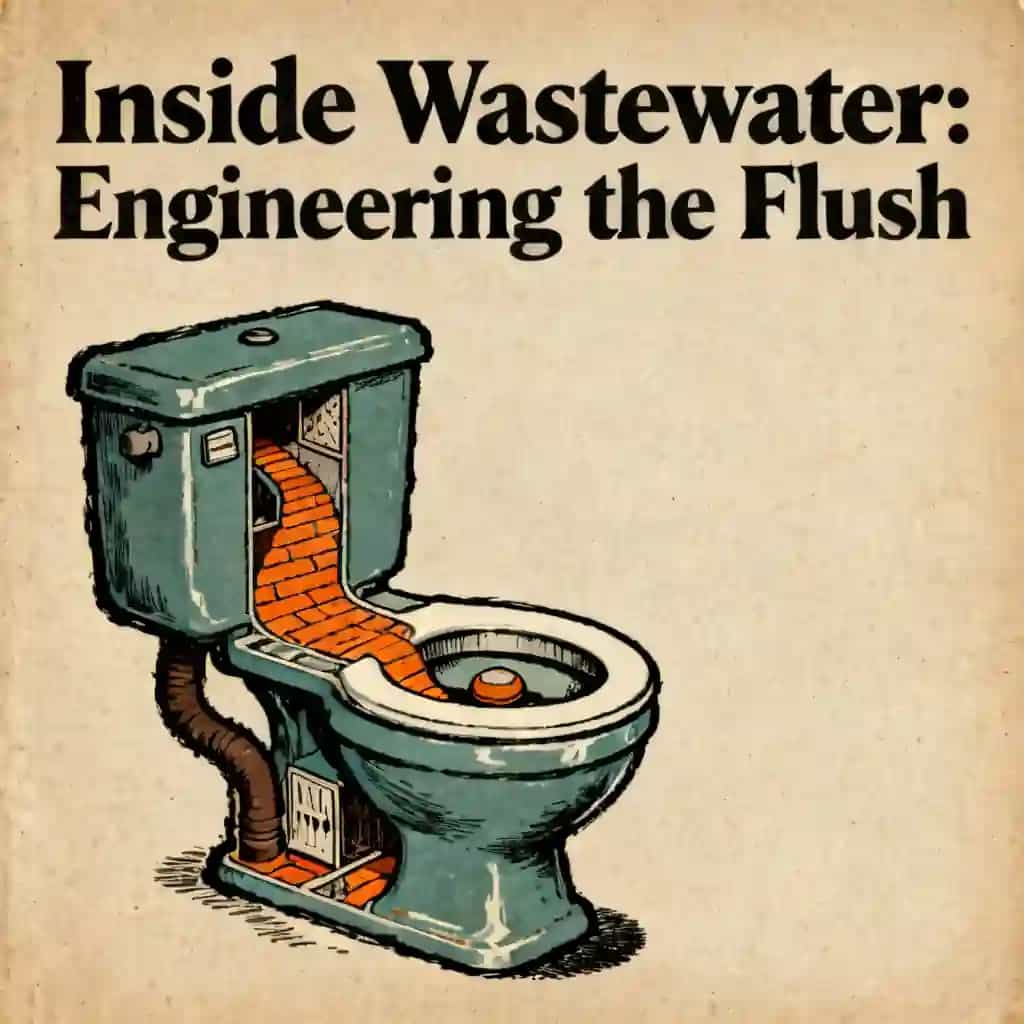
Overview of Pipe Dreams
Dive into the taboo world of toilets where science meets sustainability. "Pipe Dreams" reveals how reinventing waste management could save lives, improve education, and combat climate change - a book Sam Kean calls "vital to public health" with "charm."
- Urine-diversion toilets transform waste into fertilizer for sustainable agriculture.
- Chelsea Wald’s “Loo-topia” reimagines toilets as tools for global equity.
- Next-gen sewage systems prevent disease while harvesting nutrients and energy.
- The new toilet revolution tackles sanitation crises through radical innovation.
- Human excrement becomes a resource for fighting environmental degradation.
- Historic toilet designs inspire modern solutions for public health challenges.
- Global sanitation equity requires rethinking infrastructure and cultural taboos.
- Pipe Dreams exposes how toilets impact climate change resilience.
- Community-led projects empower regions without traditional sewage systems.
- Transforming waste into energy reduces fossil fuel dependence worldwide.
- Smart toilets with sensors optimize waste collection and treatment.
- Chelsea Wald champions urine recycling to close farming nutrient loops.
About the Author of Pipe Dreams
Chelsea Wald, an award-winning science and environmental writer, is the author of Pipe Dreams: The Urgent Global Quest to Transform the Toilet, a groundbreaking exploration of sanitation’s role in addressing global health, climate change, and inequality. Based in the Netherlands, Wald combines over a decade of journalism experience with a focus on technology and sustainability, positioning her as a leading voice in environmental solutions.
Her work has appeared in Nature, Science, and The New York Times, and she collaborates with the Solutions Journalism Network to highlight actionable innovations.
Wald’s deep dive into toilet technology—from compost systems in Haiti to waste-recovery projects in the Netherlands—reflects her commitment to uncovering pragmatic responses to urgent ecological and public health challenges. The book, praised by figures like Sam Kean and Meera Subramanian, has been featured in outlets such as Mongabay and leverages her knack for transforming complex scientific topics into engaging narratives. Published by Simon & Schuster, Pipe Dreams underscores Wald’s ability to spotlight underappreciated innovations that redefine resource sustainability.
FAQs About Pipe Dreams
What is Pipe Dreams by Chelsea Wald about?
Pipe Dreams explores the global quest to revolutionize sanitation through innovative toilet systems and waste management technologies. Chelsea Wald examines projects worldwide, from compost toilets in Haiti to a Netherlands facility recycling toilet paper from sewage, while highlighting how better sanitation can address climate change, health disparities, and resource recovery. The book combines scientific rigor with engaging storytelling to demystify an often-overlooked critical issue.
Who should read Pipe Dreams?
This book is ideal for readers interested in global health, environmental sustainability, or technology innovation. Policymakers, engineers, and advocates for equitable infrastructure will find actionable insights, while general audiences gain a new perspective on everyday sanitation’s societal impact. Wald’s accessible writing makes complex topics like wastewater energy recovery and fecal sludge management engaging for non-experts.
What are the main themes in Pipe Dreams?
Key themes include the intersection of sanitation with public health, environmental sustainability, and social equity. Wald emphasizes how toilets can mitigate climate change by recovering nutrients and energy from waste, while also addressing global inequalities—over 4 billion people lack safe sanitation access. The book critiques outdated systems and champions cutting-edge solutions like pathogen-detecting toilet seats.
How does Pipe Dreams address climate change?
The book details how modern sanitation can reduce greenhouse gases by converting waste into renewable energy and fertilizers. Wald highlights projects like a Dutch plant harvesting cellulose from sewage for insulation, diverting waste from landfills. She argues that reimagining toilets as resource-recovery tools is vital for combating water scarcity and emissions.
What innovations in sanitation does the book highlight?
Pipe Dreams features compost systems turning waste into fertilizer, IoT-enabled toilets monitoring health via stool analysis, and infrastructure harvesting heat from sewer lines. It also explores large-scale solutions, like a facility in the Netherlands recycling 400 tons of toilet paper annually from wastewater. These innovations aim to make sanitation sustainable, efficient, and universally accessible.
How does Pipe Dreams discuss global inequalities in sanitation?
Wald contrasts high-tech solutions in wealthy nations with grassroots efforts in underserved regions, like Haiti’s compost toilet projects. She critiques the “sanitation gap,” where billions lack safe toilets, exacerbating disease and environmental harm. The book advocates for equitable, culturally adaptable designs that prioritize marginalized communities.
What is the significance of the health-monitoring toilet seat mentioned in the book?
This technology uses sensors to analyze stool for early signs of illnesses like diabetes or cancer, enabling proactive healthcare. Wald frames it as an example of how toilets could evolve into diagnostic tools, merging sanitation with personalized medicine. Such innovations redefine waste as a data source, potentially revolutionizing public health.
How does Pipe Dreams compare to other books on environmental issues?
Unlike broader climate texts, Pipe Dreams zooms in on sanitation’s pivotal role in sustainability, offering tangible solutions over abstract theories. It parallels The Sixth Extinction in urgency but stands apart by blending humor with deep dives into niche topics, like the history of sewage systems. Wald’s focus on toilets provides a unique lens to explore equity and innovation.
Is Pipe Dreams worth reading?
Yes: it’s a compelling mix of science journalism and global advocacy, offering surprising insights into an underappreciated field. Wald’s global case studies, from ancient waste archaeology to futuristic tech, make complex sanitation challenges accessible and engaging. Finalist for the NASW Science in Society Journalism Award, it’s both informative and thought-provoking.
Why is Pipe Dreams relevant in 2025?
With climate crises intensifying, the book’s focus on resource recovery and sustainable infrastructure remains critical. Innovations like nutrient recycling from waste align with circular economy goals, while rising urbanization heightens the need for equitable sanitation solutions. Wald’s work underscores how toilet redesign can address interconnected health, environmental, and social issues.
Feel the book through the author's voice
Turn knowledge into engaging, example-rich insights
Capture key ideas in a flash for fast learning
Enjoy the book in a fun and engaging way
Key Themes in Pipe Dreams
Quotes from Pipe Dreams
Flush and forget masks an uncomfortable truth.
Toilets: civilization's savior and exacerbator of inequality.
People don't want to be early adopters of toilet technology.
Rethinking our relationship with toilets is essential.
Our toilet systems have stagnated.
Characters in Pipe Dreams
Quick Summary Mode - Read or listen to Pipe Dreams Summary in 10 Minutes

Break down key ideas from Pipe Dreams into bite-sized takeaways to understand how innovative teams create, collaborate, and grow.

Flash Card Mode - Top 6 Insights from Pipe Dreams in a Nutshell

Distill Pipe Dreams into rapid-fire memory cues that highlight key principles of candor, teamwork, and creative resilience.

Fun Mode - Pipe Dreams Lessons Told Through 28-Min Stories

Experience Pipe Dreams through vivid storytelling that turns innovation lessons into moments you'll remember and apply.
Personalize Mode - Read or listen to Pipe Dreams Summary in 0 Minutes

Ask anything, pick the voice, and co-create insights that truly resonate with you.

From Columbia University alumni built in San Francisco
"Instead of endless scrolling, I just hit play on BeFreed. It saves me so much time."


"I never knew where to start with nonfiction—BeFreed’s book lists turned into podcasts gave me a clear path."


"Perfect balance between learning and entertainment. Finished ‘Thinking, Fast and Slow’ on my commute this week."
"Crazy how much I learned while walking the dog. BeFreed = small habits → big gains."
"Reading used to feel like a chore. Now it’s just part of my lifestyle."

"Feels effortless compared to reading. I’ve finished 6 books this month already."
"BeFreed turned my guilty doomscrolling into something that feels productive and inspiring."

"BeFreed turned my commute into learning time. 20-min podcasts are perfect for finishing books I never had time for."
"BeFreed replaced my podcast queue. Imagine Spotify for books — that’s it. 🙌"

"It is great for me to learn something from the book without reading it."
"The themed book list podcasts help me connect ideas across authors—like a guided audio journey."
"Makes me feel smarter every time before going to work"
From Columbia University alumni built in San Francisco
"Instead of endless scrolling, I just hit play on BeFreed. It saves me so much time."
"I never knew where to start with nonfiction—BeFreed’s book lists turned into podcasts gave me a clear path."
"Perfect balance between learning and entertainment. Finished ‘Thinking, Fast and Slow’ on my commute this week."
"Crazy how much I learned while walking the dog. BeFreed = small habits → big gains."
"Reading used to feel like a chore. Now it’s just part of my lifestyle."
"Feels effortless compared to reading. I’ve finished 6 books this month already."
"BeFreed turned my guilty doomscrolling into something that feels productive and inspiring."
"BeFreed turned my commute into learning time. 20-min podcasts are perfect for finishing books I never had time for."
"BeFreed replaced my podcast queue. Imagine Spotify for books — that’s it. 🙌"
"It is great for me to learn something from the book without reading it."
"The themed book list podcasts help me connect ideas across authors—like a guided audio journey."
"Makes me feel smarter every time before going to work"
"Instead of endless scrolling, I just hit play on BeFreed. It saves me so much time."
"I never knew where to start with nonfiction—BeFreed’s book lists turned into podcasts gave me a clear path."
"Perfect balance between learning and entertainment. Finished ‘Thinking, Fast and Slow’ on my commute this week."
"Crazy how much I learned while walking the dog. BeFreed = small habits → big gains."
"Reading used to feel like a chore. Now it’s just part of my lifestyle."
"Feels effortless compared to reading. I’ve finished 6 books this month already."
"BeFreed turned my guilty doomscrolling into something that feels productive and inspiring."
"BeFreed turned my commute into learning time. 20-min podcasts are perfect for finishing books I never had time for."
"BeFreed replaced my podcast queue. Imagine Spotify for books — that’s it. 🙌"
"It is great for me to learn something from the book without reading it."
"The themed book list podcasts help me connect ideas across authors—like a guided audio journey."
"Makes me feel smarter every time before going to work"
"Instead of endless scrolling, I just hit play on BeFreed. It saves me so much time."
"I never knew where to start with nonfiction—BeFreed’s book lists turned into podcasts gave me a clear path."
"Perfect balance between learning and entertainment. Finished ‘Thinking, Fast and Slow’ on my commute this week."
"Crazy how much I learned while walking the dog. BeFreed = small habits → big gains."
"Reading used to feel like a chore. Now it’s just part of my lifestyle."
"Feels effortless compared to reading. I’ve finished 6 books this month already."
"BeFreed turned my guilty doomscrolling into something that feels productive and inspiring."
"BeFreed turned my commute into learning time. 20-min podcasts are perfect for finishing books I never had time for."
"BeFreed replaced my podcast queue. Imagine Spotify for books — that’s it. 🙌"
"It is great for me to learn something from the book without reading it."
"The themed book list podcasts help me connect ideas across authors—like a guided audio journey."
"Makes me feel smarter every time before going to work"

Get the Pipe Dreams summary as a free PDF or EPUB. Print it or read offline anytime.