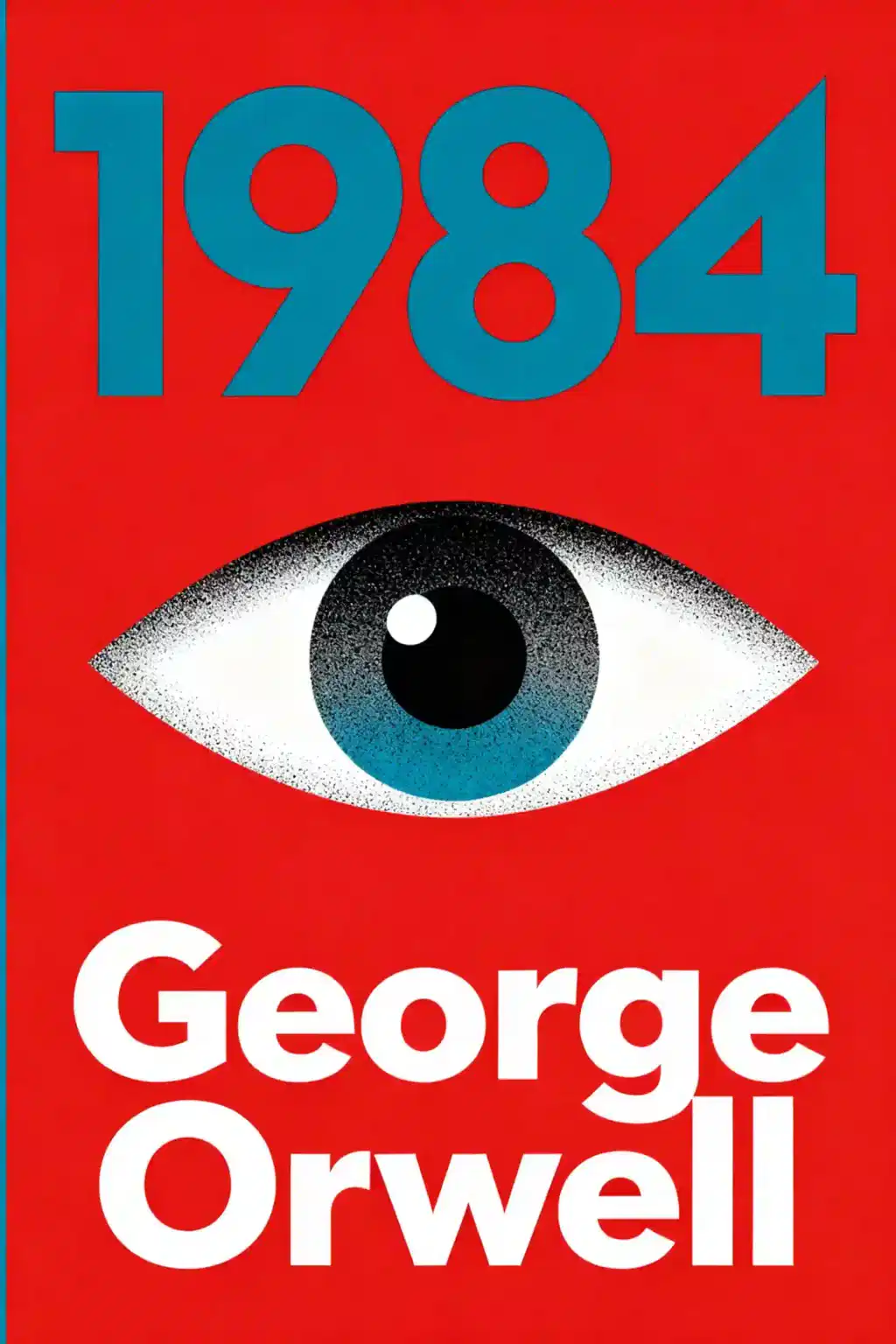
Overview of Nineteen Eighty-Four
Orwell's dystopian masterpiece sparked global panic when sales surged after NSA surveillance leaks. "1984" introduced "Big Brother" into our lexicon and topped bestseller lists when Conway's "alternative facts" eerily echoed the novel's "doublethink." What freedoms would you surrender for security?
- Totalitarian control thrives on erasing individual thought through Newspeak and Thought Police
- Perpetual war sustains power by diverting resources and crushing dissent in Oceania
- Big Brother's surveillance state exposes the fragility of privacy and personal freedom
- The Ministry of Truth weaponizes propaganda to rewrite history and manipulate reality
- Doublethink reveals how authoritarian regimes demand contradictory beliefs as loyalty tests
- Room 101 symbolizes the psychological destruction of resistance through targeted fear exploitation
- "Ignorance is strength" manifests in erasing critical thinking to maintain systemic control
- Winston Smith's failed rebellion proves hope alone cannot dismantle institutionalized oppression
- Telescreens embody the ultimate loss of autonomy in a monitored society
- The Brotherhood's philosophy exposes how power perpetuates itself through manufactured conflicts
- Newspeak demonstrates language's role in limiting rebellion by restricting expressible ideas
- Goldstein's manifesto decodes the Party's three slogans as tools for perpetual domination
About the Author of Nineteen Eighty-Four
George Orwell (1903–1950), born Eric Arthur Blair, was an English novelist and political commentator whose dystopian masterpiece 1984 cemented his reputation as a visionary critic of authoritarianism. A democratic socialist with firsthand experience of totalitarian regimes—from his service in the Spanish Civil War to his critiques of Stalinism—Orwell crafted the novel’s haunting depiction of mass surveillance and propaganda from his deep understanding of 20th-century political dynamics. His other seminal works include the allegorical satire Animal Farm and the memoir Homage to Catalonia, both exploring themes of power corruption and ideological betrayal.
Known for lucid prose and enduring concepts like "Big Brother" and "Newspeak," Orwell’s writing merges sharp political analysis with literary innovation. 1984 has sold over 30 million copies worldwide, been translated into 65+ languages, and inspired adaptations across film, theater, and television. The Times ranked Orwell among Britain’s greatest writers, with his name synonymous with warnings against state overreach.
FAQs About Nineteen Eighty-Four
What is 1984 by George Orwell about?
1984 is a dystopian novel about Winston Smith’s rebellion against Oceania’s totalitarian regime, led by the omnipresent Big Brother. Set in a surveillance state where history is manipulated and dissent is punished, the story explores themes of government control, psychological manipulation, and the erosion of truth. Winston’s forbidden relationship with Julia and eventual torture highlight the Party’s crushing of individuality.
Who should read 1984 by George Orwell?
This book is essential for readers interested in political dystopias, propaganda analysis, or warnings about authoritarianism. Students of literature, history, or social sciences will find its themes of surveillance, censorship, and reality distortion relevant to understanding modern societal challenges. Fans of classic speculative fiction like Brave New World will also appreciate Orwell’s bleak vision.
Is 1984 worth reading in 2025?
Yes. 1984 remains a cornerstone of dystopian literature, with concepts like “Big Brother” and “thoughtcrime” permeating modern discourse on privacy and misinformation. Its exploration of state-controlled narratives and technological surveillance resonates deeply in today’s digital age.
What are the main themes in 1984?
Key themes include:
- Totalitarianism: The Party’s absolute control over Oceania’s politics, economy, and culture.
- Reality manipulation: The Ministry of Truth’s rewriting of history to enforce loyalty.
- Individual vs. collective identity: Winston’s struggle to retain autonomy in a society that criminalizes free thought.
What does Big Brother symbolize in 1984?
Big Brother represents the Party’s omnipotence and the erosion of privacy. Though never confirmed to exist, his image reinforces constant surveillance and demands for conformity. The phrase “Big Brother is watching you” embodies the loss of personal freedom under authoritarian rule.
How does 1984 explore the danger of censorship?
The Party bans free expression, alters historical records, and punishes “thoughtcrime” to maintain power. Winston’s job rewriting news articles illustrates how controlling information shapes public perception and eliminates dissent.
What is the significance of the quote “War is peace, freedom is slavery, ignorance is strength”?
This paradoxical Party slogan exemplifies “doublethink,” where citizens accept contradictory beliefs. It underscores the manipulation of language to justify endless war and suppress critical thinking.
How does 1984 compare to other dystopian novels like Brave New World?
While both warn against authoritarianism, 1984 focuses on overt oppression via surveillance and fear, whereas Brave New World critiques societal control through pleasure and complacency. Orwell’s novel emphasizes the active destruction of truth, while Huxley explores passive alienation.
Why is 1984 still relevant in 2025?
Its themes of misinformation, mass surveillance, and language manipulation mirror modern concerns about AI, social media, and data privacy. The novel’s depiction of “alternative facts” and historical revisionism remains a cautionary tale for democratic societies.
What are common criticisms of 1984?
Some argue its bleakness oversimplifies human resilience, while others note its Cold War-era focus on Soviet-style regimes lacks nuance for contemporary authoritarianism. However, its core warnings about power and truth remain widely validated.
What happens to Winston and Julia at the end of 1984?
After being tortured by O’Brien, Winston betrays Julia and is brainwashed into loving Big Brother. Their relationship dissolves, symbolizing the Party’s success in eradicating loyalty and individuality.
How does 1984 define “doublethink” and “Newspeak”?
- Doublethink: Holding two contradictory beliefs simultaneously (e.g., “War is peace”).
- Newspeak: A language designed to eliminate rebellious thoughts by restricting vocabulary.
Both concepts illustrate the Party’s control over reality.
What was George Orwell’s purpose in writing 1984?
Orwell aimed to warn against totalitarianism’s dangers, drawing parallels to Stalinist Russia and fascist regimes. He sought to expose how governments could manipulate truth and suppress freedom through technology and propaganda.
Feel the book through the author's voice
Turn knowledge into engaging, example-rich insights
Capture key ideas in a flash for fast learning
Enjoy the book in a fun and engaging way
Key Themes in Nineteen Eighty-Four
Quotes from Nineteen Eighty-Four
War is peace. Freedom is slavery. Ignorance is strength.
Who controls the past controls the future. Who controls the present controls the past.
If you want a picture of the future, imagine a boot stamping on a human face—forever.
But it was all right, everything was all right, the struggle was finished. He had won the victory over himself. He loved Big Brother.
Characters in Nineteen Eighty-Four
Quick Summary Mode - Read or listen to Nineteen Eighty-Four Summary in 8 Minutes

Break down key ideas from Nineteen Eighty-Four into bite-sized takeaways to understand how innovative teams create, collaborate, and grow.

Flash Card Mode - Top 10 Insights from Nineteen Eighty-Four in a Nutshell

Distill Nineteen Eighty-Four into rapid-fire memory cues that highlight key principles of candor, teamwork, and creative resilience.

Fun Mode - Nineteen Eighty-Four Lessons Told Through 23-Min Stories

Experience Nineteen Eighty-Four through vivid storytelling that turns innovation lessons into moments you'll remember and apply.
Personalize Mode - Read or listen to Nineteen Eighty-Four Summary in 0 Minutes

Ask anything, pick the voice, and co-create insights that truly resonate with you.

From Columbia University alumni built in San Francisco
"Instead of endless scrolling, I just hit play on BeFreed. It saves me so much time."


"I never knew where to start with nonfiction—BeFreed’s book lists turned into podcasts gave me a clear path."


"Perfect balance between learning and entertainment. Finished ‘Thinking, Fast and Slow’ on my commute this week."
"Crazy how much I learned while walking the dog. BeFreed = small habits → big gains."
"Reading used to feel like a chore. Now it’s just part of my lifestyle."

"Feels effortless compared to reading. I’ve finished 6 books this month already."
"BeFreed turned my guilty doomscrolling into something that feels productive and inspiring."

"BeFreed turned my commute into learning time. 20-min podcasts are perfect for finishing books I never had time for."
"BeFreed replaced my podcast queue. Imagine Spotify for books — that’s it. 🙌"

"It is great for me to learn something from the book without reading it."
"The themed book list podcasts help me connect ideas across authors—like a guided audio journey."
"Makes me feel smarter every time before going to work"
From Columbia University alumni built in San Francisco
"Instead of endless scrolling, I just hit play on BeFreed. It saves me so much time."
"I never knew where to start with nonfiction—BeFreed’s book lists turned into podcasts gave me a clear path."
"Perfect balance between learning and entertainment. Finished ‘Thinking, Fast and Slow’ on my commute this week."
"Crazy how much I learned while walking the dog. BeFreed = small habits → big gains."
"Reading used to feel like a chore. Now it’s just part of my lifestyle."
"Feels effortless compared to reading. I’ve finished 6 books this month already."
"BeFreed turned my guilty doomscrolling into something that feels productive and inspiring."
"BeFreed turned my commute into learning time. 20-min podcasts are perfect for finishing books I never had time for."
"BeFreed replaced my podcast queue. Imagine Spotify for books — that’s it. 🙌"
"It is great for me to learn something from the book without reading it."
"The themed book list podcasts help me connect ideas across authors—like a guided audio journey."
"Makes me feel smarter every time before going to work"
"Instead of endless scrolling, I just hit play on BeFreed. It saves me so much time."
"I never knew where to start with nonfiction—BeFreed’s book lists turned into podcasts gave me a clear path."
"Perfect balance between learning and entertainment. Finished ‘Thinking, Fast and Slow’ on my commute this week."
"Crazy how much I learned while walking the dog. BeFreed = small habits → big gains."
"Reading used to feel like a chore. Now it’s just part of my lifestyle."
"Feels effortless compared to reading. I’ve finished 6 books this month already."
"BeFreed turned my guilty doomscrolling into something that feels productive and inspiring."
"BeFreed turned my commute into learning time. 20-min podcasts are perfect for finishing books I never had time for."
"BeFreed replaced my podcast queue. Imagine Spotify for books — that’s it. 🙌"
"It is great for me to learn something from the book without reading it."
"The themed book list podcasts help me connect ideas across authors—like a guided audio journey."
"Makes me feel smarter every time before going to work"
"Instead of endless scrolling, I just hit play on BeFreed. It saves me so much time."
"I never knew where to start with nonfiction—BeFreed’s book lists turned into podcasts gave me a clear path."
"Perfect balance between learning and entertainment. Finished ‘Thinking, Fast and Slow’ on my commute this week."
"Crazy how much I learned while walking the dog. BeFreed = small habits → big gains."
"Reading used to feel like a chore. Now it’s just part of my lifestyle."
"Feels effortless compared to reading. I’ve finished 6 books this month already."
"BeFreed turned my guilty doomscrolling into something that feels productive and inspiring."
"BeFreed turned my commute into learning time. 20-min podcasts are perfect for finishing books I never had time for."
"BeFreed replaced my podcast queue. Imagine Spotify for books — that’s it. 🙌"
"It is great for me to learn something from the book without reading it."
"The themed book list podcasts help me connect ideas across authors—like a guided audio journey."
"Makes me feel smarter every time before going to work"

Get the Nineteen Eighty-Four summary as a free PDF or EPUB. Print it or read offline anytime.