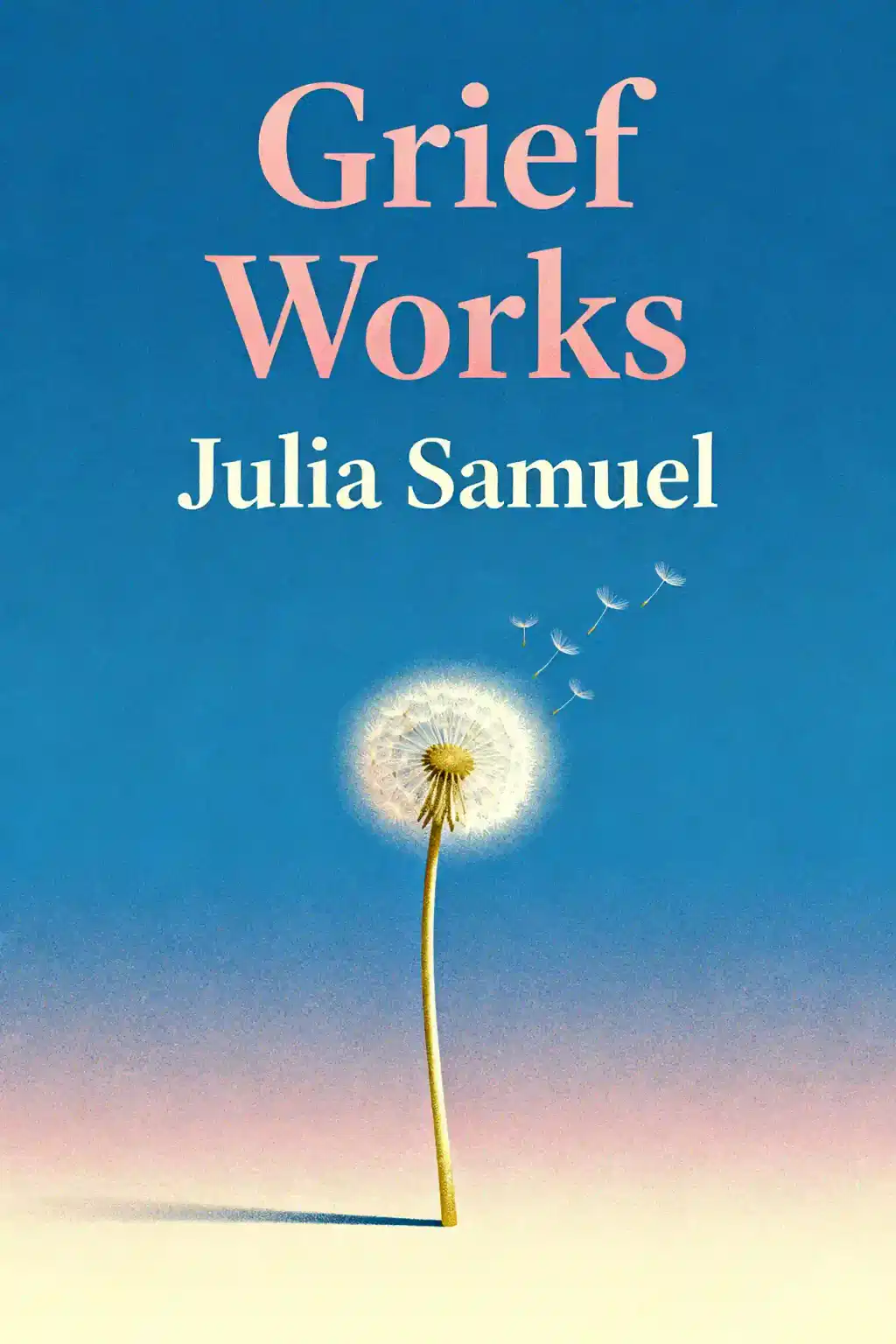
Grief Works: Stories of Life, Death and Surviving by Julia Samuel Summary

Overview of Grief Works
In "Grief Works," renowned psychotherapist Julia Samuel offers life-changing strategies for navigating loss. Praised by Vogue and The New York Times, this compassionate guide breaks death's taboo. What made Helen Fielding call it "essential" for anyone grieving? Discover why fear transforms into confidence through Samuel's healing wisdom.
- View suicide as a “heart attack of the brain” to reduce blame and shame.
- Laughter disrupts anger’s grip by interrupting grief’s obsessive thought cycles.
- Self-compassion silences your “shitty committee” of guilt during mourning.
- Honor your “new normal” instead of chasing pre-loss identity.
- Sudden deaths amplify regret—rituals and journaling ease unresolved pain.
- Lean into grief’s waves; avoiding sorrow prolongs emotional paralysis.
- Children need raw honesty about death to rebuild trust post-loss.
- Active listening (not fixing) is the greatest gift for mourners.
- Parents grieving a child must unite—isolation fractures relationships further.
- Discuss death openly to prevent “magical thinking” about its inevitability.
- Exercise channels grief’s physical energy into healing motion.
- Hope is grief’s alchemy, transforming pain into forward momentum.
About the Author of Grief Works
Julia Aline Samuel MBE is the bestselling author of Grief Works: Stories of Life, Death and Surviving and a pioneering psychotherapist specializing in grief, trauma, and family dynamics. Drawing on over three decades of clinical experience—including her NHS work at St. Mary’s Hospital, where she established groundbreaking pediatric psychotherapy services—Samuel bridges academic rigor with compassionate storytelling.
Her expertise stems from co-founding Child Bereavement UK in 1994, recognized with an MBE in 2016 for services to bereaved parents.
Samuel’s other works, including This Too Shall Pass and Every Family Has a Story, explore crisis resilience and intergenerational emotional patterns, cementing her status as a leading voice in mental health. She hosts the top-charting podcasts Therapy Works and A Living Loss, and her insights are frequently featured in BBC programs, The Times, and The Guardian. Her Grief Works app, a 28-day grief support tool, has been globally acclaimed and featured by Apple.
Translated into 17 languages, Grief Works merges clinical wisdom with real-life narratives, offering actionable frameworks for navigating loss. Samuel’s work is widely endorsed by mental health professionals and integrated into therapeutic practices worldwide.
FAQs About Grief Works
What is Grief Works by Julia Samuel about?
Grief Works is a compassionate guide to navigating loss, blending psychotherapist Julia Samuel’s 25+ years of clinical experience with real-life case studies. It explores grief’s non-linear nature, offering strategies like journaling and meditation, while addressing diverse losses—from a partner’s death to terminal illness or suicide. The book emphasizes mourning as an active process and the transformative power of confronting pain.
Who should read Grief Works?
This book is essential for anyone grieving a loss, supporting a bereaved loved one, or working in mental health. Its structured case studies (grouped by relationships lost) and evidence-based coping techniques make it valuable for therapists, while its accessible storytelling resonates with general readers seeking clarity on grief’s complexities.
Is Grief Works worth reading?
Yes. Praised as “illuminating” (The New York Times) and a “lifeline” (Vogue), the book combines practical advice with emotional depth. Its UK bestseller status and focus on actionable steps—like fostering support networks and validating emotions—make it a standout resource for understanding grief’s universality and individuality.
What are the key concepts in Grief Works?
- Grief as a Process: Rejects linear “stages,” framing grief as chaotic and unique to each person.
- Mourning vs. Grief: Defines mourning as the active adjustment to loss, requiring time and intentional effort.
- Role of Love: Posits that connection and vulnerability are central to healing.
What are the best quotes from Grief Works?
- “There is no love without pain; but only love can heal that pain which it causes.” Highlights grief as an extension of love, urging acceptance over avoidance.
- “To heal our grief we need to allow ourselves to feel the pain.” Stresses confronting emotions directly to initiate recovery.
How does Grief Works address sudden loss?
Samuel dedicates sections to sudden deaths (e.g., suicide, accidents), offering tools to manage shock and disorientation. She advises creating rituals, seeking community, and avoiding isolation, underscoring that unexpected loss intensifies grief’s unpredictability.
Can Grief Works help support someone who is grieving?
Yes. The book advises active listening, avoiding clichés like “they’re in a better place,” and practical support (e.g., meal deliveries). It warns against pressuring mourners to “move on,” advocating patience and presence instead.
How does Grief Works compare to other grief books?
Unlike theoretical guides, Samuel uses anonymized patient stories to illustrate concepts, making it relatable. It’s often grouped with On Death and Dying but stands out for its focus on case studies and actionable coping mechanisms.
Does Grief Works discuss coping with a child’s death?
Yes. Samuel examines parental grief’s unique intensity, addressing guilt, marital strain, and societal stigma. Strategies include memorializing the child and seeking specialized therapy, emphasizing there’s no “right” way to grieve.
What criticisms exist about Grief Works?
Some readers note its UK-centric examples may limit relatability, while others desire more structured exercises. However, most praise its empathetic tone and real-world applicability, calling it a “handbook for healing.”
Why is Grief Works relevant in 2025?
As global conversations about mental health expand, the book’s emphasis on connection and systemic support aligns with modern priorities. Its lessons apply to “living losses” like job displacement or health crises, resonating in post-pandemic contexts.
How does Julia Samuel’s background inform Grief Works?
As a founding patron of a UK child bereavement charity and therapist for over 25 years, Samuel blends clinical expertise with humanitarian insight. Her work with diverse patients—from parents to terminally ill individuals—lends the book authority.
What metaphors does Grief Works use to describe grief?
Samuel depicts grief as a “shadowy and mutable land,” emphasizing its ever-changing nature. Other metaphors include “unmasking” fears and “stripping away” emotional layers, illustrating grief’s role in revealing raw, authentic selves.
Feel the book through the author's voice
Turn knowledge into engaging, example-rich insights
Capture key ideas in a flash for fast learning
Enjoy the book in a fun and engaging way
Key Themes in Grief Works
Quotes from Grief Works
Grief isn't something to overcome but rather a process to be understood and honored.
We don't 'get over' significant losses but rather find ways to carry them with us.
The relationship doesn't end with death-it transforms into something we must integrate.
The death of a parent represents the loss of our most fundamental relationship.
Characters in Grief Works
Quick Summary Mode - Read or listen to Grief Works Summary in 14 Minutes

Break down key ideas from Grief Works into bite-sized takeaways to understand how innovative teams create, collaborate, and grow.

Flash Card Mode - Top 8 Insights from Grief Works in a Nutshell

Distill Grief Works into rapid-fire memory cues that highlight key principles of candor, teamwork, and creative resilience.

Fun Mode - Grief Works Lessons Told Through 24-Min Stories

Experience Grief Works through vivid storytelling that turns innovation lessons into moments you'll remember and apply.
Personalize Mode - Read or listen to Grief Works Summary in 0 Minutes

Ask anything, pick the voice, and co-create insights that truly resonate with you.

From Columbia University alumni built in San Francisco
"Instead of endless scrolling, I just hit play on BeFreed. It saves me so much time."


"I never knew where to start with nonfiction—BeFreed’s book lists turned into podcasts gave me a clear path."


"Perfect balance between learning and entertainment. Finished ‘Thinking, Fast and Slow’ on my commute this week."
"Crazy how much I learned while walking the dog. BeFreed = small habits → big gains."
"Reading used to feel like a chore. Now it’s just part of my lifestyle."

"Feels effortless compared to reading. I’ve finished 6 books this month already."
"BeFreed turned my guilty doomscrolling into something that feels productive and inspiring."

"BeFreed turned my commute into learning time. 20-min podcasts are perfect for finishing books I never had time for."
"BeFreed replaced my podcast queue. Imagine Spotify for books — that’s it. 🙌"

"It is great for me to learn something from the book without reading it."
"The themed book list podcasts help me connect ideas across authors—like a guided audio journey."
"Makes me feel smarter every time before going to work"
From Columbia University alumni built in San Francisco
"Instead of endless scrolling, I just hit play on BeFreed. It saves me so much time."
"I never knew where to start with nonfiction—BeFreed’s book lists turned into podcasts gave me a clear path."
"Perfect balance between learning and entertainment. Finished ‘Thinking, Fast and Slow’ on my commute this week."
"Crazy how much I learned while walking the dog. BeFreed = small habits → big gains."
"Reading used to feel like a chore. Now it’s just part of my lifestyle."
"Feels effortless compared to reading. I’ve finished 6 books this month already."
"BeFreed turned my guilty doomscrolling into something that feels productive and inspiring."
"BeFreed turned my commute into learning time. 20-min podcasts are perfect for finishing books I never had time for."
"BeFreed replaced my podcast queue. Imagine Spotify for books — that’s it. 🙌"
"It is great for me to learn something from the book without reading it."
"The themed book list podcasts help me connect ideas across authors—like a guided audio journey."
"Makes me feel smarter every time before going to work"
"Instead of endless scrolling, I just hit play on BeFreed. It saves me so much time."
"I never knew where to start with nonfiction—BeFreed’s book lists turned into podcasts gave me a clear path."
"Perfect balance between learning and entertainment. Finished ‘Thinking, Fast and Slow’ on my commute this week."
"Crazy how much I learned while walking the dog. BeFreed = small habits → big gains."
"Reading used to feel like a chore. Now it’s just part of my lifestyle."
"Feels effortless compared to reading. I’ve finished 6 books this month already."
"BeFreed turned my guilty doomscrolling into something that feels productive and inspiring."
"BeFreed turned my commute into learning time. 20-min podcasts are perfect for finishing books I never had time for."
"BeFreed replaced my podcast queue. Imagine Spotify for books — that’s it. 🙌"
"It is great for me to learn something from the book without reading it."
"The themed book list podcasts help me connect ideas across authors—like a guided audio journey."
"Makes me feel smarter every time before going to work"
"Instead of endless scrolling, I just hit play on BeFreed. It saves me so much time."
"I never knew where to start with nonfiction—BeFreed’s book lists turned into podcasts gave me a clear path."
"Perfect balance between learning and entertainment. Finished ‘Thinking, Fast and Slow’ on my commute this week."
"Crazy how much I learned while walking the dog. BeFreed = small habits → big gains."
"Reading used to feel like a chore. Now it’s just part of my lifestyle."
"Feels effortless compared to reading. I’ve finished 6 books this month already."
"BeFreed turned my guilty doomscrolling into something that feels productive and inspiring."
"BeFreed turned my commute into learning time. 20-min podcasts are perfect for finishing books I never had time for."
"BeFreed replaced my podcast queue. Imagine Spotify for books — that’s it. 🙌"
"It is great for me to learn something from the book without reading it."
"The themed book list podcasts help me connect ideas across authors—like a guided audio journey."
"Makes me feel smarter every time before going to work"

Get the Grief Works summary as a free PDF or EPUB. Print it or read offline anytime.