Slaughterhouse-Five by Kurt Vonnegut Summary

Overview of Slaughterhouse-Five
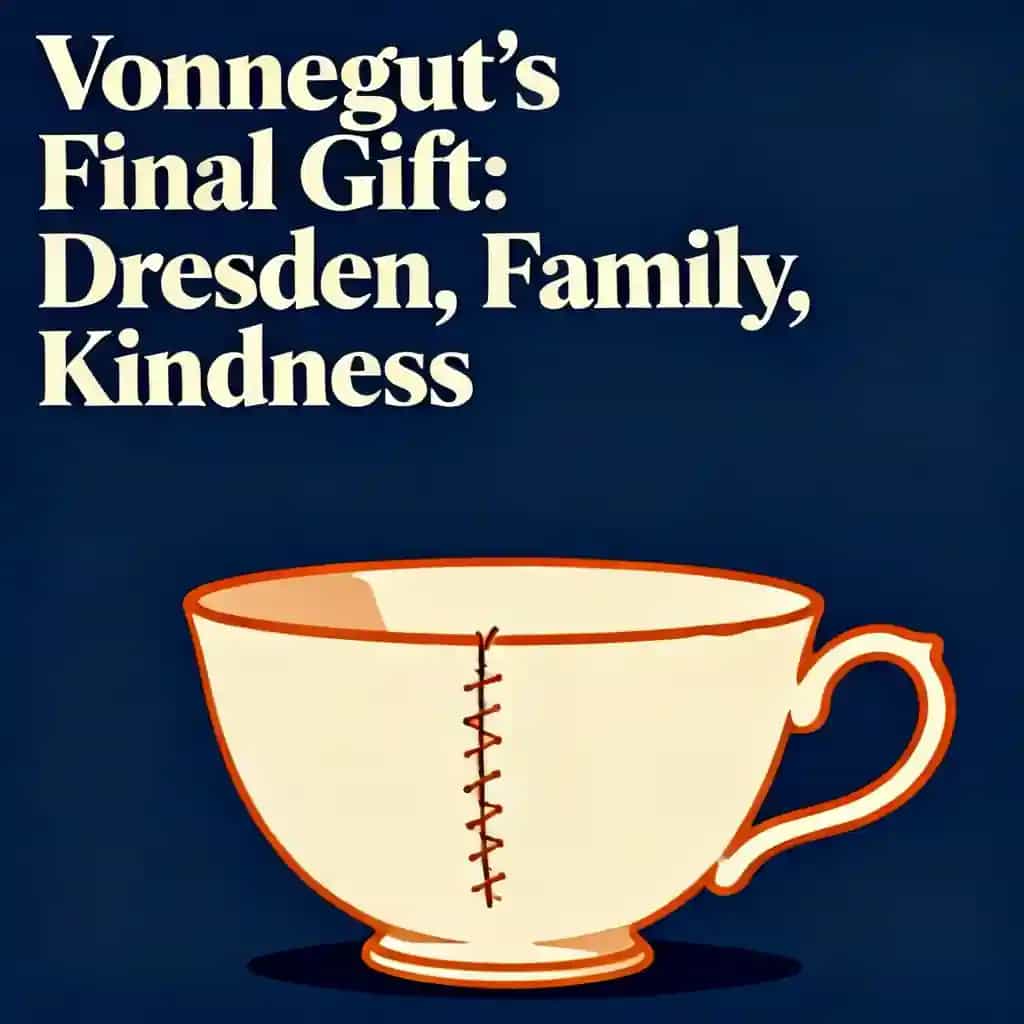
Time-traveling veteran Billy Pilgrim becomes "unstuck in time" in Vonnegut's masterpiece blending Dresden bombing memoir with sci-fi. Banned yet beloved, this anti-war classic ranked 18th on Modern Library's "100 Best Novels" list, influencing generations from college classrooms to Saturn Award-winning cinema.
- War’s trauma demands nonlinear storytelling to process unspeakable horror
- “So it goes” epitomizes accepting death’s inevitability amidst chaos
- Tralfamadorian philosophy reveals time’s simultaneity versus human linear delusion
- Dresden’s bombing exposes war’s absurd destruction of civilian life
- Free will vanishes when reliving past/present/future as fixed events
- Vonnegut’s dark humor reframes PTSD as cosmic time travel
- Billy Pilgrim’s passivity critiques postwar America’s emotional numbness
- Optometrist protagonist symbolizes society’s impaired vision of morality
- Serenity Prayer becomes ironic counterpoint to unstoppable violence
- “Destiny” narratives mask war’s preventable human-made catastrophes
- Firebombing scenes weaponize minimalist prose to intensify horror
- Vonnegut’s metafiction blurs memoir/science fiction to confront memory
About the Author of Slaughterhouse-Five
Kurt Vonnegut (1922–2007), the renowned American novelist and master of satirical fiction, authored Slaughterhouse-Five, a defining work of 20th-century anti-war literature. A World War II veteran captured during the Battle of the Bulge, Vonnegut survived the 1945 Dresden firebombing as a prisoner of war—an experience that hauntingly shaped this genre-blending novel combining historical fiction, science fiction, and dark humor.
His unique narrative voice, marked by fragmented timelines and grim wit, dissects war’s psychological toll through protagonist Billy Pilgrim’s surreal journey, cementing the book’s themes of fatalism and humanity’s cyclical violence.
Vonnegut’s literary legacy includes other seminal works like Cat’s Cradle and Breakfast of Champions, which similarly blend philosophical inquiry with absurdist satire. A Distinguished Public Service Medal recipient and former anthropology student, he transformed wartime trauma into profound social commentary. Slaughterhouse-Five remains a modern classic, named one of the Modern Library’s 100 Best Novels and translated into over 30 languages, its iconic phrase “So it goes” enduring as a cultural shorthand for life’s inevitable tragedies.
FAQs About Slaughterhouse-Five
What is Slaughterhouse-Five by Kurt Vonnegut about?
Slaughterhouse-Five follows Billy Pilgrim, a WWII soldier who becomes "unstuck in time," reliving his capture by Germans, survival of the Dresden firebombing, and encounters with alien Tralfamadorians. The nonlinear narrative blends historical fiction, science fiction, and dark humor to critique war’s senseless violence and explore themes of free will vs. determinism.
Who should read Slaughterhouse-Five?
Readers interested in anti-war literature, postmodern narratives, or explorations of PTSD will find this novel compelling. Its mix of satire, sci-fi elements, and historical events appeals to fans of authors like Joseph Heller (Catch-22) and Margaret Atwood.
Is Slaughterhouse-Five worth reading?
Yes—it’s widely regarded as a 20th-century masterpiece and was a New York Times bestseller. Despite being banned 18+ times for its "unpatriotic" themes and language, it won critical acclaim for its bold critique of war and inventive structure.
What does "So it goes" mean in Slaughterhouse-Five?
The phrase, repeated 106 times, reflects the Tralfamadorian view of death as inevitable and unremarkable. Vonnegut uses it to underscore war’s dehumanizing toll while darkly satirizing societal numbness to violence.
How does Slaughterhouse-Five portray PTSD?
Billy’s disjointed timeline and flashbacks mirror PTSD symptoms, illustrating how trauma fractures memory. Vonnegut’s own wartime experiences inform the novel’s visceral depiction of psychological scars, challenging glorified war narratives.
Why was Slaughterhouse-Five banned?
Banned for "obscene language," sexual content, and anti-war messaging, including critiques of the Vietnam War. In 1973, a school board burned 32 copies, calling it “degenerate”.
What is the significance of Dresden in the novel?
Dresden’s firebombing—which killed ~25,000 civilians—anchors the story. Vonnegut, a survivor, uses it to condemn war’s indiscriminate destruction, contrasting official silence with survivors’ trauma.
Who are the Tralfamadorians?
These fourth-dimensional aliens perceive all time simultaneously, symbolizing fatalism. Their philosophy (“ignore the awful parts”) critiques human complicity in violence and offers a lens to process trauma.
How was Slaughterhouse-Five received critically?
Praised for its innovation and moral urgency, it became Vonnegut’s breakout work. However, some critics dismissed its fragmented style, while others hailed it as a defining anti-war text.
How does Vonnegut blend genres in Slaughterhouse-Five?
The novel merges historical memoir (Dresden), sci-fi (Tralfamadorians), and dark comedy to subvert war-story tropes. This hybrid approach amplifies its critique of nationalism and dehumanization.
What are key quotes from Slaughterhouse-Five?
- “So it goes”: Repeated after every death, highlighting war’s normalization of loss
- “Everything was beautiful and nothing hurt”: Ironizes Billy’s escapism amid suffering
How does Slaughterhouse-Five compare to Catch-22?
Both satirize war’s absurdity, but Catch-22 uses circular logic and bureaucracy, while Slaughterhouse-Five employs nonlinear storytelling and sci-fi to question free will.
Feel the book through the author's voice
Turn knowledge into engaging, example-rich insights
Capture key ideas in a flash for fast learning
Enjoy the book in a fun and engaging way
Key Themes in Slaughterhouse-Five
Quotes from Slaughterhouse-Five
Billy Pilgrim, our unlikely protagonist, has "come unstuck in time."
"So it goes," he repeats after each death.
"Ignore the awful times, and concentrate on the good ones."
Writing anti-war books is as futile as writing "anti-glacier books."
The suspense isn't in what will happen, but in how these events connect.
Characters in Slaughterhouse-Five
Quick Summary Mode - Read or listen to Slaughterhouse-Five Summary in 8 Minutes

Break down key ideas from Slaughterhouse-Five into bite-sized takeaways to understand how innovative teams create, collaborate, and grow.

Flash Card Mode - Top 10 Insights from Slaughterhouse-Five in a Nutshell

Distill Slaughterhouse-Five into rapid-fire memory cues that highlight key principles of candor, teamwork, and creative resilience.

Fun Mode - Slaughterhouse-Five Lessons Told Through 19-Min Stories

Experience Slaughterhouse-Five through vivid storytelling that turns innovation lessons into moments you'll remember and apply.
Personalize Mode - Read or listen to Slaughterhouse-Five Summary in 0 Minutes

Ask anything, pick the voice, and co-create insights that truly resonate with you.

From Columbia University alumni built in San Francisco
"Instead of endless scrolling, I just hit play on BeFreed. It saves me so much time."


"I never knew where to start with nonfiction—BeFreed’s book lists turned into podcasts gave me a clear path."


"Perfect balance between learning and entertainment. Finished ‘Thinking, Fast and Slow’ on my commute this week."
"Crazy how much I learned while walking the dog. BeFreed = small habits → big gains."
"Reading used to feel like a chore. Now it’s just part of my lifestyle."

"Feels effortless compared to reading. I’ve finished 6 books this month already."
"BeFreed turned my guilty doomscrolling into something that feels productive and inspiring."

"BeFreed turned my commute into learning time. 20-min podcasts are perfect for finishing books I never had time for."
"BeFreed replaced my podcast queue. Imagine Spotify for books — that’s it. 🙌"

"It is great for me to learn something from the book without reading it."
"The themed book list podcasts help me connect ideas across authors—like a guided audio journey."
"Makes me feel smarter every time before going to work"
From Columbia University alumni built in San Francisco
"Instead of endless scrolling, I just hit play on BeFreed. It saves me so much time."
"I never knew where to start with nonfiction—BeFreed’s book lists turned into podcasts gave me a clear path."
"Perfect balance between learning and entertainment. Finished ‘Thinking, Fast and Slow’ on my commute this week."
"Crazy how much I learned while walking the dog. BeFreed = small habits → big gains."
"Reading used to feel like a chore. Now it’s just part of my lifestyle."
"Feels effortless compared to reading. I’ve finished 6 books this month already."
"BeFreed turned my guilty doomscrolling into something that feels productive and inspiring."
"BeFreed turned my commute into learning time. 20-min podcasts are perfect for finishing books I never had time for."
"BeFreed replaced my podcast queue. Imagine Spotify for books — that’s it. 🙌"
"It is great for me to learn something from the book without reading it."
"The themed book list podcasts help me connect ideas across authors—like a guided audio journey."
"Makes me feel smarter every time before going to work"
"Instead of endless scrolling, I just hit play on BeFreed. It saves me so much time."
"I never knew where to start with nonfiction—BeFreed’s book lists turned into podcasts gave me a clear path."
"Perfect balance between learning and entertainment. Finished ‘Thinking, Fast and Slow’ on my commute this week."
"Crazy how much I learned while walking the dog. BeFreed = small habits → big gains."
"Reading used to feel like a chore. Now it’s just part of my lifestyle."
"Feels effortless compared to reading. I’ve finished 6 books this month already."
"BeFreed turned my guilty doomscrolling into something that feels productive and inspiring."
"BeFreed turned my commute into learning time. 20-min podcasts are perfect for finishing books I never had time for."
"BeFreed replaced my podcast queue. Imagine Spotify for books — that’s it. 🙌"
"It is great for me to learn something from the book without reading it."
"The themed book list podcasts help me connect ideas across authors—like a guided audio journey."
"Makes me feel smarter every time before going to work"
"Instead of endless scrolling, I just hit play on BeFreed. It saves me so much time."
"I never knew where to start with nonfiction—BeFreed’s book lists turned into podcasts gave me a clear path."
"Perfect balance between learning and entertainment. Finished ‘Thinking, Fast and Slow’ on my commute this week."
"Crazy how much I learned while walking the dog. BeFreed = small habits → big gains."
"Reading used to feel like a chore. Now it’s just part of my lifestyle."
"Feels effortless compared to reading. I’ve finished 6 books this month already."
"BeFreed turned my guilty doomscrolling into something that feels productive and inspiring."
"BeFreed turned my commute into learning time. 20-min podcasts are perfect for finishing books I never had time for."
"BeFreed replaced my podcast queue. Imagine Spotify for books — that’s it. 🙌"
"It is great for me to learn something from the book without reading it."
"The themed book list podcasts help me connect ideas across authors—like a guided audio journey."
"Makes me feel smarter every time before going to work"

Get the Slaughterhouse-Five summary as a free PDF or EPUB. Print it or read offline anytime.