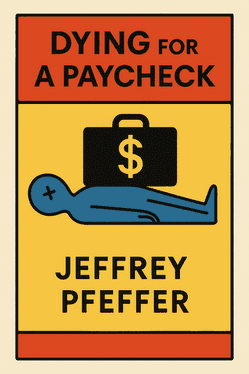
Dying for a paycheck: how modern management harms employee health and company performance--and what we can do about it by Jeffrey Pfeffer Summary

Overview of Dying for a paycheck
Toxic workplaces kill 120,000 Americans yearly. Stanford professor Jeffrey Pfeffer exposes how modern management literally costs lives while draining $300 billion from companies. Embraced by the American Heart Association's CEO Roundtable, this shocking wake-up call reveals why your job might be your deadliest relationship.
- Workplace stress is the fifth leading cause of death in the US, rivaling secondhand smoke risks.
- Gig economy jobs increase health risks through economic insecurity and lack of benefits.
- Employee autonomy reduces chronic disease risks more than healthcare access.
- Layoffs double suicide rates and increase heart attack risks by 63%.
- Your direct manager impacts health outcomes more than your primary physician.
- Health insurance "job-lock" keeps workers in toxic environments despite health costs.
- 60-hour workweeks triple stroke risks while decreasing productivity.
- Preventing workplace stress costs less than treating resulting health crises.
- Gen Z workers reject toxic workplaces, forcing corporate culture overhauls.
- HR leaders must master power dynamics, not just policy compliance.
- Aetna's stress reduction program cut healthcare costs while boosting productivity.
About the Author of Dying for a paycheck
Jeffrey Pfeffer, Stanford Graduate School of Business professor and leading organizational behavior expert, examines modern workplace hazards in Dying for a Paycheck: How Modern Management Harms Employee Health and Company Performance. A bestselling author and researcher, Pfeffer specializes in evidence-based management practices and corporate power dynamics. His analysis of toxic workplace cultures builds on decades of research documented in influential works like Power: Why Some People Have It—and Others Don’t and Leadership B.S., both summarized on this platform.
The Thomas D. Dee II Professor at Stanford since 1979, Pfeffer hosts the Pfeffer on Power podcast and writes for Fortune, blending academic rigor with practical insights from his studies of companies like Southwest Airlines and SAS Institute.
His controversial finding that harmful management practices cause approximately 120,000 preventable U.S. deaths annually has sparked global discussions about corporate responsibility. Used in MBA curricula and Fortune 500 executive training, Pfeffer’s work continues shaping debates about sustainable employment practices.
FAQs About Dying for a paycheck
What is Dying for a Paycheck by Jeffrey Pfeffer about?
Dying for a Paycheck exposes how toxic workplace practices—like excessive hours, layoffs, and poor work-life balance—harm employee health and reduce productivity. Stanford professor Jeffrey Pfeffer argues that stress-inducing management styles contribute to 120,000 U.S. deaths yearly, equating workplaces to “social pollution” as deadly as secondhand smoke. The book offers solutions to prioritize employee wellbeing while improving organizational outcomes.
Who should read Dying for a Paycheck?
Managers, HR professionals, policymakers, and employees in high-stress industries will benefit from this book. Pfeffer’s research-backed insights help leaders redesign healthier workplaces and empower workers to advocate for systemic change. It’s also critical for healthcare providers addressing stress-related illnesses.
Is Dying for a Paycheck worth reading?
Yes—Pfeffer combines decades of data with real-world examples to show how modern work cultures damage physical and mental health. The book’s actionable solutions, like measuring employee wellbeing and reforming health-cost accountability, make it essential for addressing today’s burnout epidemic.
What are the main arguments in Dying for a Paycheck?
Key arguments include:
- Chronic workplace stress causes 120,000 U.S. deaths annually, comparable to smoking.
- Layoffs double suicide risks and fail to boost profitability.
- Toxic practices cost U.S. employers $300 billion yearly in lost productivity.
- Autonomy and work-life balance improve both health and performance.
How does workplace stress impact health according to Dying for a Paycheck?
Stress triggers cardiovascular disease, depression, and unhealthy coping mechanisms like overeating. Pfeffer cites studies linking long hours to a 20% higher mortality risk and shows how job insecurity weakens immune function. These effects persist even after leaving toxic workplaces.
What solutions does Pfeffer propose in Dying for a Paycheck?
- Self-reporting health metrics to identify workplace stressors.
- Publicly naming toxic companies as “social polluters” to incentivize reform.
- Mandating employer healthcare contributions, like San Francisco’s 2007 law reducing ER visits.
- Prioritizing autonomy and flexible schedules to reduce work-family conflict.
What criticisms does Dying for a Paycheck address about layoffs?
Pfeffer debunks the myth that layoffs improve profitability, showing they often lower stock prices and productivity. He highlights cases like NYC taxi drivers driven to suicide by Uber competition, arguing layoffs create lose-lose outcomes for companies and employees.
How does Dying for a Paycheck compare workplace toxicity to environmental issues?
The book equates harmful management practices to secondhand smoke, calling for similar regulation. Just as pollution standards reduced emissions, Pfeffer advocates policies to hold companies accountable for health costs tied to stress.
Why is Dying for a Paycheck relevant in 2025?
Post-pandemic workplace stress has worsened, with remote work blurring boundaries and AI increasing job insecurity. Pfeffer’s warnings about chronic stress as a leading cause of death remain urgent, particularly in industries facing automation and restructuring.
What case studies does Dying for a Paycheck use?
- Walmart’s low wages costing taxpayers $455 million annually in public healthcare.
- Silicon Valley’s “always-on” culture linked to burnout and turnover.
- Chinese overwork deaths (“karoshi”) exceeding 1 million yearly.
What iconic quotes appear in Dying for a Paycheck?
- “People are literally dying for a paycheck.” Highlights the human cost of profit-driven practices.
- “Workplaces are as consequential for health as neighborhoods.” Emphasizes environment’s role in wellbeing.
- “Stress is a carcinogen.” Compares unmanaged workplace pressure to toxic exposure.
How does Dying for a Paycheck suggest improving employee autonomy?
Pfeffer advocates decentralized decision-making, flexible schedules, and task ownership. Studies show autonomy reduces turnover and increases engagement, as employees feel trusted to manage their workloads effectively.
Feel the book through the author's voice
Turn knowledge into engaging, example-rich insights
Capture key ideas in a flash for fast learning
Enjoy the book in a fun and engaging way
Key Themes in Dying for a paycheck
Quotes from Dying for a paycheck
The modern workplace has become a source of 'social pollution'.
What isn't measured doesn't improve.
The health impacts of toxic workplaces aren't just uncomfortable-they're lethal.
Being laid off increases mortality risk substantially.
Characters in Dying for a paycheck
Quick Summary Mode - Read or listen to Dying for a paycheck Summary in 9 Minutes

Break down key ideas from Dying for a paycheck into bite-sized takeaways to understand how innovative teams create, collaborate, and grow.

Flash Card Mode - Top 10 Insights from Dying for a paycheck in a Nutshell

Distill Dying for a paycheck into rapid-fire memory cues that highlight key principles of candor, teamwork, and creative resilience.

Fun Mode - Dying for a paycheck Lessons Told Through 25-Min Stories

Experience Dying for a paycheck through vivid storytelling that turns innovation lessons into moments you'll remember and apply.
Personalize Mode - Read or listen to Dying for a paycheck Summary in 0 Minutes

Ask anything, pick the voice, and co-create insights that truly resonate with you.

From Columbia University alumni built in San Francisco
"Instead of endless scrolling, I just hit play on BeFreed. It saves me so much time."


"I never knew where to start with nonfiction—BeFreed’s book lists turned into podcasts gave me a clear path."


"Perfect balance between learning and entertainment. Finished ‘Thinking, Fast and Slow’ on my commute this week."
"Crazy how much I learned while walking the dog. BeFreed = small habits → big gains."
"Reading used to feel like a chore. Now it’s just part of my lifestyle."

"Feels effortless compared to reading. I’ve finished 6 books this month already."
"BeFreed turned my guilty doomscrolling into something that feels productive and inspiring."

"BeFreed turned my commute into learning time. 20-min podcasts are perfect for finishing books I never had time for."
"BeFreed replaced my podcast queue. Imagine Spotify for books — that’s it. 🙌"

"It is great for me to learn something from the book without reading it."
"The themed book list podcasts help me connect ideas across authors—like a guided audio journey."
"Makes me feel smarter every time before going to work"
From Columbia University alumni built in San Francisco
"Instead of endless scrolling, I just hit play on BeFreed. It saves me so much time."
"I never knew where to start with nonfiction—BeFreed’s book lists turned into podcasts gave me a clear path."
"Perfect balance between learning and entertainment. Finished ‘Thinking, Fast and Slow’ on my commute this week."
"Crazy how much I learned while walking the dog. BeFreed = small habits → big gains."
"Reading used to feel like a chore. Now it’s just part of my lifestyle."
"Feels effortless compared to reading. I’ve finished 6 books this month already."
"BeFreed turned my guilty doomscrolling into something that feels productive and inspiring."
"BeFreed turned my commute into learning time. 20-min podcasts are perfect for finishing books I never had time for."
"BeFreed replaced my podcast queue. Imagine Spotify for books — that’s it. 🙌"
"It is great for me to learn something from the book without reading it."
"The themed book list podcasts help me connect ideas across authors—like a guided audio journey."
"Makes me feel smarter every time before going to work"
"Instead of endless scrolling, I just hit play on BeFreed. It saves me so much time."
"I never knew where to start with nonfiction—BeFreed’s book lists turned into podcasts gave me a clear path."
"Perfect balance between learning and entertainment. Finished ‘Thinking, Fast and Slow’ on my commute this week."
"Crazy how much I learned while walking the dog. BeFreed = small habits → big gains."
"Reading used to feel like a chore. Now it’s just part of my lifestyle."
"Feels effortless compared to reading. I’ve finished 6 books this month already."
"BeFreed turned my guilty doomscrolling into something that feels productive and inspiring."
"BeFreed turned my commute into learning time. 20-min podcasts are perfect for finishing books I never had time for."
"BeFreed replaced my podcast queue. Imagine Spotify for books — that’s it. 🙌"
"It is great for me to learn something from the book without reading it."
"The themed book list podcasts help me connect ideas across authors—like a guided audio journey."
"Makes me feel smarter every time before going to work"
"Instead of endless scrolling, I just hit play on BeFreed. It saves me so much time."
"I never knew where to start with nonfiction—BeFreed’s book lists turned into podcasts gave me a clear path."
"Perfect balance between learning and entertainment. Finished ‘Thinking, Fast and Slow’ on my commute this week."
"Crazy how much I learned while walking the dog. BeFreed = small habits → big gains."
"Reading used to feel like a chore. Now it’s just part of my lifestyle."
"Feels effortless compared to reading. I’ve finished 6 books this month already."
"BeFreed turned my guilty doomscrolling into something that feels productive and inspiring."
"BeFreed turned my commute into learning time. 20-min podcasts are perfect for finishing books I never had time for."
"BeFreed replaced my podcast queue. Imagine Spotify for books — that’s it. 🙌"
"It is great for me to learn something from the book without reading it."
"The themed book list podcasts help me connect ideas across authors—like a guided audio journey."
"Makes me feel smarter every time before going to work"

Get the Dying for a paycheck summary as a free PDF or EPUB. Print it or read offline anytime.