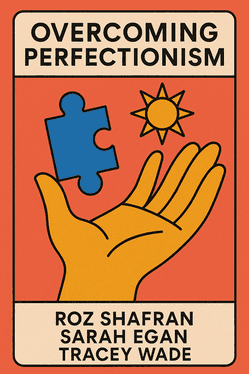
Overcoming Perfectionism by Roz Shafran & Sarah Egan & Tracey Wade Summary

Overview of Overcoming Perfectionism
Break perfectionism's grip with this clinically-proven guide recommended by therapists worldwide. Using CBT techniques, Shafran reveals why the pursuit of flawlessness leads to anxiety and depression. What if your greatest strength is actually sabotaging your happiness?
- Perfectionism becomes harmful when self-worth depends entirely on relentless achievement.
- Unrealistic standards often persist despite causing anxiety, burnout, and damaged relationships.
- Clinical perfectionism uses cognitive traps like all-or-nothing thinking and catastrophic failure predictions.
- Healthy striving focuses on growth; perfectionism fixates on unattainable flawlessness.
- Self-compassion breaks the cycle of self-criticism after perceived failures or mistakes.
- Cognitive behavioral therapy (CBT) helps reframe irrational beliefs about productivity and worth.
- Perfectionists often mislabel "good enough" outcomes as failures, escalating unnecessary stress.
- Progress-focused goals outperform perfectionist ideals by prioritizing sustainable effort over results.
- Relapse prevention strategies include identifying early warning signs and practicing flexible standards.
- Perfectionism masquerades as virtue but frequently undermines creativity, joy, and authentic success.
- Chronic overwork and sleep deprivation often signal perfectionism’s hidden emotional costs.
- Basing identity on achievements risks collapse when external validation inevitably fluctuates.
About the Author of Overcoming Perfectionism
Roz Shafran, Sarah Egan, and Tracey Wade are clinical psychologists and leading researchers specializing in cognitive-behavioral therapies. They are the coauthors of the self-help book Overcoming Perfectionism.
As professors at University College London (Roz Shafran), Curtin University (Sarah Egan), and Flinders University (Tracey Wade), their work bridges academic research and practical clinical applications, particularly in anxiety disorders, eating behaviors, and perfectionism.
Shafran, a Professor of Translational Psychology at UCL’s Great Ormond Street Institute of Child Health, has pioneered interventions for perfectionism used in youth mental health programs globally. Egan and Wade bring decades of clinical expertise, with Egan’s Cognitive-Behavioral Therapy for Perfectionism and Wade’s The Healthy Appearance Handbook further solidifying their authority in evidence-based mental health strategies.
The coauthors frequently contribute to major academic platforms, including the ACAMH podcast and the 2023 BDDF Conference keynote on perfectionism and body dysmorphic disorder. Their collaborative work has been translated into 12 languages and is widely recommended by therapists for its actionable, CBT-driven frameworks to address self-critical thinking patterns.
FAQs About Overcoming Perfectionism
What is Overcoming Perfectionism by Roz Shafran about?
Overcoming Perfectionism by Roz Shafran is a CBT-based self-help guide that addresses clinical perfectionism—a harmful cycle of setting unrealistic goals, self-criticism, and anxiety. It provides practical strategies to break this pattern, such as reevaluating standards, embracing imperfection, and preventing relapse. The book uses real-life examples (e.g., procrastination due to fear of failure) to illustrate coping mechanisms.
Who should read Overcoming Perfectionism?
This book is ideal for individuals struggling with perfectionist tendencies that lead to anxiety, depression, or burnout. It’s particularly relevant for those in high-pressure careers, students, or anyone prone to procrastination or self-criticism. Therapists and CBT practitioners may also find it a useful resource for clients.
Is Overcoming Perfectionism by Roz Shafran worth reading?
Yes, reviewers praise its evidence-based approach and actionable exercises, though some note occasional repetitiveness. It’s recommended for gaining self-awareness and learning CBT techniques to manage perfectionism. However, it’s not a standalone solution and works best when paired with professional support.
What are the main concepts in Overcoming Perfectionism?
Key concepts include:
- Clinical perfectionism: Rigid standards harming mental health.
- Cognitive restructuring: Challenging “all-or-nothing” thinking.
- Behavioral experiments: Testing the impact of imperfect actions.
- Relapse prevention: Maintaining progress through setbacks.
How does Overcoming Perfectionism use CBT techniques?
The book employs CBT tools like thought records to identify perfectionist beliefs, behavioral activation to reduce avoidance, and graded exposure to tackle fear of failure. For example, readers practice sending emails without excessive edits to challenge perfectionist habits.
What criticisms exist about Overcoming Perfectionism?
Critics mention repetitive sections, overly theoretical exercises, and a dry tone. Some find the case studies overly simplistic, while others wish for more diverse applications (e.g., workplace vs. personal life). Despite this, most agree it’s a solid introduction to perfectionism management.
How does Overcoming Perfectionism differ from similar books?
Unlike generic self-help guides, Shafran’s book focuses specifically on clinical perfectionism with academic rigor. It’s more structured than memoirs like The Gifts of Imperfection but less narrative-driven than Better Than Perfect. Its CBT framework distinguishes it from mindfulness-based approaches.
Can Overcoming Perfectionism help with workplace burnout?
Yes, the book addresses perfectionism’s role in burnout, offering strategies to set realistic deadlines, delegate tasks, and prioritize self-care. A case study illustrates an employee overcoming fear of criticism by gradually sharing unfinished work with colleagues.
What quotes are notable in Overcoming Perfectionism?
Key quotes include:
- “Striving for excellence motivates; perfectionism paralyses.”
- “Self-worth isn’t measured by unchecked boxes.” These emphasize shifting from achievement-based validation to self-compassion.
How does Roz Shafran’s expertise inform Overcoming Perfectionism?
Shafran draws on 30+ years of CBT research, including work at Oxford and UCL. Her clinical experience with OCD and eating disorders grounds the book in evidence-based practices, ensuring credibility on anxiety-driven perfectionism.
Are there exercises in Overcoming Perfectionism?
Yes, exercises include:
- Cost-benefit analysis of perfectionism.
- “Good enough” experiments (e.g., submitting a draft without proofreading).
- Progress tracking to celebrate incremental improvements.
How does Overcoming Perfectionism address relapse prevention?
The book provides tools to identify early warning signs (e.g., resuming overchecking work) and develop contingency plans. Readers learn to reframe setbacks as learning opportunities rather than failures.
What other books complement Overcoming Perfectionism?
Pair with Atomic Habits for habit-building strategies, The CBT Workbook for Perfectionism for supplementary exercises, or Daring Greatly for shame resilience. Shafran’s How to Cope When Your Child Can’t extends these principles to parenting.
Feel the book through the author's voice
Turn knowledge into engaging, example-rich insights
Capture key ideas in a flash for fast learning
Enjoy the book in a fun and engaging way
Key Themes in Overcoming Perfectionism
Quotes from Overcoming Perfectionism
Perfectionism isn't simply having high standards-it's the relentless pursuit of those standards despite negative consequences.
This creates a prison of rigid rules and "shoulds" that govern every aspect of your life.
Perfectionism frequently accompanies anxiety disorders, creating a reinforcing cycle where each condition worsens the other.
Avoidance behaviors stem from fear of failure and negative predictions about performance.
Perfectionists often delay starting tasks because they're preoccupied with doing them perfectly.
Characters in Overcoming Perfectionism
Quick Summary Mode - Read or listen to Overcoming Perfectionism Summary in 9 Minutes

Break down key ideas from Overcoming Perfectionism into bite-sized takeaways to understand how innovative teams create, collaborate, and grow.

Flash Card Mode - Top 7 Insights from Overcoming Perfectionism in a Nutshell

Distill Overcoming Perfectionism into rapid-fire memory cues that highlight key principles of candor, teamwork, and creative resilience.

Fun Mode - Overcoming Perfectionism Lessons Told Through 25-Min Stories

Experience Overcoming Perfectionism through vivid storytelling that turns innovation lessons into moments you'll remember and apply.
Personalize Mode - Read or listen to Overcoming Perfectionism Summary in 0 Minutes

Ask anything, pick the voice, and co-create insights that truly resonate with you.

From Columbia University alumni built in San Francisco
"Instead of endless scrolling, I just hit play on BeFreed. It saves me so much time."


"I never knew where to start with nonfiction—BeFreed’s book lists turned into podcasts gave me a clear path."


"Perfect balance between learning and entertainment. Finished ‘Thinking, Fast and Slow’ on my commute this week."
"Crazy how much I learned while walking the dog. BeFreed = small habits → big gains."
"Reading used to feel like a chore. Now it’s just part of my lifestyle."

"Feels effortless compared to reading. I’ve finished 6 books this month already."
"BeFreed turned my guilty doomscrolling into something that feels productive and inspiring."

"BeFreed turned my commute into learning time. 20-min podcasts are perfect for finishing books I never had time for."
"BeFreed replaced my podcast queue. Imagine Spotify for books — that’s it. 🙌"

"It is great for me to learn something from the book without reading it."
"The themed book list podcasts help me connect ideas across authors—like a guided audio journey."
"Makes me feel smarter every time before going to work"
From Columbia University alumni built in San Francisco
"Instead of endless scrolling, I just hit play on BeFreed. It saves me so much time."
"I never knew where to start with nonfiction—BeFreed’s book lists turned into podcasts gave me a clear path."
"Perfect balance between learning and entertainment. Finished ‘Thinking, Fast and Slow’ on my commute this week."
"Crazy how much I learned while walking the dog. BeFreed = small habits → big gains."
"Reading used to feel like a chore. Now it’s just part of my lifestyle."
"Feels effortless compared to reading. I’ve finished 6 books this month already."
"BeFreed turned my guilty doomscrolling into something that feels productive and inspiring."
"BeFreed turned my commute into learning time. 20-min podcasts are perfect for finishing books I never had time for."
"BeFreed replaced my podcast queue. Imagine Spotify for books — that’s it. 🙌"
"It is great for me to learn something from the book without reading it."
"The themed book list podcasts help me connect ideas across authors—like a guided audio journey."
"Makes me feel smarter every time before going to work"
"Instead of endless scrolling, I just hit play on BeFreed. It saves me so much time."
"I never knew where to start with nonfiction—BeFreed’s book lists turned into podcasts gave me a clear path."
"Perfect balance between learning and entertainment. Finished ‘Thinking, Fast and Slow’ on my commute this week."
"Crazy how much I learned while walking the dog. BeFreed = small habits → big gains."
"Reading used to feel like a chore. Now it’s just part of my lifestyle."
"Feels effortless compared to reading. I’ve finished 6 books this month already."
"BeFreed turned my guilty doomscrolling into something that feels productive and inspiring."
"BeFreed turned my commute into learning time. 20-min podcasts are perfect for finishing books I never had time for."
"BeFreed replaced my podcast queue. Imagine Spotify for books — that’s it. 🙌"
"It is great for me to learn something from the book without reading it."
"The themed book list podcasts help me connect ideas across authors—like a guided audio journey."
"Makes me feel smarter every time before going to work"
"Instead of endless scrolling, I just hit play on BeFreed. It saves me so much time."
"I never knew where to start with nonfiction—BeFreed’s book lists turned into podcasts gave me a clear path."
"Perfect balance between learning and entertainment. Finished ‘Thinking, Fast and Slow’ on my commute this week."
"Crazy how much I learned while walking the dog. BeFreed = small habits → big gains."
"Reading used to feel like a chore. Now it’s just part of my lifestyle."
"Feels effortless compared to reading. I’ve finished 6 books this month already."
"BeFreed turned my guilty doomscrolling into something that feels productive and inspiring."
"BeFreed turned my commute into learning time. 20-min podcasts are perfect for finishing books I never had time for."
"BeFreed replaced my podcast queue. Imagine Spotify for books — that’s it. 🙌"
"It is great for me to learn something from the book without reading it."
"The themed book list podcasts help me connect ideas across authors—like a guided audio journey."
"Makes me feel smarter every time before going to work"

Get the Overcoming Perfectionism summary as a free PDF or EPUB. Print it or read offline anytime.