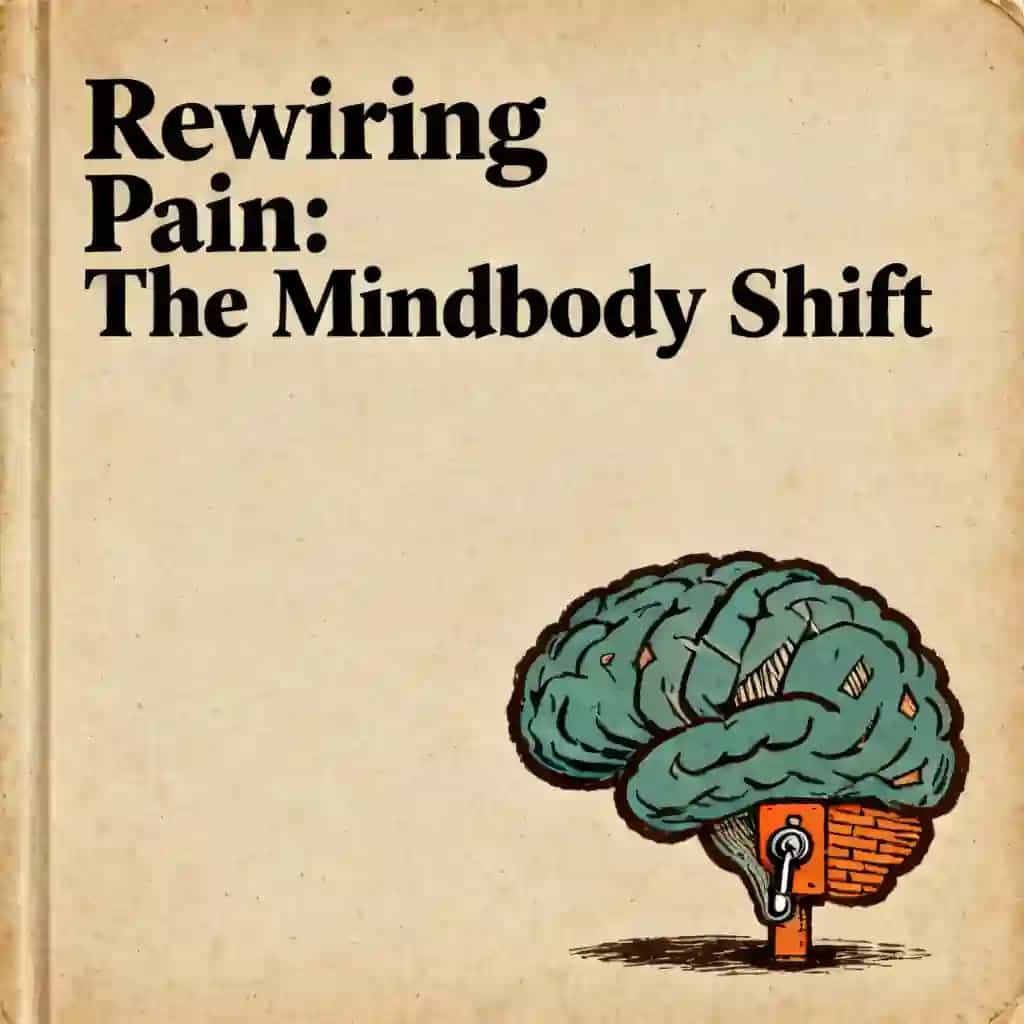
Mindbody Prescription: Healing the Body, Healing the Pain by John Sarno Summary

Overview of Mindbody Prescription
Dr. Sarno's revolutionary guide reveals how repressed emotions cause physical pain. Howard Stern and Larry David swear by it, with David calling it "the closest thing to a religious experience." Could your chronic pain actually be your mind speaking? Discover the healing power beyond traditional medicine.
- Tension Myositis Syndrome (TMS) redirects emotional stress into physical pain
- Back pain often signals repressed rage, not spinal defects
- Perfectionists face higher TMS risk due to suppressed emotions
- Conventional pain treatments fail by ignoring emotional root causes
- Writing exercises expose hidden stressors fueling chronic symptoms
- Pain disappears when brains stop using it as distraction
- Harvard trials validate Sarno’s psychology-first approach for 75% recovery
- Migraines and digestive issues may stem from mindbody disorders
- Diagnose TMS only after ruling out life-threatening conditions
- “Healing back pain” requires accepting emotions, not fixing posture
- Childhood trauma manifests decades later as unexplained pain
- Visualization breaks pain cycles by addressing stress physiology
About the Author of Mindbody Prescription
Dr. John E. Sarno (1923–2017), author of The Mindbody Prescription: Healing the Body, Healing the Pain, was a groundbreaking physician and bestselling authority on psychosomatic medicine.
A professor of rehabilitation medicine at NYU School of Medicine and attending physician at NYU’s Rusk Institute for over four decades, Sarno specialized in treating chronic pain through his pioneering concept of Tension Myositis Syndrome (TMS). His work bridges self-help and medical science, arguing that repressed emotions manifest as physical symptoms—a theme explored in his influential books like Healing Back Pain and The Divided Mind.
Sarno’s revolutionary approach, which eschewed medications and surgery in favor of psychological awareness, gained mainstream attention through media features and patient testimonials. His books have sold millions of copies worldwide, with Healing Back Pain remaining a foundational text for practitioners of mind-body medicine. The Mindbody Prescription expands his theories to address diverse conditions like fibromyalgia and migraines, cementing his legacy as a visionary who challenged conventional pain treatment paradigms.
FAQs About Mindbody Prescription
What is The Mindbody Prescription by John Sarno about?
The Mindbody Prescription argues that chronic pain (back pain, headaches, etc.) often stems from repressed emotions like anger or anxiety, not physical damage. Dr. John Sarno terms this Tension Myositis Syndrome (TMS), proposing the brain redirects emotional stress into physical pain. Healing involves recognizing this mind-body link and addressing underlying psychological tensions.
Who should read The Mindbody Prescription?
This book is ideal for chronic pain sufferers unresponsive to traditional treatments, individuals interested in psychosomatic health, or those exploring alternative pain management. It’s also valuable for mental health professionals seeking to understand somatic symptom connections.
Is The Mindbody Prescription worth reading?
Yes, particularly if conventional pain treatments have failed. Patients like Howard Stern and John Stossel credit Sarno’s methods with eliminating long-term pain. Reviews highlight dramatic recovery stories, though critics note a lack of peer-reviewed studies supporting TMS.
What is Tension Myositis Syndrome (TMS)?
TMS is Sarno’s diagnosis for pain caused by repressed emotions triggering reduced blood flow to muscles or nerves. The brain creates physical symptoms to distract from unresolved psychological stressors, often rooted in childhood traumas or perfectionism.
How does The Mindbody Prescription suggest treating chronic pain?
Sarno’s protocol involves:
- Education: Accepting TMS as the pain source.
- Journaling: Identifying repressed emotions like anger or anxiety.
- Resuming activity: Reassuring patients movement won’t cause harm.
This method emphasizes psychological awareness over physical interventions.
What are common criticisms of Sarno’s theories?
Mainstream medicine often dismisses TMS due to limited empirical evidence. Critics argue Sarno’s approach oversimplifies complex pain conditions and risks dismissing legitimate physical causes. However, proponents counter that his success rates in anecdotal cases warrant further research.
How does The Mindbody Prescription differ from traditional pain management?
Traditional methods focus on medications, surgery, or physical therapy. Sarno’s approach rejects structural explanations (e.g., herniated discs) as primary causes, instead prioritizing emotional resolution. This paradigm shift challenges patients to confront psychological factors rather than seeking external fixes.
What role does repressed anger play in TMS?
Sarno identifies repressed anger as a key TMS trigger, often stemming from unconscious childhood experiences or adult stressors. By diverting attention to physical pain, the brain avoids confronting anger, which patients might perceive as socially unacceptable.
Can The Mindbody Prescription help with conditions beyond back pain?
Yes. Sarno’s principles apply to fibromyalgia, migraines, gastrointestinal issues, and tendonitis. The book cites cases where patients resolved diverse symptoms by addressing emotional conflicts rather than physical abnormalities.
How does Sarno’s work compare to other mind-body approaches?
Unlike generic stress-reduction techniques, Sarno’s method specifically links pain to repressed emotions and provides a structured diagnostic framework. It aligns with psychodynamic therapy but contrasts with mindfulness practices that avoid deep emotional excavation.
What quotes from The Mindbody Prescription highlight its core ideas?
- “The mind and body are intimately connected; repressed emotions can manifest as physical pain.”
- “TMS is a harmless alteration of bodily function meant to distract you from what’s really bothering you.”
These lines encapsulate Sarno’s thesis of emotion-driven pain.
Why is The Mindbody Prescription controversial in medicine?
Sarno’s rejection of structural diagnoses conflicts with conventional training and pharmaceutical/surgical industries. However, rising interest in psychosomatic research and patient testimonials keep his work relevant despite institutional skepticism.
Feel the book through the author's voice
Turn knowledge into engaging, example-rich insights
Capture key ideas in a flash for fast learning
Enjoy the book in a fun and engaging way
Key Themes in Mindbody Prescription
Quotes from Mindbody Prescription
Pain protects us from emotional distress that feels more threatening than physical pain.
We possess two minds that operate by different rules.
The brain creates physical pain as a distraction.
TMS: Pain without structural cause.
Address psychological factors, it may be more effective than physical interventions.
Characters in Mindbody Prescription
Quick Summary Mode - Read or listen to Mindbody Prescription Summary in 9 Minutes

Break down key ideas from Mindbody Prescription into bite-sized takeaways to understand how innovative teams create, collaborate, and grow.

Flash Card Mode - Top 9 Insights from Mindbody Prescription in a Nutshell

Distill Mindbody Prescription into rapid-fire memory cues that highlight key principles of candor, teamwork, and creative resilience.

Fun Mode - Mindbody Prescription Lessons Told Through 19-Min Stories

Experience Mindbody Prescription through vivid storytelling that turns innovation lessons into moments you'll remember and apply.
Personalize Mode - Read or listen to Mindbody Prescription Summary in 0 Minutes

Ask anything, pick the voice, and co-create insights that truly resonate with you.

From Columbia University alumni built in San Francisco
"Instead of endless scrolling, I just hit play on BeFreed. It saves me so much time."


"I never knew where to start with nonfiction—BeFreed’s book lists turned into podcasts gave me a clear path."


"Perfect balance between learning and entertainment. Finished ‘Thinking, Fast and Slow’ on my commute this week."
"Crazy how much I learned while walking the dog. BeFreed = small habits → big gains."
"Reading used to feel like a chore. Now it’s just part of my lifestyle."

"Feels effortless compared to reading. I’ve finished 6 books this month already."
"BeFreed turned my guilty doomscrolling into something that feels productive and inspiring."

"BeFreed turned my commute into learning time. 20-min podcasts are perfect for finishing books I never had time for."
"BeFreed replaced my podcast queue. Imagine Spotify for books — that’s it. 🙌"

"It is great for me to learn something from the book without reading it."
"The themed book list podcasts help me connect ideas across authors—like a guided audio journey."
"Makes me feel smarter every time before going to work"
From Columbia University alumni built in San Francisco
"Instead of endless scrolling, I just hit play on BeFreed. It saves me so much time."
"I never knew where to start with nonfiction—BeFreed’s book lists turned into podcasts gave me a clear path."
"Perfect balance between learning and entertainment. Finished ‘Thinking, Fast and Slow’ on my commute this week."
"Crazy how much I learned while walking the dog. BeFreed = small habits → big gains."
"Reading used to feel like a chore. Now it’s just part of my lifestyle."
"Feels effortless compared to reading. I’ve finished 6 books this month already."
"BeFreed turned my guilty doomscrolling into something that feels productive and inspiring."
"BeFreed turned my commute into learning time. 20-min podcasts are perfect for finishing books I never had time for."
"BeFreed replaced my podcast queue. Imagine Spotify for books — that’s it. 🙌"
"It is great for me to learn something from the book without reading it."
"The themed book list podcasts help me connect ideas across authors—like a guided audio journey."
"Makes me feel smarter every time before going to work"
"Instead of endless scrolling, I just hit play on BeFreed. It saves me so much time."
"I never knew where to start with nonfiction—BeFreed’s book lists turned into podcasts gave me a clear path."
"Perfect balance between learning and entertainment. Finished ‘Thinking, Fast and Slow’ on my commute this week."
"Crazy how much I learned while walking the dog. BeFreed = small habits → big gains."
"Reading used to feel like a chore. Now it’s just part of my lifestyle."
"Feels effortless compared to reading. I’ve finished 6 books this month already."
"BeFreed turned my guilty doomscrolling into something that feels productive and inspiring."
"BeFreed turned my commute into learning time. 20-min podcasts are perfect for finishing books I never had time for."
"BeFreed replaced my podcast queue. Imagine Spotify for books — that’s it. 🙌"
"It is great for me to learn something from the book without reading it."
"The themed book list podcasts help me connect ideas across authors—like a guided audio journey."
"Makes me feel smarter every time before going to work"
"Instead of endless scrolling, I just hit play on BeFreed. It saves me so much time."
"I never knew where to start with nonfiction—BeFreed’s book lists turned into podcasts gave me a clear path."
"Perfect balance between learning and entertainment. Finished ‘Thinking, Fast and Slow’ on my commute this week."
"Crazy how much I learned while walking the dog. BeFreed = small habits → big gains."
"Reading used to feel like a chore. Now it’s just part of my lifestyle."
"Feels effortless compared to reading. I’ve finished 6 books this month already."
"BeFreed turned my guilty doomscrolling into something that feels productive and inspiring."
"BeFreed turned my commute into learning time. 20-min podcasts are perfect for finishing books I never had time for."
"BeFreed replaced my podcast queue. Imagine Spotify for books — that’s it. 🙌"
"It is great for me to learn something from the book without reading it."
"The themed book list podcasts help me connect ideas across authors—like a guided audio journey."
"Makes me feel smarter every time before going to work"

Get the Mindbody Prescription summary as a free PDF or EPUB. Print it or read offline anytime.