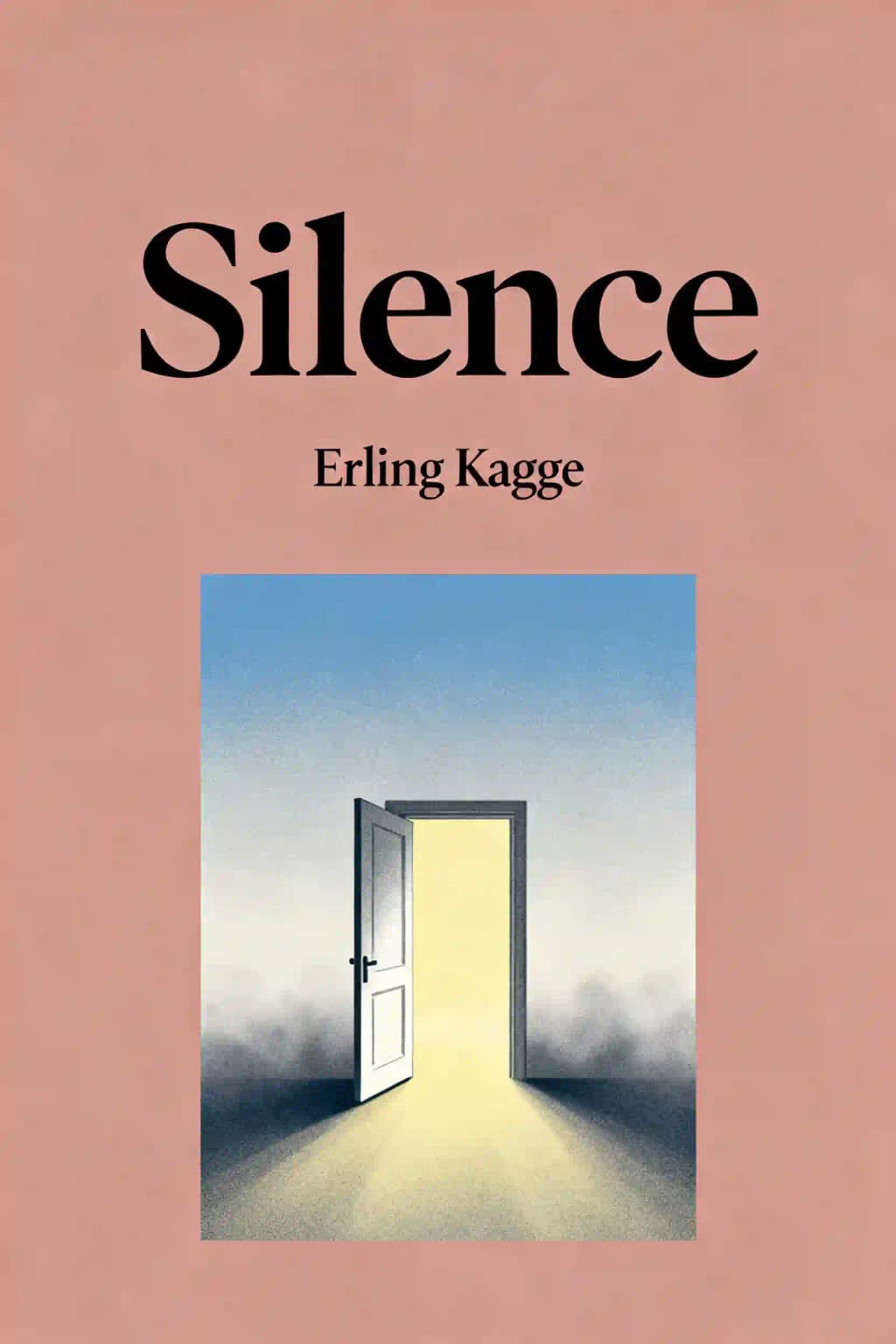
Silence
In the Age of Noise
《Silence》概述
In "Silence," explorer Erling Kagge reveals why inner quiet is our most precious resource in today's chaotic world. Would you rather receive an electric shock than sit alone with your thoughts? Harvard research suggests many would - a disturbing reality this transformative book challenges.

《Silence》核心主题
- internal stillness
- digital detox
- polar exploration
- sensory deprivation
- intentional solitude
《Silence》经典语录
Silence is not the same as stillness.
Wonder is one of life's purest joys and our finest skills.
Silence carries a majesty similar to an ocean.
The most profound silence isn't external but internal.
Silence isn't about emptiness but presence.
《Silence》主要人物
- Erling KaggeAuthor and polar explorer who reached three poles
- Jon FossePoet whose writing inspired the study of silence
- Børge OuslandExplorer who accompanied Kagge to the North Pole
- Marie CurieScientist cited for her pursuit of discovery
关于作者
《Silence》作者介绍
Erling Kagge, the bestselling author of Silence: In the Age of Noise, is a Norwegian explorer, philosopher, and publisher renowned for his reflections on solitude and modern life.
Known globally as the first person to reach the North Pole, South Pole, and Mount Everest on foot, Kagge’s expeditions—including a 50-day solo trek to the South Pole—inform his writing on silence, mindfulness, and the human experience.
His books, such as Walking: One Step at a Time and Philosophy for Polar Explorers, blend adventure narratives with philosophical inquiry, resonating with readers seeking clarity in an overstimulated world. A frequent contributor to The New York Times and Financial Times, Kagge founded Kagge Forlag, Norway’s leading nonfiction publisher, and is an influential art collector.
Silence has been translated into 38 languages, cementing his status as a bridge between extreme exploration and everyday introspection.
下载《Silence》摘要
免费获取《Silence》摘要的 PDF 或 EPUB 版本。可打印或随时离线阅读。
关于本书的常见问题
Silence: In the Age of Noise explores the transformative power of silence in a hyperconnected world. Norwegian explorer Erling Kagge—the first person to reach the “three poles” (North, South, and Everest)—argues that silence isn’t merely the absence of noise but a mindful state fostering introspection, gratitude, and connection to nature. Through personal expeditions and philosophical reflections, he challenges readers to reclaim silence amid modern distractions.
This book is ideal for mindfulness enthusiasts, overstimulated professionals, and nature lovers seeking respite from digital noise. It resonates with readers interested in philosophy, self-discovery, or adventure memoirs. Kagge’s blend of Arctic exploration anecdotes and urban reflections makes it accessible to both adventurers and urban dwellers.
Yes, for its unique fusion of exploration narratives and meditative insights. Kagge’s firsthand accounts—like trekking Antarctica with a broken radio or finding stillness in NYC’s sewage system—offer tangible examples of silence’s transformative potential. While some critique its fragmented structure, its practical wisdom on resisting overstimulation makes it a compelling read.
Key themes include:
- Silence as a mindset, not just quiet environments.
- Nature’s role in fostering introspection and awe.
- Resisting digital overload by creating intentional quiet.
- Paradox of noise: Even extreme environments (like Arctic storms) contain moments of stillness. Kagge emphasizes that silence is “a full emptiness” requiring active cultivation.
Kagge defines silence as a “state of mind” achievable anywhere, even in chaotic settings. He describes it as a “full emptiness” that allows self-discovery and connection to the present. For example, he contrasts the natural noise of cracking Arctic ice with the profound stillness felt after a supply plane departure.
- “Silence is the new luxury”: Highlights its scarcity in modern life.
- “The quieter you become, the more you hear”: Emphasizes introspection’s value.
- Quoting Pascal: “All humanity’s problems stem from man’s inability to sit quietly in a room alone”
Unlike abstract guides, Kagge grounds his advice in extreme adventures—e.g., 50-day solo Antarctic treks—to illustrate silence’s universality. It’s less prescriptive than Atomic Habits but more experiential, blending Stoic philosophy with explorer grit. Ideal for readers seeking memoir-driven insights over step-by-step routines.
Some reviewers note its fragmented structure, shifting abruptly from Arctic tales to urban musings. Others desire clearer actionable steps. However, most praise its evocative prose and unique perspective on silence as a “portable sanctuary.”
Kagge suggests:
- Micro-silences: Pause notifications during meals or walks.
- Embrace mundane moments: Find stillness in chores or commutes.
- Nature immersion: Even urban parks offer respite. His NYC sewage system walk exemplifies finding quiet in unlikely places.
As AI and virtual spaces dominate, Kagge’s lessons on intentional disconnection grow urgent. The book’s emphasis on self-awareness and reducing digital dependency aligns with trends toward digital minimalism. Its timeless themes resonate amid rising burnout and screen fatigue.
His polar expeditions—facing blizzards, isolation, and equipment failures—frame silence as both a survival tool and spiritual resource. These stories differentiate the book from theoretical works, offering visceral examples of silence’s power to clarify purpose and resilience.
Nature acts as both setting and teacher. Kagge argues wilderness—whether Antarctica’s icy expanses or NYC’s hidden corners—provides raw material for introspection. He contrasts natural “noise” (wind, cracking ice) with human-made distractions, urging readers to seek environments that nurture mindful presence.