第 1 章
When Change Knocks: Embracing the Inevitable
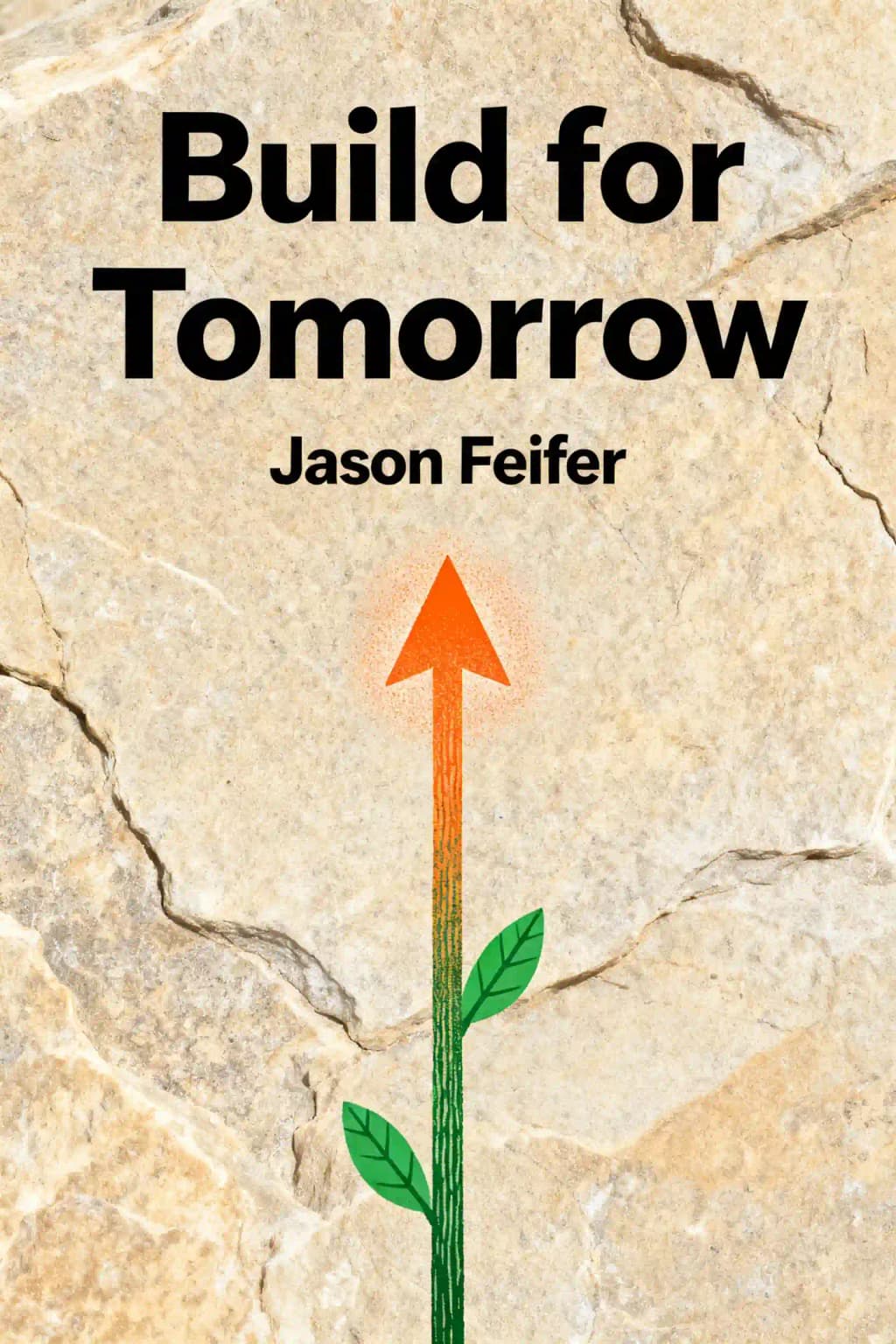
In a world of constant disruption, one skill stands above all others: the ability to navigate change. As editor-in-chief of Entrepreneur magazine, Jason Feifer has observed that successful people-whether small business owners or corporate leaders-share this critical trait. They've mastered the four phases of transformation: Panic (when the unfamiliar terrifies us), Adaptation (when we work with what we have), New Normal (establishing fresh routines), and finally, Wouldn't Go Back (recognizing that change pushed us to positive transformation).
The book has become a favorite among business leaders like Salesforce CEO Marc Benioff and has been featured in Forbes, Fortune, and The Wall Street Journal for its refreshing take on embracing disruption. Its cultural relevance has only grown since publication, as pandemic aftereffects continue reshaping how we work and live. At its core, "Build for Tomorrow" redefines entrepreneurship as "someone who makes things happen for themselves"-a mindset available to everyone, regardless of job title.
第 2 章
The Hidden Opportunity in Crisis
History reveals that our most devastating moments often birth our greatest innovations. When the bubonic plague decimated medieval Europe in 1348, killing 60% of the population, it created an unexpected consequence: our modern economy. With labor suddenly scarce, surviving serfs gained unprecedented bargaining power. Employment contracts emerged for the first time, codifying that labor deserves compensation. Some former serfs moved to cities, establishing the first true merchant class-opening banks, trading spices, and creating textiles. This transformation laid the groundwork for modern capitalism and forever changed the relationship between workers and employers.
Similar patterns emerged during other historical crises. The Great Depression spawned dozens of Fortune 500 companies, including Disney and HP. World War II accelerated technological advancement, giving us computers, jet engines, and radar. The 2008 financial crisis birthed companies like Uber, Airbnb, and Square, which revolutionized their respective industries by identifying needs exposed during economic turmoil.
Crisis shifts "the window on options we are willing to collectively take seriously." When performing arts school owner Leigh Ann Cannady was forced to reduce class sizes during the pandemic, she discovered smaller classes benefited everyone-teachers were less stressed, students received more attention, and the school maintained profitability while spending less on marketing. This revelation led to a permanent restructuring of her business model, proving that forced adaptation can lead to superior solutions.
The lesson is clear: stability makes us comfortable with existing methods, often blinding us to potentially better alternatives. Only disruption forces us to higher ground. The entrepreneurs who thrive during upheaval aren't necessarily smarter or more talented-they're simply better at recognizing that instability creates opportunity. They understand that nothing should be permanent, and even gigantic shifts can become advantageous parts of our journey.
Consider the rise of remote work during the pandemic. What began as a crisis response evolved into a fundamental reimagining of workplace dynamics. Companies discovered increased productivity, reduced overhead costs, and access to global talent pools. Organizations like Twitter, Shopify, and Square made permanent shifts to remote-first policies, demonstrating how crisis-driven changes can become strategic advantages.
Innovation often emerges from necessity rather than convenience. The Japanese concept of "kintsugi" - repairing broken pottery with gold - serves as a metaphor for this principle. The repair doesn't just fix the break; it creates something more valuable than the original. Similarly, crisis doesn't just force change; it creates opportunities for transformation that might otherwise remain undiscovered.
第 3 章
You Come From the Future
When panic strikes, we often feel uniquely afflicted-as though no one has faced our particular disruption before. But the truth is that we're never the first to face industry transformation.
Consider John Philip Sousa, America's most famous musician in the early 1900s and composer of iconic marches like "The Stars and Stripes Forever." When phonographs and radio emerged, Sousa campaigned vigorously against recorded music, warning that if mothers played phonographs instead of singing lullabies, children would become "simply human phonographs-without soul or expression."
Musicians' unions coined the term "live music" specifically as propaganda, positioning recordings as "dead music." They went on strike twice in the 1940s, refusing to record anything. Yet ironically, Sousa himself eventually embraced recordings when he realized they could make him money.
What these musicians feared actually became their greatest asset-recorded music allowed musicians to scale their work globally and make money while sleeping. The technology also created entirely new jobs: studio engineers, promoters, DJs, and equipment manufacturers.
This pattern repeats throughout history: the ice industry fought refrigeration, movie studios opposed VCRs, and people even protested mirrors, pencil erasers, and watches. Yet we are the products of all these once-feared changes. Everything we consider normal and good was once new and threatening to a previous generation.
The lesson is liberating: You come from the future. You are living evidence that change can be good. The future isn't optional-change is coming, and we can either embrace it or fight a losing battle.
第 4 章
Breaking the Cycle of Technological Panic
Our tendency to panic about new technologies follows a predictable pattern that Cambridge psychologist Amy Orben calls the "Sisyphean Cycle of Technology Panics." Like Sisyphus eternally rolling his boulder uphill only to watch it roll back down, society repeatedly panics about new technologies, goes through a painful process that ends unproductively, then starts the cycle again with the next innovation-as if we've learned nothing.
This cycle begins when something new changes behavior patterns, especially among vulnerable populations like children. These behavioral shifts get linked to whatever broader social concerns already exist. In the 1950s, when kids became obsessed with pinball, adults connected this indoor activity to fears about juvenile delinquency. Politicians eagerly join these moral panics because they simplify complex problems-it's easier to blame technology manufacturers than address difficult structural issues like inequality.
Scientists then face pressure to produce quick answers to hot-button issues, as funding follows public interest. While science requires time for proper consensus-building, politicians demand immediate answers. This mismatch leads researchers to accelerate their work and communicate preliminary findings before the scientific process has fully played out.
The cycle typically ends with little accomplished but significant collateral damage before everyone moves on to the next panic. We saw this with "Facebook Depression"-a 2011 phenomenon where the American Academy of Pediatrics warned that teens using social media might develop depression. Years later, more sophisticated research revealed that technology has an insubstantial effect on psychological well-being-"less than half a percent away from feeling emotionally sound." For context, eating potatoes has nearly the same degree of effect, and wearing glasses has a more negative impact on adolescent mental health than social media use.
To escape this cycle, we must develop self-awareness about our negative reactions to new things. Like Tariq Farid, founder of Edible Arrangements, who initially panicked when cannabis "edibles" emerged, we can transform resistance into opportunity by seeking understanding instead of fighting change. Farid eventually launched his own CBD products after investigating the industry.
第 5 章
Extrapolating the Gain
Our tendency to fixate on potential losses while struggling to imagine future gains explains why we initially fear change. We extrapolate losses, imagining cascading negative consequences without evidence. This mindset becomes clear when examining historical examples, like a 1938 newspaper story warning that "Too Much Reading Is Harmful," where adults worried about a book-loving child who preferred reading to socializing-concerns that sound remarkably similar to modern anxieties about technology.
This "loss aversion" causes us to weigh losses more heavily than gains, leading to irrational decisions. In one experiment, people given fully loaded pizzas to modify kept more ingredients than those who started with plain pizzas and added toppings. Our brains literally process potential losses more strongly than gains.
The umbrella's introduction to 18th-century England perfectly illustrates this phenomenon. Despite being a practical solution to England's constant rain, umbrellas were initially met with mockery and hostility. The English associated their rainy climate with making them "sturdy, robust, independent" people. They viewed umbrellas not as helpful tools but as threats to their identity and character. Only when London developed a street culture in the early 1800s did attitudes shift-the umbrella became valuable for maintaining social activities during rain, transforming from an object of loss to a driver of gain.
To become more adaptable, we must "extrapolate the gain" by asking: What are we doing differently because of this new thing? What new skill are we learning? How could that be put to good use? The author shares how moving from New York to Colorado during the pandemic taught him to incorporate midday breaks, developing better work habits and self-care.
When we zoom out from personal experiences, we can see how society collectively benefits from initially feared innovations. The 19th-century novel, once criticized as addictive, became "an important tool of sympathy or empathy" that helped readers develop understanding of others unlike themselves. Similarly, video games-despite concerns about violence-help children develop three-dimensional thinking and problem-solving skills.
第 6 章
Using Yesterday for What It Was, Not What It Wasn't
Even the most successful people worry they can't repeat their achievements. DJ MICK, who works for celebrities and major companies, confessed his anxiety about transitioning to new entrepreneurial ventures. He feared his success might have been based on luck. These worries are "toxic garbage"-we're taught to take responsibility for failures but often fail to own our successes.
We have a strange relationship with our past, idealizing it over time. Children who return from summer camp initially report mixed experiences, but months later remember mostly the good parts-this is nostalgia, which serves to make us feel better in the present. Our brains are programmed with "fading affect bias," retaining positive emotions longer than negative ones.
While this can strengthen bonds and provide purpose, it becomes problematic when we begin preferring an idealized past over our present or future. This thinking leads to the myth of "the good ol' days" that demagogues exploit and cultures perpetuate, making us less open to future opportunities and more likely to attribute our successes to circumstances rather than skills.
When TV personality Stacy London faced dwindling opportunities at fifty, she confronted a career transition. After unsuccessfully pitching a show about menopause, she was offered the chance to become CEO of State of Menopause. London hesitated, questioning whether she was "smart enough" and struggling to let go of her identity as a public figure.
To make this transition, she asked herself, "What is my kernel of truth?"-what existing skills could she bring to this new role? She realized her personal experience with menopause gave her customer insight, and her reputation as a "truth talker" would serve her well as a CEO addressing taboo topics.
This approach reveals three essential questions we must ask to escape nostalgia's grip: What did I overcome? What skills do I still possess? And ultimately, what can I bring forward into new opportunities?
第 7 章
What You Do, and Why You Do It
Change feels difficult because it threatens our identity. When change happens, we worry about who we'll become. The key insight: we are not what we do, but why we do it. Our core skills, passions, and beliefs remain even as circumstances change.
Entrepreneurs understand this distinction, identifying an unchangeable mission (their why) while remaining flexible about how they accomplish it (their what). This mindset allows them to adapt without losing their sense of self.
The author shares his personal struggle with identity, having defined himself first as a Miami Heat fan, then as a newspaper reporter, and later as a magazine editor. When each identity was threatened, he panicked. From entrepreneurs, he learned a better approach: defining yourself by your mission rather than your specific role.
Foodstirs exemplifies this-when the pandemic forced them to abandon plans for new products, they weren't devastated because their core mission of "bringing joy through sweet baked goods" remained intact. The what (baking mixes) might change, but the why (bringing joy) is unchangeable.
Understanding your core purpose is liberating. The author's core is "I tell stories in my own voice," while Dwayne Johnson realized he wanted to be "a ten-lane highway approaching the world" rather than just a wrestler or actor. His business partner Dany Garcia describes her mission as "advancing the human experience."
Chip Gaines struggled with his identity transition from physical builder to brand builder, eventually finding peace in being "a builder of people and personal networks." Jimmy Fallon initially followed "just the path" of SNL stars into movies, which led to failure. Only when he discovered his core purpose-"Can it make people happy?"-did he find true direction.
Finding your why provides an anchor that remains constant through all change. It helps you see that your value isn't tied to specific tasks but to the underlying purpose that drives everything you do.
第 8 章
Change Before You Must
People often misunderstand Blockbuster's downfall as simple shortsightedness, but the reality is more complex. CEO John Antioco wasn't blind to the future-he'd eliminated late fees and invested in a Netflix-like subscription service. But shareholders like Carl Icahn focused on immediate profits rather than long-term strategy. The real lesson isn't about stupidity but about timing: sometimes saving a business requires making painful changes at the peak of success, not waiting until decline begins.
You can either wait for change to impact you or proactively change on your terms. Waiting means scrambling with your "hair on fire" when change finally arrives, though you can claim it wasn't your fault. Making changes first feels insane-you'll appear to be hurting something that works based on instinct or prediction. People will be angry because they can't see what you see. But while waiting likely ends in failure, proactive change gives you control while there's still time.
Sam Calagione of Dogfish Head Craft Brewery made a counterintuitive decision when his 60 Minute IPA became wildly successful. By 2006, this beer was on track to become 70-80% of all Dogfish sales. Rather than capitalize on this success, Calagione capped sales at 50% of total revenue. People were furious-customers screamed, liquor store owners cried, and even Amtrak was denied. But Calagione held firm, offering other Dogfish beers instead.
His foresight paid off: when beer trends shifted away from IPAs, Dogfish Head wasn't pigeonholed as just an IPA brand but recognized as an innovative brewery. This strategic decision ultimately led to Dogfish Head selling for approximately $300 million to Boston Beer Company in 2019-a deal that would never have happened had he allowed his company to become dependent on a single product.
Andy Monfried, founder of Lotame, built a $30 million business pioneering targeted digital advertising. But when clients began telling him they were building similar systems in-house, he recognized the warning signs despite continued profitability. In just ten days, Monfried made the radical decision to shut down his profitable business, lay off half his staff, and completely pivot. He rebuilt Lotame as a company that helps publishers understand their own audience data-eventually regaining and exceeding his previous revenue.
The critical moment wasn't when pain arrived but at the first moment of awareness that change was inevitable.
第 9 章
Asking the Essential Question: What Is This For?
Our misunderstanding of new technologies often stems from viewing them through outdated lenses. This simple four-word question-"What is this for?"-has extraordinary power when navigating change. It forces us to challenge our assumptions and recognize that purposes evolve over time.
Consider Kutol Products in the 1930s, whose wallpaper cleaning clay became obsolete when homes switched from coal heating to cleaner alternatives. Rather than fighting the change, they asked "What is this for?" and transformed their product into Play-Doh. Meanwhile, Kodak ignored their own digital camera invention for eighteen years, clinging to outdated purposes while competitors embraced change.
This question can guide us through crises too. When the pandemic hit, Lena Fleminger transformed her wig shop from an open storefront to an appointment-only model with virtual consultations. Though initially terrified, she discovered this change actually boosted profits by 22% by focusing on serious customers and leveraging her website. The pandemic forced her to reconsider what her storefront was for-not just a retail space, but "a space to solve someone's very intimate problem."
The question applies not just to big structural things but to everyday aspects of life. Small talk, often dismissed as meaningless, is actually a filter developed through cultural evolution to establish mutual safety and find commonalities that might lead to meaningful connections. It's not the conversation itself but a window to better conversation.
Introductions aren't just for explaining who you are but for communicating your value to others. Time management becomes clearer when you ask what each hour is for. Entrepreneur Sonny Caberwal tracked all 168 hours of his week, restructured his workweek (front-loading with 18-hour Mondays and tapering to 4-hour Fridays), and combined activities to maximize meaning.
By repeatedly asking "What is this for?" about our skills, relationships, and services, we can identify shifting purposes and uncover new opportunities without necessarily making radical changes.
第 10 章
Reconsider the Impossible
The bubonic plague of the 1300s didn't just transform labor-it revolutionized human thinking. Before the plague, people viewed the world as ordered and knowable, where virtue was rewarded and sin punished. The plague shattered this worldview by killing indiscriminately, forcing people to accept that life contains both beauty and chaos.
This shift from certainty to exploration is crucial for finding our Wouldn't Go Back moments. True opportunity exists in the unknown, in reconsidering what we once dismissed as impossible, illogical, or ridiculous. People who thrive after change often discover they're doing exactly what they once thought impossible.
Like dogs trained with electronic collars, humans create invisible boundaries for themselves through limiting beliefs about what's possible. Aziz Hashim exemplifies breaking these boundaries with his Franklin Junction concept-a radical idea allowing restaurants to sell other brands' food from their kitchens. Rather than opening new physical locations, brands like The Captain's Boil could sell through existing Ruby Tuesday kitchens.
Initially planned for his own brands, when COVID-19 hit, the desperate restaurant industry embraced this previously "impossible" idea, with brands like Nathan's Famous eagerly participating. These self-imposed limits aren't just professional-they're personal too, keeping us in unfulfilling relationships, preventing us from trying new activities, or even making new friends.
The danger of operating within our knowledge bubbles is illustrated by the Swedish military's 1980s Cold War blunder. For fifteen years, they secretly investigated what they believed was an advanced Russian submarine technology, only to discover-after finally consulting outside scientists-that it was merely schools of herring fish making digestive sounds.
When we claim to know what people want, what's possible, or where our limits lie, we're often trapped by our own assumptions. Even institutions we consider foundational, like the five-day workweek (which only became law in 1938), deserve questioning. Companies experimenting with four-day workweeks have discovered remarkable productivity gains-Microsoft Japan saw a 40% boost and Perpetual Guardian found 20% higher productivity with 45% better work-life balance.
The wiser approach is to embrace a more humble narrative: "I think I know what people want, but I'll keep pushing boundaries. I don't know what's impossible, so I'll keep exploring what I'm capable of. Nobody truly knows where the limits are."
第 11 章
Building Your Tomorrow
You now have the tools to quiet Panic, speed Adaptation, build your New Normal, and embrace your Wouldn't Go Back moment. But feeling prepared for the unknown remains challenging, even with these frameworks in place. The wisest advice I ever received came during a pivotal career decision when I was torn between a dream job in New York and my comfortable life in Boston: "It never stops." This simple yet profound insight reveals that life isn't about reaching endpoints but embracing endlessness-a constant state of experimentation and evolution where all ideas are welcome because there's time for them all to unfold.
Not all change is inherently good, nor is every new thing better than what came before. Some changes might feel like setbacks initially - a job loss, a relationship ending, or a forced relocation. But change itself is inevitable and neutral; it's our response to it that shapes its impact. Instead of defining ourselves through rigid identities or fixed positions, we must recognize that everything we do is simply the next step in a continuum of experiences. Your current cycle of change can become the "Conscious Cycle"-one where you actively track and document how change transforms you and how you can influence its direction.
This conscious approach involves several key practices: regular reflection on your progress, documentation of lessons learned, and intentional experimentation with new approaches. When facing change, ask yourself: What am I learning? How am I growing? What possibilities are opening up that weren't there before? These questions help transform reactive responses into proactive choices.
When you reach your Wouldn't Go Back moment in this cycle, you'll have tangible proof that the process works, creating a powerful reference point that allows you to bypass panic in future cycles. Each successful navigation through change builds confidence and resilience for the next challenge. Think of it as building a change muscle - the more you exercise it, the stronger it becomes.
Our greatest fortune isn't to hit pause on life or to achieve some static perfect state, but to have as many tomorrows as possible-and to build them with intention, awareness, and the deep understanding that we are always becoming. This continuous evolution isn't just about surviving change; it's about thriving through it, using each cycle as an opportunity for growth and discovery. The journey never truly ends - and that's exactly what makes it beautiful and worth embracing.