Happiness Trap: Stop Struggling, Start Living by Russ Harris Summary

Overview of Happiness Trap
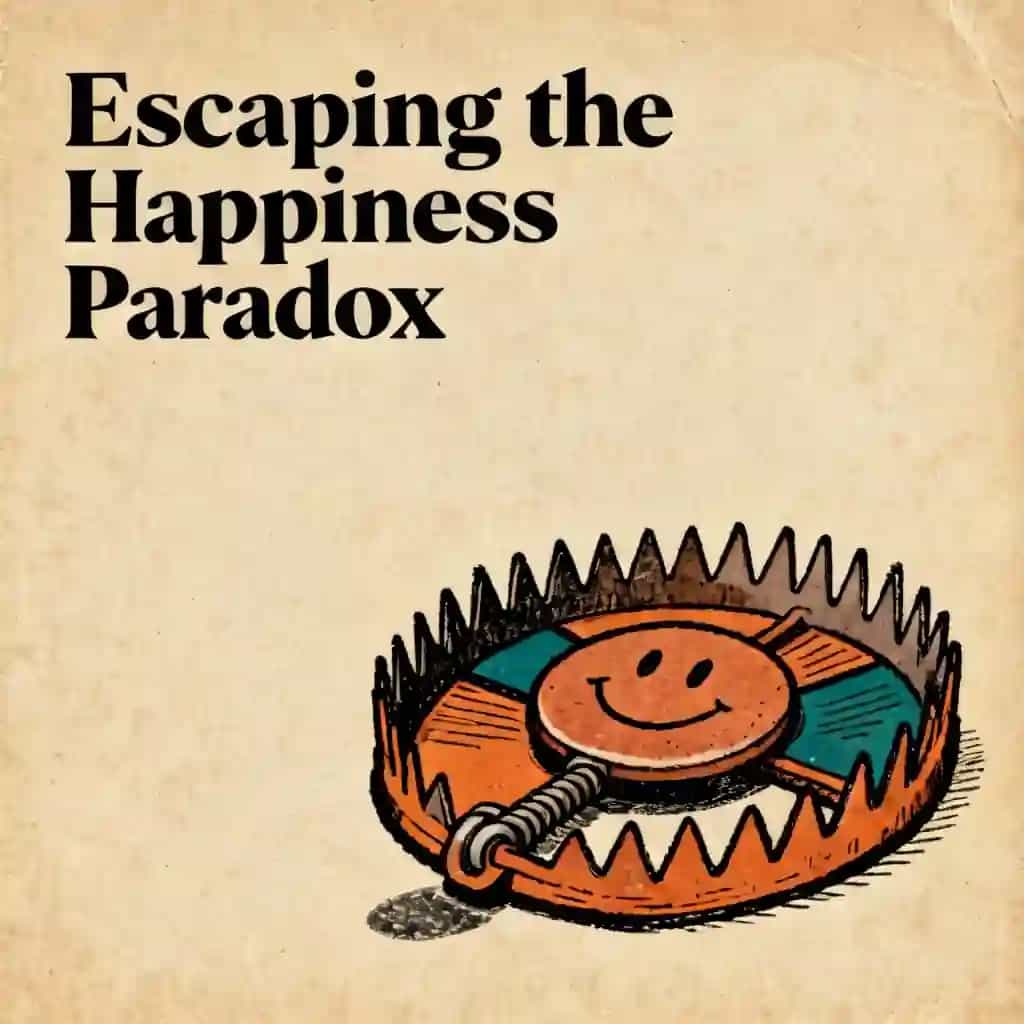
Escape the paradox where chasing happiness makes you miserable. With over 1 million copies sold, this revolutionary guide to Acceptance and Commitment Therapy asks: What if everything you know about happiness is wrong? Discover why mental health professionals worldwide recommend this life-changing approach.
- Pursue values over happiness to escape chronic dissatisfaction cycles
- Accept negative emotions as natural instead of fighting them
- Practice psychological flexibility through mindfulness and defusion techniques
- Break thought fusion by observing mental patterns without judgment
- Build meaning through committed action aligned with personal values
- Recognize happiness traps in cultural myths about constant positivity
- Develop the observing self to detach from unhelpful narratives
- Use expansion techniques to create space for discomfort
- Replace emotional control strategies with value-based decision making
- Implement ACT principles to transform suffering into purposeful living
- Counteract avoidance behaviors through gradual exposure to fears
- Redefine success as living authentically rather than feeling happy
About the Author of Happiness Trap
Dr. Russ Harris, bestselling author of The Happiness Trap and a leading expert in Acceptance and Commitment Therapy (ACT), combines his medical background as a physician with psychotherapy to address modern mental health challenges. A British-born Australian psychotherapist, Harris transitioned from general practice to pioneering ACT, a mindfulness-based approach helping individuals build psychological flexibility.
His work focuses on themes of emotional resilience, values-driven living, and breaking free from unhelpful thought patterns—concepts central to The Happiness Trap, a self-help classic translated into 30+ languages.
Harris has trained over 80,000 professionals through his workshops and authored nine books, including ACT Made Simple for clinicians and The Confidence Gap for personal growth. His protocol for the World Health Organization, used in refugee camps, significantly reduced PTSD and depression in clinical trials.
Regularly featured on mental health podcasts like The OCD Stories, Harris blends scientific rigor with accessible strategies. The Happiness Trap has sold over one million copies worldwide, cementing its status as a global resource for overcoming stress and cultivating fulfillment.
FAQs About Happiness Trap
What is The Happiness Trap by Russ Harris about?
The Happiness Trap challenges the myth that humans are wired for constant happiness, arguing that societal pressures to pursue joy often exacerbate suffering. Russ Harris introduces Acceptance and Commitment Therapy (ACT)—an evidence-based approach focusing on mindfulness, values-aligned action, and psychological flexibility to navigate life’s inevitable challenges.
Who should read The Happiness Trap?
This book is ideal for individuals struggling with stress, anxiety, or self-criticism, as well as therapists seeking practical tools. Harris’s accessible style makes ACT principles applicable to anyone aiming to build resilience, embrace discomfort, and create a meaningful life beyond fleeting happiness.
Is The Happiness Trap worth reading?
Yes—with over 1 million copies sold and translations in 30+ languages, The Happiness Trap is a seminal work in modern psychology. Its ACT framework, validated by WHO studies in refugee camps, offers actionable strategies to reduce emotional struggle and improve mental health.
What are the main concepts in The Happiness Trap?
Key ideas include:
- The happiness trap paradox: Fighting negative emotions intensifies suffering.
- ACT’s six core principles: Acceptance, cognitive defusion, mindfulness, self-as-context, values clarification, and committed action.
- Values-driven living: Prioritizing meaningful actions over transient feelings of happiness.
How does Russ Harris define the “happiness trap”?
Harris defines it as the counterproductive cycle where efforts to avoid pain or chase happiness lead to greater distress. This stems from outdated brain mechanisms prioritizing survival over contentment, exacerbated by societal myths equating happiness with success.
What myths about happiness does The Happiness Trap debunk?
The book challenges four misconceptions:
- Happiness is humanity’s natural state.
- Negative emotions are “bad” and must be eliminated.
- Self-criticism motivates improvement.
- External achievements guarantee lasting fulfillment.
Who is Russ Harris, the author of The Happiness Trap?
Dr. Russ Harris is a physician-turned-psychotherapist specializing in ACT. Trained in medicine at the University of Newcastle-Upon-Tyne, he shifted focus to mental health in the 1990s. His WHO-endorsed stress-management protocol has helped refugees globally, cementing his authority in evidence-based therapies.
What is a key quote from The Happiness Trap?
“Success in life means living according to your values” encapsulates Harris’s thesis. Values—unlike goals—are enduring principles (e.g., kindness, curiosity) that guide actions even amid discomfort, fostering long-term fulfillment.
Are there critiques of The Happiness Trap?
Some critics argue ACT’s emphasis on acceptance may feel passive to readers seeking quick fixes. Others note the book’s repetitive exercises, though this intentional design reinforces skill-building through practice.
How does The Happiness Trap compare to other self-help books?
Unlike The Power of Now (spiritual focus) or Atomic Habits (behavioral tweaks), Harris prioritizes psychological flexibility—a research-backed method to reframe one’s relationship with thoughts/emotions. This makes it unique in blending mindfulness with actionable behavioral change.
What practical exercises does The Happiness Trap include?
Key exercises:
- Leaves on a Stream: Observing thoughts without judgment.
- Values Clarification: Identifying core principles to guide decisions.
- Defusion Techniques: Labeling unhelpful thoughts (e.g., “I’m having the thought that…”).
Why is The Happiness Trap relevant in 2025?
Amid rising global mental health crises, Harris’s focus on adaptability resonates. The WHO’s adoption of ACT for trauma relief underscores its efficacy, while societal shifts toward valuing purpose over perfection align with the book’s core message.
Feel the book through the author's voice
Turn knowledge into engaging, example-rich insights
Capture key ideas in a flash for fast learning
Key Themes in Happiness Trap
Quotes from Happiness Trap
Our minds evolved not to make us happy but to help us survive.
Constant happiness-seeking paradoxically increases psychological suffering.
The mind doesn't work that way.
The more intensely we pursue happiness...the more we set ourselves up for disappointment.
Uncomfortable emotions are problems that must be solved.
Characters in Happiness Trap
Quick Summary Mode - Read or listen to Happiness Trap Summary in 8 Minutes

Break down key ideas from Happiness Trap into bite-sized takeaways to understand how innovative teams create, collaborate, and grow.

Flash Card Mode - Top 10 Insights from Happiness Trap in a Nutshell

Distill Happiness Trap into rapid-fire memory cues that highlight key principles of candor, teamwork, and creative resilience.

Personalize Mode - Read or listen to Happiness Trap Summary in 0 Minutes

Ask anything, pick the voice, and co-create insights that truly resonate with you.

From Columbia University alumni built in San Francisco
"Instead of endless scrolling, I just hit play on BeFreed. It saves me so much time."


"I never knew where to start with nonfiction—BeFreed’s book lists turned into podcasts gave me a clear path."


"Perfect balance between learning and entertainment. Finished ‘Thinking, Fast and Slow’ on my commute this week."
"Crazy how much I learned while walking the dog. BeFreed = small habits → big gains."
"Reading used to feel like a chore. Now it’s just part of my lifestyle."

"Feels effortless compared to reading. I’ve finished 6 books this month already."
"BeFreed turned my guilty doomscrolling into something that feels productive and inspiring."

"BeFreed turned my commute into learning time. 20-min podcasts are perfect for finishing books I never had time for."
"BeFreed replaced my podcast queue. Imagine Spotify for books — that’s it. 🙌"

"It is great for me to learn something from the book without reading it."
"The themed book list podcasts help me connect ideas across authors—like a guided audio journey."
"Makes me feel smarter every time before going to work"
From Columbia University alumni built in San Francisco
"Instead of endless scrolling, I just hit play on BeFreed. It saves me so much time."
"I never knew where to start with nonfiction—BeFreed’s book lists turned into podcasts gave me a clear path."
"Perfect balance between learning and entertainment. Finished ‘Thinking, Fast and Slow’ on my commute this week."
"Crazy how much I learned while walking the dog. BeFreed = small habits → big gains."
"Reading used to feel like a chore. Now it’s just part of my lifestyle."
"Feels effortless compared to reading. I’ve finished 6 books this month already."
"BeFreed turned my guilty doomscrolling into something that feels productive and inspiring."
"BeFreed turned my commute into learning time. 20-min podcasts are perfect for finishing books I never had time for."
"BeFreed replaced my podcast queue. Imagine Spotify for books — that’s it. 🙌"
"It is great for me to learn something from the book without reading it."
"The themed book list podcasts help me connect ideas across authors—like a guided audio journey."
"Makes me feel smarter every time before going to work"
"Instead of endless scrolling, I just hit play on BeFreed. It saves me so much time."
"I never knew where to start with nonfiction—BeFreed’s book lists turned into podcasts gave me a clear path."
"Perfect balance between learning and entertainment. Finished ‘Thinking, Fast and Slow’ on my commute this week."
"Crazy how much I learned while walking the dog. BeFreed = small habits → big gains."
"Reading used to feel like a chore. Now it’s just part of my lifestyle."
"Feels effortless compared to reading. I’ve finished 6 books this month already."
"BeFreed turned my guilty doomscrolling into something that feels productive and inspiring."
"BeFreed turned my commute into learning time. 20-min podcasts are perfect for finishing books I never had time for."
"BeFreed replaced my podcast queue. Imagine Spotify for books — that’s it. 🙌"
"It is great for me to learn something from the book without reading it."
"The themed book list podcasts help me connect ideas across authors—like a guided audio journey."
"Makes me feel smarter every time before going to work"
"Instead of endless scrolling, I just hit play on BeFreed. It saves me so much time."
"I never knew where to start with nonfiction—BeFreed’s book lists turned into podcasts gave me a clear path."
"Perfect balance between learning and entertainment. Finished ‘Thinking, Fast and Slow’ on my commute this week."
"Crazy how much I learned while walking the dog. BeFreed = small habits → big gains."
"Reading used to feel like a chore. Now it’s just part of my lifestyle."
"Feels effortless compared to reading. I’ve finished 6 books this month already."
"BeFreed turned my guilty doomscrolling into something that feels productive and inspiring."
"BeFreed turned my commute into learning time. 20-min podcasts are perfect for finishing books I never had time for."
"BeFreed replaced my podcast queue. Imagine Spotify for books — that’s it. 🙌"
"It is great for me to learn something from the book without reading it."
"The themed book list podcasts help me connect ideas across authors—like a guided audio journey."
"Makes me feel smarter every time before going to work"

Get the Happiness Trap summary as a free PDF or EPUB. Print it or read offline anytime.