
Communicate to Influence: How to Use Your Voice to Be Heard and Get Results

Overview of Communicate to Influence
Transform your presentations from forgettable information dumps into persuasive experiences. USA Today's "gold standard" communication guide has shaped how Fortune 500 leaders at Cisco, JPMorgan Chase, and Bacardi inspire action. What's the one counterintuitive technique 100,000+ professionals swear changed everything?
- The Decker Method transforms communication from informing to inspiring action through audience-centered content.
- Avoid the Five White Lies of Communicating, like relying solely on data or expertise for credibility.
- Use the Communicator’s Roadmap to diagnose whether your message informs, persuades, or truly inspires change.
- Align verbal and nonverbal cues with the Behaviors of Trust to build connection and executive presence.
- The Decker Grid shifts self-centered messaging to audience-focused narratives that drive measurable business outcomes.
- Replace closed body language with open gestures to project confidence and approachability in high-stakes moments.
- Balance emotional resonance with logical arguments using the 70-30 rule for maximum persuasive impact.
- Master impromptu speaking by structuring thoughts around purpose, problem, proof, and proposal using the Decker Grid.
- Combat shortened attention spans by frontloading relevance and framing content as solutions to audience pain points.
- Transform presentations into experiences through strategic storytelling that links data to human outcomes.
- Build influence by replacing “what I want to say” with “what they need to hear.”
- Cultivate empathy and warmth through intentional eye contact, vocal variety, and purposeful silence during critical conversations.
About the Author of Communicate to Influence
Ben Decker and Kelly Decker, authors of Communicate to Influence: How to Inspire Your Audience to Action, are leading experts in business communication and executive leadership. Their book, a cornerstone in professional development, blends practical frameworks like the Decker Method with insights on trust-building, audience-centered messaging, and inspiring action.
As co-CEOs of Decker Communications, they’ve trained tens of thousands of executives at Fortune 500 companies and startups, refining techniques to transform technical experts into influential leaders. Kelly, a published author and keynote speaker featured in the New York Times and Harvard Business Review, combines corporate communications expertise with storytelling strategies. Ben, a psychology graduate and seasoned executive coach, drives the firm’s vision, scaling virtual programs and consulting services.
Their work has been pivotal in guiding organizations through remote and hybrid workplace challenges, with Decker Communications achieving record growth under their leadership. The Deckers’ methods, honed over 36 years, are practiced globally, empowering leaders to shift from routine updates to impactful, audience-driven communication. Communicate to Influence distills their proven approach, emphasizing behavioral alignment and measurable results—principles that have cemented their reputation as trusted advisors to top-tier enterprises.
FAQs About Communicate to Influence
What is Communicate to Influence by Ben Decker about?
Communicate to Influence is a practical guide for professionals seeking to master persuasive communication. Co-authored by Ben and Kelly Decker, it introduces the Decker Grid framework to structure messages, eliminate nervous habits, and deliver audience-focused presentations. The book emphasizes actionable strategies for workplace scenarios, including virtual meetings and high-stakes pitches, with exercises like video self-analysis to refine skills.
Who should read Communicate to Influence?
This book targets executives, managers, and team leaders who need to inspire action through presentations, emails, or negotiations. It’s particularly valuable for professionals in sales, HR, or project management seeking to overcome public speaking anxiety, align stakeholders, or lead organizational change.
What is the Decker Grid method?
The Decker Grid is a strategic communication tool that helps speakers clarify their core message by answering four questions: 1) What’s the key takeaway? 2) Why does it matter to the audience? 3) What action should they take? 4) What’s the broader vision? This framework ensures presentations are purposeful and audience-centric.
What are the key takeaways from Communicate to Influence?
- Audience-first mindset: Tailor messages to listeners’ needs
- Nonverbal mastery: Maintain eye contact for 7-10 seconds per person
- Distillation: Simplify complex ideas into digestible points
- Nervousness management: Replace fidgeting with purposeful gestures
The book stresses that great communicators are made, not born, through deliberate practice.
How does Communicate to Influence compare to Crucial Conversations?
While Crucial Conversations focuses on resolving conflicts, Communicate to Influence specializes in structured persuasive messaging. Decker’s approach offers more tactical frameworks like the Grid Method and behavior-modification exercises, whereas Crucial Conversations emphasizes emotional intelligence during tense discussions.
What are common criticisms of Communicate to Influence?
Some readers find the behavioral exercises overly rigorous, particularly video self-analysis and 7-second eye contact drills. Critics note the methods work best for formal presentations rather than casual conversations, and the structured approach may feel rigid for creative communicators.
How can Communicate to Influence help with remote presentations?
The book addresses virtual communication challenges, advising on camera positioning, lighting optimization, and compensating for lost nonverbal cues through vocal variety. It includes Zoom-specific tips like using the “gallery view” to simulate audience eye contact.
What leadership communication skills does the book teach?
Key leadership strategies include:
- Aligning teams around shared objectives
- Delivering difficult feedback with empathy
- Using storytelling to make data memorable
- Projecting executive presence through posture and pacing
Does Communicate to Influence work for non-corporate audiences?
Yes – the principles apply to educators, nonprofit leaders, and creatives pitching ideas. A case study shows how a museum director used the Grid Method to secure donor funding by reframing artifact preservation as community legacy-building.
Why is Communicate to Influence relevant in 2025?
With hybrid work and AI-generated content dominating workplaces, the book’s human-centric communication techniques help professionals stand out. Updated examples address pitching to algorithm-driven decision-makers while maintaining authentic connection.
How does Ben Decker’s background influence the book’s approach?
Drawing from 20+ years training Fortune 500 leaders, Decker blends corporate pragmatism with spiritual principles from his meditation expertise. This creates a unique focus on mindful communication – staying present under pressure while delivering impactful messages.
Are there downloadable resources with Communicate to Influence?
Yes – the Decker website provides supplementary materials including a self-assessment quiz, presentation templates, and a 30-day habit tracker for eliminating filler words like “um” and “you know”.
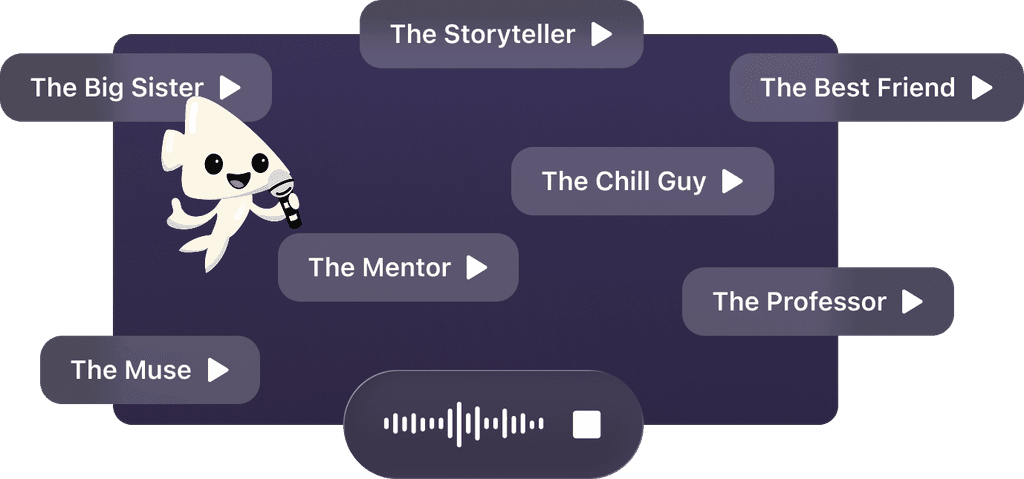
Feel the book through the author's voice
Turn knowledge into engaging, example-rich insights
Capture key ideas in a flash for fast learning
Enjoy the book in a fun and engaging way
Characters in Communicate to Influence
- Ben DeckerCo-author and communication expert
- Kelly DeckerCo-author and communication expert
- Marissa MayerFormer Yahoo! CEO used as a case study
- Michael BayFilm director used as a case study on delivery
Key Themes in Communicate to Influence
- audience engagement
- authentic leadership
- emotional connection
- attention economy
- behavioral feedback
Quotes from Communicate to Influence
Everything a leader does is symbolic.
Communication isn't just about words-it's about creating an experience.
If I say the words, people will get it.
People tell me I'm pretty good at speaking.
Explore Your Way of Learning
 Quick Summary Mode
Read or listen to Communicate to Influence Summary in 9 Minutes
Break down key ideas from Communicate to Influence into bite-sized takeaways to understand how innovative teams create, collaborate, and grow.

 Fun Mode
Communicate to Influence Lessons Told Through 23-Min Stories
Experience Communicate to Influence through vivid storytelling that turns innovation lessons into moments you'll remember and apply.
 Personalize Mode
Experience Communicate to Influence in your own learning style
Ask anything, choose your learning style, and co-create insights that truly resonate with you.
From Columbia University alumni built in San Francisco
"Instead of endless scrolling, I just hit play on BeFreed. It saves me so much time."


"I never knew where to start with nonfiction—BeFreed’s book lists turned into podcasts gave me a clear path."


"Perfect balance between learning and entertainment. Finished ‘Thinking, Fast and Slow’ on my commute this week."
"Crazy how much I learned while walking the dog. BeFreed = small habits → big gains."
"Reading used to feel like a chore. Now it’s just part of my lifestyle."

"Feels effortless compared to reading. I’ve finished 6 books this month already."
"BeFreed turned my guilty doomscrolling into something that feels productive and inspiring."

"BeFreed turned my commute into learning time. 20-min podcasts are perfect for finishing books I never had time for."
"BeFreed replaced my podcast queue. Imagine Spotify for books — that’s it. 🙌"

"It is great for me to learn something from the book without reading it."
"The themed book list podcasts help me connect ideas across authors—like a guided audio journey."
"Makes me feel smarter every time before going to work"
From Columbia University alumni built in San Francisco
"Instead of endless scrolling, I just hit play on BeFreed. It saves me so much time."
"I never knew where to start with nonfiction—BeFreed’s book lists turned into podcasts gave me a clear path."
"Perfect balance between learning and entertainment. Finished ‘Thinking, Fast and Slow’ on my commute this week."
"Crazy how much I learned while walking the dog. BeFreed = small habits → big gains."
"Reading used to feel like a chore. Now it’s just part of my lifestyle."
"Feels effortless compared to reading. I’ve finished 6 books this month already."
"BeFreed turned my guilty doomscrolling into something that feels productive and inspiring."
"BeFreed turned my commute into learning time. 20-min podcasts are perfect for finishing books I never had time for."
"BeFreed replaced my podcast queue. Imagine Spotify for books — that’s it. 🙌"
"It is great for me to learn something from the book without reading it."
"The themed book list podcasts help me connect ideas across authors—like a guided audio journey."
"Makes me feel smarter every time before going to work"
"Instead of endless scrolling, I just hit play on BeFreed. It saves me so much time."
"I never knew where to start with nonfiction—BeFreed’s book lists turned into podcasts gave me a clear path."
"Perfect balance between learning and entertainment. Finished ‘Thinking, Fast and Slow’ on my commute this week."
"Crazy how much I learned while walking the dog. BeFreed = small habits → big gains."
"Reading used to feel like a chore. Now it’s just part of my lifestyle."
"Feels effortless compared to reading. I’ve finished 6 books this month already."
"BeFreed turned my guilty doomscrolling into something that feels productive and inspiring."
"BeFreed turned my commute into learning time. 20-min podcasts are perfect for finishing books I never had time for."
"BeFreed replaced my podcast queue. Imagine Spotify for books — that’s it. 🙌"
"It is great for me to learn something from the book without reading it."
"The themed book list podcasts help me connect ideas across authors—like a guided audio journey."
"Makes me feel smarter every time before going to work"
"Instead of endless scrolling, I just hit play on BeFreed. It saves me so much time."
"I never knew where to start with nonfiction—BeFreed’s book lists turned into podcasts gave me a clear path."
"Perfect balance between learning and entertainment. Finished ‘Thinking, Fast and Slow’ on my commute this week."
"Crazy how much I learned while walking the dog. BeFreed = small habits → big gains."
"Reading used to feel like a chore. Now it’s just part of my lifestyle."
"Feels effortless compared to reading. I’ve finished 6 books this month already."
"BeFreed turned my guilty doomscrolling into something that feels productive and inspiring."
"BeFreed turned my commute into learning time. 20-min podcasts are perfect for finishing books I never had time for."
"BeFreed replaced my podcast queue. Imagine Spotify for books — that’s it. 🙌"
"It is great for me to learn something from the book without reading it."
"The themed book list podcasts help me connect ideas across authors—like a guided audio journey."
"Makes me feel smarter every time before going to work"

Download Summary of Communicate to Influence
Get the Communicate to Influence summary as a free PDF or EPUB. Print it or read offline anytime.


