Глава 1
The Leadership Minute That Changes Everything
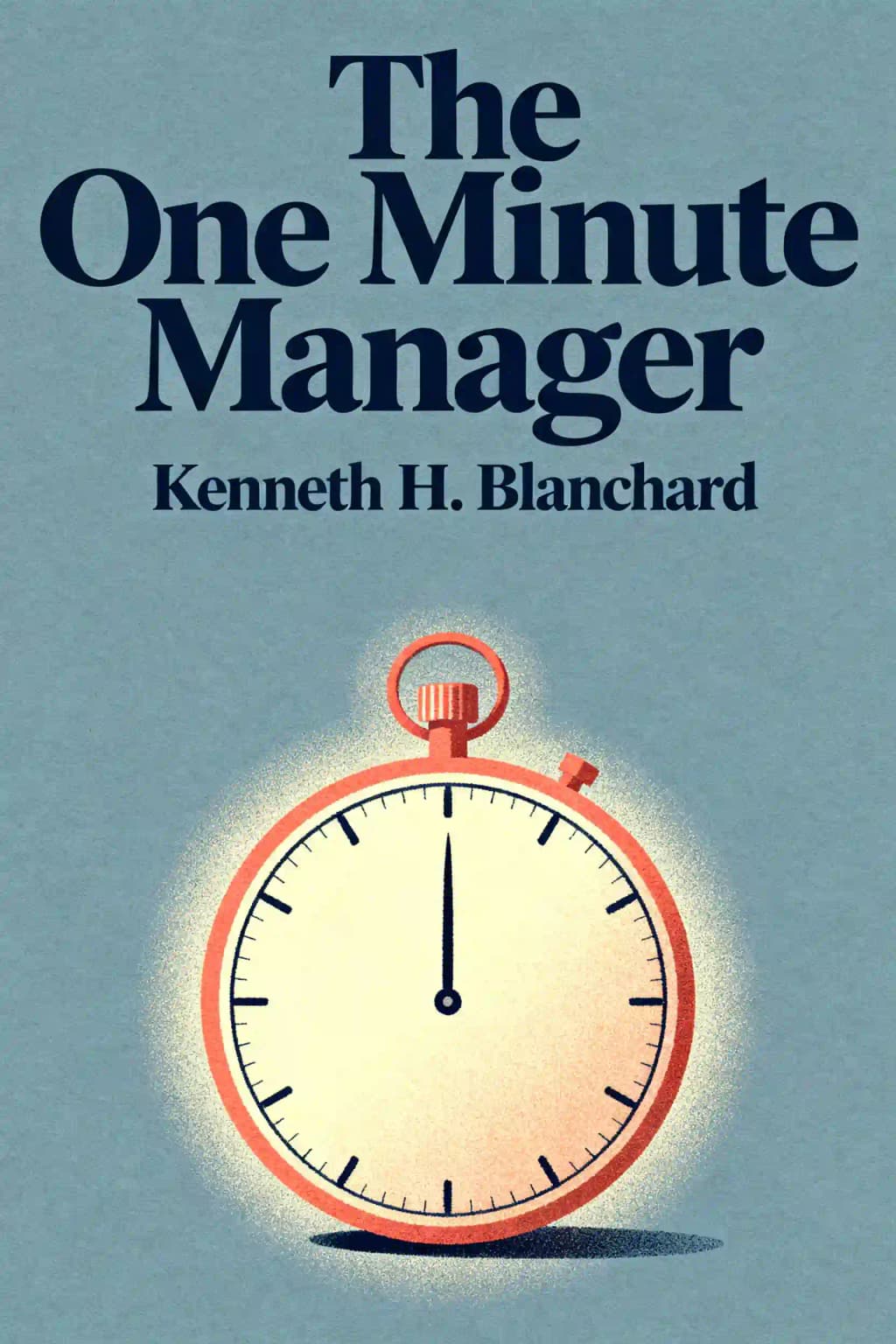
Imagine a workplace where people are both highly productive and genuinely happy. Where managers spend mere minutes on interactions that transform performance. Where results and relationships flourish simultaneously. This isn't workplace fantasy-it's the proven approach of The One Minute Manager, a slim volume that has revolutionized leadership for millions. Since its publication in 1982, this business classic has sold over 15 million copies in 47 languages and remains on Warren Buffett's recommended reading list. Even Google's early management philosophy drew inspiration from its principles. What makes this approach so powerful? It's the rare management philosophy that acknowleds both the frantic pace of modern work and the fundamental human need for meaningful connection-all delivered through three deceptively simple practices that take just minutes to implement.
Глава 2
The Evolution of Leadership: From Command to Collaboration
The business landscape has transformed dramatically since Kenneth Blanchard and Spencer Johnson first introduced the One Minute Manager. Organizations now operate in an environment where technology and globalization demand faster responses with fewer resources. The traditional top-down management approach-where executives issue orders and employees follow-has become obsolete in a world requiring agility and innovation.
Today's effective leadership is more side-by-side than hierarchical. People seek more than just a paycheck; they want meaningful contribution, personal fulfillment, and work-life balance. Organizations that recognize this shift understand that attracting and retaining talent means creating environments where people can thrive personally while delivering exceptional results.
The New One Minute Manager embodies this evolution. Rather than seeing leadership as exercising control over others, this approach views it as a collaborative partnership. During weekly meetings, teams review achievements, problems, and plans together, with decisions binding on everyone. This collaborative style taps into talent throughout the organization, not just the executive suite.
What makes this approach particularly powerful is its dual focus. Unlike "tough" autocrats who prioritize results at the expense of people, or "nice" democrats who prioritize people while organizational performance suffers, the One Minute Manager recognizes that people and results are inseparable. The philosophy is elegantly captured in a simple statement: "People Who Feel Good About Themselves Produce Good Results."
This isn't just feel-good rhetoric-it's practical business sense. When people understand what's expected, receive recognition for achievements, and get constructive feedback on mistakes, they become self-motivated and high-performing. They develop the confidence to adapt to change, innovate solutions, and take appropriate risks. In today's business environment, these qualities aren't just nice-to-haves; they're essential for organizational survival and success.
The beauty of this approach is that it doesn't require more time-just more focus on the activities that produce the greatest impact. By investing minutes in people, leaders create the conditions for sustainable excellence.
Глава 3
One Minute Goals: Clarity That Drives Performance
Have you ever felt like you're bowling with a curtain covering the pins? You roll the ball down the lane, hear some pins fall, but have no idea which ones you hit or missed. Frustrating, isn't it? Yet this is precisely how many people experience their jobs-unclear about expectations, uncertain about priorities, and receiving feedback only when something goes wrong.
One Minute Goals eliminate this frustration by establishing crystal-clear expectations. The process begins with a collaborative conversation between manager and team member to identify key responsibilities. Rather than imposing goals, the manager asks questions that help the person determine what success looks like in their role. Together, they identify the critical 20% of activities that will produce 80% of important results-typically just three to five key areas.
What makes these goals different from conventional objective-setting is their simplicity and accessibility. Each goal is written concisely on a single page, using language that's clear and specific. The description includes concrete examples of what good performance looks like, removing ambiguity about expectations. These one-page summaries serve as powerful alignment tools that can be reviewed in about a minute.
Consider Teresa's experience: When she joined the organization, her manager didn't just hand her a job description. Instead, he asked questions about her understanding of her responsibilities and worked with her to develop clear goals. When she encountered problems, rather than providing solutions, he guided her through a problem-solving process: identifying the gap between actual and desired outcomes, and developing effective solutions independently. This approach built her capability while ensuring alignment.
The power of One Minute Goals comes from regular review. Team members are encouraged to look at their goals daily-a practice that takes just minutes but keeps priorities front-of-mind. This regular check creates a self-management system where people can evaluate whether their actions align with expectations and adjust course as needed.
In today's rapidly changing environment, this clarity becomes even more valuable. When priorities shift, the one-page format makes updating goals straightforward. The simplicity ensures that even as circumstances change, people maintain a clear understanding of what matters most.
By establishing this foundation of clarity, One Minute Goals address the most fundamental question in any working relationship: "What exactly am I supposed to be doing?" When people know precisely what's expected and can see their progress, they become self-motivated and directed. The manager's role shifts from supervisor to supporter, freeing time for more strategic work while developing more capable team members.
Глава 4
One Minute Praisings: The Power of Catching People Doing Right
Think about how parents teach a child to walk. Do they criticize when the child falls? Of course not. Instead, they celebrate each small victory-standing up, taking a wobbly step, maintaining balance for a moment. With each success, parents offer enthusiastic praise-smiles, hugs, and encouragement that builds the child's confidence until walking becomes natural.
This approach seems intuitive with children, yet in professional settings, many managers operate with an entirely different mindset. They practice what might be called "leave-alone-zap" management-ignoring good performance while pouncing on mistakes. This creates an environment where people work primarily to avoid criticism rather than to achieve excellence.
One Minute Praisings reverse this dynamic by catching people doing things right. When a manager notices someone performing well-especially when learning something new-they immediately deliver specific, meaningful recognition. The process takes just a minute but creates lasting impact.
The structure is simple but powerful. In the first 30 seconds, the manager:
1. Praises the person immediately after noticing good performance
2. Specifies exactly what was done right
3. Expresses how they feel about the achievement and its positive impact
Then comes a critical moment-a pause. This brief silence allows the person to fully absorb the recognition and experience the positive feelings associated with their accomplishment. In the remaining 30 seconds, the manager:
1. Encourages the person to continue the excellent work
2. Expresses confidence in their abilities
3. Offers support for their continued success
Paul Trenell experienced this approach firsthand. Unlike his previous micromanaging boss who focused on mistakes, his current manager stayed close during new projects, watching for opportunities to recognize progress. When Paul successfully handled a difficult client interaction, his manager immediately acknowledged the specific skills he demonstrated and expressed appreciation for how it strengthened the client relationship. This timely recognition boosted Paul's confidence and motivation far more effectively than waiting for an annual review.
What makes One Minute Praisings particularly effective is their specificity and timing. By identifying exactly what was done well, the manager reinforces desired behaviors and creates clear examples of success. The immediate delivery connects the recognition directly to the performance, strengthening the positive association.
As people develop in their roles, the manager gradually raises expectations, praising increasingly refined performance. This progressive approach builds confidence while continually elevating standards. Eventually, team members internalize this positive reinforcement, catching themselves doing things right and experiencing intrinsic satisfaction from their achievements.
The cumulative effect transforms the workplace atmosphere. Rather than operating from fear of criticism, people work from a foundation of earned confidence. They take appropriate risks, offer creative solutions, and adapt more readily to change-all essential qualities in today's business environment. And perhaps most importantly, they begin to praise others, creating a culture of positive reinforcement that perpetuates excellence.
Глава 5
One Minute Re-Directs: Course Correction with Dignity
Even the most skilled professionals make mistakes. What distinguishes great organizations isn't the absence of errors but how they're addressed when they occur. The One Minute Re-Direct (evolved from what was once called the One Minute Reprimand) provides a framework for addressing performance issues that maintains standards while preserving relationships.
Many managers handle mistakes poorly in one of two ways. Some avoid addressing problems directly, allowing small issues to compound until they become serious. Others deliver harsh criticism that damages confidence and creates defensiveness. The One Minute Re-Direct offers a more effective alternative that takes just a minute but creates lasting improvement.
The approach begins with preparation-ensuring goals were clear and that the person understood expectations. When a mistake occurs, the manager delivers feedback in two distinct parts. In the first 30 seconds, they:
1. Address the issue immediately after becoming aware of it
2. Confirm and review the facts together, ensuring shared understanding
3. Express specifically how they feel about the mistake and its impact
This is followed by a brief pause-a moment that allows the significance to register. This pause is crucial; it creates space for reflection without prolonging discomfort. In the second 30 seconds, the manager:
1. Reminds the person they are better than their mistake
2. Reaffirms confidence in their abilities
3. Makes it clear that when the conversation ends, the issue is closed
Jon Levy's experience illustrates this approach in action. When he mishandled a client presentation, his manager met with him privately. Rather than beginning with accusations, she confirmed their shared understanding of the situation. She then expressed her disappointment clearly but without attacking Jon personally. After a brief moment, she reminded Jon of his previous successes and expressed confidence in his ability to improve. The conversation ended with support rather than lingering resentment.
What makes this approach effective is how it separates behavior from personal worth. The manager is "tough and nice"-in that order. They address the poor performance directly while affirming the person's value. This distinction prevents defensiveness and keeps focus on improvement rather than blame.
The One Minute Re-Direct works because it delivers feedback in small, manageable doses. Unlike managers who "gunnysack" feedback-storing up observations until frustration builds and then dumping everything at once-this approach addresses one behavior at a time, making it easier for people to hear and accept the feedback.
Importantly, the manager also models accountability by acknowledging their own mistakes and maintaining a sense of humor. This creates an environment where errors are viewed as learning opportunities rather than character flaws. People feel safe taking appropriate risks and trying new approaches, knowing that mistakes will be addressed constructively rather than punitively.
When delivered effectively, the One Minute Re-Direct actually strengthens relationships. People appreciate the honesty, clarity, and respect inherent in this approach. They learn that feedback-even critical feedback-comes from a place of caring about their success. This foundation of trust enables continuous improvement and development.
Глава 6
The 80/20 Principle: Maximum Impact in Minimum Time
"The best minute I spend is the one I invest in people." This simple statement captures the essence of the One Minute Manager approach. In a business world obsessed with efficiency, it recognizes that time spent developing people isn't an expense-it's an investment with extraordinary returns.
The One Minute Manager approach leverages the Pareto Principle-the observation that roughly 80% of effects come from 20% of causes. By identifying and focusing on the vital few activities that produce the greatest impact, managers can achieve remarkable results with minimal time investment.
Consider how this principle applies to each of the three secrets:
With One Minute Goals, managers focus on the critical 20% of responsibilities that produce 80% of important results. Rather than creating exhaustive job descriptions covering every possible task, they collaborate with team members to identify the three to five key areas that truly drive success. This clarity allows people to prioritize effectively and avoid wasting energy on low-value activities.
One Minute Praisings target the specific behaviors that contribute most significantly to performance. By recognizing these high-impact actions, managers reinforce the 20% of behaviors that drive 80% of desired results. This focused recognition shapes performance more effectively than general praise or comprehensive reviews.
One Minute Re-Directs address the small number of issues that create the majority of problems. By catching and correcting these key issues early, managers prevent minor mistakes from escalating into major failures. This targeted approach is far more efficient than either ignoring problems until they become serious or micromanaging every detail.
What's particularly powerful about this approach is how it transforms the manager's role. Rather than constantly directing and controlling, the manager establishes clear expectations, provides timely feedback, and then steps back. This creates space for team members to manage themselves while freeing the manager to focus on more strategic priorities.
The irony is striking: by spending just minutes on these high-impact interactions, managers actually save hours of time previously spent on crisis management, conflict resolution, and performance problems. Team members become more self-sufficient, requiring less supervision and producing better results.
This efficiency extends beyond the workplace. Managers report reduced stress, more time for planning and family, and fewer personnel problems. Team members experience greater job satisfaction, clearer direction, and improved work-life balance. The organization benefits from higher productivity, better quality, and increased innovation.
In an era where everyone feels pressed for time, the One Minute Manager approach offers a refreshing alternative to the "more hours equals more results" mindset. By investing minutes in people-in the right ways, at the right times-managers create exponential returns that benefit everyone involved.
Глава 7
From Management to Self-Management: The Ultimate Goal
The true measure of leadership isn't creating followers-it's developing leaders. The One Minute Manager approach ultimately aims to transform people from being managed to managing themselves. This progression toward self-management represents the highest form of empowerment and creates sustainable excellence.
The journey begins with clear expectations through One Minute Goals. When people understand exactly what success looks like, they gain the foundation for self-direction. Rather than waiting for instructions, they can independently assess situations and determine appropriate actions. The one-page format makes these goals accessible for regular review, creating a built-in guidance system that people can consult whenever needed.
One Minute Praisings accelerate this development by building confidence and reinforcing effective behaviors. Initially, the manager provides this recognition, helping people identify what "good" looks like in practice. Over time, something remarkable happens-people begin to catch themselves doing things right. They develop the ability to evaluate their own performance objectively and experience intrinsic satisfaction from their achievements. This internal feedback loop reduces dependency on external validation.
One Minute Re-Directs complete the progression by teaching people to correct their own course. When delivered effectively, these conversations help individuals understand not just what went wrong but why it matters and how to improve. Eventually, people develop the ability to recognize their own mistakes, learn from them, and make adjustments without managerial intervention.
As this self-management capacity grows, the manager's role evolves from director to resource. Rather than telling people what to do, they ask questions that stimulate thinking. Instead of solving problems, they help people develop their own solutions. The relationship becomes increasingly collaborative, with both parties contributing their unique perspectives and strengths.
This progression benefits everyone involved. Team members gain autonomy, mastery, and purpose-the three elements research shows drive intrinsic motivation. Managers escape the trap of being perpetual problem-solvers and gain time for strategic thinking. The organization develops a pipeline of capable leaders who can respond effectively to challenges without constant supervision.
Perhaps most significantly, this approach creates sustainability. When leadership practices are concentrated in a single person, the organization becomes vulnerable to their absence or departure. When leadership capacity is distributed throughout the team, the organization becomes resilient, with multiple people capable of stepping up when needed.
The ultimate expression of this philosophy comes when people not only manage themselves but begin developing others. Like the young man in the story who eventually becomes a One Minute Manager himself, those who experience this approach often feel compelled to share it. They create a ripple effect, spreading effective practices throughout their professional and personal networks.
Глава 8
Beyond the Workplace: Life Applications
While developed for professional settings, the One Minute Manager principles have profound applications beyond the workplace. The same approaches that build effective teams can strengthen families, improve friendships, and enhance community organizations. The principles work because they address fundamental human needs for clarity, recognition, and constructive feedback.
Consider how One Minute Goals might transform family dynamics. Many household conflicts stem from unclear expectations about responsibilities. By having brief conversations to establish shared understanding about chores, schedules, or financial decisions, families can prevent misunderstandings and reduce tension. Children particularly benefit from clear, specific expectations rather than vague instructions like "clean your room" or "behave yourself."
One Minute Praisings may have even greater impact in personal relationships. Many people are quick to notice when partners, children, or friends fall short but slow to acknowledge when they meet or exceed expectations. By consciously looking for opportunities to provide specific, timely recognition, we strengthen relationships and encourage positive behaviors. Something as simple as "I noticed you took out the trash without being asked, and I really appreciate how that helps our household run smoothly" can be remarkably powerful.
One Minute Re-Directs offer a framework for addressing issues in personal relationships without triggering defensiveness. By separating behavior from personal worth and focusing on specific actions rather than character, difficult conversations become more productive. The pause between addressing the behavior and reaffirming the relationship gives both parties space to process emotions before moving toward resolution.
The approach works equally well in volunteer organizations, community groups, and educational settings. Anywhere people work together toward common goals, these principles create clarity, motivation, and continuous improvement.
What makes these applications particularly valuable is their efficiency. In our time-starved world, we often neglect important relationship maintenance because it seems too time-consuming. The One Minute Manager approach demonstrates that meaningful connection doesn't require hours-it requires presence and intention. A minute of focused attention often creates more impact than hours of distracted interaction.
By integrating these principles into daily life, we create environments where people-including ourselves-can thrive. We establish clear expectations that prevent misunderstandings, provide recognition that builds confidence, and address issues before they escalate. The result is healthier, happier, and more productive relationships in every area of life.
Глава 9
The Gift That Multiplies: Sharing Effective Leadership
The One Minute Manager story concludes with a simple request: "if you find it useful, you will... Share It With Others." This invitation captures the essence of truly effective leadership-it's not about accumulating power but about multiplying impact through others.
When leaders share these principles, they create a cascading effect throughout organizations and communities. Each person who adopts the approach potentially influences dozens or hundreds of others, who in turn affect their own circles of influence. What begins as one person's practice becomes a culture of clarity, recognition, and constructive feedback.
This multiplication happens because the approach is both effective and accessible. Unlike complex management theories that require extensive training to implement, the One Minute Manager principles can be understood quickly and applied immediately. The simplicity doesn't diminish their power-it enhances it by making the practices available to everyone, regardless of position or experience.
The approach also spreads naturally because people experience its benefits firsthand. Team members who thrive under this leadership style often adopt similar practices when they move into leadership positions. They've felt the difference between being managed through control versus collaboration and choose the more effective path.
Perhaps most importantly, sharing these principles creates a common language and framework for leadership. When entire organizations adopt the approach, expectations become clearer, feedback becomes more consistent, and development becomes more intentional. This alignment accelerates improvement and creates more cohesive cultures.
The invitation to share extends beyond formal teaching. Leaders model these principles through their daily interactions, demonstrating what effective leadership looks like in practice. When they acknowledge their own imperfections while continuing to apply the principles, they create psychological safety that encourages others to experiment and grow.
This perspective transforms leadership from a position to a practice-something anyone can contribute regardless of their formal authority. Administrative assistants can provide clear expectations to those requesting their services. Team members can recognize colleagues' contributions without waiting for managers to do so. Everyone can address issues directly and constructively rather than allowing problems to fester.
By sharing effective leadership practices, we create environments where everyone can succeed. We establish cultures where goals are clear, achievements are recognized, and mistakes become learning opportunities. We develop organizations that adapt more readily to change because people at all levels take initiative and solve problems. Most importantly, we build communities where people feel valued, understood, and empowered to contribute their best.
The One Minute Manager approach reminds us that leadership isn't about grand gestures or elaborate systems. It's about those small, consistent moments of clarity, recognition, and redirection that, over time, transform both results and relationships. By investing just minutes in these high-impact practices, we create ripples of positive change that extend far beyond our immediate influence.