Глава 1
Leadership's Unexpected Maestro: How David Rubenstein Orchestrates Wisdom
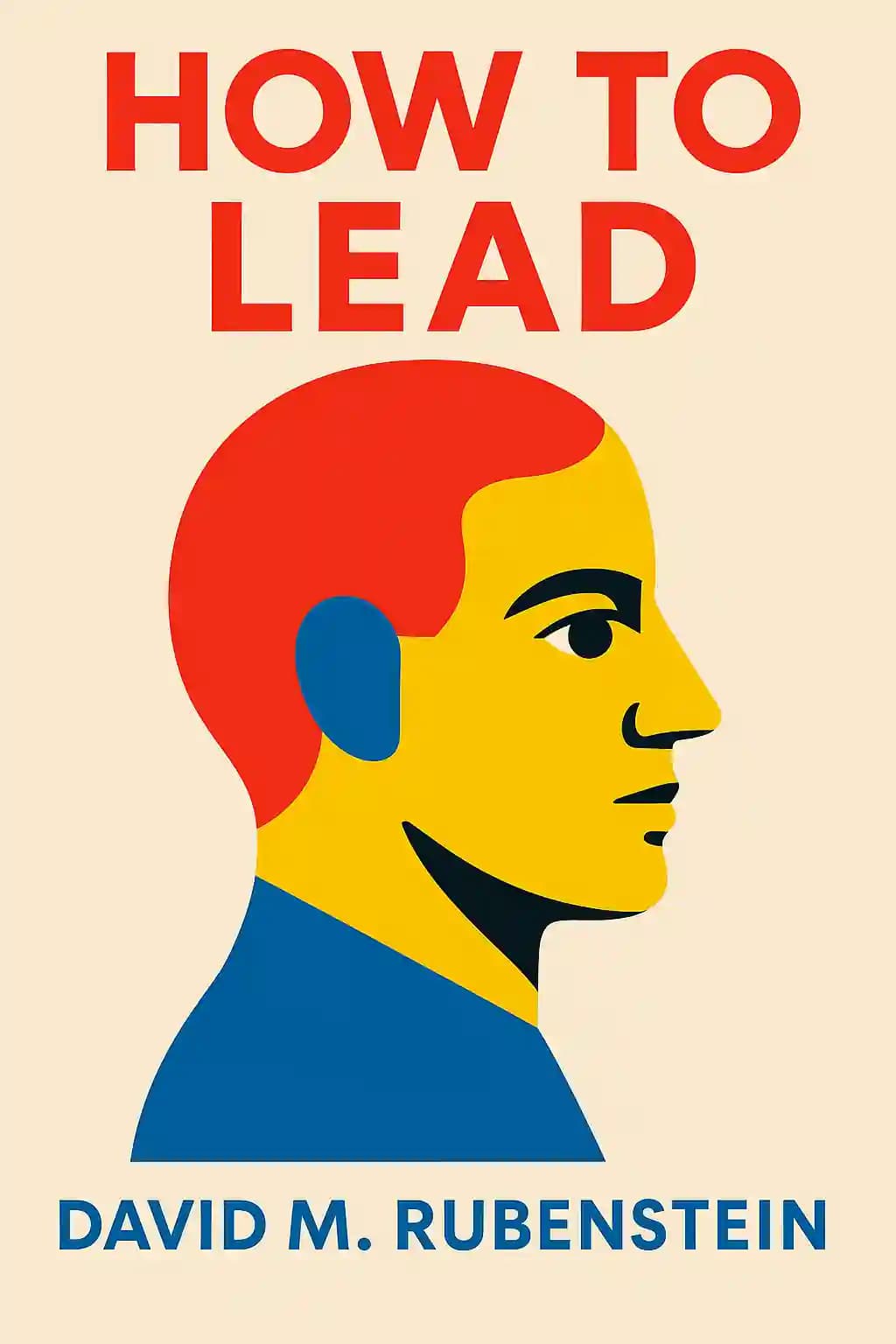
What makes a true leader? Is it innate talent, relentless determination, or perhaps something more elusive? In "How to Lead," David Rubenstein-co-founder of The Carlyle Group and one of America's most successful private equity pioneers-offers a masterclass in leadership through conversations with thirty extraordinary individuals who've shaped our world. This isn't just another business book; it's Warren Buffett revealing his investment philosophy over breakfast, Oprah Winfrey explaining how listening transformed her career, and Jeff Bezos sharing the decision-making framework that built Amazon. The book has become required reading in leadership courses at institutions like Harvard and Stanford, with Bill Gates calling it "the leadership bible for the next generation." Through these intimate dialogues, Rubenstein doesn't just document greatness-he decodes it, revealing that true leadership often emerges not from early success but from life's second and final thirds, after facing setbacks that forge resilience and perspective.
Глава 2
The Architect's Blueprint: Rubenstein's Leadership Framework
Rubenstein's own journey provides the foundation for his leadership insights. At thirty-seven, he abandoned a successful legal career to launch Washington DC's first private equity firm despite having "no Wall Street experience, no money, and no clear business plan." This bold pivot came from recognizing five crucial factors: his growing dislike for practicing law's daily routines, direct inspiration from Bill Simon's remarkable $80 million buyout of Gibson greeting cards, his astute observation that law was becoming more about business metrics than passionate advocacy, the untapped opportunity in Washington's nascent buyout market, and comprehensive research showing entrepreneurs typically launch their most successful ventures around age thirty-seven - a finding that gave him confidence despite his late start.
The Carlyle Group's eventual success, growing from a small startup to a global investment powerhouse managing over $370 billion in assets, transformed Rubenstein from a self-described "non-leader" into a respected figure through six essential attributes he consistently heard from his interview subjects. First, persuasiveness - developing clear writing that convinces, speaking that inspires, and leading by personal example in ways that motivate others to follow. Second, a humble demeanor that openly acknowledges luck's substantial role while avoiding the trap of success-driven arrogance that often derails leaders. Third, credit-sharing, following President Kennedy's wisdom that "Victory has a hundred fathers" by celebrating team successes publicly while personally accepting blame for setbacks - a practice he implemented during Carlyle's challenging early years.
Fourth, continuous learning through voracious reading of multiple newspapers daily, industry periodicals, and at least 100 books annually - a habit Rubenstein maintains even while traveling. Fifth, unwavering integrity, following Judge Simon Rifkind's sage advice that "It takes a lifetime to build a reputation, and five minutes to destroy it" - demonstrated through transparent dealings and ethical decision-making even when costly. Finally, crisis management - working harder during difficulties while maintaining clear, frequent communication with stakeholders, as exemplified during the 2008 financial crisis when Rubenstein personally called hundreds of investors.
Through these extensive conversations with diverse leaders, Rubenstein reveals that while leadership manifests differently across fields - from military commanders directing troops in combat to entrepreneurs building innovative companies, scientists making breakthrough discoveries, artists creating transformative works, and athletes achieving world-class excellence - the fundamental attributes remain remarkably consistent. His comprehensive framework organizes these leaders into six distinct but overlapping categories: Visionaries who see possibilities others miss, like Jeff Bezos identifying the potential of online retail; Builders who create enduring institutions, exemplified by JP Morgan's financial empire; Transformers who reinvent existing organizations, such as Lou Gerstner at IBM; Commanders who lead through authority and inspiration, like Colin Powell; Decision-Makers who navigate complex choices under pressure, including Supreme Court justices; and Masters who achieve the highest levels of excellence in their fields, from Tiger Woods in golf to Yo-Yo Ma in classical music.
Глава 3
The Visionary's Gaze: Seeing Beyond the Horizon
Jeff Bezos exemplifies the visionary leader who transforms industries by seeing possibilities others miss. Though he didn't invent selling books online, Bezos recognized that better software could make the process more efficient, eventually expanding Amazon to sell virtually everything. His early insight about the internet's 2,300% annual growth rate in 1994 led him to build a business that could "let the Internet grow around us." When ranking potential products, he chose books because of their unique characteristics-three million titles in print worldwide while the largest physical bookstores carried only 150,000. This gap between available inventory and physical limitations became the foundation for Amazon's competitive advantage, demonstrating how visionaries identify structural inefficiencies that others overlook.
Bezos structures his day around energy levels and decision-making capacity, avoiding meetings before 10 a.m. and scheduling high-IQ meetings before lunch when his thinking is sharpest. He prioritizes eight hours of sleep for better thinking, energy, and mood. As a senior executive, he believes his job is making "a small number of high-quality decisions"-just three good decisions daily is sufficient. His famous "two-pizza rule" for meetings ensures groups stay small enough to be effective, while his insistence on written memos instead of PowerPoint presentations forces clear thinking. He encourages executives to "work in the future," focusing on initiatives that will materialize years ahead rather than current quarterly results, noting "That quarter was baked three years ago." This long-term perspective has enabled innovations like AWS, Prime, and Kindle, which required years of investment before showing results.
Bill Gates similarly demonstrates visionary leadership through his early recognition that software would become more valuable than hardware. When IBM contracted Microsoft for their operating system, they failed to recognize software's future value, allowing Gates to retain ownership rights to MS-DOS rather than buying it outright-a crucial oversight that Gates acknowledges was "fairly advantageous to us." This decision became the cornerstone of Microsoft's dominance in personal computing. Gates's ability to envision the PC revolution led to his famous goal of "a computer on every desk and in every home." Gates structures his philanthropic work with the same visionary approach, deliberately choosing global health and U.S. education as areas addressing "the greatest injustice in the world" while helping "the U.S. be as strong as it could." His foundation's work on vaccine development and distribution demonstrated this same forward-thinking approach years before the COVID-19 pandemic.
Richard Branson's visionary leadership manifests through entering industries where he sees poor service from existing players. His approach isn't primarily profit-focused: "I never go into a venture with the idea of making a profit. If you can create the best in its field, generally speaking you'll find that you'll pay the bills and you'll make a profit." This philosophy has guided his creation of over 300 Virgin-branded companies across diverse industries. From Virgin Records to Virgin Atlantic to Virgin Galactic, Branson consistently identifies opportunities where customer experience can be dramatically improved. His vision extends beyond traditional business boundaries, as demonstrated by his early commitment to space tourism and sustainable energy initiatives. Each venture follows his pattern of disrupting established industries by prioritizing customer experience and innovation over immediate profitability.
Глава 4
The Builder's Craft: Creating Enduring Institutions
Phil Knight exemplifies the builder archetype, transforming a small importing business into Nike, the world's largest athletic-shoe company. Knight describes Nike as "a marketing company, and the product is our most important marketing tool," crediting much of his success to being "pretty good at evaluating people" and building a valuable team of early partners. When asked if he ever imagined Nike becoming what it is today-a $100 billion company with $40 billion in revenue and 74,000 employees-Knight humorously replied, "Sometimes I say, 'We're exactly on plan,' but with you I can't be a smartass."
Jamie Dimon demonstrates the builder's mentality through his complete commitment to JPMorgan Chase, moving his family to Chicago when he joined Bank One despite skepticism about whether he'd stay. He explains, "I wear the jersey every day. I'm not a hired gun. I'm going to bleed for the company." This dedication has grown JPMorgan's market value from $132 billion to $429 billion under his leadership. Dimon believes business leaders should prioritize national interests over company interests when engaging with Washington: "Just do what's right for the damn country. Your business is going to be fine."
Robert F. Smith built Vista Equity Partners into one of the world's most successful private equity firms by developing a systematic approach to transforming enterprise software companies. His innovation came from recognizing that software companies were inefficiently run because their founders knew coding but not operations. Smith's methodology "cracks the Rubik's Cube of profitable growth" by simultaneously increasing profit margins while accelerating growth. His vision extends beyond business to creating "an equalization of opportunity for African Americans" by building sustainable frameworks of education, internships, and career paths for the next generation of business leaders and technologists.
Ken Griffin built Citadel into a global trading operation that works 24 hours daily across multiple markets. Starting with just 4-5 employees in 1990, Griffin learned delegation early-a skill he credits for Citadel's 30-year success. His leadership philosophy emphasizes empowering those closest to information to make decisions, acknowledging that his analysts who've covered companies for years will make better calls than he could. This decentralized approach enables Citadel to handle massive trading volume-approximately 3-4% of all U.S. equity turnover daily.
Глава 5
The Transformer's Touch: Reimagining Existing Organizations
Tim Cook exemplifies transformational leadership by succeeding Steve Jobs at Apple despite analysts' low expectations. Under his leadership, Apple's market value increased from $359 billion to $1.4 trillion, becoming the first trillion-dollar company. Cook's effectiveness stems from his methodical attention to detail, collaborative teamwork approach, and quiet consistent manner. Rather than trying to replicate Jobs' creative genius, Cook focused on organization, efficiency, and low-key leadership. When asked about his modest demeanor despite running the world's biggest company, Cook attributes it to Apple's culture of high expectations where everyone, including the CEO, is expected to perform and contribute-"you never quite get there," which prevents complacency or ego from taking hold.
Melinda Gates has transformed philanthropy through her equal partnership with Bill in creating the Gates Foundation and her focused advocacy for women globally. After twenty years of foundation work, particularly in sub-Saharan Africa, she developed her focus on women's issues, concluding: "If we can help lift up all women, we will change the world... If you lift up women, they lift up everybody else around them. That ultimately lifts up a community and a country." Despite her Catholic faith, Melinda chose to focus on contraception after meeting women facing life-or-death situations, explaining: "I had to wrestle with my Catholic faith and say, 'What do I believe in? I believe in saving lives.'"
Indra Nooyi transformed PepsiCo by shifting toward healthier products while expanding globally. Her leadership approach includes writing personal letters to executives' parents thanking them for "the gift of their child to PepsiCo," creating profound emotional connections. This practice began after visiting her mother in India as a new CEO and observing visitors congratulating her mother rather than her for her achievements, realizing she was "a product of my upbringing." Nooyi maintains connection with PepsiCo's vast workforce through multiple channels, deliberately revealing herself as a person, not just an executive, making herself accessible to employees at all levels.
Eric Schmidt transformed Google from a small search engine into a trillion-dollar company with 123,000 employees and 1.2 trillion annual searches. He brought seasoned management experience that complemented the founders' technical brilliance while embracing Google's unique culture-free food to encourage collaboration, 20% time for innovation projects, and an environment where engineers could create breakthrough products. Schmidt describes his unusual interview process with Larry and Sergey, who had been searching for a compatible CEO for sixteen months. They clicked immediately despite their intense questioning, including criticizing one of his Novell products. Schmidt recognized it was "their company" and his job was to make it successful.
Глава 6
The Commander's Authority: Leading Through Crisis and Complexity
General Colin Powell's implementation of the "Powell Doctrine" during the Gulf War stands as a masterclass in command leadership. This doctrine established three fundamental principles: exhausting all diplomatic solutions before military engagement, establishing crystal-clear political objectives, and applying overwhelming "decisive force" to guarantee mission success. Powell's strategic brilliance was particularly evident in how he exploited Iraqi tactical vulnerabilities. When Iraqi forces made the critical error of establishing static defensive positions along the Saudi border and coast, Powell recognized an opportunity. Rather than engaging in a frontal assault, he devised a bold "left hook" maneuver that would sweep around the enemy's flank while keeping their main force pinned in place through deception and show of force. His assertion to President Bush that "there is no question about the outcome" wasn't mere bravado - it was founded on meticulous planning and strategic insight.
Powell's philosophy of leadership extends beyond military strategy to universal principles. He emphasizes that great leadership begins with the fundamental understanding that you're "leading followers" - human beings who need purpose, direction, and support. True leadership, in Powell's view, requires creating meaningful work that resonates with people's values and aspirations. He outlines three essential components: providing inspiration that motivates action, ensuring followers have all necessary resources to succeed, and establishing a clear vision that permeates every level of the organization. His favorite Lincoln anecdote about preferring to lose a brigadier general rather than 100 horses illuminates a crucial leadership principle - the importance of valuing and protecting your organization's most vital resources, whether they're "horses, soldiers, employees, clerks, students, faculty, or whatever it takes to be successful."
General David Petraeus brings additional depth to strategic leadership through his framework of four critical tasks. First, leaders must "get the big ideas right" - developing strategies that address core challenges and opportunities. Second, these ideas must be effectively communicated throughout the organization, ensuring every member understands their role in the larger mission. Third, implementation requires careful attention to metrics, time management, and maintaining organizational energy through consistent encouragement and support. Finally, Petraeus emphasizes the often-neglected task of formal evaluation - regularly assessing whether strategies need refinement or replacement based on changing circumstances and results.
Petraeus's leadership during the Iraq War demonstrates these principles in action. His most significant contribution wasn't just the surge in military forces, but what he calls "the surge of ideas" - a fundamental shift in strategy that transformed the entire approach to counterinsurgency. Instead of operating from isolated bases, forces were embedded within Iraqi communities, building trust and gathering intelligence. This strategy, combined with innovative reconciliation efforts with former insurgents, led to an extraordinary 85% reduction in violence during the 18-month Surge period. This remarkable turnaround in a country "on the verge of an all-out civil war" exemplifies how strategic leadership, when properly executed, can transform seemingly impossible situations into opportunities for success.
Глава 7
The Decision-Maker's Calculus: Navigating Complex Choices
Warren Buffett exemplifies the decision-maker archetype through his straightforward approach to investments. He explains his methodology with elegant simplicity: "We bought businesses that we thought were decent businesses at sensible prices, and we had good people to run them." When analyzing investments, Buffett doesn't rely on computers or complex calculations. He likens investing to journalism, telling Bob Woodward it's "just about assigning yourself the right story"-researching and valuing assets like a reporter. If calculations require "four decimal places," he says to "forget it." He reads annual reports like novels and does valuations in his head, focusing on businesses he understands rather than glamorous but unprofitable ventures.
Buffett's approach to acquisitions is remarkably straightforward. For Precision Castparts, his largest deal at approximately $37 billion, he simply met the CEO for 30 minutes and immediately recognized the opportunity. He doesn't hire investment bankers for analysis, though he's "perfectly willing to pay a fat commission" when they're involved in deals. He typically names a price and rarely departs from it, once agreeing to increase an offer by just five cents ($35 to $35.05) after an investment banker spent a week trying to negotiate.
Nancy Pelosi demonstrates decision-making leadership through her strategic thinking and coalition-building. She celebrates motherhood as valuable leadership training, noting that being a mom develops skills in managing time, personalities, diplomacy, logistics and multitasking. Pelosi approaches all presidents with respect for the office and their voters, while emphasizing that the presidency "is about the people, not about you" and success means "people were better off when I quit. Kids had a better future. Things were coming together."
Dr. Anthony Fauci exemplifies decision-making under pressure during the COVID-19 pandemic. Unlike HIV (which spread slowly over decades) or other outbreaks like Zika (which affected specific regions), COVID-19 "exploded upon us" in just months, causing widespread deaths and affecting everyone. Fauci's leadership approach combines scientific expertise with clear communication, acknowledging when information changes and adjusting recommendations accordingly. His decision-making balances scientific evidence with practical implementation challenges, recognizing that public health guidance must be both scientifically sound and realistically applicable.
Глава 8
The Master's Excellence: Perfecting Craft and Legacy
Jack Nicklaus exemplifies mastery through his meticulous approach to tournament preparation-arriving a week ahead for majors to study green speeds, fairway widths, rough depth, and firmness. "My wife has a saying: there's no excuse for not being properly prepared," he notes. Nicklaus attributes his success to mental strength, saying: "Your mind is a big part of it. You've got to believe in what you can do. You've got to learn to play within yourself." Despite his professional achievements, Nicklaus insists his greatest pride is his family: "Golf's a game. I love the game of golf, and I'm proud of my major championships, obviously. But they're still just part of the game."
Coach K attributes his enduring leadership success to three key principles: constantly updating his approach to reflect changes in the basketball landscape, learning through listening to others, and surrounding himself with supportive, talented people who provide advice when needed. His leadership philosophy emphasizes pushing beyond limits and embracing failure as a learning opportunity rather than a destination-a principle he learned at West Point. Despite Duke's polarizing status as both "America's favorite program" and "America's most hated program," Coach K never takes criticism personally, focusing instead on earning respect through performance.
Yo-Yo Ma approaches performances with total presence and engagement regardless of venue, caring more about who he plays for and with than where he performs. "Whether I play in New York or Jakarta or Peoria or Waco, Texas, doesn't matter," he explains, focusing instead on making meaningful connections that inspire action. During performances, he maintains absolute concentration, though he admits memory becomes more challenging after age forty. For Ma, live music is communion-a shared experience that must count for something lasting. His dedication comes from deep existential questioning about why his work matters: "I have to prove it to myself, let alone to the rest of society, that something is worthwhile, that my humanity or my playing three notes on the cello means something."
Lorne Michaels' mastery of television production is evident in his approach to Saturday Night Live. His leadership philosophy centers on flexibility and meritocracy: "Leadership in this particular field is the ability to change your mind, and change your mind quite often." He emphasizes that if a better idea comes from a first-year writer, they'll use it, creating a culture where hierarchy doesn't determine which ideas move forward. During the crucial 45 minutes between dress rehearsal and air, he solicits everyone's input but makes the final decisions, noting "you can feel consensus" among people who simply want the show to succeed.
Глава 9
The Leadership Paradox: Humility in Greatness
The most striking pattern across these thirty leaders is their combination of extraordinary achievement with genuine humility. Jeff Bezos, despite building Amazon into a trillion-dollar company, still answers customer complaint emails personally and maintains a "Day 1" mentality, treating every day like a startup. Warren Buffett, one of history's most successful investors, lives in the same modest house he bought in 1958 and drives modest cars, demonstrating that wealth hasn't changed his fundamental values. Ruth Bader Ginsburg, despite her groundbreaking legal career and iconic status, maintained that her faith remained in "the spirit of liberty" rather than institutional power, often crediting her colleagues and predecessors for advancing gender equality.
This paradox-humility amid greatness-emerges as perhaps the most crucial leadership attribute. Condoleezza Rice identifies integrity as central to leadership: "Once you lose people's trust, you have nothing." She exemplifies this through her own career, maintaining consistent principles whether serving as Secretary of State or returning to academic life. Great leaders are visionaries who see the world as it should be, not as it is-like Nelson Mandela envisioning a multiracial South Africa from his jail cell, or Martin Luther King Jr. dreaming of racial equality during the height of segregation. Bill Gates, while revolutionizing personal computing, consistently acknowledges Microsoft's early failures and learning moments.
The book's profound insight is that leadership isn't primarily about personal achievement but about enabling others to succeed. As Colin Powell explains, true leadership means understanding you're "leading followers" and putting "a group of human beings into work that has value." This perspective transforms leadership from self-aggrandizement to service-creating conditions where others can thrive and contribute to something larger than themselves. Mary Barra at General Motors exemplifies this by promoting collaborative decision-making and encouraging dissenting voices in meetings. Similarly, Satya Nadella transformed Microsoft's culture by emphasizing growth mindset and empathy over competition.
Through these thirty remarkable conversations, Rubenstein reveals that leadership isn't merely a position or title but a continuous practice of vision, decision-making, and human connection. The greatest leaders demonstrate this through daily actions: Jamie Dimon of JPMorgan Chase regularly visits bank branches to connect with frontline employees; Indra Nooyi, former PepsiCo CEO, wrote personal letters to parents of her senior executives to thank them for raising such talented children. These leaders don't simply accumulate power; they create possibilities for others while remaining grounded in the understanding that their own success depends on forces larger than themselves - including luck, timing, mentorship, and the collective effort of their teams. In this paradox-power held with humility-lies the essence of truly transformative leadership, where personal achievement becomes a platform for elevating others rather than a pedestal for self-promotion.