Глава 1
Forged in Fire: Leadership Lessons from America's Elite Warriors
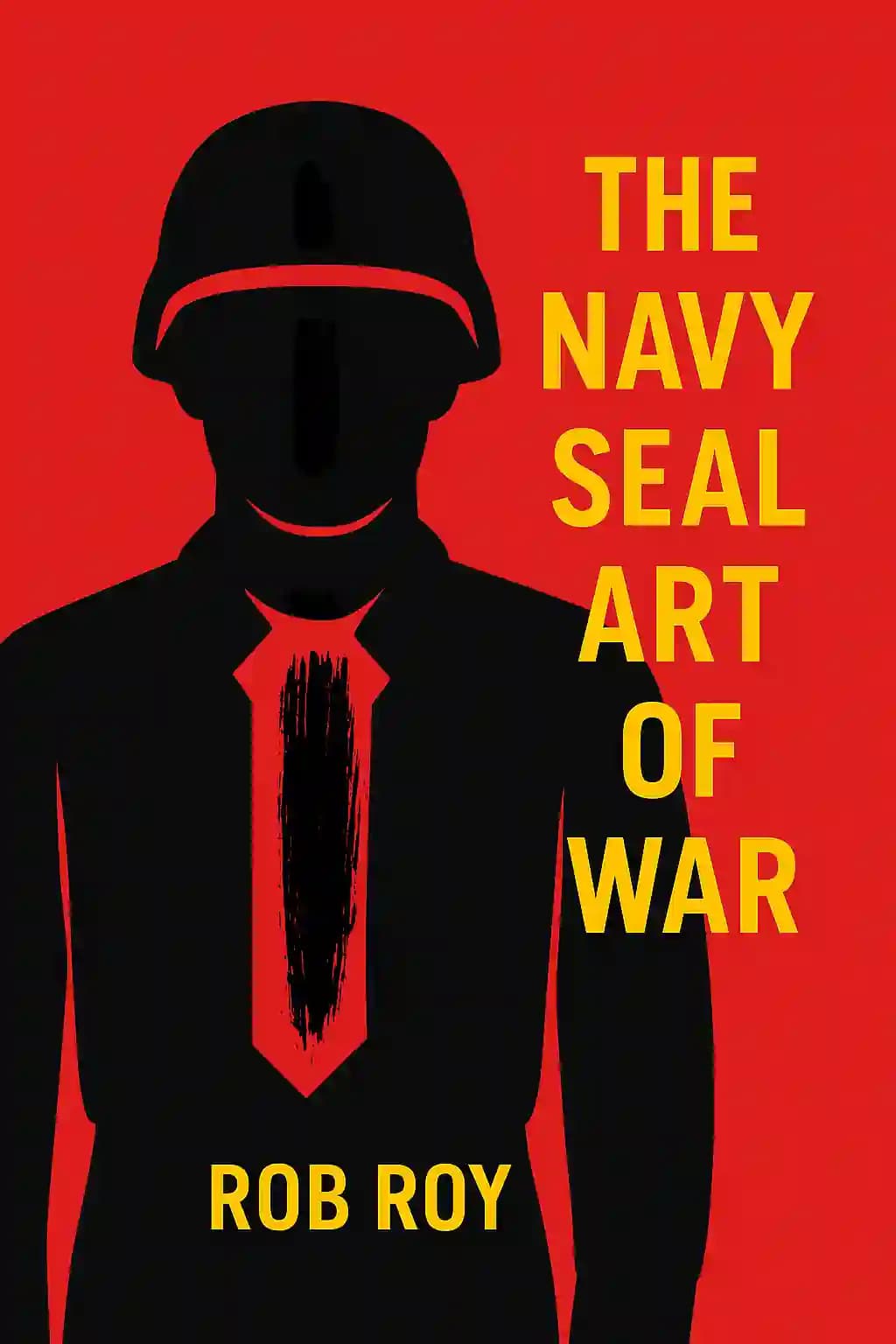
The Navy SEALs have earned their legendary status through blood, sweat, and an unwavering commitment to excellence. Their methods have been battle-tested in the most hostile environments on earth, producing a leadership philosophy that transcends the battlefield. Rob Roy's "The Navy SEAL Art of War" has become a cornerstone text for executives worldwide, with leadership programs based on these principles commanding premium prices from Fortune 500 companies. The book has been endorsed by military leaders and business titans alike, with former GE CEO Jack Welch calling it "the definitive guide to building high-performance teams." What makes this approach so powerful is its simplicity - stripping leadership down to its essential elements while maintaining the psychological depth that Sun Tzu first articulated 2,500 years ago.
Глава 2
The SEAL Ethos: Building the Warrior Mindset
The Naval Special Warfare Ethos establishes the core identity of America's maritime special operations force. It's not just words on paper but a living code that defines how SEALs think, act, and lead. At its heart lies an unwavering commitment to mission accomplishment and team welfare above self-interest, demonstrated daily through grueling training evolutions and combat operations where individual comfort is willingly sacrificed for collective success.
"We expect to lead and be led," the creed declares, establishing the fluid leadership dynamic that allows SEALs to adapt instantly to changing battlefield conditions. This mindset creates operators who thrive in ambiguity, maintain emotional control under extreme pressure, and refuse to quit regardless of circumstances. In practice, this means any team member might need to assume leadership at a moment's notice - whether directing a combat mission after a senior leader is wounded or taking charge of a critical training evolution when circumstances demand it.
The ethos emphasizes that SEALs "serve with honor on and off the battlefield." This isn't empty rhetoric - it acknowledges that character forms the bedrock of effective leadership. Without integrity, technical competence means little. The most skilled operator who lacks character becomes a liability rather than an asset. This principle extends beyond combat operations into every aspect of a SEAL's life, from financial dealings to personal relationships, recognizing that trust once broken is nearly impossible to restore.
"I am never out of the fight" stands as perhaps the most powerful declaration in the creed. This simple statement embodies the relentless persistence that separates elite performers from the merely good. It's about maintaining mental toughness when others falter, pushing through pain barriers, and refusing to surrender when conventional wisdom suggests defeat is inevitable. This mindset has enabled SEALs to survive brutal POW situations, recover from catastrophic injuries, and accomplish missions despite overwhelming odds.
The SEAL ethos creates warriors who demand innovation while expecting discipline, who embrace adversity rather than avoid it, and who stand ready to deliver decisive force when needed. It shapes operators who can transition seamlessly from combat operations to humanitarian missions, maintaining the highest standards of professionalism in any environment. The ethos instills a deep sense of humility, emphasizing that no individual is greater than the team or the mission.
Above all, it reinforces the sacred obligation to uphold the legacy of those who served before - a brotherhood written in blood and sacrifice spanning generations of warriors. This culminates in the powerful commitment that resonates through every mission: "I will not fail." This isn't bravado, but rather a solemn promise to oneself, one's teammates, and the nation, backed by years of preparation and unwavering dedication to excellence.
Глава 3
Leadership Under Fire: When Everything Is on the Line
There's a great equalizer in Basic Underwater Demolition/SEAL (BUD/S) training called Log PT. Teams of seven men hoist a 300-pound telephone pole overhead while performing grueling exercises. The log doesn't care about your background, education, or connections. It simply demands that everyone lifts their eighteen inches or the entire team suffers.
This exercise teaches crucial lessons: the only way out is through, and no one is better than the team. Those who refuse to dig deep and push through pain aren't wanted on a SEAL team. When someone quits, the mission remains - the log doesn't get any lighter.
The quitters infuriate me. I know they can make it, but they don't believe it themselves. They refuse to suck it up and just lift the fucking log. A true SEAL knows he's going to be a SEAL and pushes until his arms feel like they'll explode. The team will gladly carry someone who's shown they deserve to be there.
This principle extends beyond military operations. In my Leadership Under Fire program, business executives pay thousands to experience SEAL-style challenges. We splash them into dark water at midnight, forcing them to swim two miles to shore. This reveals who freezes, who maintains situational awareness, and who inspires others.
One participant, Paulo, a 42-year-old restaurant magnate, mentally checked out during training and was pulled from his boat crew for not following simple instructions. Despite encouragement to focus on the present moment rather than his discomfort, Paulo quit an hour later. His arrogance and unwillingness to serve as part of a larger team was evident.
Twenty-one others remained and bloomed where they were planted. They discovered that real leadership is a visceral experience. Motivation is not leadership - real leaders inspire, direct, guide, and give hope. They understand that excellence isn't an act but a habit, and they persevere because they know there's no elevator to success - you have to take the stairs.
Глава 4
Commander's Intent: Clarity in Chaos
When immediate military action is required, Navy SEALs get the call. The president simply states the end goal - sink this boat, eliminate that target, free those hostages - leaving implementation details to capable subordinates. This vital communication, known as "Commander's Intent," provides a clearly defined mission objective without micromanagement.
Unlike organizational vision statements, Commander's Intent is a specific goal for a particular mission. When plans inevitably change in the fog of war, this clear understanding of the ultimate objective empowers operators to improvise and succeed. Everyone knowing "what right looks like" allows individuals and teams to deploy their knowledge creatively when needed.
One executive, a recovering micromanager, transformed his leadership style after learning how SEALs thrive on trust. By holding employees accountable while giving them autonomy, he achieved better results and improved morale. Research shows that in great workplaces, over 90% of employees feel trusted without being micromanaged.
The foundation of effective Commander's Intent is trust - confidence that your team is properly trained and equipped for the mission. As advertising pioneer David Ogilvy advised: "Hire people who are better than you are, then leave them to get on with it."
This approach allows for nimble decision-making at the tactical level. In combat, SEALs must constantly outthink and out-execute opponents with both blinding speed and audacity. They respond to rapidly changing conditions through endless agility - adapting, improvising, and overcoming.
To achieve this state, SEALs employ John Boyd's brilliant "OODA Loop" concept: Observe, Orient, Decide, and Act in a recurring cycle. Whoever processes this cycle faster - ideally getting inside their enemy's decision-making loop - will outmaneuver opponents and ensure success. Orientation is the most crucial part since it shapes how we observe, decide, and act. For SEALs, orientation comes from experiences, culture, and exhaustive training.
Глава 5
Front Sight Focus: Maintaining Clarity Under Pressure
In 2009, three Navy SEAL snipers rescued the Maersk Alabama captain by simultaneously killing three Somali pirates with perfect precision. Despite bobbing seas and difficult conditions, they executed flawlessly - three shots, three kills.
This exemplifies what we call Front Sight Focus - being laser-focused on the mission despite any distractions. When properly dialed in, no chaos should rattle you. Emotions remain checked, and you stay in the zone. During training, we introduce countless obstacles to force relentless focus on objectives.
For shooters, this means maintaining proper sight alignment by focusing on the front sight post while centering it in the rear aperture. Even as the target blurs or battlefield sounds intrude, this unwavering focus ensures accurate shots.
Daniel Goleman, author of "Focus: The Hidden Driver of Excellence," suggests leaders need a troika approach to focus: on yourself, on others, and on the wider world. "A primary task of leadership is to direct attention," he writes. This balanced awareness prevents being rudderless (failing to focus inward), clueless (failing to focus on others), or blindsided (failing to focus outward).
This principle extends to business execution. No plan survives first contact with the enemy. For missions like the bin Laden raid to succeed, extensive planning and training are essential. When executed properly, close quarters battle becomes an almost Zen-like experience - operators flowing through spaces with deadly precision.
The key to success in these unpredictable situations is training until actions become instinctual. Repetition leads to memorization, and memorization leads to instinct. This is why the SEALs who got bin Laden didn't panic when their helicopter crashed - they'd trained for such scenarios. They knew exactly what to do without hesitation.
One CEO created a culture of endless training for his sales teams after hearing my lecture, with remarkable results. His teams never "wing it" - they prepare thoroughly, enabling them to freelance confidently when necessary. They understand the difference between confidence (based on preparation) and cockiness (based on nothing).
Глава 6
Breaking Barriers: The Power of "No Limits" Thinking
Ask the average person how many push-ups they can do, and they'll give you a specific number - "twenty-five" or "forty." Ask a SEAL the same question and you'll hear "I can do at least one hundred." This fundamental difference reveals the SEAL ethos - we think in possibilities, not limitations.
Setting hard numbers creates self-limiting barriers. When you declare you can do twenty-five push-ups, you'll likely stop at twenty-five, satisfied with meeting your goal. SEALs believe the only limitations we have are those we place upon ourselves. We charge all out to a higher standard, not stopping to count reps but pushing until complete exhaustion. If we don't attack challenges this way, our teammates will rightly ask, "Is that seriously all you've got?"
Theresa, a software development firm president, applied this mindset to her business after attending my seminar. Instead of setting specific sales targets with plus/minus margins, she shifted to "At a minimum, we will achieve XXX." This subtle change created an infectious culture that consistently exceeds minimums because they don't put limits on themselves.
This mindset is essential when facing seemingly insurmountable challenges. Former US President Teddy Roosevelt embodied this spirit long before the SEALs existed. Born physically weak with debilitating asthma, he transformed himself through sheer determination into the "bull moose" of history, conquering his ailments through rigorous commitment.
Roosevelt's famous "Man in the Arena" quote captures this philosophy perfectly - it's not critics who matter, but those whose faces are "marred by dust and sweat and blood," who strive valiantly despite errors and shortcomings. Better to fail while "daring greatly" than to be among those "cold and timid souls who neither know victory nor defeat."
When SEALs face adversity, we often ask: "Are you injured or are you hurt?" There's a crucial difference. If you're injured, you're out. If you're hurting, you can still play. During my Leadership Under Fire events, one participant dislocated his shoulder during a night swim but later popped it back in place himself and finished the course with glory. Another complained of shoulder pain but was merely hurting, not injured - he needed to push through rather than quit.
Глава 7
Team First: The Foundation of Elite Performance
SEALs expect to lead but are equally willing to be led by someone with a better plan. In the absence of orders, we take charge, but if a teammate has a superior solution during operations, rank becomes moot. This "team ability" requires mutual trust, confidence, and respect - it's what makes SEAL teams exceptionally effective.
Those who believe they always know best make poor teammates and worse leaders. A successful SEAL learns early to fit into the team rather than bend it to his will. A good leader may not always have the best ideas but excels at drawing them from others. Confident in his abilities, he doesn't need to dominate - his professionalism naturally commands respect.
This "team before self" principle resonates with executives I work with, though individuals often struggle with it. Take "One-Way Randall," a talented graphic artist stuck in mid-management because he constantly positioned himself as the smartest person in the room. His boss valued his skills but found him personally insufferable and unsuited for leadership. Randall later realized, "I always thought I had to cut others off at the knees... It was always about me, not the bigger team."
SEALs master getting along with others - essential among dynamic, Type-A personalities in high-pressure environments. We also recognize our "team" extends beyond trigger-pullers to include support personnel. For every SEAL, eight to ten others make our missions possible.
When Stephen, a hospital association's chief medical officer, applied these principles, he transformed his organization's culture by emphasizing that everyone contributes to patient care. By empowering nurses to speak without fear of reprisal and counseling doctors to show more respect, operating room errors plummeted, patient care improved, staff morale soared, and lawsuits decreased.
The concept of the "swim buddy" reinforces this team-first mentality. In BUD/S, instructors pair trainees for "two-man integrity" - everywhere you go, your swim buddy goes too. This represents teamwork at its most fundamental level. One company implemented this concept in their employee orientation, pairing new hires with veteran coworkers for their first year. What began as a way to improve orientation became team-building at its finest.
Глава 8
The Heart of Leadership: Caring for Those You Lead
Unless you truly, deeply care about the people you lead, you'll never form an elite team or be considered effective. Too many leaders remain disengaged, disingenuous, or negative - yet genuine caring is one of the easiest leadership acts with staggering benefits.
For SEAL team leaders, while the mission comes first, the people are most important. We recognize people matter more than hardware. This doesn't mean we're all close friends - I've served with guys whose personal lives remained complete mysteries to me - but we cared deeply about each other's well-being, and everyone knew it.
Caring means giving time and energy to others - talking and especially listening. It means understanding values and attitudes while addressing physical and emotional needs. It means teaching, training, coaching, and developing operators while ensuring they have necessary resources. It means creating safe workplaces free from discrimination, establishing performance standards, and demanding adherence. It means not putting yourself above others - if there aren't enough cots for everyone, everyone including the commanding general sleeps on the ground.
It's about respect. Uncaring leaders waste people's time and skills, don't hold others accountable, ignore their people, allow troops to remain ill-prepared, lack basic compassion, and consider people expendable. The most effective way to show appreciation isn't expensive corporate picnics but genuine personal connection - smiles, handshakes, showing interest in employees' personal lives. When people feel truly valued, they'll go above and beyond, hold themselves accountable, and be happier in their roles.
This servant leadership approach is exemplified by General James "Mad Dog" Mattis, who earned a reputation as both a ruthless battlefield commander and a beloved leader who cared more about "his marines" than himself. When discovered personally standing duty on Christmas Day, Mattis explained he'd relieved a young officer with family so they could spend Christmas together.
Sun Tzu understood this 2,500 years ago when he wrote: "Regard your soldiers as your children, and they will follow you into the deepest valleys." The best leaders subordinate their own needs to a greater good, putting the mission, business, employees, and customers before themselves.
Глава 9
The Bell: Choosing Excellence Over Surrender
SEALs are legendary for their resilience and perseverance, but this isn't due to special gifts or natural talent. It comes from conscious choices to leave "average" behind - reaching deep to find a can-do mindset devoted to doing whatever it takes to complete the mission.
BUD/S training was designed to be brutally demanding. The only way to survive is total commitment with no off-ramps. I've seen candidates crawling on all fours, bleeding, frothing at the mouth, making desperate plunges to finish lines - these are the teammates I want. Others convince themselves they can't take one more step or endure one more second of cold - these aren't the people I need beside me.
The iconic symbol separating warriors from the weak is The Bell. At BUD/S and SOT-G, this brass ship's bell represents the easy way out - ring it three times for a one-way ticket to Average Town. It means hot showers, warm beds, and an end to suffering - but no glory.
Life hurls seemingly unimaginable challenges at everyone. Whether facing financial disaster, failed relationships, medical emergencies, or business threats - you can finish the race or ring the bell. Winners silence the naysaying voice in their heads and remember why they started.
History's greatest entrepreneurs - Henry Ford, Walt Disney, Richard Branson - all faced multiple failures but never quit. Pete Rose made up for less natural talent with sheer determination, hustling on every play. If you want to win, commit fully. Pain is good. Extreme pain? Very good.
There's a terrific cartoon that speaks volumes about this tenacity. It shows a crane that has just plucked a fat, feisty frog from a pond and is struggling to swallow it headfirst. But the frog, with half its body already down the bird's gullet, has clamped both "hands" around the crane's neck in a death grip. The crane's eyes bulge in astonishment and terror as the frog refuses to go quietly. The caption reads: "Never Give Up."
This image represents what not-quitting looks like - pure hope and determination. It reminds me of Winston Churchill's famous 1941 speech: "Never give in, never give in, never, never, never - in nothing, great or small, large or petty." You never know how close you are to victory or success. Don't quit!
Глава 10
Know Yourself, Lead Others: The Journey to Authentic Leadership
To succeed as a SEAL - or as a leader in any organization - you must know yourself. As Sun Tzu said: "If you know the enemy and know yourself, you need not fear the result of a hundred battles." It takes hard, continuous work to truly understand your strengths and weaknesses.
Smart leaders apply the same energy, passion, and competitiveness they use for external challenges to the internal work of self-knowledge, gaining a crucial leadership advantage. This isn't navel-gazing - it's about being prepared to help yourself and others. Self-aware leaders maintain steady leadership regardless of circumstances, make better decisions, and understand what motivates both success and failure.
Without self-awareness, you risk career-damaging decisions, as my journalist friend discovered when he realized his desire to work at the Washington Post stemmed purely from ego rather than authentic career fulfillment. In BUD/S, the stress always reveals a candidate's true commitment.
This self-knowledge must be paired with competence and character - both essential for inspiring trust, a necessary ingredient for any successful leader. I trusted my teammates with my life because I trusted both their operational competence and their personal character.
General Norman Schwarzkopf emphasized these qualities as essential for 21st-century leadership, noting he'd met many competent leaders who lacked character - those only seeking promotions and personal advancement. Great leaders see beyond the platoon to the 44 individuals with hopes, aspirations, and dreams.
In warfare, competence might edge out character in importance - you can't have a SEAL leader with perfect character who can't fight effectively. But character always counts tremendously. Business leaders should ask if their company clearly values and promotes both qualities. Customers recognize the power of competence and character together - and remarkable leaders do too.
The most visible demonstration of this principle is leading from the front. If you want others to follow you, lead by example. For SEALs, that means being able and willing to lead from the front - showing your subordinates you'll share their burdens and fight shield-to-shield on the frontlines. I've never asked teammates to do anything I was unwilling to do myself.
When you lead from the front, you demonstrate that everyone's role has equal value in mission success. You gain firsthand situational awareness without filtered information. Conversely, leaders who remain cloistered miss essential opportunities and poison team morale. Studies confirm that absent leaders cause higher turnover and lower productivity.
As you develop as a leader, remember that your reputation is everything. Warren Buffett famously said, "It takes twenty years to build a reputation and five minutes to ruin it. If you think about that, you'll do things differently." Whether online or offline, your personal and professional reputation must be guarded at all costs.
For SEALs, reputations form quickly at BUD/S and spread remarkably fast. When a candidate gets labeled as someone who makes excuses, comes unprepared, or can't control their temper, that reputation follows them everywhere. Smart leaders sweat the small stuff - doing what's expected to the best of their ability.
In the end, leadership isn't about you - it's about serving something greater than yourself. As Lao Tzu said, "A good leader, who talks little, when his work is done, his aims fulfilled, they will all say, 'We did this ourselves.'"