Глава 1
From Navy SEAL to Life Mastery: The Ultimate Guide to Mental Toughness
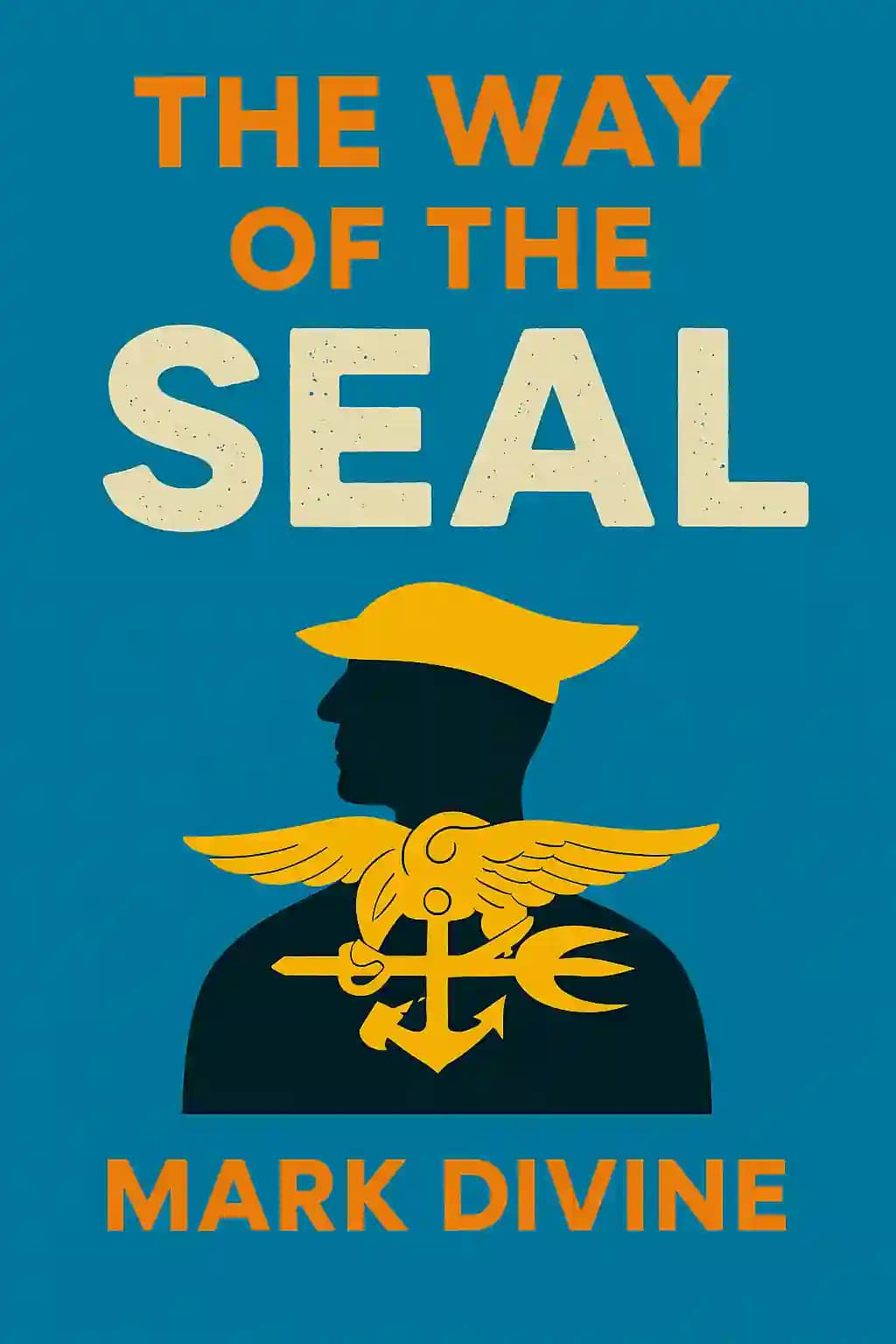
In a world where uncertainty and chaos reign, what if you could develop the mental resilience of elite warriors? Mark Divine's "The Way of the SEAL" has become a cultural phenomenon, endorsed by high-performers from Tim Ferriss to Jocko Willink, and has transformed thousands of lives with its practical wisdom. As a former Navy SEAL commander who transitioned from CPA to elite warrior to successful entrepreneur, Divine offers a rare perspective on achieving extraordinary results through mental discipline and strategic thinking. This isn't just another military memoir-it's a comprehensive framework for developing unshakable confidence and clarity in any situation.
Глава 2
Discovering Your Inner Compass: The Foundation of Elite Performance
Imagine standing at a crossroads in your life, uncertain which path to take. This was Mark Divine's reality when, as a successful New York accountant, he felt an inexplicable emptiness despite his professional achievements. During a morning run, a Navy SEAL recruitment poster with the simple phrase "Be Someone Special" caught his attention, igniting a transformation that would lead him from corporate boardrooms to becoming Honor Man of his SEAL class.
The first principle of the Way of the SEAL is establishing your "set point"-an internal reference that guides your decisions when challenges arise. Without this foundation, you'll constantly react to circumstances rather than acting from your core values. Your set point consists of three elements: your stand, your purpose, and your willingness to embrace risk.
Your stand articulates what you won't compromise on, regardless of circumstances. When interviewing for SEAL selection, Commander Woody demanded to know what Divine truly stood for beyond generic values. After deep reflection, Divine declared: "Destiny favors the prepared in mind, body, and spirit." This became his personal stand, guiding critical life decisions like leaving active SEAL duty to save his marriage.
Finding your purpose answers "Why am I here?" Divine's purpose-"To be a warrior and a leader. To master myself so I can fulfill this purpose as best I can"-emerged after leaving his accounting firm over ethical concerns. Your purpose must come from within; intrinsic motivation sustains you through challenges, while extrinsic motivation inevitably fails. In Divine's Kokoro Camp, those motivated by proving something to others typically quit, while those driven by internal values like "becoming a better man to be a better father" persevere through extreme challenges.
Embracing risk, loss, and failure completes your set point. When Divine left his high-paying corporate career for military service, he sacrificed financial security and faced family disappointment, potential failure, and even death. Yet he recognized that walking through doors of opportunity, despite their challenges, leads to greater rewards. As he discovered, the universe often rewards courage in surprising ways.
To establish your own set point, begin with deep breathing to access your subconscious mind. Define your stand by answering questions like "What would I do if I only had one year to live?" Identify your values-what you want more of in your life (like being "healthy and positive") and less of (like being "negative and judgmental"). Discover your passions by examining what activities energize you, and finally, uncover your purpose as a "being" statement rather than an achievement goal.
With your set point established, you've created an internal GPS that will guide every decision and action, connecting them to your deepest values and highest purpose.
Глава 3
Laser Focus: The Secret Weapon of Elite Performers
When a near-fatal parachute collision threatened Mark Divine's life, something remarkable happened: his mind slowed down, clarity emerged, and he performed flawlessly under extreme stress. This "front-sight focus"-the ability to concentrate completely on one target at a time-is what separates elite performers from average ones.
Most people use a scattered "shotgun" approach to goals, but SEALs engage one target at a time with precision. To develop this focus, you must first prepare your mind through practices like deep diaphragmatic breathing, which controls your physiological response to stress. When Divine neglected these practices after leaving active duty, he made poor business decisions with NavySEALs.com, rushing into partnerships without proper vetting.
Visualization is another crucial element of front-sight focus. What you can conceive and believe, you can achieve. Consider Jim, a forty-year-old sales rep who attended SEALFIT Academy feeling unsatisfied despite having security and family. Through training, he realized his passion was teaching and leading others, not industrial sales. He clarified his purpose-to inspire others to higher achievement and live honorably-and visualized opening a training facility teaching SEALFIT methods.
Two years later, Jim invited Divine to present at CrossFit Honor, his new gym in Allentown. The results were remarkable: 130 passionate members living SEALFIT values, his wife running operations, and even his twelve-year-old son participating. Jim saw it, believed it, visualized daily, and made it happen.
Defining your mission requires clarifying both explicit and implicit expectations. While explicit goals like "launch on time and within budget" are straightforward, hidden expectations often determine success or failure. Divine experienced this when developing his Unbeatable Mind training for digital delivery. His explicit mission was creating content to sell through a subscription website within sixty days, but questioning revealed implicit tasks he hadn't considered: hiring professional copywriters, establishing sales processes, learning affiliate marketing, and navigating legal issues around digital subscriptions.
Finally, simplifying the battlefield means eliminating distractions to maintain front-sight focus. Steve Jobs famously pushed for simplicity, insisting on single-button operation for the iPhone when competitors used multiple buttons. Simplification requires knowing your unique offer and decluttering your environment. The KISS (Keep It Simple, Smarty) system starts with decluttering physical spaces, then simplifying commitments using the 80/20 rule-focus on the 20% of actions producing 80% of results-and finally, simplifying your internal environment by releasing emotional baggage and limiting beliefs.
Through these practices, you'll develop the laser-like focus that enables elite performance in any field, from business to personal challenges.
Глава 4
Bulletproofing Your Mission: Planning for Success
Most ventures fail not because the idea was bad, but because the execution lacked proper risk mitigation and uncertainty elimination. Divine learned this lesson the hard way when launching Coronado Brewing Company after leaving active SEAL duty. Despite writing a detailed business plan for an ambitious brewery restaurant, he failed to ensure adequate capitalization, build a synchronized team of "A" players, or select high-value targets.
Though they opened successfully with loyal customers, partnership problems quickly surfaced, leading to legal battles, family estrangement, and his in-laws' separation. After a three-year ordeal, Divine managed to return investors' capital with profit, but learned painful lessons about partnership and mission planning.
To bulletproof your mission, you must first select high-value targets using the FITS process: Does this target Fit your skills and team with good ROI? How Important is it to mission success? Is the Timing optimal? Is the target Simple and clear? Score potential targets from 1-5 in each category to identify the highest-value opportunities.
When facing multiple paths forward, use the PROP framework: What are your current Priorities? What are the Realities of the situation? What Options do your targets suggest? Which Path forward will you select? After losing a $5 million contract to Blackwater in 2007, Divine used this process to navigate a critical decision. His priorities became damage control and determining next steps. The realities included Blackwater's superior resources and his desire to care for his employees. He identified three options and chose to release his employees to work elsewhere while pursuing a new concept, which ultimately led to creating SEALFIT.
Clear mission communication is essential for gaining support and ensuring alignment. In the SEALs, they tell stories using visual mosaics rather than boring text slides. When raising funds for CBC, Divine hired a graphic artist to render images of the brewpub, complete with discount coupons and coasters. These visuals helped him raise $1.5 million, including $800,000 from a bank despite his lack of restaurant or brewing experience. People invested not just for ROI but because the vision became real to them.
Finally, "dirt-dive" your mission through regular review and rehearsal. In the SEALs, they physically and mentally rehearse until success feels inevitable. When SEAL teams located Osama bin Laden, they rehearsed for months in a mock compound, visualizing every detail until the actual mission became "just another day." Even when physical rehearsal isn't possible, mental rehearsal in your "mind gym" is essential. At Colgate University, Divine's swim coach had him visualize his 200-yard breaststroke races each night before bed. After six months of practice, when he returned to swimming after months away, he achieved his best time ever-matching exactly what he had visualized a year earlier.
By selecting high-value targets, exploring options systematically, communicating your vision effectively, and thoroughly rehearsing your mission, you dramatically increase your chances of success in any endeavor.
Глава 5
Embracing the Challenge: Finding Your 20X Factor
"Stop screaming! Focus and get control of yourself. Breathe deeply and close your eyes." These words shocked Ed into focus as he dangled upside down from a climbing rope. Following Divine's coaching, he regained control, got his feet on the wall, and pushed off. Later, Divine learned Ed had transformed his life-losing weight, getting fit, and earning a promotion. He'd discovered his "20X factor"-the realization that we're capable of twenty times more than we believe.
Are you an extra in someone else's play or the author of your own drama? Your reality forms at the intersection of your subjective story and objective reality. Too many of us operate from flawed beliefs, buffeted by external events rather than guided by purpose and values.
Joe exemplifies this struggle. Despite business success, he suffered from a fragmented sense of self stemming from childhood trauma with his alcoholic mother. At 54, after countless hours of therapy, he still felt unfulfilled. When he saw Divine's Kokoro Camp-SEALFIT's fifty-hour civilian Hell Week-something stirred in him. Through physical trials, team challenges, and meditation, Joe confronted his deepest beliefs and discarded mental garbage that had limited him for decades. His breakthrough transformed both his personal relationships and his business focus.
Most people avoid extreme challenges, but satisfaction and joy often lie on the other side of difficulty. The industrial age eliminated many natural challenges but brought obesity, poor health, and purposelessness. We must create a new cultural story that recognizes hard work and mighty effort as necessary for true happiness.
"Pain is weakness leaving the body" and "Suck it up!" are common SEAL sayings that describe the alchemy of transforming training-induced pain into confidence. You don't need superhuman abilities-you just need to endure pain better than the average person. It's crucial to distinguish between "integrating pain" (good) and "dis-integrating pain" (bad). Good pain leads to growth; bad pain causes injury or regret.
One technique for embracing challenges is to immediately shift focus to something positive and smile or laugh. During Hell Week, when "Instructor Evil" tried to break Divine with one thousand eight-count body builders, he started laughing uncontrollably after hitting his physical limit at seven hundred reps. This mental shift sent energy coursing through him. Looking the instructor in the eye, he said, "Easy day, this is fun." Recognizing his inner strength, the instructor released him back to class.
Excellence isn't an act but a habit formed through the Three Ds: Discipline, Drive, and Determination. Discipline is the spark igniting habit formation-literally meaning to be a disciple to a higher purpose. Drive provides motivation-the desire, belief and expectation that extraordinary achievement is possible. Determination is the long-view commitment. World-class performers aren't always naturally talented-they're the hardest working and most determined.
By embracing challenges, finding your 20X factor, and building the Three Ds, you'll discover capabilities far beyond what you currently believe possible.
Глава 6
Forging Mental Toughness: The SEAL Mindset
Mental toughness-the ability to hang on after others have let go-isn't developed through a silver bullet solution but earned through trial by fire. Interestingly, SEAL training success isn't about athletic ability but about "grit"-being first in, last out, fighting hard with a smile.
At SEALFIT, trainees begin by holding a push-up position for forty-five minutes. Most fail after five minutes but learn through repeated attempts that physical limits are determined by mental limits. This introduces five fundamental skills for forging mental toughness: controlling your response, controlling your attention, developing emotional resilience, setting effective goals, and visualizing powerfully.
SEALs use breath control to manage their fight-flight-freeze response. The breath connects our sympathetic nervous system (stress response) with our parasympathetic system (calming response). Box Breathing-inhaling for four counts, holding for four counts, exhaling for four counts, and holding again for four counts-fully oxygenates the blood, detoxifies organs, and centers the mind.
Attention control is the SEAL version of positive self-talk-shifting our focus from negative to positive thoughts. Divine uses the Native American legend of two wolves (or "Fear Dog and Courage Dog") battling within us. Whichever one we feed wins. We can't eliminate Fear Dog completely, but we can weaken him by redirecting his energy into discipline while feeding Courage Dog with positive thoughts. Simply asking "What dog am I feeding?" helps maintain awareness and positive internal dialogue.
During his 300-hour SCARS combat training in 1994, Divine learned that emotional control is crucial for warriors. When a classmate knocked out his tooth, his anger distracted him from focusing on his next target, putting him on the defensive. Emotional resilience-the ability to bounce back quickly from setbacks-is essential for mental toughness.
Many people think positively but feel negatively, creating an emotional purgatory. True positivity requires alignment of speech, visualization, and feelings. The DIRECT process (Detect, Interdict, Redirect, Energize, Communicate, Train) can be extended to emotions. Since most emotions beyond love and fear are stored thought energy, we can witness negative emotions, interdict them, and redirect them into positive ones.
Setting goals ignites a success spiral that feeds mental toughness by providing something to strive for, visualize, and focus on. Well-stated goals are SMART: Specific, Measurable, Achievable, Realistic, and Time-bound. When things get tough, create smaller "microgoals" focused on immediate targets rather than distant objectives. During Hell Week, Divine focused not on earning his Trident but on finishing the current training round with his team intact.
Visualization takes three primary forms: guided meditation (scripted images for relaxation or healing), mental projection (imagining yourself achieving goals), and mental rehearsal (practicing skills mentally). Research shows dedicated mental rehearsals produce results similar to live practice. Tiger Woods credits his success partly to mental rehearsals combined with physical practice.
Through these five practices-controlling your response, controlling your attention, developing emotional resilience, setting effective goals, and visualizing powerfully-you'll forge the mental toughness needed to overcome any obstacle.
Глава 7
Breaking Things: The Art of Innovation and Adaptation
When Mark Divine's e-commerce business NavySEALs.com crashed after a website migration failure, he made the tough decision to lay off his team and rebuild from scratch rather than desperately clinging to what was broken. This principle of breaking and remaking is achieved through total commitment, failing forward fast, navigating gaps for opportunity, and innovating quickly.
True commitment means burning your boat upon the shore of action, removing all escape routes. When SEAL Team ONE was tasked with protecting Iraqi elected officials in 2004-a mission completely outside their normal operations-they responded with "Yes, sir, we've got this!" rather than "I'll give it a try." This certainty creates powerful momentum. Commitment doesn't mean knowing exactly how you'll accomplish something; it means pledging to find a way or make one.
In our chaotic world, failure is inevitable despite preparation. The Way of the SEAL embraces risk, expecting and even welcoming failure as essential for growth. Alden Mills exemplifies failing forward fast with his Perfect Pushup success story. After burning through $1.5 million on his failed Body Rev product, he had only $25,000 left. Rather than tweaking the failed product or giving up, he created the simpler Perfect Pushup, used targeted print ads in men's magazines, and achieved nationwide retail placement in just one year.
The SEAL approach systematizes trial and error: try something new, fail, analyze lessons, implement changes, incorporate insights, and try again until success. This process conditions teams to expect failure as part of growth rather than as a reason for punishment.
In times of rapid change, gaps emerge between old and new realities, creating numerous opportunities for those who can spot them. While most people either look backward with nostalgia or forward with anxiety, WOS leaders operate in the present moment where creativity flourishes. The rational mind dwells in past or future, but the creative mind exists in the now.
While Marines are "Semper Fidelis" (Always Faithful), SEALs operate by "Semper Gumby" (Always Flexible). This flexibility allows them to function in chaos and navigate opportunity gaps. During Desert Storm, when a SEAL platoon needed to transfer large amounts of C-4 explosives to shore undetected, a junior SEAL suggested using boogie boards to float the explosives-an unconventional but brilliant solution that addressed all their needs.
Beyond risk aversion and fear of failure, indecision often kills innovation through inertia. WOS leaders know that any plan is better than no plan, and a good plan executed now beats a perfect plan executed too late. This doesn't mean acting without thinking, but getting comfortable with "good enough" plans based on incomplete information, letting intuition guide you, and improving as you go.
By embracing total commitment, failing forward fast, navigating opportunity gaps, and innovating quickly, you'll develop the ability to break things when necessary and rebuild them better than before.
Глава 8
Harnessing Intuition: The Warrior's Sixth Sense
Breaking things with your rational mind is only half the equation-your most creative ideas often come from your subconscious. Learning to harness this powerful intelligence will break you through to new levels of awareness and accomplishment. Most people ignore intuitive moments like bad feelings about situations, sensing something before it happens, or experiencing deja vu.
Military organizations have researched intuitive techniques since the Cold War. Projects like Trojan Horse sequestered special forces to practice aikido and meditation, resulting in improved concentration, accuracy, stress management, and "intuitive awareness." Divine's own experience with Apache scout training taught him that the intuitive mind communicates through imagery and sensations rather than rational language.
Awareness means simultaneously attending to both the whole and details of a situation. Divine teaches two eye techniques: Focused Awareness (looking intently with laser-like vision) and Relaxed Awareness (using soft, defocused eyes that absorb information like windows). The first engages conscious processing while the second allows subconscious information flow-the state where Einstein and other "geniuses" accessed their greatest insights.
SEALs on patrol demonstrate this perfectly-using Relaxed Awareness until danger is sensed, then immediately shifting to Focused Awareness. In business settings, this translates to absorbing meeting details broadly, then focusing on specific questions, constantly shifting between states to optimize performance.
Developing sensory perception allows you to take in more information through all five senses, fostering mindfulness and deeper self-connection. In business settings, Divine prepares for important meetings by breath control, stilling his mind, and scanning his body for intuitive signals about others' emotional states. He'll adjust his approach based on sensing someone's uneasiness, dishonesty, or negative energy.
Life experiences, especially from childhood, can solidify into negative beliefs that drive our behavior in subtle ways-what Divine calls your Background of Obviousness (BOO). These are hidden in plain sight, obvious to others but not to you. For example, if your mother became extremely upset over minor events, as an adult you may experience perpetual anxiety and outbursts that seem justified to you. These hidden beliefs can sabotage your confidence in your intuition and prevent authentic communication with teammates.
The stomach, often called the "little brain" with millions of neurons, gives you information about your body's reactions to subconscious messages. When danger lurks, your stomach diverts blood to extremities-your brain may not register the threat, but you feel the tug. Trusting your gut means learning to acknowledge this information.
As you practice these techniques, you'll develop a clearer channel between your conscious and subconscious mind through your "mind gym"-a mental space where you can meditate, visualize, practice skills, and seek healing. When facing difficult decisions that you've analyzed but can't resolve, you can invite an imaginary counselor into your mind gym for guidance.
By expanding your awareness, strengthening your sensory perception, uncovering your Background of Obviousness, and opening up to your inner wisdom, you'll develop the intuitive capabilities that give elite warriors their seemingly supernatural abilities to sense danger and opportunity.
Глава 9
Thinking Offense: The Ultimate Competitive Edge
The eighth principle teaches you to adopt an offensive rather than defensive mindset in all situations. Instead of hunkering down when things go wrong, you'll scan the field, prepare contingencies, and take decisive action at the first opportunity. As Emerson said, "Do not go where the path may lead; go instead where there is no path and leave a trail."
Developing unwavering confidence begins with transforming your language from defensive to offensive. During SCARS training at SEAL Team THREE, Divine learned that defensive language like "block" and "deflect" programmed his body to respond slowly to threats. Words stimulate imagery-defensive words create defensive mental pictures that undermine total commitment. By replacing weak words (defend, retreat, can't, try) with strong ones (attack, pounce, will, do), you reprogram your mind for victory.
True confidence comes from developing constant awareness of your surroundings. SEALs use the Cooper Color system to maintain awareness: White represents complete unawareness, Yellow is alert scanning for threats and opportunities, Orange is preparation for action, and Red is total commitment to action. SEALs maintain Yellow awareness as baseline, allowing them to act with speed when needed. In business, your "enemies" are competitors, and threats include market changes or competitors beating you to market.
Doing the unexpected means looking at things differently than everyone else does. SEALs have an "all options on the table" approach-they don't follow the enemy's rules or even their own if they're broken or outdated. Breaking rules within ethical boundaries allows you to exploit opportunities others miss. The rules worth breaking are those representing weak patterns of behavior built on outdated thinking, rules that blindly constrain good options, or those that are impractical or stupid.
Several common rules worth breaking: 1) Multitasking is efficient (it actually reduces focus and performance by 28%); 2) Nice guys finish last (you can be both nice and intensely focused); 3) More is better (doing fewer things better aligns with your purpose); 4) Fight fair (competition is inherently unfair, so be aggressive while maintaining cooperation); 5) Always tell the truth (sometimes filtering truth protects others); 6) Eat three square meals (eat when hungry and follow an 80/20 nutrition rule); 7) Be real all the time (sometimes you must "act the part" in leadership); 8) Nothing good comes free (giving away valuable content builds trust and loyal followers).
Velocity and agility are critical for staying ahead of competition. Like the SEAL team that captured Bin Laden with surprising speed, WOS leaders must execute rapidly. Commander William McRaven identified five principles of successful special operations, with surprise and speed being key to capturing opponents' minds. In business, Samsung demonstrated this by quickly producing tablets to compete with Apple's iPad.
The OODA loop (Observe, Orient, Decide, Act) is a tactical decision-making process that enhances agility and velocity in chaotic environments. Colonel John Boyd's concept shows that whoever navigates their OODA loop fastest gains the upper hand-speeding up your cycle while slowing your competitors'. The offensive leader doesn't kill momentum with overplanning but shifts with the landscape using the OODA loop, maintaining forward momentum while competitors hedge their bets.
By developing unwavering confidence, activating your radar, doing the unexpected, and executing with velocity and agility, you'll gain the offensive mindset that separates winners from losers in any competitive environment.
Глава 10
Training for Life: Integrating the Way of the SEAL
Growth is essential to avoid regression in life. Just as our bodies require proper nutrition and activity to maintain development through each life phase, our mental capacities need continuous cultivation beyond early adulthood. The Way of the SEAL principles, when actively trained and integrated, become part of your identity, shaping your reality and delivering extraordinary results in surprising ways as you develop clarity, focus, and power.
You can't force your own development; you can only facilitate it. Taking a "slow is smooth" approach allows your body and mind to absorb concepts and techniques completely, making them available in "smooth and fast" form when needed. Like the SEALs' "crawl, walk, run" rhythm, you must master fundamentals before advancing.
The Way of the SEAL requires building various skills through drills, exercises and tools. Morning and evening rituals provide an effective framework for combining key techniques into daily training sessions that strengthen your mental, emotional, intuitional and spiritual mountains. Integral training means cross-training the five human capacities: Physical (functional fitness), Mental (focus and toughness), Emotional (control and resilience), Intuitional (awareness), and Spiritual (kokoro-merging heart and mind in action).
To achieve serious change, you must visualize victory rather than focusing on what you don't want. However, you need to know your starting point before planning your path forward. A self-assessment helps determine which mountains need development and which WOS principles resonate most with your current situation.
For the time-pressed, incorporate brief but powerful practices: a 20-minute morning ritual (yoga, Box Breathing, visualization), midday physical training during lunch, afternoon power breaks, device-free family dinners with Authentic Communication, evening reading instead of screen time, and a pre-bed ritual of breathing, reflection and planning. Even small increments of training will transform your life, providing calmness and focus to achieve your goals.
Three examples demonstrate how different people integrate training: Mark's intensive four-hour daily regimen including two hours of physical training; Melanie's balanced approach as a single mother fitting training around childcare; and Jeff's three-hour daily practice while transitioning from corporate management to entrepreneurship. Each schedule illustrates how to adapt the Way of the SEAL to different lifestyles while maintaining consistent practice across the five mountains.
Maintaining discipline is crucial when the initial excitement wears off and progress in inner development becomes less visible than physical changes. Inner growth follows a nonlinear, exponential pattern rather than the linear progression of physical training. To stay committed, designate a permanent distraction-free space for your practice; gain family support by including them in your training; maintain motivation by reviewing your purpose daily; track progress through Focus Plans and journaling; refresh your plan quarterly with new practices and goals; and join practice groups for accountability.
When pursuing self-mastery, you commit to truth, wisdom, and leading with heart. Wisdom and heart emerge through moral courage, which is forged by facing risk, loss, and failure. The global challenges we face require collective effort at individual, team, and systemic levels-an upwelling of honor, courage, and commitment for humanity.
By integrating these principles into your daily life through consistent practice and training, you'll develop the mental toughness, clarity, and resilience that characterize elite warriors and exceptional leaders in any field. The Way of the SEAL isn't just a set of techniques-it's a comprehensive approach to living with purpose, power, and peace.