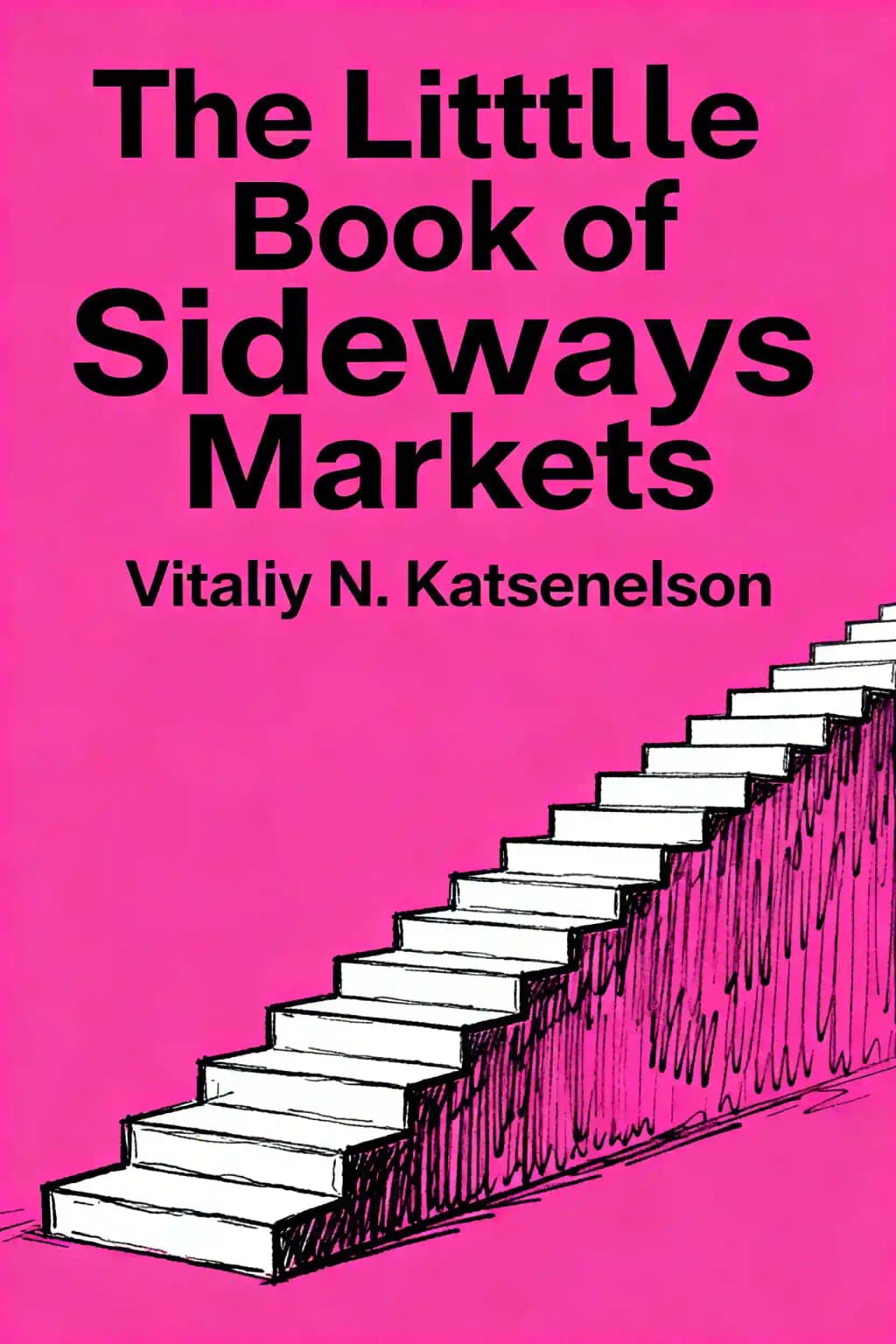
Navigate volatile markets with confidence using Katsenelson's acclaimed sideways market playbook. Called "the bible for investing in tumultuous times" by economist David Rosenberg, this guide reveals why volatility is actually a stock picker's best friend - if you know how.
Vitaliy N. Katsenelson, CFA, is the acclaimed author of The Little Book of Sideways Markets and a leading voice in value investing. Born in Murmansk, Russia, he is now CEO of Denver-based Investment Management Associates. He combines decades of market experience with contrarian strategies for range-bound markets.
The book distills his expertise in navigating stagnant markets through disciplined valuation frameworks, shaped by his role as a former University of Colorado finance instructor and columnist for The Financial Times, Barron’s, and Institutional Investor.
Katsenelson’s investing insights extend to his bestselling Active Value Investing and the philosophical Soul in the Game, exploring life’s meaning beyond finance. Recognized by Forbes as “the new Benjamin Graham,” he shares actionable analysis through his blog Contrarian Edge and newsletter The Intellectual Investor. His works have been translated into eight languages, cementing their status as essential resources for investors worldwide.
The Little Book of Sideways Markets by Vitaliy N. Katsenelson explains how to navigate stagnant or volatile markets through active value investing. It introduces the QVG framework (Quality, Valuation, Growth) to identify undervalued companies and advocates a buy-and-sell strategy over traditional buy-and-hold approaches. The book emphasizes adapting to market cycles, dividend-focused investing, and rational decision-making during prolonged periods of flat returns.
This book is ideal for value investors, financial professionals, and anyone seeking strategies to profit in sideways markets. It suits intermediate investors familiar with market basics but looking for actionable frameworks like QVG. Beginners may find it challenging due to its focus on active portfolio management and valuation analysis.
Yes, for its clear, practical advice on sideways market investing. Katsenelson’s QVG framework and emphasis on dividend stocks provide actionable insights, while historical examples make complex concepts accessible. Critics note it requires effort to implement strategies effectively, but its focus on disciplined investing makes it a valuable resource.
The QVG framework evaluates stocks based on:
The book rejects passive buy-and-hold approaches for sideways markets, where stagnant returns demand active management. Instead, it advises cyclical buying and selling based on valuations, reinvesting dividends, and rebalancing portfolios to lock in gains during P/E reversion periods.
Sideways markets are prolonged periods (often decades) of flat returns driven by mean-reverting P/E ratios. Katsenelson shows they follow bull markets more often than bears, requiring investors to prioritize dividends, valuation discipline, and selective buying to outperform.
It advocates concentrated portfolios of high-QVG stocks, arguing overdiversification dilutes returns. Risk is mitigated through margin-of-safety valuations, avoiding overleveraged companies, and selling when prices exceed intrinsic value.
Dividends are critical in sideways markets, often constituting most returns. The book advises targeting companies with strong dividend histories and sustainable payout ratios, reinvesting dividends to compound gains during low-growth periods.
He emphasizes global diversification but warns against ignoring geopolitical risks. Investors should apply the QVG framework globally, focusing on markets with stable governance and transparent accounting.
Critics argue its active approach demands significant time and expertise, making it less suitable for casual investors. Some find its valuation methods complex, and its strategies may underperform in strong bull markets.
While Michael Covel’s The Little Book of Trading focuses on trend-following strategies across all markets, Katsenelson’s work targets value investing in stagnant periods. Covel prioritizes technical analysis, whereas Katsenelson emphasizes fundamental valuation.
With markets facing volatility from geopolitical tensions and economic uncertainty, Katsenelson’s frameworks help investors navigate flat or erratic returns. His focus on dividends and disciplined selling remains applicable to modern portfolio challenges.
Katsenelson is a CFA charterholder, CEO of Investment Management Associates, and former finance professor. Recognized by Forbes as the “new Benjamin Graham,” he combines academic rigor with practical investing experience, detailed in his books and articles for Financial Times and Barron’s.
Почувствуйте книгу через голос автора
Превратите знания в увлекательные, богатые примерами идеи
Захватите ключевые идеи мгновенно для быстрого обучения
Наслаждайтесь книгой в весёлой и увлекательной форме
Investors mistake P/E-driven returns for economic advancement.
Sideways markets create a false sense of opportunity.
Consumption debt simply increases costs and future obligations.
We face a slower-growth 'muddle-through' economy.
Avoiding losses becomes critical since there's no bull market tailwind.
Разбейте ключевые идеи Little Book of Sideways Markets на понятные тезисы, чтобы понять, как инновационные команды создают, сотрудничают и растут.
Погрузитесь в Little Book of Sideways Markets через яркие истории, превращающие уроки инноваций в запоминающиеся и применимые моменты.
Задавайте любые вопросы, выбирайте свой стиль обучения и создавайте идеи, которые действительно вам подходят.

Создано выпускниками Колумбийского университета в Сан-Франциско
"Instead of endless scrolling, I just hit play on BeFreed. It saves me so much time."
"I never knew where to start with nonfiction—BeFreed’s book lists turned into podcasts gave me a clear path."
"Perfect balance between learning and entertainment. Finished ‘Thinking, Fast and Slow’ on my commute this week."
"Crazy how much I learned while walking the dog. BeFreed = small habits → big gains."
"Reading used to feel like a chore. Now it’s just part of my lifestyle."
"Feels effortless compared to reading. I’ve finished 6 books this month already."
"BeFreed turned my guilty doomscrolling into something that feels productive and inspiring."
"BeFreed turned my commute into learning time. 20-min podcasts are perfect for finishing books I never had time for."
"BeFreed replaced my podcast queue. Imagine Spotify for books — that’s it. 🙌"
"It is great for me to learn something from the book without reading it."
"The themed book list podcasts help me connect ideas across authors—like a guided audio journey."
"Makes me feel smarter every time before going to work"
Создано выпускниками Колумбийского университета в Сан-Франциско

Получите резюме книги «Little Book of Sideways Markets» в формате PDF или EPUB бесплатно. Распечатайте или читайте офлайн в любое время.
Imagine boarding a roller coaster that thrills you with dramatic ups and downs for hours, only to deposit you exactly where you started. This is precisely what a sideways market feels like - exhilarating and exhausting, yet ultimately going nowhere. These markets aren't anomalies but predictable patterns that typically last about 17 years, following extended bull markets. During these periods, investors experience a psychological journey from optimism to frustration as their expectations clash with market reality. The 20th century witnessed this pattern repeatedly. The 1966-1982 sideways market featured five distinct cyclical bull and bear markets, with the Dow Jones fluctuating between 600 and 1000 points multiple times. Similarly, after the extraordinary bull run from 1982 to 1999 that delivered nearly 13x returns, we entered another sideways period that continues today. What drives these extended sideways periods? Two opposing forces cancel each other out: earnings growth pushes stocks up while P/E compression pulls them down. During the 1966-1982 sideways market, corporate earnings grew about 6.6% annually, but P/E ratios simultaneously declined 4.2% per year as investors became increasingly pessimistic, resulting in modest 2.2% annual price increases. This mathematical relationship creates the sideways pattern that frustrates investors who still expect bull market returns.
In sideways markets, Katsenelson's QVG framework offers a more effective approach than traditional buy-and-hold strategies. Quality forms the foundation - companies need sustainable competitive advantages that protect against competitors who would otherwise erode returns through price cuts or increased spending. Quality companies generate substantial free cash flows after all expenses, providing a more reliable measure of profitability than manipulatable earnings. Valuation creates your margin of safety. Investors need multiple valuation tools, not just relative measures like P/E ratios, which can mislead in sideways markets. A margin of safety of 30-50% below intrinsic value protects against disappointments. Growth - through earnings and dividends - rewards patience while valuations normalize. Growing earnings compress P/E ratios over time, while dividends provide income during the wait. A $15 stock with $1 EPS growing 15% annually doubles earnings in five years, generating 10% annual returns at 12x P/E, or 15% with a 5% dividend yield. The framework's power lies in the interaction of these dimensions. High scores in just one area aren't enough - H.J. Heinz proved quality alone couldn't save an overvalued, slow-growth company, while General Motors showed cheap valuation without quality or growth often leads to failure.
We're witnessing the end of a 60-year debt supercycle with profound implications. Consumer debt-to-GDP ratios rose from 50% to over 100% before the Great Recession, creating economic tailwinds that have now reversed. While productive debt funds future income-generating activities, consumption debt only increases future obligations without creating value. Consumers are now deleveraging - paying down debt and saving more - while governments have assumed massive sovereign debt that cannot grow indefinitely. Historical analysis of 250 financial crises shows post-crisis recoveries typically take 6-8 years, with slower growth and more frequent recessions. We face a "muddle-through" economy with higher structural unemployment. The days of ignoring global economic issues are over. While bottom-up analysis sufficed in the growth-oriented 80s and 90s, today's interconnected economies and indebted governments require careful attention to macroeconomic conditions. Japan serves as a warning sign - after its 1990s market collapse, multiple stimulus packages achieved little. Now facing 200%+ debt-to-GDP and severe demographic decline with 28% of its population over 65, Japan exemplifies the challenges of debt-laden economies.
Long-term investing remains valid in sideways markets, but execution must change. Replace "buy-and-hold" with active value investing: buy when undervalued and sell when approaching full value, not just when overvalued. Sideways markets feature high volatility despite ending where they began. Don't try timing the overall market - instead, focus on individual stock valuations through disciplined buying and selling. Evaluate companies through two lenses: company analysis (quality and growth) and stock analysis (valuation). For quality companies at high valuations, maintain a wish list with target buy prices. Avoid losses by rejecting marginal investments. Unlike in bull markets, cash is a viable option when quality stocks at good prices aren't available. While companies strong in both Quality and Growth dimensions offer better prospects, beware of "religion stocks" - high-quality growth companies with excessive valuations. Even excellent businesses like Coca-Cola in the late 1990s disappoint when their premium valuations meet slowing growth.
Dividends are crucial in sideways markets, typically comprising over 90% of total returns. They act as "bear market protectors" and "return accelerators," with reinvested dividends both buffering downturns and amplifying recoveries. As indicators of financial health, dividends come from real cash flows, not manipulated earnings. Companies with higher dividend payouts often show faster earnings growth because dividends force management discipline in capital allocation. Think of dividends as a bird in hand versus two in the bush. While bull markets chase future gains (birds in bush), sideways markets favor reliable dividend income (bird in hand). Consistent dividend-raising companies typically outperform in sideways markets. Growing dividends create price support and attract income-seeking investors, offering both steady income and potential appreciation when price growth is limited.
China's economy resembles the movie Speed's bus - it must maintain momentum or risk collapse. This has led to empty malls, ghost cities, and an enormous property bubble, with housing prices reaching 30-50 times annual salaries in major cities. As investors, we must evaluate companies' true earnings potential when current tailwinds reverse. Focus on businesses with strong competitive positions, low debt, and resilient business models. For high-quality but slow-growing companies trading at attractive valuations, demand a larger margin of safety or seek specific catalysts like restructuring. Remember: never compromise on multiple dimensions, as this compounds risk and reduces returns.
Sideways markets aren't investment deserts - they're fields of opportunity for those with the right tools and mindset. While overall markets may stagnate, individual stocks still offer tremendous potential for investors who understand the QVG framework and practice active value investing. Market averages mask individual stock performance. Even in sideways markets, many companies deliver exceptional returns through earnings growth, dividend income, and valuation improvement. The key is identifying these opportunities systematically before others discover them. Sideways markets are a value investor's paradise, where emotional reactions create mispricings that disciplined investors can exploit. By focusing on quality companies with reasonable valuations and sustainable growth, you position yourself to thrive when markets go nowhere. Success requires patience, discipline, and contrarian thinking. The rewards are substantial - steady returns in challenging times and the satisfaction of skillful navigation when others struggle. This new reality demands adaptation to lower returns, higher volatility, and frequent disruptions. While transformative technologies and economic reforms will eventually fuel another bull market, investors must adjust their strategies for the current environment.


