Глава 1
The Journey Begins Where You Stand
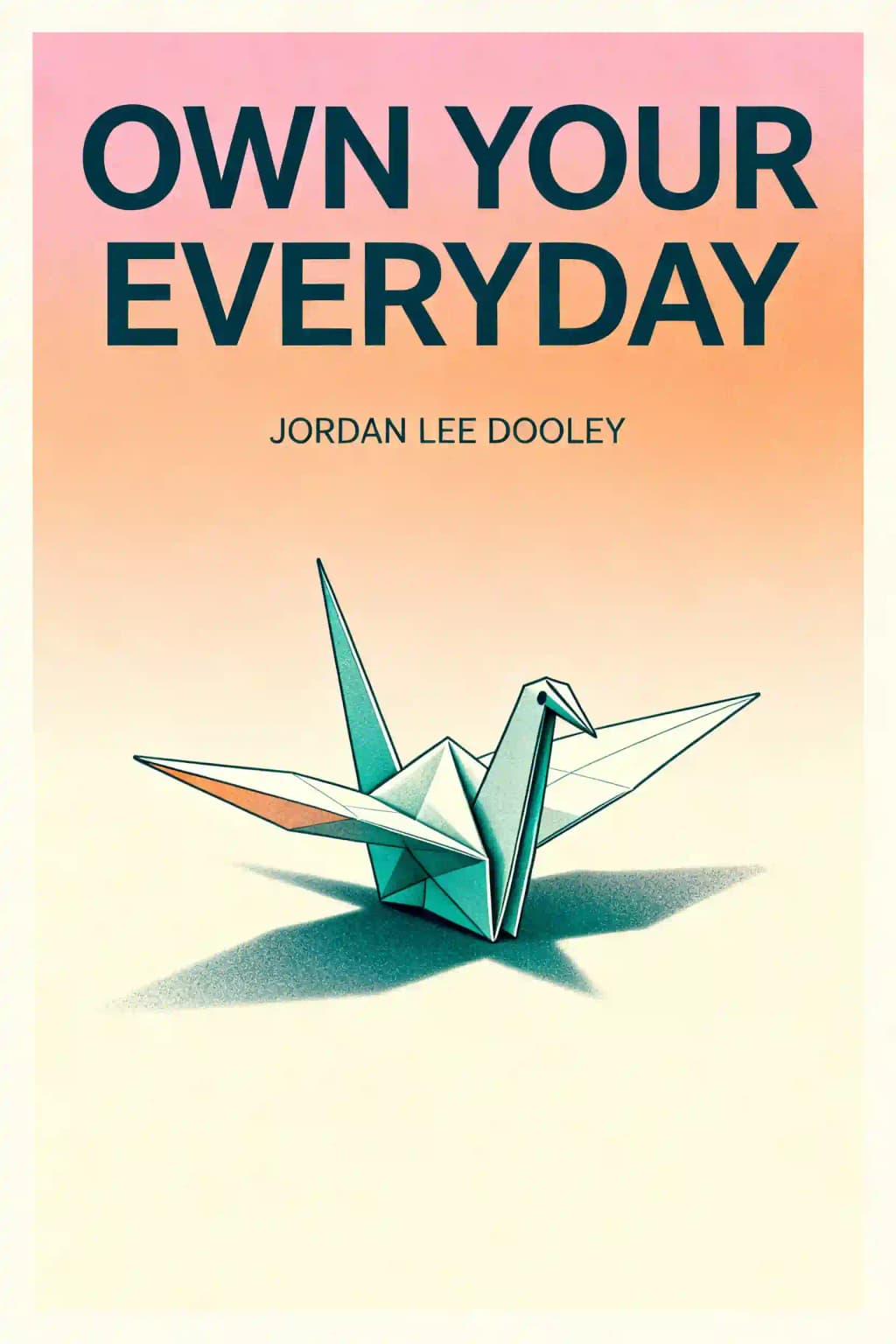
In a world obsessed with finding purpose, Jordan Lee Dooley offers a refreshing perspective: perhaps we're not meant to search for purpose at all, but to recognize it's been within us all along. As a self-described "recovering perfectionist with a chronic need to achieve," Jordan's journey resonates with millions of women worldwide who feel the crushing pressure to map out their futures with precision. Her book "Own Your Everyday" has become a cultural phenomenon, particularly among millennial women seeking authentic guidance in an Instagram-filtered world. What makes this book stand apart in the crowded self-help market is Jordan's ability to blend vulnerability with practical wisdom-creating a work that feels less like advice from an expert and more like a heart-to-heart with a trusted friend who just happens to have figured a few things out ahead of you.
Глава 2
Breaking Through Walls to Find Your Purpose
Growing up playing imaginary games with her Hispanic grandmother (Nana), Jordan learned a simple yet profound lesson: "You can't walk through walls." In their make-believe houses created with masking tape on carpet, Nana always left gaps for doorways-teaching young Jordan that doors are essential both for letting others in and for stepping out beyond the walls we build to avoid vulnerability.
During these childhood games, Jordan earned the nickname "Sparkles" from her grandmother because of her natural desire to shine and be seen. Together, they would take "big steps"-a special tradition that became their way of approaching life. Nana encouraged Jordan to take fearless steps with purpose before having everything figured out, instilling a courage that would later prove invaluable.
Years later, when Nana developed Alzheimer's, their roles reversed dramatically. The woman who once nurtured Jordan no longer recognized her, and instead of Nana feeding Jordan, Jordan found herself feeding peaches to her grandmother from a plastic cup. When Nana passed away, Jordan's grief was overwhelming. She drove home from college in tears, arriving just in time to kiss her grandmother's pale forehead one final time before she died.
In the aftermath of this loss, Jordan tried to distract herself from mourning by wrapping her life in achievements-academic accomplishments, leadership positions, a boyfriend, and resume boosters. She became the quintessential overachiever: partying on Friday nights yet acing Monday morning tests, all while juggling extracurriculars, a part-time job, and training for a half marathon. These seemingly positive labels-"the smart girl," "the put-together girl"-became like the tape walls from her childhood games: mere illusions that never truly kept her safe, just imaginary boxes she got stuck inside.
What Jordan didn't realize then was that these walls existed only in her mind. The pressure to prove herself and her true purpose could not coexist. It wasn't her skill set holding her back, but her mindset-a revelation that would eventually transform her approach to life and purpose.
Глава 3
Finding Connection Beyond Fitting In
After Nana's death, Jordan joined a sorority seeking the sense of belonging her grandmother had provided. Standing in line during recruitment in a puffy pink jacket while surrounded by perfectly dressed girls, she felt completely out of place. The pressure to prove herself was overwhelming as she rattled off achievements to sorority sisters, hiding her awkwardness behind lipstick.
Despite receiving a bid from AOII, Jordan almost didn't accept it, overthinking whether she'd fit in or if they'd discover her imperfections. Free pizza convinced her to attend the welcome party, where her fears melted amid enthusiastic welcomes. What she thought would simply be a place to fit in revealed something much deeper about her purpose.
Living in the sorority house with three roommates, Jordan discovered through late-night conversations and spontaneous ice cream sessions during breakups that she was made for authentic friendship-real connection beyond just fitting in. Her interior walls began to crumble as a passion for sisterhood and empowering women sparked within her.
"I realized God uses seemingly insignificant places to reveal our purpose, even when we begin with selfish motives," Jordan reflects. This understanding transformed her perspective: purpose isn't found in jobs, degrees, or titles, but in the meaning that drives our lives. Life improves when we stop trying to fit in and instead welcome others to the table, even those completely different from us.
This realization inspired her shop tagline, "Your Brokenness Is Welcome Here," and taught her that small steps taken before everything makes sense are actually the big steps that matter most. Through this experience, Jordan learned a universal truth: we miss who we're made to be when focusing on what we think we're supposed to be.
Глава 4
Digging Beneath the Surface to Build a Foundation
Jordan's battle with cystic acne taught her a powerful lesson about addressing root causes rather than symptoms. After trying to handle breakouts herself-resulting in bruises, ice packs, and scars-her dermatologist finally revealed these weren't surface issues but systemic ones, something internal causing external symptoms.
This physical struggle paralleled a deeper truth: we waste time building an image instead of taking responsibility for breaking through our self-created limits. Jordan's husband's theory about makeup being "expensive dirt" that creates an endless cycle of covering problems while making them worse contains profound wisdom: we've become so focused on our external image that we forget to address what's happening inside.
Growing up with a father who owned a construction company, Jordan learned that every building begins the same way-breaking ground, digging beneath the surface, and removing dirt to make room for the foundation. This taught her an invaluable lesson: breaking through insecurities requires going beneath the surface.
"In our world of instant gratification, we're quick to build external images without preparing our hearts," Jordan observes. "We want to appear confident rather than do the work to become confident-pure laziness." The surface-level show to prove ourselves only tears down confidence, eats away at faith, and distracts from the life we're made for.
Jordan doesn't pretend she's conquered every insecurity, but she's learned to own them instead of covering them up. For her acne, the root cause was too much sugar. For her insecurities as a wife, it was inexperience. For her fear about publishing her book, it was a need for affirmation. She emphasizes that we must acknowledge our insecurities exist, then take action to address their roots.
Her confidence now comes not from having flawless skin, but from doing both the hard work to heal her acne and the "heart work" too. "What courage is there in having confidence by achieving an image of perfection?" she asks. True purpose begins with being 100% yourself-not you plus all the decorations or labels you've glued onto your image. It begins with getting into the nitty-gritty parts of your heart that you've ignored or covered up.
Глава 5
Overcoming Impostor Syndrome Through Incremental Action
Do you ever feel you're not who people think you are? That if people discovered the real you, they'd think you're a fraud? This phenomenon has a name: impostor syndrome. Jordan has struggled with it countless times, even while writing her book.
Her entrepreneurial journey began unexpectedly during college. After a stiff corporate internship interview, her mother gave surprising advice: "Don't feel the pressure to prove yourself. Try some other stuff while you're still in school." This freed Jordan to explore interests like hand-lettering, which became therapeutic.
Her boyfriend (now husband) suggested she start an Etsy shop. Her first primitive designs-quotes lettered with Sharpies on computer paper-surprisingly sold! As orders increased, she recruited friends to help, paying them in pizza. Their third-floor storage closet packing sessions became places where they shared life lessons, which she wrote about in social media captions.
These stories resonated with women worldwide, creating an unexpected online community following her for her content more than her products. Jordan felt like an impostor-a 21-year-old sorority girl being followed by women with far more life experience. This small beginning grew into a blog, speaking engagements, photography business, online courses, podcast, and eventually a book.
"I've felt unqualified countless times, made mistakes, nearly went into debt, faced legal threats, and embarrassed myself," Jordan admits. "But every step has been worth it." Her purpose isn't tied to sales, followers, or titles-it's about the passion she brings to whatever space she occupies in everyday life.
Four barriers often prevent us from exploring new possibilities: expectations, opinions, labels, and fear of embarrassment. Expectations-whether from others or ourselves-can hold us back when reality doesn't match them. We worry about others' opinions, wanting simple answers to "What do you do?" that will impress people. We get trapped in boxes or labels, categorizing ourselves based on what we do. And finally, we fear embarrassment, not wanting people to see us starting small or failing.
When feeling like a fraud, Jordan suggests five strategies: Ask more questions and be coachable instead of pretending to know everything. Embrace your reality and start where you are, focusing on what you're equipped to do rather than comparing yourself to others. Be prepared to fail, not just expecting it but planning how you'll respond. Shift your perspective on failure-unless you refuse to try or quit growing, it's not failure; it's learning. Finally, execute incremental, implementable imperfection action-take pressure off by breaking things into small steps.
"You'll tackle unfigured-out dreams only when you give yourself permission to dream outside the box," Jordan encourages. "Try new things and show up as your full self-not as a more figured-out version or the person others expect."
Глава 6
Transforming Disappointment into Redirection
Disappointment can be even more debilitating than impostor syndrome-especially when dreams we've worked hard for get crushed. Jordan and her husband Matt experienced this firsthand when they thought his football career would be their platform for purpose.
They met at Indiana University when he was a junior on football scholarship and she was a sophomore. As their relationship grew serious, Jordan embraced the athlete's life alongside him-early practices, two-a-days, agents, contracts, and special diets. When they discussed marriage while he trained for the NFL draft, she realized his NFL pursuit would be part of their journey together.
Draft day came, and they invited friends to celebrate Matt's anticipated signing as a free agent. But as minutes ticked by-five, ten, fifteen, thirty, forty-five-nothing happened. Other players announced their new teams online, but Matt's phone remained silent. His agent was just as confused as they were. They had no answers and no backup plan.
By fall, Matt was working for a medical device company when the Pittsburgh Steelers unexpectedly called him for a workout. They signed him! Jordan was ecstatic-finally, the dream was coming true. Matt trained all spring and summer, while Jordan lived with her parents planning their wedding for Labor Day weekend-dangerously close to when teams make final roster cuts.
Just thirteen days before their wedding, Jordan received a devastating text: "Just got released." They were about to get married with no idea where they'd live or work. They said their vows in a tiny white chapel and stepped into their marriage without a plan beyond that day.
Through this experience, Jordan learned crucial lessons about living meaningfully, not just comfortably. First, they had to shift their mindset from seeing Matt's NFL career as something that "didn't work out" to recognizing it actually did-just not how they wanted. While it's important to process disappointment, viewing every setback as an obstacle rather than an opportunity turns you into a wallower.
Second, they learned not to trust the process but to trust God in the process. "Worry and insecurity lose their grip when I accept I'm not in control," Jordan explains. "I can't control what happens to me-only how I respond."
Third, they realized they didn't need a big platform like the NFL to live their purpose-they already had platforms in their small spheres of influence. "We don't need a big platform to live our purpose-we just need to love people," Jordan discovered. "Purpose lies in how we show up and how people are loved by us."
Finally, they developed an attitude of gratitude. "Disappointment will crush determination and drive if you're not grateful for the experience it gave you," Jordan warns. "Grumbling turns a letdown into a lockdown on your life."
Looking back at their challenging first year of marriage, Jordan is grateful they didn't get everything they wanted. Had their plans gone as hoped, they wouldn't have spent precious final months with Matt's grandfather or discovered dreams they didn't know they had. Sometimes the most unglamorous things we do are the most important, and what seemed like disappointment was actually redirecting them to something better.
Глава 7
Breaking Free from Shame Through Vulnerability
Jordan developed body image issues early in life, being one of the tallest kids in class and developing early. During her freshman year of college, after trying on bikinis and disliking what she saw in the mirror, she developed an unhealthy obsession with calorie counting, food restriction, and extreme exercise. What started as getting fit became dangerously extreme, causing significant weight loss and concerning her parents.
She hid her struggles, wanting to be seen as the perfect student and youth leader rather than "the girl with the problem." She learned that when we allow lies to become labels, we see ourselves through a lens of shame rather than reality.
Though Jordan grew up attending church, her faith wasn't personal-it felt like a tradition based on fear and guilt rather than something real and active. Her perspective transformed during a cold December day when she volunteered to deliver holiday care packages. When a disheveled young woman with empty eyes refused their gift, closing the door on them, Jordan later realized she was just like her-hiding behind her own door, afraid to be fully seen.
That night, she felt God speaking to her heart: "The way she's living on the outside is the way you've been living on the inside." Jordan understood that she couldn't be 99% free and call that freedom-she had to completely let go of her past and open the door wide. For the first time, the gospel became personal-freedom isn't found in maintaining an image but in surrendering to God.
Jordan's friendship with Mel showed her the power of vulnerability. When Mel opened up about her struggles with dieting and body image, Jordan immediately shared her own story. This mutual vulnerability created a deeper connection between them, turning walls into hallways connecting their hearts. "Vulnerability is the key to overcoming shame-not by sharing with everyone, but by intentionally opening up to trusted people," Jordan learned.
While God's love ultimately helped Jordan overcome her unhealthy obsession with food and exercise, she shares practical steps that aided her recovery: finding a healthy community of like-minded people who wanted the best for her; identifying triggers like the scale and calorie counting and gradually eliminating them; setting sensible goals coupled with boundaries to prevent obsession; and not letting shame stop her from getting professional help when needed.
"Remember, your body is a temple, not a trophy," Jordan emphasizes, "and you get to decide which lens to view it through."
Глава 8
Defeating Comparison Through Compassion and Connection
That feeling when you see friends posting cool opportunities while you're struggling to figure out your life? That's comparison-induced pressure. Jordan felt it intensely after college when juggling multiple part-time jobs while friends had "legit" careers. "Comparison exhausts us like running on a treadmill-lots of effort but going nowhere," she observes. "It distracts us from our purpose and keeps us stuck in unhealthy patterns."
Through reflection, Jordan has identified three recurring ways comparison manifests: comparing our looks/success/status with others, measuring up to our own expectations, and comparing our issues with others' struggles. Each type keeps us from serving our purpose where we are.
The most common comparison has us thinking, "Why can't I have what she has?" On the treadmill at the gym, Jordan failed to consider context-how long her neighbors had been running, their goals, or their stories. She only saw their current performance against hers. "We cannot live purposefully while preoccupied with making our lives look like someone else's," she concludes.
Most of us also have expectations for our lives-marriage by 35, career advancement, a spotless home. The danger comes when reality doesn't match these ideals, causing disillusionment and hopelessness. When the gap between expectation and experience widens, we live from discontentment rather than intentionality.
We also absurdly compare our struggles and shortcomings. We feel guilty for struggling with "smaller" issues than others, or we dismiss others' problems because they haven't experienced our level of hardship. "An experience you consider insignificant might be another's deepest brokenness," Jordan points out.
Rather than wasting energy on comparison, Jordan focuses on redirecting that energy toward compassion, connection, and community through five strategies: remember your "why," replace jealous thoughts with joyful ones, practice gratitude and cheerful generosity, let her win, and communicate.
One simple way Jordan combats comparison is by refocusing on her original purpose. When comparing herself to another runner on the treadmill, she asks: "Why am I here? Did I come to race or to steward my health?" Similarly, when jealousy creeps in, she's learned to replace toxic thoughts with positive ones like "Her success is not my failure" or "I am fully known and fully loved at my worst, not just at my best."
Complaining is usually the by-product of comparison. When Jordan lives from a place of gratitude, she tends to be more generous than jealous. "The more I give with a compassionate heart, the less I cling to expectations that drive me to compare," she shares.
When Jordan found herself secretly competing with a neighboring runner at the gym, she felt unexpected freedom when she finally outpaced her. "Let her win the competition you've created in your mind-it's liberating to exit a race that doesn't actually exist," she advises. Practice cheering others on instead.
Finally, Jordan emphasizes communication over comparison. At the gym, she admired a woman doing intense HIIT workouts while she stayed in her comfort zone. When they finally spoke, the woman invited Jordan to join her. Though intimidated, Jordan showed up and discovered she wasn't the superhuman she'd imagined-just a normal, kind woman who became a supporter. "The people we compare ourselves to most might become our greatest allies if we actually get to know them," Jordan discovered.
Глава 9
Prioritizing Purpose Over Perfectionism
In the golden light of an Indiana summer evening, Jordan gathered with girlfriends for simple, imperfect moments that became spectacular through genuine connection. During one such gathering, her friend Lindsey asked what areas they tend to be perfectionists in. Jordan confessed that she puts pressure on herself to do everything right and be a perfect example, affecting her marriage, work, and confidence. She either feels she must be the best at something or not try at all, while simultaneously feeling pressured to be everything to everyone.
After researching perfectionism, Jordan found it defined as "the setting of unrealistically demanding goals accompanied by a disposition to regard failure to achieve them as unacceptable and a sign of personal worthlessness." What makes perfectionism toxic is that while perfectionists desire success, they're most focused on avoiding failure, creating a negative orientation where love feels conditional on performance.
For perfectionists like Jordan, love isn't a refuge but something earned through performance. This distorts the ability to love because it warps understanding of it. "When driven by perfectionism rather than purpose, I prioritize performance over what I'm ultimately made to do-love God, love people, and let myself be loved," Jordan explains.
Living in perfectionism is like living in a house where mirrors have replaced all windows-all you see is yourself, not the outside world. "Perfectionism says, 'Look at me. I've got it all together!' while purpose says, 'Hey, sister, let's do this together,'" Jordan observes. Perfectionism boxes us into ourselves, but purpose calls us outside ourselves-outside our imperfections and obsessions and into the lives of others.
When operating under fear of failure, Jordan feels weighed down by the pressure to prove herself and loses sight of what God has given her to do in this season. "In pursuit of purpose, you will disappoint others sometimes," she acknowledges. "You can't do all things well or give your best in a few things if you're striving to be the best in all things."
If perfectionism drives too long, Jordan eventually hits a wall and burns out because perfection is unattainable. When that happens, she collapses and wants to hit the Easy button, thinking, "If I can't be perfect, I'll quit trying." We live in extremes of unrealistic expectations and limiting beliefs, falling to one end of the spectrum or the other.
To overcome perfectionism, Jordan suggests three strategies: First, don't just list your priorities-do what it takes to live them by comparing what you claim are your priorities against where your time is actually spent. Second, identify what drives your perfectionism and interrupt it-for Jordan, it's the internet, so she logs off and chooses to be present instead. Finally, make a plan to overcome procrastination, which often signals avoiding failure due to perfectionism.
"Exchange pressure for purpose by prioritizing and giving your best to whatever is before you," Jordan encourages. "Faithfulness in small things trumps striving for flawlessness in all things."
Глава 10
Combating Distraction with Intentional Direction
Jordan admits she is a distractible human being. Sometimes even the grocery store overwhelms her with its endless options. If she doesn't go with a full stomach and a list arranged according to the store layout, decision-making becomes paralyzing.
These distractions are costly. As a pioneering generation with endless opportunities at our fingertips, we face an interesting dilemma: not a lack of opportunities but an overwhelming abundance of options competing for our time, talent, and energy. When life feels uncertain, distractions become our default, numbing our fears about what we're doing and where we're heading.
Jordan recently read a proverb that says, "Guard your heart, for everything you do flows from it." Just like at the grocery store where what she puts in her cart determines what she consumes, every day she faces hundreds of choices about which voices she allows to speak into her life. "Distractions make me a consumer of the world rather than a contributor to it," Jordan realizes. "But contributors are the ones who change the world."
Instead of trying to ignore inevitable distractions, Jordan combats them by: identifying her default distractions, having a decision-making strategy, and equipping herself with a list.
"One of the smartest things we can do is become more self-aware," Jordan suggests. "When we understand ourselves, we can address the root of why we do certain things rather than treating symptoms with quick fixes." We all have strongholds-distractions we default to when overwhelmed. The danger is that default mode is essentially passive mode. The more distracted we are, the more passive and less passionate we become, leaving us unable to pursue our purpose.
The 10-10-10 rule, developed by Suzy Welch, is a game-changing decision-making tool Jordan recommends. When faced with a decision about what to spend time on or commit to, ask yourself: What will be the consequences of this decision in ten minutes? In ten weeks? In ten years? This helps remove you from the moment to think long-term.
Each daily decision has a greater effect than we think because small decisions add up. Just as Jordan uses a grocery list to avoid the cookie aisle, we need a list of what's healthy for our hearts-a guide to follow when surrounded by options. This isn't a to-do list but a to-be list-a purpose-based list guiding you to be more focused rather than distracted with unnecessary commitments.
Jordan's list includes directives like "Be present in your marriage," "Know God and make Him known," and "Lead your team and work well." She sets these as her phone lock screen for constant reminders. "Keep your list simple and manageable-one directive for each default distraction," she advises. Every time you feel overwhelmed with options, check what you're about to fill your time with against your list.
Глава 11
Embracing Your True Identity as the Foundation of Purpose
Jordan has discovered that living a meaningful life starts with understanding who we are before determining what we're meant to do. As a teenager wrestling with her identity, she asked God "Who am I?" expecting affirmations about her accomplishments. Instead, she received one profound word: "Mine." This simple answer changed everything-showing her that her worth isn't based on what she does but on who God says she is.
During a coffee shop conversation with her friend Zach, he shared something profound: "We always live out of who we believe we are." This struck Jordan-identity is the remedy to insecurity! "I fail to live with purpose when insecurity becomes my identity," she explains. "When I forget who I truly am, I get stuck."
Jordan has repeatedly questioned her worthiness: "Who am I to create something someone across the world would buy? Who am I to write a book? Who am I to inspire others?" These doubts keep too many of us playing small because we feel small-forgetting how big God is. What if instead we asked, "Who am I not to _____?" or simply, "Who am I?" When insecurity creeps in, Jordan reminds herself: "I am a child of God, and nothing is impossible with my Dad."
Jordan has witnessed countless women struggling under immense pressure to succeed. The underlying message women receive today seems to be "Be everything to everyone at all times." While she appreciates empowering initiatives, they often create pressure to constantly prove ourselves. Pinterest quotes like "Hustle until your haters ask if you're hiring" sound motivating but ultimately promote success based on pride and external validation.
Instead, Jordan redefines success as little daily wins that happen when you focus on being who God made you to be. She creates "micro-success factors"-doable daily goals that equip her to succeed every day. Hers include being off her phone by 6:00 p.m. to spend time with her husband, moving her body for thirty minutes, talking to God, and writing one thousand words.
"Define success both on macro and micro levels," Jordan suggests. "Identify your big dreams, then establish daily disciplines that will help you achieve them. When you can see each day as a success, you'll make steady progress toward what you're made to do."
Глава 12
Living Purposefully in Every Season
Jordan once received a message asking, "How do I handle it when it feels like I'm in a perpetual season of waiting?" This resonated deeply with her. For years, her life felt like a constant anticipation of the next milestone-getting through puberty, finishing high school, completing college, ending a long engagement.
But focusing on what you're waiting for wastes the opportunity to live fully right where you are. "Why make our purpose contingent on future milestones?" Jordan asks. "If you see today as merely something to get through rather than live through, you'll remain dissatisfied and out of alignment with your purpose."
We've become accustomed to instant gratification, but life's raw realities don't work that way. We turn challenging seasons into something to endure rather than something to learn from. "But this IS the good stuff," Jordan insists. "Doing anything worthwhile requires going through the process, not around it."
Proverbs 31:25 describes a woman who faces the future with laughter, not fear-just like Jordan's Nana. Despite her hard story as a widow and immigrant with four children, she taught Jordan to turn "cannots" into "cans" with her silly dances and "Ta-da!" finales whenever Jordan faced challenges. "The world tells us 'once you achieve X, you can start living your purpose,'" Jordan notes, "but a girl who knows better lives with purpose before anything is secured."
Perhaps unfigured-out dreams are the best kind, because the less we try to control the future, the more intentional we can be in the present. Even our hardest days shape who we become. "Don't become so obsessed with figuring out your dreams that you miss living like the girl you see in your dreams right now-compassionate, confident, joyful," Jordan encourages.
When Nana taught Jordan to take big steps as a child, she often fell. She fell backward when looking back, and lost balance when looking side to side. But when she kept her eyes forward, even her falls moved her ahead. "Stop looking left and right trying to find a purpose that isn't lost," Jordan advises. "Quit looking back thinking you haven't come far enough."
Your purpose will come alive when you put your full yes on the table and step forward when you'd rather sit down. "Big steppers become ground takers, barrier breakers, freedom makers, and ultimately culture shapers," Jordan declares. "Be among the few who do small things that become big things. Don't wait for something good to happen-BE the good that happens."
Start small because small wins add up to big victories. When you fail, fail forward. Keep your eyes fixed ahead, not on what's behind you or who's to your left or right. It's time to dance through doorways with a fearless heart. You are a woman of purpose, uniquely chosen to change today's world.