Глава 1
The Surprising Power of Tidiness in a Chaotic World
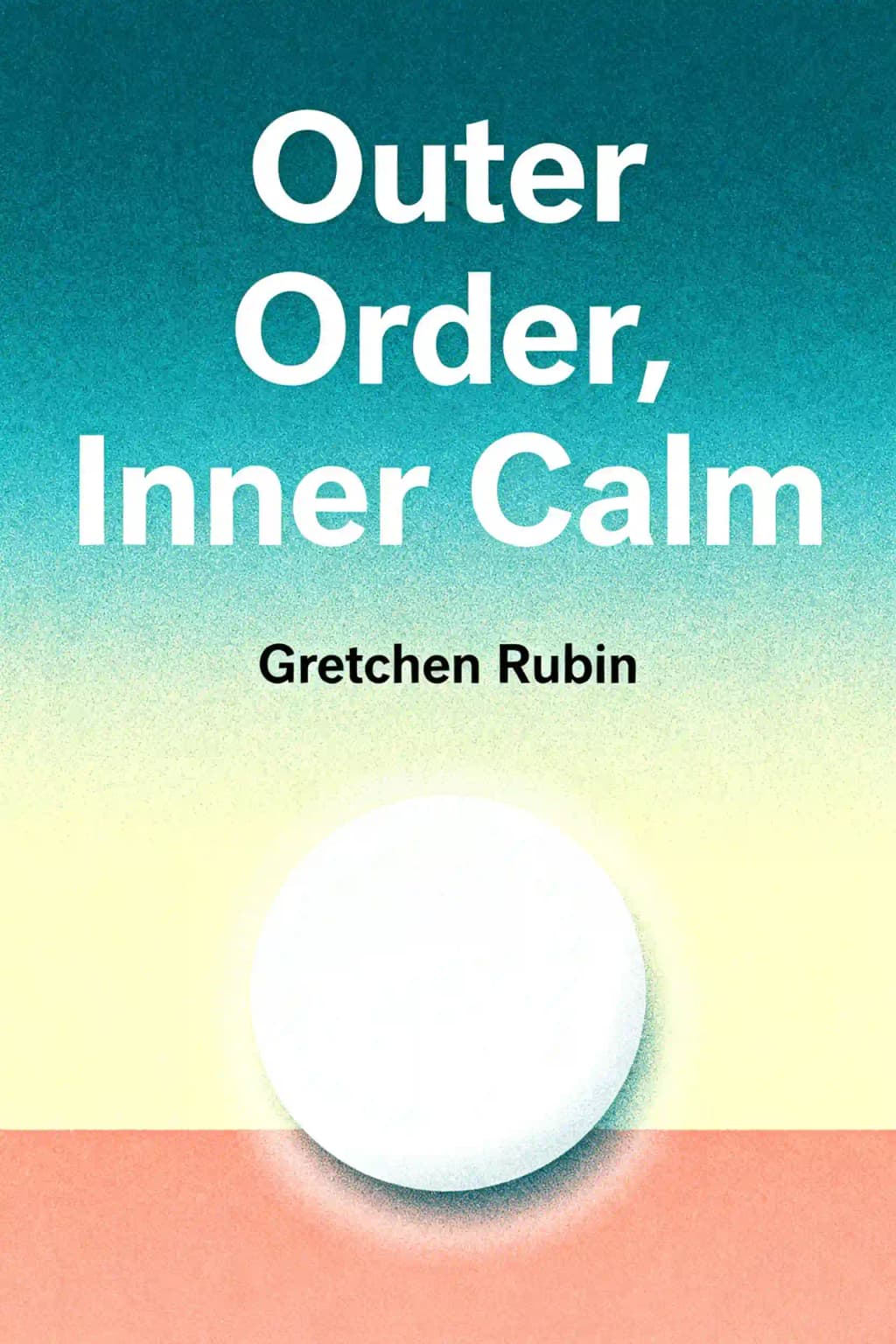
In our increasingly complex lives, one simple truth stands out: outer order contributes to inner calm-far more than it should. This insight forms the foundation of Gretchen Rubin's approach to creating harmony through organization. Her book has resonated with millions worldwide, including celebrities like Reese Witherspoon and Oprah Winfrey, who have publicly praised its practical wisdom. Since its 2019 publication, it has become a cultural touchstone in our Marie Kondo-influenced era of mindful possession.
What makes this philosophy so compelling? Perhaps it's the recognition that when we control our physical environment, we feel more in control of our lives. A messy desk might seem trivial, yet the energy we gain from cleaning it can be transformative. As one of Rubin's friends remarked after organizing her refrigerator: "I finally cleaned out my fridge and now I know I can switch careers." This seemingly disproportionate relationship between physical order and emotional wellbeing isn't just anecdotal-it's a phenomenon many of us experience daily, whether we're conscious of it or not.
Глава 2
The Decision Fatigue Behind Clutter
Clearing clutter is fundamentally about making decisions-often difficult ones. We accumulate possessions for countless reasons: the "someday I might need this" mentality, guilt about gifts, childhood compensation patterns, sentimental attachments, or the belief that items might become valuable. These emotional barriers make decluttering mentally taxing.
To overcome this decision fatigue, approach decluttering when you're well-rested, not hungry, and perhaps even caffeinated. For major projects, recruit a companion to help with both decisions and physical labor. Have proper supplies ready: bags for donations, labels, bins, gloves, and cleaning materials.
When evaluating each possession, ask three fundamental questions: Do I need it? Do I love it? Do I use it? An item might pass the test by meeting just one criterion-you might use something you don't love, need something you rarely use, or love something purely decorative. But if it fails all three questions, it probably should go. For items that pass, ask one additional question: Where does it belong? Every item needs a specific home-and never label anything "miscellaneous," a designation that guarantees forgotten contents.
The endowment effect-our tendency to value things more once we own them-makes letting go particularly difficult. Before accepting something for free or taking advantage of a sale, ask if you truly need or love it. Once an item enters your home, parting with it becomes harder. When clearing clutter, ask yourself: "If I didn't already own this, would I buy it?" If not, why keep it?
Unfinished projects create particularly insidious clutter, draining energy through constant reminders of what remains undone. Whether it's knitting experiments, half-built Lego castles, or woodworking projects, these items often stay visible as perpetual reminders. Either commit to finishing them or simply abandon the project-sometimes the easiest way to complete something is to let it go.
Глава 3
Creating Systems for Lasting Order
Once you've made key decisions about your possessions, the next step is establishing order. Though challenging, organizing brings a deeply calming satisfaction that extends beyond mere tidiness. Creating order-even with mundane items-gives a disproportionate boost of energy and cheer, affecting both our physical space and mental clarity. There's much we can't control in life, but we can control our stuff, creating islands of order in an chaotic world.
The "broken windows" theory, while controversial in policing, applies perfectly to personal spaces-when our environment becomes disorderly, our behavior follows suit. Small instances of order make us feel more in control and create positive ripple effects throughout our lives. Common "broken windows" include unsorted mail piling up on tables, scattered shoes by multiple entrances, cluttered counters collecting random items, and unmade beds that set a tone of disorder for the entire day. Each of these seemingly minor issues can cascade into larger organizational challenges.
Certain areas inevitably become "clutter magnets" in everyone's home or office-dining tables that collect papers and projects, hallway chests that accumulate miscellaneous items, bedroom chairs that become impromptu clothing storage, and kitchen counters that attract everything from mail to electronics. Since clutter attracts more clutter, these areas quickly deteriorate into overwhelming chaos. Develop the habit of clearing these magnets daily or weekly, depending on your schedule. Even five minutes of focused attention can prevent these areas from becoming overwhelming dumping grounds.
Accessibility should trump pure storage considerations. If you can't retrieve something within 30 seconds, you likely won't use it at all. Think carefully about frequency of use when deciding where to place items. Daily-use items should be within arm's reach, while seasonal items can be stored further away. If you want to store something but don't care if it's accessible, that's a strong indicator you may not need to keep it at all.
We waste tremendous time and energy searching for items we consistently misplace-keys, sunglasses, phone chargers, badges, important documents. Studies show the average person spends 2.5 days per year looking for misplaced items. Identify your specific problem objects and solve the search problem systematically: install key hooks by every door, buy duplicate charging cords for different locations, keep pens in every room where you might need them. Create designated homes for frequently used items and stick to them religiously. A little thoughtful effort in creating these systems saves immense daily frustration.
Don't postpone decluttering-it becomes significantly harder with age, requiring sustained energy, time, physical strength, decision-making capacity, and emotional fortitude. Research shows that after age fifty, the likelihood of divesting possessions diminishes with each decade. Some people become literally trapped in their homes because they can't face clearing decades of accumulation. The emotional and physical toll only increases with time. Do it now while you have the energy and clarity-waiting makes it exponentially harder, not easier. Consider it an investment in your future well-being and mobility.
Глава 4
Understanding Your Personal Relationship with Stuff
There are no magic, one-size-fits-all solutions for establishing order; we must each find what works for us personally. Some seek detachment by letting go of meaningless things, while others embrace engagement by keeping only treasured items. When we understand ourselves, we can customize our surroundings to suit our needs rather than following someone else's methods.
Being clear about why you're tackling clutter makes it easier to use your time productively and recognize success. If you start clearing the garage because you "should," you might get distracted and never finish. But if your purpose is specific-like wanting to park your car inside to avoid scraping ice off the windshield-you're more likely to complete the task.
We often keep objects that would be useful in a fantasy life-hand weights, embroidered towels, a briefcase, a guitar, or electric tools. Or perhaps we want to present a certain image to others, like being a history buff or film connoisseur. While it can be painful to admit we won't use these possessions, clearing them creates room for things we truly love and use.
Similarly, we might cling to possessions that represent outdated identities-ski equipment despite a knee injury that prevents skiing, work suits though you no longer go to an office, or magazines for hobbies you've abandoned. Sometimes we hold onto these items to avoid acknowledging change or because we've invested time and money in a past identity. While a few well-chosen mementos help recall old times, too much keeps us stuck in the past and prevents us from embracing the present.
People with backward-looking clutter keep items as reminders of the past ("Years ago, we had fun building this Popsicle stick castle"). Those with forward-looking clutter keep items as preparation for the future ("One day, I might need this oversize glass jar"). Recognizing these patterns helps us decide what to keep.
Some people take a practical view of possessions as inanimate objects to sort and store, while others take a more mystical view-believing socks might feel uncomfortable in a crowded drawer or that plates feel indignant if ignored. This mystical perspective can make it harder to relinquish possessions. If you hold this view, thank items for their service and acknowledge their contribution before allowing them to move on.
Глава 5
Developing Habits That Maintain Order
To clear clutter, we must first make choices and create order. Once we've done that, knowing ourselves helps recognize what systems will work for us. The next step is establishing helpful habits. Easy, quick, regular habits make it possible to manage possessions before they accumulate. We often underestimate what we can accomplish in short bits of time with the right habits.
Follow the "one-minute rule"-do any task that can be finished in less than one minute without delay. Hang up a coat, read and toss a letter, file a document, throw away a non-working pen, put the toothpaste away and close the cabinet door. Because these tasks are so quick, following this rule isn't difficult, and it's amazing how much gets done in one-minute increments over weeks.
Whenever you walk from one room to another, take one thing with you. You don't have to take it to its final destination, just move it closer. When leaving the kitchen, take your sweater with you-not necessarily all the way to your closet, just closer to it. Little by little, things begin to move into place.
Don't put things down; put things away. If you hear yourself saying, "I'll put this here and deal with it later," beware! This temporary placement is often the beginning of a clutter pile.
Be alert for signs of clutter accumulation. Clutter creeps in gradually until forming an intimidating heap. Watch for warning signs: a closet door forced to close, a drawer that won't shut, things stored in double rows, items jammed at angles, lids that won't close, persistent piles, items in inappropriate places, piles interfering with normal space use, or items stored out of context.
Create a "waiting room" for items that need to go somewhere else: packages to mail, books to return, items needing repair. Instead of leaving them out as reminders, designate a shelf, closet corner, or garage space where such things can be properly stored until you deal with them. Check this waiting room regularly to ensure items don't languish there.
Don't wait for everyone sharing your space to agree to participate in clearing clutter. Do what's within your power alone. You'll benefit immediately without feeling frustrated by others' attitudes. Often, people get inspired to clean their own areas when they see other areas getting cleared-example is more persuasive than admonition.
Глава 6
Adding Beauty to Complete the Transformation
Having made key choices about our possessions, we can begin establishing order. Though difficult, organizing and putting things in their proper places brings a deeply calming satisfaction. Creating order-even with mundane items-gives a disproportionate boost of energy and cheer. There's much we can't control, but we can control our stuff.
Cultivating a signature color like chartreuse, aquamarine, or slate can add beauty and harmony to your home. It makes decision-making easier-what color for your phone case or exercise clothes? Your signature color, of course. Seeing splashes of a color you love will raise your spirits. Alternatively, you might have a signature pattern like polka dots or a signature material like leather or velvet.
Turn clutter-clearing into a game-beat your best kitchen-cleaning time, pretend to be a professional cleaner, challenge yourself to toss ten items during a commercial break. Listen to favorite music or podcasts while sorting. Or make it a social event, like inviting friends to help and rewarding them with dinner afterward.
Do you save things and hold back? Many people use their delicate china only a handful of times in decades, fearing breakage. Beautiful stationery, fancy bath salts, fine ingredients, new white T-shirts-these things are meant to be used. It's satisfying to use what we own and wasteful to save for a day that may never come. Put things to good use. Spend out.
One pleasant aspect of clearing clutter is that once we eliminate things we don't use, need, or love, we boost enjoyment of what remains. After clearing a closet, dressing becomes easier and we wear a wider variety of outfits because we like everything we own and can find it easily. When children's belongings are cleared, they suddenly have more fun with what they keep-they have space to spread out, find things easily, and rediscover forgotten possessions. Having less often leads to using things more.
Just a little luxury can add beauty to our lives. Gorgeous colored markers, an excellent chef's knife, Egyptian cotton sheets, a fine leather wallet, a really good umbrella-a splurge in the right area makes life more pleasant. When my husband developed a taste for bourbon, I bought him crystal glasses to enhance his enjoyment. At work too, exceptional tools or whimsical touches make tasks more pleasant. For my office, I chose bright patterned file folders, decorative sticky notes, and an elegant book weight-nicer than strictly necessary, they help me enjoy my work.
Глава 7
Challenging Yourself to Choose the Bigger Life
When facing tough choices about possessions, challenge yourself: "Choose the bigger life." This question reveals our values, as different people have different views on what the "bigger life" includes. When debating getting a dog, you might be torn between pros and cons until thinking, Choose the bigger life. For some, that means getting a dog; for others, choosing the bigger life might mean not getting a dog to enable travel or save money. By choosing the bigger life, we make space for expansion in new directions.
Entrances tend to become cluttered as people dump bags, kick off shoes, and drop coats when entering-creating an overwhelming, uninviting sight. Make it easy to put things away with hooks, baskets, bowls, or shelves. Add art, plants, a mural, or attractive furniture to beautify the space. Stay vigilant so things don't remain out of place overnight. We should feel sanctuary and calm when stepping over our threshold.
Few things make us happier than seeing photos of loved ones, but it's easy for displays to become so familiar we stop noticing them. Create photo sets displayed only at certain times-a Christmas display, Fourth of July display, or back-to-school display. Consider themed frames; for a Valentine's Day gallery, use pink, red, and silver frames. Because these photos appear briefly, they don't fade into the background, and seasonal displays make it easier to reduce photos crammed elsewhere.
Everything looks better arranged on a tray. Perfume bottles, spice jars, cuff links, enamel boxes, coffee-making materials-a tray (or basket, bowl, or plate) pulls individual items into a pleasing collection. Even when things are in the right place, they may look messy until contained in some way.
Certain areas become so crowded and "loud" they hurt the eye. A refrigerator door plastered with schedules, artwork, expired coupons, and magnets makes the kitchen seem messy despite other order. At work, a computer screen framed with sticky notes creates visual cacophony. Try to bring down the noise level by limiting what's displayed and creating clear spaces for the eye to rest.
Глава 8
The Balance of Order and Personality
You were likely drawn to certain features when choosing your home-a deck, fireplace, garden, porch, or sunroom. But are you actually using these features to their full potential? Don't let your sitting room become a junk repository or your deck furniture stay in the garage. A beautiful fireplace loses its charm when blocked by storage boxes, and a garden brings no joy when neglected. You paid for these special features; make them accessible and integrate them into your daily life. Consider creating seasonal rituals around these spaces - morning coffee on the deck, evening reading by the fireplace, or weekend gardening sessions.
Every room should include something purple. Or something glittery, miniature, oversize, in a striking pattern, or even something deliberately ugly. This could be an oversized vintage poster in the kitchen, a tiny collection of brass figurines in the study, or an admittedly gaudy chandelier that you simply love. Every room benefits from an element of surprise or whimsy that adds character and visual interest. These unexpected touches make spaces feel alive and personal rather than sterile. The key is to incorporate these elements thoughtfully - perhaps a collection of mismatched vintage doorknobs as wall art, or an inherited piece that doesn't quite "match" but tells a story.
Someplace, keep an empty shelf; someplace, keep a junk drawer. An empty shelf provides the luxury of space and room for new things to enter your life-almost decadent in its beautiful emptiness. It serves as a visual pause, a reminder that not every space needs to be filled. A junk drawer makes space for things without obvious homes that you still want to keep - spare keys, instruction manuals, random cables, and those items that defy categorization but prove useful at unexpected moments. Balance order with a little bit of necessary mess, understanding that both serve different but essential purposes in a well-lived home.
Make your home feel more alive with a secret place known only to household members-a desk with a hidden drawer, concealed closet, or locked chest. As Christopher Alexander asks in A Pattern Language, "Where can the need for concealment be expressed?" Creating such a space is strangely satisfying and adds mystery and depth to your environment. These hidden spaces can house treasured mementos, private journals, or simply serve as a playful reminder that homes, like people, contain multitudes. Consider installing a false bottom in a drawer, creating a hidden door behind a bookshelf, or designating a special cabinet for family secrets and surprises.
Most importantly, remember love. This is the most fundamental suggestion of all. When parents keep every piece of your schoolwork or you can't toss your husband's ragged college T-shirts, remember: All this junk is an expression of love. Sometimes the most meaningful possessions aren't the most beautiful or useful-they're the ones that connect us to the people we care about. That chipped mug from your first apartment, your child's primitive clay sculpture, or those holiday decorations handed down through generations - these items tell your family's story. Create designated spaces for these treasures, perhaps a memory box for each family member or a special display shelf for items that carry emotional significance.
Глава 9
Finding Inner Calm Through Outer Order
Outer order is challenging to impose and maintain, but the profound impact it has on our mental wellbeing makes it worth the sustained effort. It contributes to inner calm through multiple pathways: helping us feel good by providing physical and mental rest, creating a sense of spaciousness that allows for clearer thinking, establishing organization that reduces daily friction, and generating energy through reduced visual chaos. It also relieves negative feelings like chronic irritation from searching for misplaced items, guilt about maintaining disorder, and frustration with cluttered spaces. Perhaps most importantly, outer order helps us feel right by keeping our attention focused on what truly matters, while creating an atmosphere conducive to personal growth and transformation. Interestingly, this relationship works both ways - when we achieve inner calm, we're more likely to maintain outer order, creating a self-reinforcing virtuous cycle.
Getting control of our possessions makes us feel more in control of our fates in both subtle and profound ways. While our possessions aren't literally us, they form an extension of our identity - we project ourselves into our surroundings much like snails building their protective shells. This psychological connection means that when we see our belongings in good order, containing only what we genuinely need, regularly use, and truly love, we see a better reflection of ourselves and our values. This careful curation of our space becomes a physical manifestation of our intentions and priorities.
The ten most useful tips for creating outer order are surprisingly simple yet powerfully effective: make your bed each morning to start the day with an accomplishment; follow the "one-minute rule" by immediately handling any task that takes less than 60 seconds; schedule a weekly "power hour" to tackle accumulated small tasks; transform organizing into an enjoyable activity by adding music or company; prevent spaces from becoming completely empty as they tend to attract clutter; develop the habit of putting things away rather than just setting them down; resist the urge to stockpile beyond realistic usage; be selective with mementos, keeping them small and few; maintain organization without becoming obsessive about perfection; and when something goes missing, use it as a prompt to clean and organize.
These principles aren't about achieving some arbitrary standard of minimalism or striving for an unrealistic level of perfection. Instead, they're about creating an environment that supports your best life - one where you can confidently say: "I have plenty of room for the things that are important to me. I can find what I need when I need it, I can see and appreciate what I have, and when something new enters my life, I have the space to accommodate it." This kind of physical and mental spaciousness - the ability to breathe, think clearly, and move freely through your space - is the true gift of outer order. It creates a foundation for creativity, productivity, and personal growth while reducing the mental burden of managing excess possessions and disorganization.