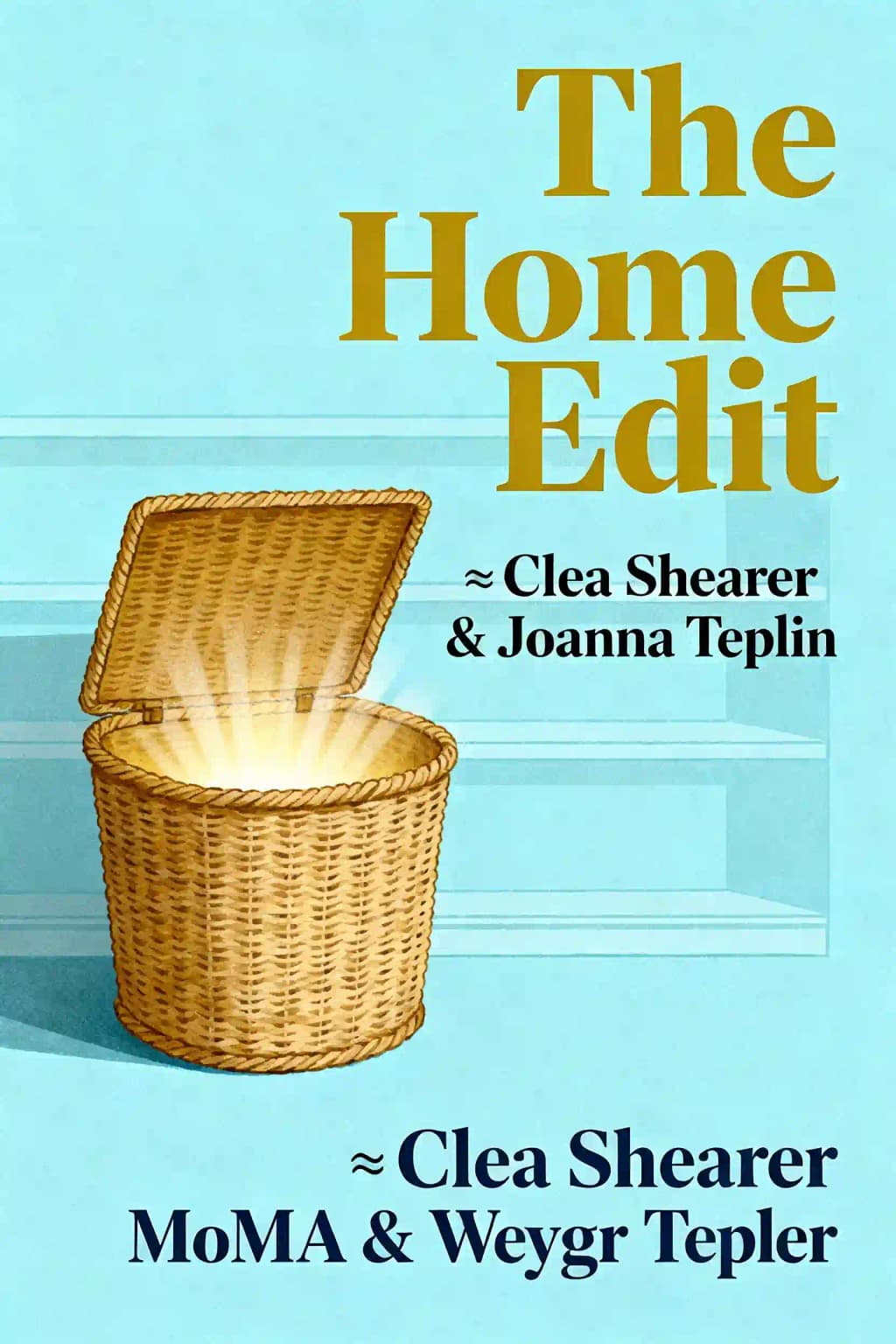
Transform your chaotic space into Instagram-worthy perfection with "The Home Edit" - the #1 New York Times bestseller that revolutionized organizing. Netflix stars Clea and Joanna's system has celebrities swooning. What's in Molly Sims' pantry that you're missing?
Clea Shearer & Joanna Teplin, bestselling authors of The Home Edit: Stay Organized, are home organization experts and founders of the globally recognized lifestyle brand The Home Edit. Specializing in merging practical organizing techniques with interior design principles, their work focuses on creating visually appealing, functional spaces. Both The Home Edit and its follow-up, The Home Edit Life, became New York Times bestsellers, offering readers strategies for decluttering and maintaining order.
Shearer, with a background in social media and PR, and Teplin, whose expertise spans stationery and event planning, launched their company in 2015, which has since grown into a multimedia empire. They co-host the Emmy-nominated Netflix series Get Organized with The Home Edit and ABC’s Extreme Makeover: Home Edition, further cementing their authority in the genre. Their Walmart organizational product line and features in People, Architectural Digest, and House Beautiful highlight their influence.
The Home Edit: Stay Organized builds on their signature approach, blending humor and actionable advice. The book’s success led to its adaptation into their Netflix show, which has inspired millions to transform chaotic spaces into streamlined, Instagram-worthy environments.
The Home Edit by Clea Shearer and Joanna Teplin is a practical guide to transforming living spaces through organization blended with design. It introduces their signature system of categorizing items by use and aesthetics, emphasizing functionality and visual harmony. The book features room-by-room strategies (like kitchens and entryways), decluttering techniques, and vibrant before-and-after photos to inspire readers.
This book is ideal for homeowners, renters, or design enthusiasts seeking structured yet stylish solutions for clutter. It’s particularly useful for parents juggling toy storage, professionals aiming for workspace efficiency, or anyone inspired by Instagram-worthy organization. The authors’ humorous tone and celebrity client examples appeal to readers who value both practicality and visual appeal.
Yes, for its actionable systems and motivational visuals. While critics note some methods may require ongoing maintenance (like color-coded shelves), the book provides adaptable frameworks for small apartments to large homes. It’s praised for merging Marie Kondo’s tidiness with interior design flair, making organization feel achievable and creative.
The Home Edit System prioritizes grouping items by category (e.g., cooking tools, kids’ toys) and arranging them based on frequency of use and visual flow. Key steps include decluttering first, using clear containers for visibility, and labeling everything. The authors advocate for “zones” (like pantry shelves for snacks vs. staples) to maintain order long-term.
“Minimalism is a lifestyle choice. Being organized just means respecting your space and belongings.” This reflects their stance that organization doesn’t require owning fewer items—just thoughtful placement. Another standout: “If you can’t see it, you won’t use it,” underscoring their transparency-focused approach.
While Marie Kondo focuses on keeping only what “sparks joy,” The Home Edit emphasizes practical sorting and design integration. Shearer and Teplin encourage keeping frequently used items (even if not sentimental) but storing them attractively. Their system is less about minimalism and more about creating functional, photogenic spaces.
Some readers find the systems high-maintenance (e.g., color-coding spices) or unrealistic for busy households. Critics argue the book’s celebrity examples (like walk-in closets) don’t reflect average homes. However, fans appreciate adaptable tips, such as using dollar-store bins for toy storage.
The book suggests rotating toy bins to reduce clutter, using clear drawers for easy access, and designating “kid zones” with low shelves. For arts and crafts, they recommend categorizing supplies by type (markers, paper) and storing them in labeled caddies. These methods aim to teach children tidy habits while keeping spaces functional.
Yes! Strategies include:
Indirectly—by encouraging readers to repurpose existing storage (like shoeboxes) and donate unused items. While not a focus, their “edit first” philosophy reduces waste by curbing impulse purchases. The book also promotes reusable acrylic bins over single-use organizers.
The Home Edit Life expands beyond physical spaces to cover digital organization (email inboxes) and time management. It introduces travel packing systems and wardrobe curation tips, making it a broader lifestyle companion. Both books share the core “category + flow” approach but apply it to new contexts.
Почувствуйте книгу через голос автора
Превратите знания в увлекательные, богатые примерами идеи
Захватите ключевые идеи мгновенно для быстрого обучения
Наслаждайтесь книгой в весёлой и увлекательной форме
Everything needs a home.
Labels are the glue that holds an organized system together.
The key is understanding yourself and how you really live, not how you wish you lived.
Entries are challenging because they're high-traffic zones where people naturally drop things.
Разбейте ключевые идеи The Home Edit на понятные тезисы, чтобы понять, как инновационные команды создают, сотрудничают и растут.
Выделите из The Home Edit быстрые подсказки для запоминания, подчёркивающие ключевые принципы открытости, командной работы и творческой устойчивости.

Погрузитесь в The Home Edit через яркие истории, превращающие уроки инноваций в запоминающиеся и применимые моменты.
Задавайте любые вопросы, выбирайте голос и совместно создавайте идеи, которые действительно находят у вас отклик.

Создано выпускниками Колумбийского университета в Сан-Франциско
"Instead of endless scrolling, I just hit play on BeFreed. It saves me so much time."
"I never knew where to start with nonfiction—BeFreed’s book lists turned into podcasts gave me a clear path."
"Perfect balance between learning and entertainment. Finished ‘Thinking, Fast and Slow’ on my commute this week."
"Crazy how much I learned while walking the dog. BeFreed = small habits → big gains."
"Reading used to feel like a chore. Now it’s just part of my lifestyle."
"Feels effortless compared to reading. I’ve finished 6 books this month already."
"BeFreed turned my guilty doomscrolling into something that feels productive and inspiring."
"BeFreed turned my commute into learning time. 20-min podcasts are perfect for finishing books I never had time for."
"BeFreed replaced my podcast queue. Imagine Spotify for books — that’s it. 🙌"
"It is great for me to learn something from the book without reading it."
"The themed book list podcasts help me connect ideas across authors—like a guided audio journey."
"Makes me feel smarter every time before going to work"
Создано выпускниками Колумбийского университета в Сан-Франциско

Получите резюме книги «The Home Edit» в формате PDF или EPUB бесплатно. Распечатайте или читайте офлайн в любое время.
Standing in the home organization aisle, cart loaded with pretty bins and ambitious dreams - we've all been there. What makes "The Home Edit" approach revolutionary isn't just its Instagram-worthy rainbow aesthetics, but its profound understanding that organization isn't a one-time project but a sustainable lifestyle. Clea Shearer and Joanna Teplin have mastered the art of creating systems that work with your real life, not some Pinterest fantasy. Their philosophy acknowledges an essential truth: life is inherently messy, but with thoughtful systems in place, your home doesn't have to be. The magic happens when beautiful organization meets practical reality - where systems don't just look good but actually function in your everyday chaos. Why do so many organizing attempts fail? We create gorgeous systems that don't match our actual habits, then blame ourselves when everything falls apart. The secret lies in understanding yourself - how you really live, not how you wish you lived. The framework is refreshingly simple: Edit (pare down what you own), Categorize (group similar items), Contain (give everything a proper home), and Maintain (regularly reset your spaces). This approach works whether you're tackling a junk drawer or an entire home. One game-changing concept is "backstock" - thoughtfully stored extra supplies that support your lifestyle without cluttering primary spaces. Having backstock saves time, money, and ensures you're prepared for unexpected needs like last-minute school projects or pandemic-level toilet paper concerns. The key to making organization stick is hardwiring helpful habits. Our brains naturally follow the path of least resistance, so build one small organizing habit at a time: putting makeup away while brushing teeth, hanging bags while removing shoes, folding laundry during TV time. Like exercise, organizing is a gift that keeps giving - once you form the habit, the benefits become self-reinforcing.