Глава 1
When Incentives Send the Wrong Message
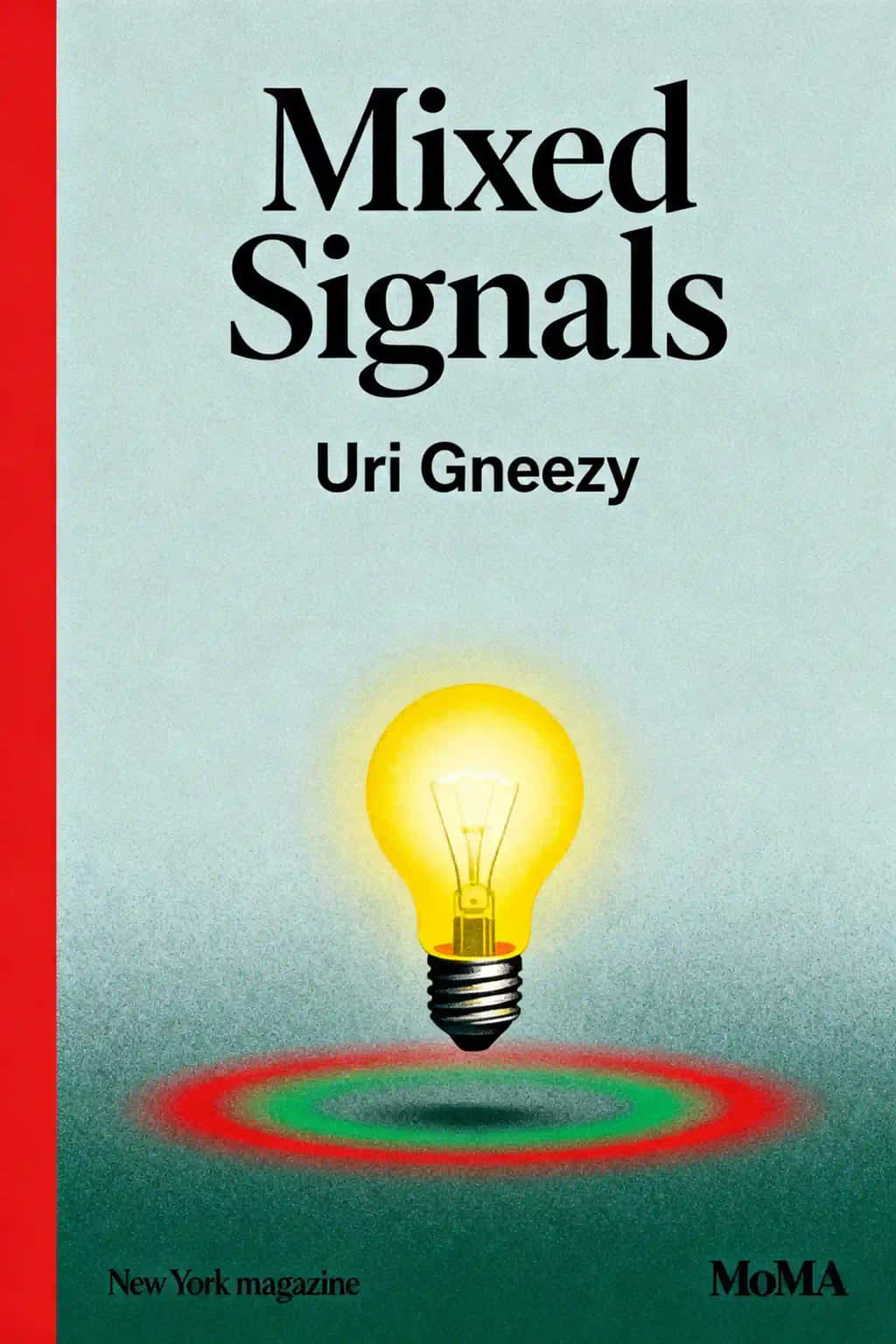
Have you ever told a child to be honest, then lied about their age to save money at Disney World? Or encouraged teamwork at work while rewarding individual performance? Welcome to the world of mixed signals - where what we say contradicts what we incentivize. This fascinating disconnect sits at the heart of economist Uri Gneezy's groundbreaking work on incentives and human behavior.
"Mixed Signals" has become a sensation among behavioral economists and business leaders alike, with Bill Gates naming it one of his top reads and companies from Google to Goldman Sachs implementing its principles. Gneezy's research has influenced policy decisions worldwide, from healthcare reforms to environmental initiatives. The book's unique blend of academic rigor and practical application has made it required reading at top business schools, where students learn how subtle incentive structures can dramatically alter human behavior in ways traditional economics fails to predict.
Глава 2
The Hidden Language of Incentives
Incentives are the invisible forces that shape our behavior, often more powerfully than our conscious intentions. When my son Ron was young, I taught him that honesty separates good people from bad ones. Then came our Disney World trip, where I told the cashier he was "almost three" to avoid the $117 ticket price for children three and older-despite his birthday being months earlier.
Ron's confusion was immediate: "Daddy, I'm confused. You told me only bad guys lie, and you just did!" This moment perfectly captures the concept of mixed signals-saying one thing but doing another when faced with incentives. The lesson Ron actually learned wasn't about honesty but about situational ethics: "do as I do, not as I say."
What could Disney do to reduce such dishonesty? Rather than creating hassle through documentation requirements, they could simply ask that children be present when purchasing tickets or have the child state their own age. This forces parents to either lie in front of their children or pay the full price-a powerful signal about honesty that aligns words with actions.
This principle extends far beyond theme parks. Companies routinely create mixed signals through poorly designed incentives. Consider the CEO who emphasizes teamwork while rewarding individual success-employees will naturally prioritize personal gain over collaboration. Other common examples include organizations that stress long-term goals but reward short-term results, inspire innovation while punishing failure, or emphasize quality while paying for quantity.
The key insight is that incentives don't just motivate behavior-they send signals about what truly matters. When these signals contradict our stated values, people follow the incentives, not the rhetoric. Aligning what we say with the incentives we offer creates credible, understandable signals that drive consistent behavior.
Глава 3
How Signaling Wins Markets
The right signals can captivate consumers and win markets, while the wrong ones can backfire spectacularly. Remember the Seinfeld episode where Jerry gives Elaine cash for her birthday ($182), disappointing her, while Kramer's thoughtful but less expensive bench delights her? Jerry's gift signaled thoughtlessness despite its monetary value, while Kramer's signaled care and consideration.
Signals serve as valuable tools for communicating private information that others wouldn't believe through mere words. A "costly signal" allows people to credibly inform others about their values, abilities, or preferences. Consider Harley motorcycle culture: anyone can buy Harley merchandise like Jim the accountant who rides for a month yearly, but getting neck tattoos serves as a credible signal of authentic biker identity because it's too costly for "fakers" who need to return to office life.
Education functions similarly in job markets, as Nobel Prize winner Michael Spence demonstrated. Quality education credibly signals an applicant's abilities because it requires significant investment that's less costly for high-ability individuals than low-ability ones. Former Navy SEALs signal character through their completion of extremely demanding training. The credibility of signals comes from their difficulty, cost, or permanence-revealing something valuable about one's true preferences, abilities, or character.
Toyota's Prius provides a perfect case study in effective signaling. In 1999, Toyota and Honda both introduced hybrid cars to the US market, but Toyota's Prius quickly dominated while Honda's offering failed. Paradoxically, Toyota succeeded partly because early hybrid cars were objectively "bad" in most dimensions except fuel consumption-more expensive with less speed, acceleration, comfort, and safety than comparable non-hybrid vehicles.
These shortcomings created a powerful signaling opportunity. By purchasing a Prius despite its drawbacks, consumers sent a strong signal about their environmental values-they were demonstrating willingness to sacrifice comfort, safety, and money for environmental benefits. Unlike Honda, which designed hybrids resembling regular cars, Toyota's second-generation Prius featured a distinctive look that everyone recognized. Sales data showed Toyota's strategy worked brilliantly-a 2007 study found 57% of Prius buyers got it "because it makes a statement about me," while only 36% cited fuel economy.
Глава 4
The Dual Nature of Signaling: Social and Self
While the Prius demonstrated social signaling-improving our image with others-many choices are also driven by self-signaling, where we gain satisfaction from actions indicating we're good people. These two types of signaling interact in complex ways that don't simply add up.
Consider Jane, a lawyer who donates blood periodically. The slight discomfort actually enhances her self-signaling-she's sacrificing comfort for others. She may also enjoy social signaling when mentioning her donation to friends. In her calculation, the good feelings outweigh the time and discomfort costs.
Unlike Jane, Joe, a secretary at the same law firm, doesn't donate blood. With a lower salary, he'd rather spend time driving for Uber to supplement his income. The economics of blood donation are fascinating-hospitals pay about $570 per unit, but donors aren't paid. When monetary compensation (like $50) is introduced, it changes everything. Jane can no longer signal her altruism to friends or herself, as money clouds her motives. Meanwhile, Joe might start donating if the incentive is large enough.
Our restaurant experiment showed these signals don't always reinforce each other-sometimes they conflict. When customers could pay anonymously for their meal, they actually paid more than when observed, suggesting that being watched reduced the self-signal's value. With no observers, the self-image receives the full benefit of generosity.
Small non-cash incentives like pens or medals can work without compromising the altruistic signal, as they enhance rather than replace the signaling value. Understanding your audience and how incentives affect self-selection is crucial when designing effective incentive schemes.
Глава 5
When Incentives Prioritize Quantity Over Quality
Our choices and actions signal our values to others. When managers say one thing ("customer care is most important") but incentivize another (paying by number of calls answered), they create confusion. This mixed signals problem centers on what should be rewarded. Often, companies measure and compensate for just one aspect of performance-typically what's easiest to measure-sending a clear message to workers: focus only on what we pay you for.
Suzan, a call center manager, faces a dilemma in compensating her team member Jack. Should she pay him a fixed wage based on time (which might lead to leisurely work and Facebook breaks) or by number of calls completed? If she chooses the latter, Jack receives a signal to maximize call volume-potentially "accidentally" dropping complicated calls or rushing customers to end conversations quickly.
Companies and governments repeatedly make this mistake of incentivizing quantity at the expense of quality. The US government's first transcontinental railroad paid Union Pacific by mile of track built, leading Thomas Durant to inflate costs by unnecessarily adding miles. Similarly, paleontologists in 19th-century China paid locals per fossil fragment, causing them to smash valuable bones to increase earnings. Soviet glass factories first incentivized weight (producing nearly opaque glass) then square meters (resulting in dangerously thin glass).
When you push people to increase one dimension of output, you create unintended effects on other dimensions. In Chile, when bus drivers' pay was changed from hourly to per-passenger, they immediately became more efficient but also more aggressive, causing more accidents and less pleasant rides. Tel Aviv's minibuses, operated by drivers who pocket passenger fees, move faster but dangerously-often leaving before passengers are seated or doors fully closed.
Rideshare companies brilliantly solved the quantity-versus-quality dilemma by adding a rating system to their pay-per-ride incentive structure. While taxi drivers on fixed wages lack motivation to optimize routes and those paid per ride might sacrifice service quality for speed, Uber drivers must maintain high ratings to keep driving. This simple, cost-effective solution simultaneously incentivizes efficiency and good service.
The fee-for-service healthcare model creates similarly perverse incentives that prioritize quantity over quality. Physician-mothers are 7.5% less likely to receive C-sections than non-physician mothers, suggesting medical knowledge helps counter financially-driven treatment recommendations. This knowledge gap has real consequences-if all patients received the same treatment as informed physicians, C-section rates would drop and hospital charges would decrease by $2 billion annually.
The lesson is clear: when incentivizing quantity, always include quality metrics to avoid sending mixed signals.
Глава 6
Innovation Versus Risk Aversion
Companies that encourage innovation but punish failure send a devastating mixed signal that stifles risk-taking. Success requires innovation, which inevitably involves failure-like Edison testing 6,000 materials before finding the right lightbulb filament. Organizations that truly innovate create cultures where mistakes aren't just tolerated but analyzed openly.
The Israeli Air Force exemplifies this approach, treating near-accidents as learning opportunities and commending sound decision-making regardless of outcome. Creative geniuses don't necessarily have higher success rates than others; they simply try more ideas and fail faster. Smart companies recognize this reality by incentivizing early termination of failing projects rather than punishing failure itself.
Blockbuster's dramatic fall from industry domination to bankruptcy demonstrates how avoiding change and fearing failure leads to stagnation. Once America's leading video rental chain with a $3 billion market value and 9,000 stores, Blockbuster built its business model around late fees, collecting $800 million annually from its 65 million customers. This created a customer base frustrated by penalties, setting the stage for disruption.
After a $40 late fee, Reed Hastings founded Netflix with a subscription model eliminating return deadlines. When Hastings proposed a partnership, Blockbuster's CEO laughed him off. While Netflix innovated with streaming services and earned $116 million by 2009, Blockbuster lost $516 million, clinging to its profitable but dying model. When CEO Antioco finally attempted to transition away from late fees and invest in digital platforms, the board rejected his vision, fearing the $400 million cost, and fired him. Under new leadership focused on short-term profits, Blockbuster soon went bankrupt.
Richard Branson exemplifies the opposite approach to failure with his Virgin Group. Launching over 400 companies across diverse industries, Branson embraces risk and learns from failures. When Virgin Cola initially succeeded in the UK but ultimately failed against Coca-Cola's aggressive counterattack, Branson didn't dwell on the loss. Instead, he extracted valuable lessons about only entering markets where Virgin could be "palpably better than all the competition." His risk-seeking spirit permeates his companies' culture, encouraging innovation despite potential failures.
Глава 7
Short-Term Results Versus Long-Term Vision
Companies often sabotage their long-term success by incentivizing short-term gains. When Bazaarvoice acquired PowerReviews in 2012, executives saw their stock price soar above $20 and personally realized $90 million. However, they knew this anti-competitive move would likely face legal challenges. Indeed, the Department of Justice forced divestiture, causing the stock to plummet below $7.
This "short-termism" occurs when executives focus on immediate results at the expense of sustainable growth. Research confirms that CEOs with equity vesting in upcoming quarters make decisions that boost short-term stock performance but harm long-term value. To align incentives with lasting success, companies should escrow executive equity for at least five years and consider extending guaranteed tenure to encourage forward-thinking investments.
The length of tenure significantly impacts decision-making horizons. Politicians facing reelection every few years avoid long-term infrastructure investments that won't yield benefits until after they leave office. While unlimited political tenure creates other problems in a democracy, extending guaranteed tenure in other contexts can effectively align incentives with long-term success. Basketball coaches with job security for at least a season are more likely to develop promising young players rather than relying solely on veterans for immediate wins.
Performance-based teacher pay has spread across at least twenty states, fueled by federal Teacher Incentive Funds that grew from $97 million to $487 million in just one year. While intended to reward good teachers, this approach creates problematic mixed signals. Teachers must sacrifice valuable learning time for standardized test preparation, with 81% reporting their students spend too much time testing. The curriculum becomes compressed and dry, eliminating creative activities that foster genuine learning.
Finland offers a stark contrast-with no standardized tests and teacher autonomy, Finnish students consistently outperform Americans on international assessments while maintaining a dropout rate below 1% (compared to America's 25%). The debate continues between those who believe incentives motivate educators and those who argue that attaching dollar signs to education undermines teachers' intrinsic motivation to facilitate long-term student growth.
Глава 8
Team Versus Individual Incentives
Organizations often send mixed signals by emphasizing teamwork while rewarding individual performance. This disconnect creates confusion about true priorities and can damage collaboration.
Mark Zuckerberg once paid $47 million to acquire FriendFeed primarily to obtain exceptional talent, stating that exceptional performers are "100 times better" than average ones. This star-player philosophy is exemplified by quarterback Tom Brady, who led the Tampa Bay Buccaneers to a Super Bowl victory immediately after leaving the Patriots. However, soccer superstar Lionel Messi demonstrates that individual brilliance isn't always enough-despite unparalleled success with Barcelona, he struggled to achieve similar results with Argentina's national team, showing that even extraordinary talent requires the right team environment to flourish.
Individual incentives motivate harder work and attract top talent, but they create mixed signals when organizations simultaneously emphasize teamwork. Employees follow the money, not the talking points. When team performance matters, individual incentives can discourage collaboration, mentoring, and knowledge sharing. Team incentives encourage cooperation but risk "free riding" where some members reduce effort expecting others to compensate.
Price competition experiments reveal how incentive structures affect team dynamics. When team profits are divided equally, prices drop significantly as members work collectively toward winning. However, with individual incentives where each player keeps what they charge, prices remain much higher as members try to maximize personal gain while free-riding on teammates who set lower prices. After 100 rounds, team incentives resulted in average prices under $12, while individual incentives produced prices two and a half times higher at $30.
Professional sports perfectly illustrate this tension. In soccer, players like Alexis Sanchez at Manchester United received 75,000 per goal but only 20,000 per assist, creating situations where passing to a teammate with a better scoring chance (60% probability) was financially worse than attempting a lower-probability shot (40%). These individual bonuses caused visible conflicts, like when Sanchez and Pogba argued over penalty kicks, and created team discord.
Similar issues plague NFL players, who receive performance bonuses for individual statistics like sacks or playing time, potentially incentivizing behavior that benefits personal stats over team success or even player health. While individual incentives motivate star performers, they often contradict the "teamwork" messaging from management, sending mixed signals that undermine collective success.
Глава 9
The Psychology of Incentive Framing
Behavioral economists and psychologists have discovered systematic ways that different incentive framings affect the meaning we assign to behavior. When a daycare center introduced a modest fine of 10 Israeli shekels (about $3) for late pickups, it unintentionally transformed a social norm into a financial transaction. Rather than feeling guilty about inconveniencing staff, parents now viewed lateness as a service they could purchase, removing the social pressure that had previously encouraged punctuality.
Even after removing the fine, parents continued arriving late-they had learned that lateness wasn't seriously frowned upon. Similarly, when the Welsh government fined parents 60 for taking children out of school during term time, unauthorized absences actually increased as parents treated it as a price worth paying for cheaper vacations. By contrast, steeper penalties-like the $5-per-minute fines in some US daycares or the Paris practice of taking children to police stations when parents are late-effectively signal that lateness is unacceptable.
Safety measures can paradoxically increase risky behavior. When drivers wear helmets while passengers don't, the protected driver may take greater risks, endangering the vulnerable passenger. This "Peltzman effect" emerged after seatbelts became mandatory-drivers felt safer and took more risks, potentially increasing accidents. Similarly, as AIDS treatments transformed the disease from fatal to chronic, people became less cautious about prevention.
When choosing incentive currency, how you frame rewards matters more than their actual value. Redfin discovered their commission refunds had zero effect on demand despite giving away hundreds of millions of dollars. The problem wasn't the incentive itself but how it was delivered. People mentally categorize money differently based on context-a principle called "mental accounting" that violates economic fungibility.
A $450 discount feels insignificant against a $20,000 car purchase, but that same amount as a prepaid gas card feels substantial because it targets a specific, irritating expense category. In field experiments with Edmunds.com, a $250 gas card proved more effective than a $450 car discount. Similarly, Singapore taxi drivers walked significantly more steps when incentivized with taxi rental fee credits versus equivalent cash payments, with effects persisting even after incentives ended.
Глава 10
Creating Lasting Behavior Change
We've all experienced the cycle of ambitious resolutions followed by rapid abandonment. Gym data illustrates this perfectly: January sees 11% of annual memberships purchased, yet 50% quit by month's end. People consistently overestimate their future self-control, resulting in costly decisions-like paying $70 monthly for gym memberships they rarely use.
Change happens incrementally. When someone first visits the gym, they struggle to exercise even ten minutes and wake up sore the next day. But continuing builds "habitual stock"-practice and experience that makes exercising less painful and eventually enjoyable as benefits become tangible. Incentives help people overcome the difficult starting phase, which is crucial since evidence shows starting is the hardest part.
In our university experiment, we offered students $25 to visit the campus gym once, then randomly selected some to receive $100 for eight more visits over four weeks. The results were striking: during the incentive period, gym visits spiked dramatically, but more importantly, even after payments stopped, the incentivized group visited the gym twice as often as controls for seven more weeks. This improvement came entirely from previously irregular gym-goers, suggesting monetary incentives can indeed help form exercise habits by pushing people past the threshold needed for consistent activity.
Given self-control problems, commitment devices-ways to lock oneself into a plan-can help people follow through. Like Odysseus tying himself to his ship's mast to resist the Sirens, Royer, Stehr, and Sydnor tested commitment devices with 1,000 Fortune 500 employees. After an initial incentive period ($10 per gym visit), some participants were offered a self-funded commitment option: they could pledge their own money toward continued exercise, losing it to charity if they failed. This approach was remarkably effective, with participants retaining half their incentive-induced exercise increase over the following two months.
Social connections significantly amplify exercise incentives. Babcock and Hartman demonstrated this by mapping friendship networks among college students before randomly assigning gym incentives. They found incentivized participants visited the gym more frequently when they had more incentivized friends, but less frequently when they had more unincentivized friends.
Глава 11
Transforming Communities Through Incentives
Moving beyond individual behavior change, incentives can transform deeply-rooted cultural practices across entire communities. While cultural traditions are resilient and complex, they ultimately consist of individual actions driven by incentives. With carefully designed interventions, even centuries-old harmful practices can be replaced with beneficial alternatives.
The Maasai's traditional practice of killing lions threatens both their cultural heritage and Kenya's dwindling lion population. When sixteen-year-old Samson prepared to spear a lion as his warrior rite of passage, he was participating in a tradition rooted in economic necessity-lions threatened the livestock that constituted the Maasai's entire wealth. However, with Kenya's lion population plummeting from 200,000 to just 20,000 in thirty years, conservationists Luca Belpietro and Samson Parashina developed the "Simba Project" to change this practice.
Their incentive scheme targeted Maasai elders who owned livestock: rather than calling warriors to kill lions that attacked their cattle, elders could receive financial compensation for lost livestock-but only if no lions were subsequently killed. By altering the payoff structure, the project made restraint more economically attractive than revenge. Funded by tourist taxes at Belpietro's eco-lodge, the compensation matches market value of lost livestock, making the program sustainable while preserving both wildlife and tourism revenue.
While the financial incentives effectively changed the elders' behavior, the warriors posed a unique challenge. For them, lion killing was a sacred rite of passage that defined their manhood. The solution was creating "Simba Scouts"-a group of established warriors now tasked with protecting lions instead of killing them. Through education about conservation, older warriors helped shift younger warriors' perspectives, redefining bravery as preserving lions rather than killing them. This alternative role preserves the warriors' pride and traditional identity while providing a decent living.
The narrative change worked brilliantly-young Maasai boys no longer aspire to kill lions, elders don't call for lion hunts after livestock attacks, and both the lion population and tourism are thriving. This success demonstrates how well-designed incentives can transform even the most deeply ingrained cultural practices by addressing both economic and social needs.
Глава 12
The Power of Incentives in Negotiations
Our choices and actions signal our values to others, and nowhere is this more evident than in negotiations. Using the example of selling a house in Chicago, we learn that the first offer in a negotiation serves as a powerful signal that influences the entire process. Even in zero-sum interactions where one party's gain is the other's loss, understanding four key behavioral principles can give you an advantage: anchoring and adjustment, the contrast effect, price signals quality, and the norm of reciprocity.
The anchoring effect shows that a buyer's perception of value isn't independent of the negotiation process itself. In Tversky and Kahneman's classic experiment, participants' estimates of African nations in the UN correlated with random numbers they'd previously seen on a "wheel of fortune." This anchoring effect works even on experts-financial managers' predictions about interest rates were influenced by suggested numbers, and real estate agents' property valuations were affected by listing prices despite their insistence otherwise.
A high but reasonable first offer not only anchors your counterpart but also creates a contrast effect that benefits you throughout the negotiation. Like the fable of the poor man who temporarily brought farm animals into his crowded hut only to appreciate the space after removing them, your initial offer becomes the reference point against which all subsequent offers are compared.
When you set a high price, you signal high quality-a psychological effect that can actually improve the perceived value of your offering. Peloton CEO John Foley discovered this counterintuitive principle when he raised his bike's price from $1,200 to $2,000 and saw sales increase because customers assumed the higher-priced product must be better built.
Humans are hardwired to return favors-a principle demonstrated when sociologist Phillip Kunz received over 200 Christmas cards from complete strangers after randomly sending cards to 600 people. In negotiations, this creates a powerful dynamic: starting with a high initial offer allows you to make a seemingly generous concession, which triggers the buyer's reciprocity instinct to respond with their own concession.
The ideal first offer should be "just this side of crazy"-surprising but not offensive enough to end negotiations. What constitutes "high but reasonable" varies by context and culture, from bazaars where opening at several times your reservation price is expected, to industries with minimal negotiation where even 1% might be considered aggressive.
Глава 13
From Mixed Signals to Clear Communication
The COVID-19 pandemic transformed the world into a real-life behavioral laboratory, raising practical and ethical questions about using incentives. As vaccines became available in spring 2021, organizations explored how to incentivize vaccination, with Ohio's "Vax-a-Million" lottery offering a million dollars to vaccinated residents.
People fall into three categories regarding incentives: those who need no incentives, those who won't respond to any incentive, and those who are skeptical but persuadable. For this third group, signals matter tremendously. Smaller, more thoughtful incentives often work better-like New Jersey offering dinner with the governor or free state park admission, which connected vaccination with reopening. The most effective incentives tied vaccination to supporting local businesses, like Connecticut's free drink program or Krispy Kreme's free donut offer.
Israel's plastic bag fee law introduced in 2017 reduced bag usage by 80% in its first year despite the tiny three-cent charge. The law's success came from its clear signal that environmental protection was a priority. The message wasn't about collecting money but protecting the environment for future generations.
These examples show that when incentives align with clear signals about priorities, they can achieve remarkable results. The key lesson from "Mixed Signals" is that incentives work best when they tell a coherent story-one that aligns with our stated values and goals. By understanding both the economic and psychological dimensions of incentives, we can design systems that motivate desired behaviors while reinforcing our deepest principles.