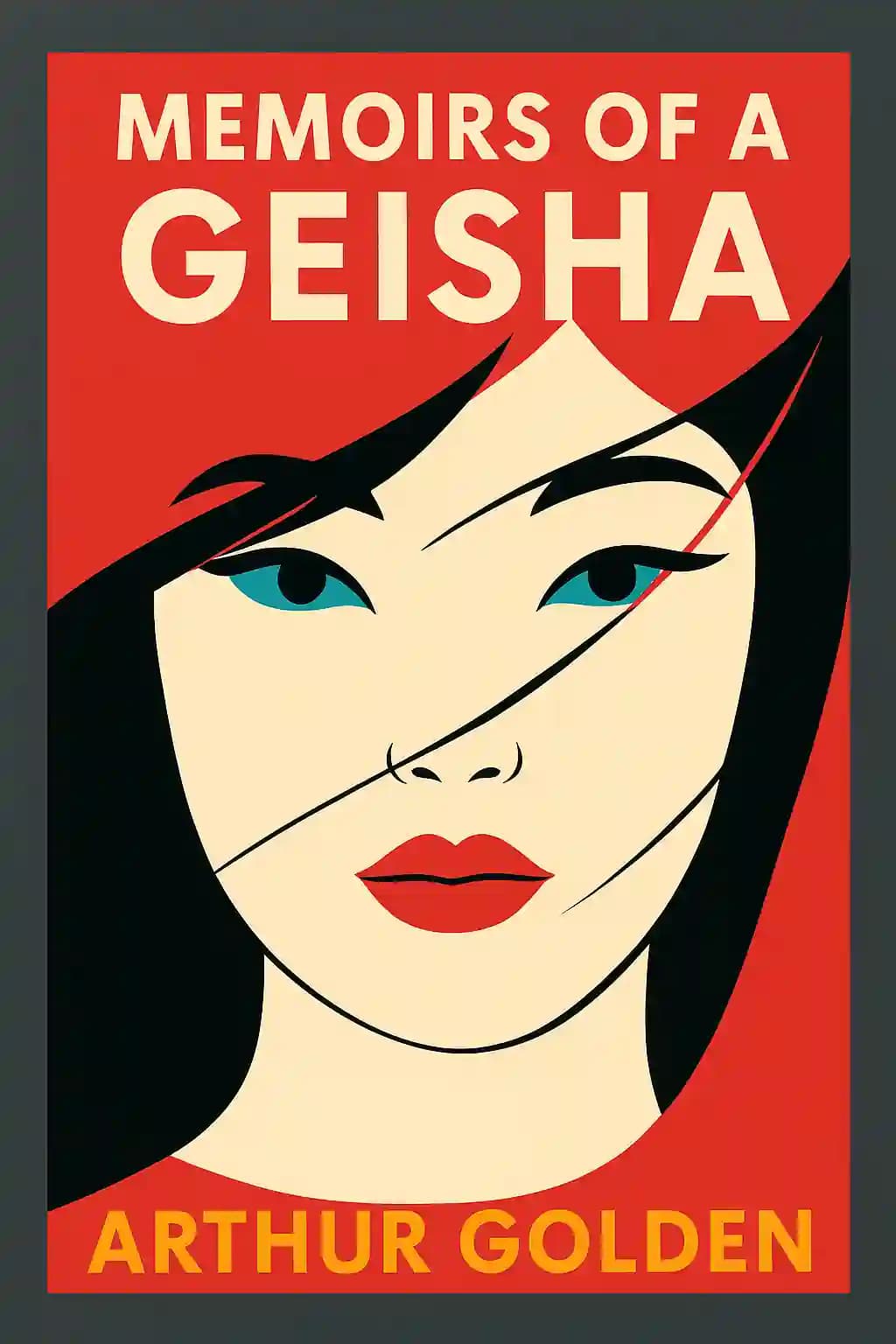
Step into a secretive geisha's world in Golden's controversial bestseller that sold 4 million copies and spent 58 weeks on the NYT list. Based on real geisha Mineko Iwasaki's confidential revelations, it sparked lawsuits, cultural debates, and a Hollywood adaptation. What truths lie beneath the white makeup?
Arthur Sulzberger Golden, bestselling author of Memoirs of a Geisha, is renowned for his meticulous research and evocative storytelling in historical fiction. Born in Chattanooga, Tennessee (1956), Golden holds degrees in Japanese history from Columbia University and art history from Harvard, blending academic rigor with narrative flair to explore themes of tradition, identity, and cultural transformation.
His groundbreaking novel, set in Kyoto’s geisha district, drew from extensive interviews with former geisha Mineko Iwasaki and six years of revisions to authentically portray 20th-century Japan. The 1997 literary sensation spent two years on the New York Times bestseller list, sold over four million copies worldwide, and was adapted into an Academy Award–winning film (2005).
Golden’s work has been translated into 32 languages, cementing its status as a global classic. A longtime supporter of emerging writers in New England’s literary community, he remains celebrated for bridging Eastern and Western perspectives through immersive historical storytelling.
Memoirs of a Geisha follows the life of Sayuri, a fictional geisha in 1930s-1940s Japan, as she navigates the rigorous training, artistic traditions, and complex social hierarchies of Kyoto’s geisha districts. The novel explores themes of identity, resilience, and sacrifice, blending historical detail with a lyrical first-person narrative inspired by interviews with real geisha, including Mineko Iwasaki.
Fans of historical fiction, readers interested in Japanese culture, and those who enjoy richly detailed character studies will appreciate this novel. It’s ideal for book clubs due to its discussable themes of agency, tradition, and romance.
While fictional, the novel draws heavily on Arthur Golden’s interviews with former geisha Mineko Iwasaki, who later sued him for breaching her anonymity. Golden spent six years researching Japanese culture and rewriting the story three times to refine its perspective.
Key themes include the tension between tradition and modernity, the commodification of women’s artistry, and the pursuit of autonomy in a restrictive society. The story also delves into love, betrayal, and the illusion of glamour in geisha life.
The novel spent two years on the New York Times bestseller list, sold over four million copies worldwide, and was adapted into a 2005 film that won three Academy Awards. Arthur Golden received the Golden Plate Award in 2000.
Critics argue it misrepresents geisha culture by conflating it with prostitution and exoticizing Japanese traditions. Mineko Iwasaki’s lawsuit—settled in 2003—accused Golden of defamation and breaking promises to protect her identity.
Golden interviewed Mineko Iwasaki extensively, studied Japanese history at Columbia University, and immersed himself in Kyoto’s geisha districts. He rewrote the novel three times, shifting from third-person to Sayuri’s first-person voice for authenticity.
The novel uses poetic, descriptive prose to evoke 20th-century Japan, blending historical detail with emotional introspection. Its first-person memoir format creates an intimate, immersive reading experience.
Yes. The 2005 film adaptation, directed by Rob Marshall, stars Ziyi Zhang as Sayuri and won Oscars for Best Cinematography, Costume Design, and Art Direction. However, it faced criticism for casting Chinese actors in Japanese roles.
The novel highlights geisha rituals, tea ceremonies, and dance, but some scholars argue it perpetuates stereotypes. Supporters praise its vivid depiction of pre-war Kyoto, while detractors call it Westernized and inaccurate.
Iwasaki published her autobiography, Geisha, A Life, in 2002 to counter Golden’s portrayal. She claimed the novel distorted geisha culture and damaged her reputation, despite the out-of-court settlement.
No. Golden has not published another novel since Memoirs of a Geisha in 1997. He remains active in Boston’s literary community, mentoring emerging writers.
Почувствуйте книгу через голос автора
Превратите знания в увлекательные, богатые примерами идеи
Захватите ключевые идеи мгновенно для быстрого обучения
Наслаждайтесь книгой в весёлой и увлекательной форме
Water is powerful. It can wash away earth, put out fire, and even destroy iron.
The heart dies a slow death, shedding each hope like leaves until one day there's nothing left but a bare branch.
Grief is like a room in which everyone is present, yet no one can speak.
She realizes her past is gone forever.
Разбейте ключевые идеи Memoirs of a geisha на понятные тезисы, чтобы понять, как инновационные команды создают, сотрудничают и растут.
Выделите из Memoirs of a geisha быстрые подсказки для запоминания, подчёркивающие ключевые принципы открытости, командной работы и творческой устойчивости.

Погрузитесь в Memoirs of a geisha через яркие истории, превращающие уроки инноваций в запоминающиеся и применимые моменты.
Задавайте любые вопросы, выбирайте голос и совместно создавайте идеи, которые действительно находят у вас отклик.

Создано выпускниками Колумбийского университета в Сан-Франциско
"Instead of endless scrolling, I just hit play on BeFreed. It saves me so much time."
"I never knew where to start with nonfiction—BeFreed’s book lists turned into podcasts gave me a clear path."
"Perfect balance between learning and entertainment. Finished ‘Thinking, Fast and Slow’ on my commute this week."
"Crazy how much I learned while walking the dog. BeFreed = small habits → big gains."
"Reading used to feel like a chore. Now it’s just part of my lifestyle."
"Feels effortless compared to reading. I’ve finished 6 books this month already."
"BeFreed turned my guilty doomscrolling into something that feels productive and inspiring."
"BeFreed turned my commute into learning time. 20-min podcasts are perfect for finishing books I never had time for."
"BeFreed replaced my podcast queue. Imagine Spotify for books — that’s it. 🙌"
"It is great for me to learn something from the book without reading it."
"The themed book list podcasts help me connect ideas across authors—like a guided audio journey."
"Makes me feel smarter every time before going to work"
Создано выпускниками Колумбийского университета в Сан-Франциско

Получите резюме книги «Memoirs of a geisha» в формате PDF или EPUB бесплатно. Распечатайте или читайте офлайн в любое время.
In a small fishing village clinging to Japan's rocky coast, nine-year-old Chiyo Sakamoto tends to her dying mother while helping her fisherman father mend nets. Her extraordinary "water-gray" eyes catch the attention of Mr. Tanaka, a wealthy fish merchant whose silk kimono and refined manner represent everything her life isn't. When he invites Chiyo and her plain, wooden-natured sister Satsu to visit his home in nearby Senzuru, the young girl weaves elaborate fantasies of adoption into his world of polished floors and porcelain teacups. The betrayal, when it comes, is absolute-Mr. Tanaka sells both sisters into servitude. While Satsu is condemned to a brothel, Chiyo finds herself transported to Kyoto's famous Gion district, a world of wooden teahouses and mysterious women in elaborate kimono. At the Nitta okiya (geisha house), Chiyo encounters her nemesis-the beautiful but venomous Hatsumomo, who marks her immediately as a rival. Under the calculating gaze of Mother, the okiya's business-minded proprietress, Chiyo begins life as a maid, her dreams of escape crushed by a failed attempt that leaves her with injured legs and the devastating news of her parents' deaths. The final threads connecting her to her former life arrive in a plain wooden box containing her family's mortuary tablets-all that remains of the coastal village where waves once lulled her to sleep.