Глава 1
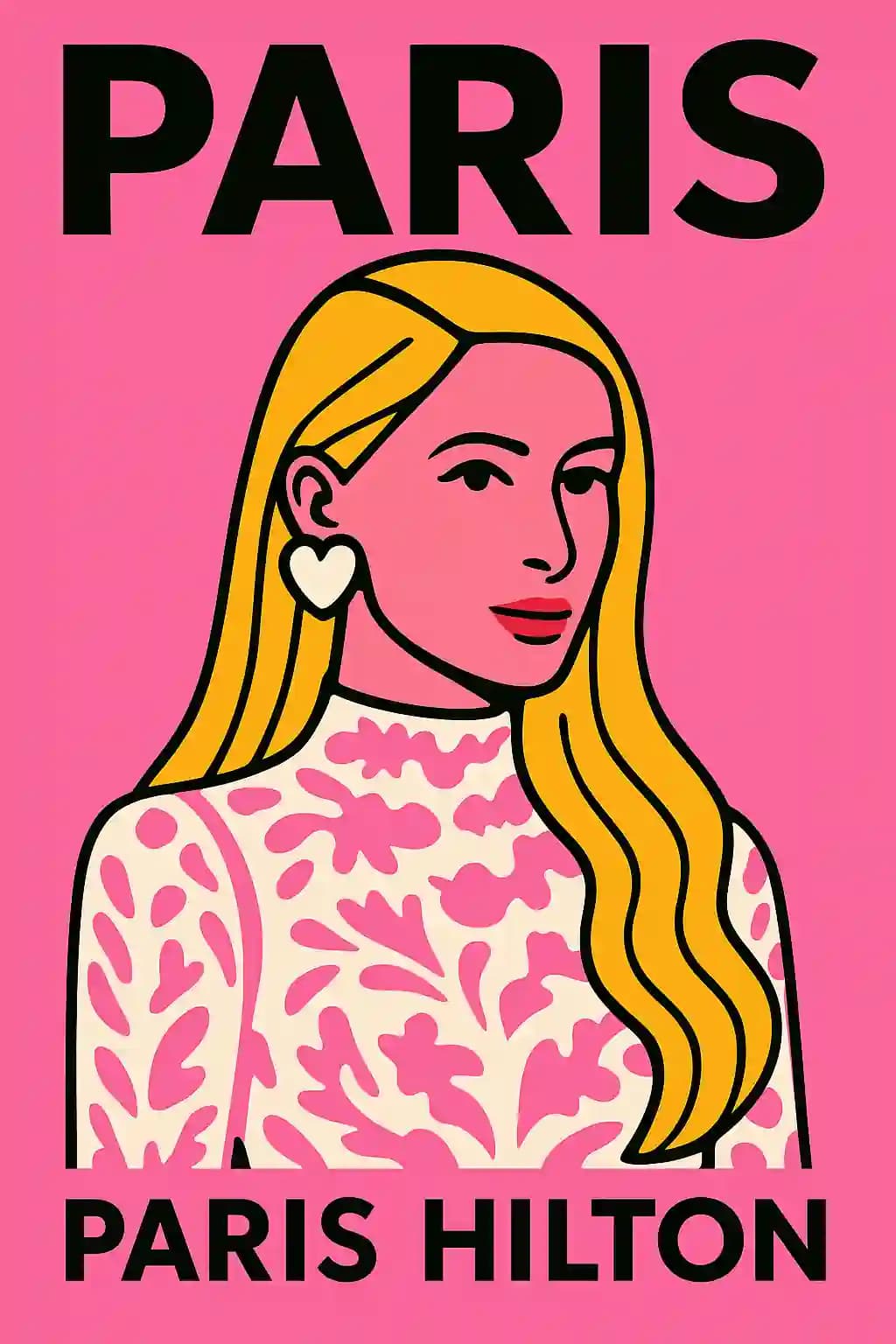
Beyond the Glitter: Paris Hilton's Journey Through Trauma and Triumph
In a world obsessed with celebrity culture, few names have maintained their relevance quite like Paris Hilton. What began as hotel heiress fame evolved into a multibillion-dollar empire spanning music, fashion, television, and business. Yet beneath the glittering surface lies a story of profound resilience. "Paris: The Memoir" has become a cultural sensation, earning praise from unexpected quarters including The New York Times, which called it "the most surprising and affecting celebrity memoir in years." Even academic circles have embraced it as a powerful examination of trauma, female agency, and the evolution of influencer culture. The book reveals how Paris's seemingly frivolous "that's hot" persona was actually a carefully constructed shield protecting deeper wounds-and how she ultimately found the courage to dismantle it.
Глава 2
The Ferrari Brain: Understanding Paris's ADHD
Paris describes her ADHD brain as "a Ferrari with bicycle brakes"-powerful but difficult to control. This neurological difference shapes everything about her life, from her constant phone-losing to her creative business instincts. She regularly misplaces essential items, starts multiple projects simultaneously, and speaks in rapid-fire thoughts that jump between topics. Far from viewing it as a disability, Paris has come to embrace her ADHD as a superpower that fuels her multitasking abilities and non-linear thinking. Her brain craves constant sensory input-sounds, images, experiences-making her naturally drawn to environments like nightclubs that provide intense stimulation. This need for stimulation manifests in her attraction to bright colors, dynamic environments, and high-energy situations.
The ADHD brain is essentially a throwback to primitive survival mechanisms-smaller frontal lobe, different neural pathways, slow-drip dopamine. These neurological differences affect everything from attention span to emotional regulation. Where others might see chaos, Paris's husband Carter sees something akin to Burning Man-beautiful creative disorder. Her office space reflects this, with multiple screens displaying different projects, Post-it notes everywhere, and an environment that would overwhelm most people but keeps her engaged. Dr. Edward Hallowell, who finally provided Paris with proper diagnosis and understanding after years of self-medicating with Adderall, explained that her greatest challenge would always be boredom: "If stimulation doesn't occur, we create it." This insight helped Paris understand why she constantly sought new ventures, from perfumes to DJing to cooking shows.
This neurological reality explains much about Paris's life choices that seemed inexplicable to outsiders. Her attraction to nightlife wasn't primarily about alcohol or drugs but about the sensory feast that fed her brain's unique needs. The pulsing music, flashing lights, and constant movement provided the exact kind of stimulation her brain required. Her seemingly scattered communication style-full of tangents, dashes, and fragments-reflects how her mind naturally works, jumping from thought to thought in what she calls "idea ping-pong." Even her business success stems partly from this difference: her ability to spot trends early, make unexpected connections, and maintain energy across multiple simultaneous projects. She can see patterns and opportunities that others miss precisely because her mind doesn't follow conventional linear paths.
"I don't just love fun," Paris explains. "I need it as jet fuel." This understanding transforms our perception of her famous partying-not mere frivolity but a form of self-medication for a brain wired differently from the neurotypical world that constantly judged her. Her ADHD has become an asset in the digital age, where rapid adaptation and multiple revenue streams are crucial for success. She's learned to harness her brain's unique wiring, creating systems and support structures that work with, rather than against, her natural tendencies. This includes maintaining highly organized assistants, using technology to track important items, and creating environments that support her need for constant stimulation while allowing for productive work.
Глава 3
The Making of a Party Girl: From Hilton Legacy to Club Culture
Paris's journey into nightlife began against the backdrop of extraordinary privilege. Her earliest social experiences unfolded at her grandparents' Brooklawn mansion-the same estate where she would later marry Carter Reum in 2021. These sophisticated gatherings, featuring politicians, celebrities, and business titans, provided early exposure to a world where social connections meant everything. Her mother Kathy, now known for her playful persona on Real Housewives of Beverly Hills, was then a strict disciplinarian focused on teaching her daughters proper etiquette, from perfect posture to graceful small talk, preparing them to carry the weight of the Hilton name in high society.
Understanding the "Hilton of it all" provides essential context for Paris's later rebellion. Her great-grandfather Conrad built an empire on old-school Christian values, starting with a small hotel in Texas and expanding to become the world's first global hotel chain. Family members often tell Paris she inherited his entrepreneurial spirit and business acumen. Though being a Hilton provided extraordinary privilege and opportunities - private schools, luxury vacations, and instant social cachet - it also came with suffocating expectations and relentless public scrutiny that would ultimately fuel her desire to create her own identity.
Her first taste of club culture came at twelve when family friend Pia Zadora took her to a New Kids on the Block after-party at Studio 54. The sensory explosion-strobe lights, pulsing music, uninhibited laughter, avant-garde fashion-gave her ADHD brain exactly what it craved: constant stimulation and novelty. Though her aunt Kyle Richards quickly ended that adventure with one phone call to Kathy, Paris became determined to return to this world that felt so perfectly aligned with her neurological needs and growing desire for independence.
By sixteen, armed with fake IDs procured from club promoters and a burgeoning modeling career with T Management, Paris had fully immersed herself in New York's club culture. Rather than simply attending parties, she studied them like an anthropologist, learning from legendary drag queens and vogue dancers who became her surrogate family, protectors, and mentors. They taught her practical nightlife wisdom: always carry water, master the art of looking pretty (never sloppy drunk), wear comfortable shoes under long dresses for dancing until dawn, and most importantly, how to command attention while maintaining mystique. This education would later serve her well when she transformed partying from a rebellion into a lucrative profession.
"I didn't invent getting paid to party," she acknowledges with characteristic self-awareness, "but I reinvented it as the OG influencer." Paris understood intuitively what marketers would later codify-that her presence created measurable value through attention and association. She pioneered the concept of being paid simply to attend events, sometimes earning up to $1 million for a single appearance. A true party girl, in her view, isn't just decorative arm candy but a "facilitator, negotiator, and diplomat" who brings energy, connections, and star power to every room she enters, transforming ordinary gatherings into memorable events through the force of her carefully crafted personality.
Глава 4
The Dark Truth: Trauma in the Troubled Teen Industry
Behind the glittering facade of Paris's early fame lay a devastating secret. At sixteen, she was forcibly removed from her bedroom at the Waldorf-Astoria by two strange men while her parents watched tearfully from their doorway. This middle-of-the-night "transport" began her nightmare journey through the troubled teen industry-a fifty-billion-dollar-per-year business built on exploiting parental fears and promising "rehabilitation" for rebellious teenagers. The practice of midnight kidnapping, known as "gooning," became a standard industry tactic designed to disorient teens and prevent resistance.
The industry began in 1964 when furniture salesman Mel Wasserman, a disciple of Synanon cult founder Charles E. Dederich, rebranded cult tactics as "emotional growth" programming. His CEDU schools targeted wealthy families, marketing themselves as exclusive therapeutic boarding schools rather than the punitive institutions they truly were. The program attracted celebrity clients including Michael Douglas, Clint Eastwood, and Barbara Walters, lending it an air of legitimacy that masked its darker reality. Wasserman's model would become the blueprint for hundreds of similar facilities across America.
Paris endured horrific conditions at three facilities: CEDU, Ascent, and Provo Canyon School. At CEDU, she underwent humiliating strip searches upon arrival and was forced to participate in bizarre group rituals called "Raps" - hours-long sessions where students were surrounded by peers and forced to confess their "sins" while enduring verbal abuse until emotional breakdown. Students who refused to participate faced isolation or physical punishment. After multiple escape attempts through the surrounding wilderness, she was labeled "high risk" and transferred to Ascent.
At Ascent, a military-style boot camp with white-supremacist undertones, children endured physical abuse disguised as discipline. Staff members routinely slapped, punched, and choked students, often holding them face-down with knees on their necks - a practice that would later remind Paris of George Floyd's murder. The facility enforced strict hierarchies, with new arrivals treated as subhuman until they "earned" basic privileges like speaking or making eye contact.
The worst came at Provo Canyon School, a lockdown facility where Paris became #127 instead of a person. She was force-fed unknown medications that left her in a constant fog, and minor infractions resulted in solitary confinement in "Obs" - a freezing concrete cell with nothing but a bucket for waste. Most devastating were the sexual abuses disguised as "medical exams," where staff members targeted attractive girls for invasive "gynecological checks" that Paris now recognizes as sexual assault. These examinations occurred frequently, without medical necessity or parental consent.
For years after her release, Paris maintained her family's elaborate cover story that she had been homeschooled in London due to a stalker threat. The psychological programming from these institutions left deep scars, with the message "They sent you away because they couldn't stand you" playing on repeat in her mind. This trauma manifested in severe insomnia, recurring nightmares, and an inability to form trusting relationships. She self-medicated with alcohol and avoided medical care, particularly gynecological examinations, due to her trauma.
Years later, Paris would discover that the troubled teen industry not only survived but thrived, with Provo Canyon School continuing operations despite thousands of abuse allegations and multiple documented deaths at similar facilities. This revelation, combined with meeting other survivors sharing eerily similar stories, would eventually transform Paris from a celebrity known for her carefully crafted public persona into a passionate advocate for institutional reform and children's rights.
Глава 5
Reclaiming Her Story: The Sex Tape Scandal and Media Exploitation
Perhaps no event in Paris's life has been more misunderstood than the infamous sex tape scandal. At twenty-one, she began dating an older "bad boy" who pressured her into making a private recording despite her discomfort. Contrary to her public image as a sex symbol, Paris actually "feared sex" and "hated the idea of sex" due to her teenage trauma. To make the tape, she had to "drink herself silly" and take Quaaludes, feeling she needed to prove something to both him and herself.
When the tape surfaced years later in 2003, Paris was devastated. The media narrative suggested she had orchestrated its release for publicity-a claim she vehemently denies. "If I had chosen to release a sex tape," she points out, "I would have made sure there was good lighting and camera angles." The reality was far more painful: her family was crushed, with her mother staying in bed, her father frantically calling lawyers, and her brothers barely able to look at her.
The timing couldn't have been worse, coinciding with the debut of "The Simple Life," her reality show with Nicole Richie. Despite the scandal, the show premiered to 13 million viewers, with the second episode drawing even more. Paris eventually addressed the situation through a brilliant "Saturday Night Live" sketch with Jimmy Fallon, filled with hotel-related double entendres that allowed her to reclaim some narrative control.
The exploitation continued in other forms. In 2004, South Park aired an episode titled "Stupid Spoiled Whore Video Playset" that depicted her dog being killed and demeaned young female fans who admired her. Someone acquired her storage unit containing personal photos, journals, and medical records, publishing them online. Her Sidekick phone was hacked in 2005, leaking private contacts, messages, and photos.
These violations reflected a broader cultural misogyny that targeted young female celebrities in the early 2000s. When Paris attended the MTV Awards before serving her jail sentence for a minor DUI violation, comedian Sarah Silverman brutally mocked her to audience cheers-many from people who regularly partied at her house. Years later, discussing this with her sister Nicky on her podcast, Paris finally acknowledged the pain rather than "rising above it," recognizing how media culture systematically degraded young women in that era.
The redemptive moment came when Silverman responded on her own podcast with a heartfelt apology, acknowledging that "comedy is not evergreen" and that she'd grown. This gesture moved Paris to tears, showing her that healing was possible even from public humiliation.
Глава 6
Building an Empire: From Socialite to Business Mogul
While the public fixated on her partying and scandals, Paris was quietly building a business empire that would eventually generate billions. Her entrepreneurial journey began with modeling contracts and paid appearances, where she instinctively recognized her value as "an amplifier" for brands and events. She commanded fees upward of $250,000 for club appearances and understood early on that her presence could transform an ordinary event into a media spectacle. Rather than simply enjoying attention like "a pound puppy," she understood she was providing a marketable commodity that could be leveraged across multiple platforms.
Without formal business training, Paris followed entrepreneurial principles her future husband Carter would later write about in "Shortcut Your Startup." One of her most ingenious early moves was creating a fictional female manager named Natalie Porter, complete with her own email and phone persona. This tough-talking alter ego handled all negotiations, allowing Paris to maintain her friendly public image while driving hard bargains. The strategy proved remarkably effective, helping her avoid the standard 15-20% management fees while maintaining complete control over her brand and business decisions.
Her fragrance empire became the cornerstone of her business success, launching with "Paris Hilton for Women" in 2004. The line would eventually expand to over 25 different scents, generating nearly three billion dollars in revenue. By 2017, she had diversified into nineteen other lifestyle brands, including clothing lines, accessories, and hotels-following her great-grandfather Conrad Hilton's legacy. Her Paris Hilton Beach Club Resort chain in the Philippines demonstrated her ability to translate her brand into successful hospitality ventures.
Her technological investments and adaptability proved particularly lucrative. Beyond her early adoption of the T-Mobile Sidekick, which she promoted alongside Snoop Dogg in 2004, Paris became an early cryptocurrency advocate and NFT investor. Her social media mastery resulted in unprecedented engagement rates, with casual product mentions regularly triggering significant sales spikes. She pioneered the concept of social media monetization before terms like "influencer marketing" existed.
Music became another successful venture, with her debut single "Stars Are Blind" emerging as more than just a vanity project. The reggae-influenced track, originally conceived for Gwen Stefani, reached number 18 on Billboard's Hot 100 and number 5 on the UK Singles Chart. The song's enduring appeal has seen it featured in major films and covered by contemporary artists, with critics reassessing its significance in pop culture history. Artists from Lady Gaga to Charli XCX have cited it as an influence on their work, and its inclusion in Emerald Fennell's Oscar-winning "Promising Young Woman" introduced it to a new generation.
Perhaps most impressive was Paris's reinvention as a DJ. After experiencing an epiphany at Ibiza's legendary Amnesia nightclub, where she witnessed Swedish House Mafia commanding a crowd of thousands, Paris invested in intensive training. Despite initial skepticism from the electronic music community, she spent hundreds of hours mastering equipment and techniques with top industry professionals. Her dedication paid off with a five-year residency at Amnesia, commanding fees up to $1 million per show and becoming one of the highest-paid female DJs globally. This transition from socialite to respected performer in the electronic music scene exemplified her ability to continuously evolve and succeed in new ventures.
Глава 7
Finding Her Voice: From Silence to Advocacy
The turning point in Paris's journey came when she discovered Provo Canyon School still existed, despite the severe abuses she had experienced there. The revelation hit her with devastating force - while she had spent years trying to forget her trauma, the institution continued operating, potentially subjecting other teenagers to similar experiences. Guilt consumed her for staying silent, knowing that her silence might have inadvertently allowed the cycle of abuse to continue. Through extensive research and engagement in online forums, she uncovered a vast network of survivors from Provo and similar institutions who struggled with severe psychological aftermath - ranging from debilitating PTSD and substance addiction to broken relationships and, in tragic cases, suicide attempts. Meanwhile, these troubled teen industry facilities generated billions in revenue, expertly maneuvering through legal loopholes and corporate restructuring to evade accountability.
Working with acclaimed documentary filmmaker Alexandra Dean, Paris finally broke her decades-long silence during an emotionally charged all-night confession in Seoul. The raw, unscripted moment came after years of maintaining a carefully crafted public persona. The resulting film, "This Is Paris," represented a watershed moment in her life, culminating in a powerful scene where she returned to Provo Canyon School with fellow survivors. Perhaps most challenging was the heart-wrenching conversation with her mother about the reality of her "boarding school" years - a conversation that had been avoided for decades.
The process of watching her mother come to terms with the truth was particularly painful. Her mother's reaction evolved from initial skepticism and disbelief to profound shock, and finally to devastating grief upon realizing what her daughter had endured. Though Paris initially worried her mother might revert to old patterns of "sweeping things under the rug," she was deeply moved when her mother began actively engaging with the issue, sending articles about other Provo survivors and showing genuine willingness to confront the painful past. Their healing journey became both intensely personal and publicly significant, with her mother's presence at legislative advocacy events sending a powerful message to other families: "Mom's here."
When "This Is Paris" was released in September 2020, it garnered an extraordinary 16 million views in its first month, transforming Paris from a pop culture icon into a passionate advocate for institutional abuse survivors. She began making regular trips to Washington, delivering compelling testimony before Congress about the troubled teen industry's systemic problems. Her advocacy work provided unexpected benefits - giving her ADHD-affected mind a clear sense of purpose and focus, while channeling her considerable energy and influence toward meaningful change.
The symbolic pinnacle of her advocacy journey came when Paris confronted her past by visiting a replica of the isolation cell from her troubled-teen facility. Standing in that space, she experienced a profound realization - the fear that had controlled her for so long had transformed into strength. Her work was creating tangible impact, helping to prevent other children from experiencing similar trauma. This evolution from silent survivor to powerful advocate represented her most significant reclamation of personal power and marked the beginning of her most meaningful chapter yet.
Глава 8
Love and Legacy: Finding Authentic Connection
Paris's romantic journey finally found its destination with entrepreneur Carter Reum, though the path there was far from straightforward. Their lives had intersected numerous times over the years at various social events and industry gatherings, but true connection remained elusive until Thanksgiving 2019. At a friend's intimate dinner gathering in the Hamptons, Paris truly saw Carter for the first time - tall, athletic, with a kind smile that reached his eyes and a gentle, attentive way of caring for his widowed mother that spoke volumes about his character. Their connection was electric and immediate, culminating in a bold move by Paris when she kissed him against a tennis court fence before the evening drew to a close.
What distinguished this relationship from the start was its foundation of radical honesty. Paris shared her deepest vulnerabilities, including her traumatic past and the upcoming documentary that would reveal parts of her life she'd kept hidden for years. When the COVID-19 pandemic hit in March 2020, their forced isolation became a blessing in disguise, allowing them to develop a deeper understanding and connection without external pressures or distractions. Carter demonstrated what a truly equal, mature partnership could look like - supporting her ambitions while challenging her to grow, bringing out her playful side while respecting her serious endeavors, and most importantly, making her feel secure enough to envision building a family together. On her milestone fortieth birthday, he proposed in a moment that felt both perfectly planned and naturally inevitable, leading to their "11:11" wedding - a three-day celebration that became the subject of "Paris in Love."
The journey to motherhood proved to be one of Paris's most challenging chapters. For nearly two years, she underwent grueling IVF treatments, experiencing the physical discomfort of hormone injections and the emotional pain of watching her sister Nicky and sister-in-law Tessa experience the pregnancies she so desperately desired. Through this experience, Paris became an advocate for women's reproductive choices, strongly advising young women to take control of their fertility timeline rather than leaving it to chance. Despite the physical and emotional toll of multiple treatment cycles, she and Carter remained committed to their dream of having three children - specifically hoping for two daughters and a son.
The memoir concludes with a joyful revelation - the impending arrival of their son, Phoenix. The name choice is deeply symbolic, representing rising from the ashes of past trauma and embodying how triumph can emerge from disaster. This new chapter in Paris's life represents the culmination of her journey from trauma to healing, from carefully constructed public persona to authentic self-expression.
Throughout her memoir, Paris examines her unique position in the technology renaissance and influencer age, exploring how her power was initially taken from her and the complex process of reclaiming it. She takes a strong stance against the common narrative that trauma should be reframed as a positive force, insisting that "terrible things are terrible" and that true strength comes from within, not from suffering. Her story stands as a powerful testament to the possibility of transformation - from misunderstood party girl to passionate advocate, from victim to powerful voice for change, from heiress to the architect of her own meaningful legacy.