Глава 1
When Authenticity Meets Connection: Redefining Love Through an Autistic Lens
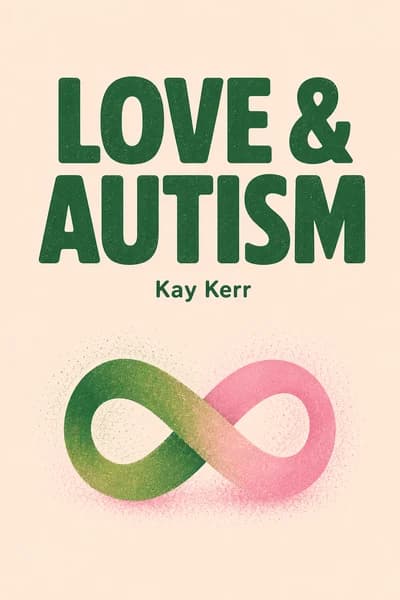
Kay Kerr's "Love & Autism" has become something of a quiet revolution in literary circles. Praised by The Guardian as "groundbreaking" and featured on NPR's "Fresh Air," this intimate exploration of neurodivergent relationships has found champions in celebrities like Padma Lakshmi and Daniel Radcliffe, who have openly discussed its impact on their understanding of autism. What makes this book truly remarkable isn't just its subject matter, but how it flips the traditional narrative-instead of focusing on what autistic people lack in relationships, it celebrates what they uniquely bring to them. In a world increasingly recognizing neurodiversity, Kerr's work arrives at the perfect cultural moment, offering both validation for autistic readers and illumination for everyone else.
Глава 2
The Journey Toward Self-Understanding: Autism as Identity, Not Disorder
Kay Kerr describes herself as "an autistic writer who has always been obsessed with stories and books." Her relationship with love has been complicated-feeling she's doing it wrong, not being emotional enough in expected ways yet too emotional in ways people dislike. Her tears come at the "wrong" times, she doesn't ask the "right" questions, and she needs more solitude than most people understand. These experiences reflect common autistic traits: intense interests, different emotional expression patterns, and heightened needs for personal space. Before her autism diagnosis in her twenties, she wore many unflattering labels: sensitive, difficult, particular, snobby, rude, blunt, angry, emotional, dramatic, crazy, bad - labels that often mask underlying neurodivergent traits.
The language we use to discuss autism matters profoundly. Kerr prefers identity-first language ("I am autistic") over person-first ("person with autism") because autism shapes her fundamental experience of the world. This choice reflects a broader movement within the autistic community that views autism as an integral part of identity, similar to how we say "gay person" rather than "person with gayness." She rejects functioning labels like "high-functioning" or "low-functioning" as harmful oversimplifications that either minimize needs or strip agency. These labels create a false dichotomy-either your challenges aren't taken seriously, or your capabilities are underestimated. For instance, an autistic person might excel professionally while struggling with basic daily tasks, or may be non-speaking yet highly intelligent and capable.
Masking-hiding autistic traits to appear neurotypical-further complicates this picture. Many autistic people learn to present as less autistic for safety and acceptance, often at tremendous personal cost. This might involve forcing eye contact, suppressing stimming behaviors, or mimicking social cues they don't naturally feel. Early intervention frequently encourages masking, making someone appear to function well while suffering internally. The mental health implications are significant: chronic anxiety, depression, and burnout often result from sustained masking. As Kristy Forbes, an autistic advocate, explains: "So-called 'high-functioning' autistics have higher suicide rates, while those labeled 'low-functioning' have their capacities completely undermined."
What if we moved beyond these limiting frameworks? What if we recognized autism as a neurological difference with its own strengths and challenges rather than a collection of deficits? This perspective shift doesn't deny difficulties but acknowledges the full humanity of autistic individuals and the unique perspectives they bring to relationships. It recognizes that autistic people often possess valuable traits like intense focus, pattern recognition, honesty, and deep empathy, even if expressed differently. This neurodiversity paradigm suggests that neurological differences are natural variations in human development, not errors to be corrected. Understanding autism this way opens possibilities for genuine acceptance and support that honors both challenges and strengths.
Глава 3
Michael: Authenticity as the Foundation of Connection
Michael's story begins as a small boy with big feelings and a passionate love for Thomas the Tank Engine. As the first child of Vanessa and Tom, he completes 1000-piece puzzles at age two while being a late talker. When specialists confirm his autism diagnosis, they paint a tragic picture, claiming he'll never express love or show empathy.
Reality proves them spectacularly wrong. Michael grows into a deeply empathetic person whose heart-on-sleeve approach defies those early predictions. His childhood is shaped by loving family traditions-his mother leaving Yowie chocolates on his pillow and his father taking him on special nighttime drives around Wollongong.
Now 28, Michael has become a breakout star from ABC's "Love on the Spectrum" and hosts a popular podcast. During interviews, he doesn't maintain constant eye contact or sit perfectly still-not rudeness but authentic autistic being. His freedom to be wholly himself is inspiring, highlighting the unnecessary burden of "masking" that many autistic people carry.
After stressful school days, Michael retreats to his "quarters" where he acts out scenes from favorite TV shows to regulate his emotions. Television provides essential comfort through repeated viewings of Modern Family, SpongeBob SquarePants, and New Girl. While initially feeling ignored by peers, especially girls, Michael unexpectedly finds popularity in his later high school years. His open-hearted nature resonates particularly with female classmates, who support him during his first seizure in math class.
Michael's appearance on Love on the Spectrum transforms his self-confidence as supportive messages flood in from viewers. "It made me realise that if these people can see the best in me, maybe I should too," he reflects. Embracing new opportunities, Michael has signed with a talent agent, launched his podcast, and left his five-year job to pursue acting full-time. He approaches audition rejections philosophically, viewing them as redirections rather than failures.
In his search for romantic partnership, Michael values kindness and loyalty over physical "type," refusing to mask or change himself to find love. Drawing strength from friends and family who accept him fully, he embraces autism as an intrinsic part of his identity-like his height or hair color-and encourages other autistic people to do the same.
Глава 4
Jess: Finding Your People Through Authentic Communication
Jess is a perpetually moving creative child with wild hair who finds joy on the trampoline and in books. She learns to read early by memorizing her favorite picture book-an example of hyperlexia common in autistic people. Her imagination flourishes in the garden searching for butterflies and fairies, hinting at her growing love for animals.
Indoors, her body fills with nervous energy that she releases by rolling on her bedroom floor, shaking her arms and legs. Even alone, she feels this behavior isn't "normal" and experiences shame, worrying her parents might walk in. This private struggle reveals her early awareness of being different and the pressure to conceal her natural tendencies.
At twelve, Jess discovers a pamphlet about Asperger's in a counselor's waiting room that perfectly describes her life experiences. Despite showing it to her supportive mother, finding someone to diagnose her proves challenging. School becomes unbearable in year eight when she's bullied by a girl and her friend group. Outside school, church youth group provides routine and structure, though she's devastated when not asked to stay on as a leader when she ages out. Her closest friendships form online, including her first autistic friend with whom she can finally be herself without explanation.
Jess's relationship with her partner Jesslyn faces challenges as they learn to cohabitate. Coming from a background of isolation, Jess struggles with communication, often retreating to her computer rather than talking directly. Through patience, they learn to respect each other's needs-Jesslyn wanting verbal communication and Jess learning to ask about her partner's wellbeing.
Without workplace accommodations, Jess cycles through jobs, often returning home devastated after being fired-a common experience for autistic individuals who face unemployment rates six times higher than neurotypical people. Video gaming becomes her escape, playing World of Warcraft for 9-10 hours daily to "be somebody else" and decompress from masking.
Eventually, Jess begins "unmasking" with her psychologist, finally feeling truly seen as they work to discover who she really is beneath years of trauma. This newfound self-understanding empowers her when facing workplace discrimination. During a recovery period from injury, Jess discovers her passion for creating artistic cakes and enrolls in pastry courses. With growing self-awareness, she develops coping mechanisms for sensory overload at work: "That was a real moment of clarity for me, like something I had never accommodated and allowed for myself before."
Глава 5
Chloe: Finding Joy in Neurodivergent Partnership
Chloe is a sensitive, rule-loving girl whose literal thinking manifests early when she refuses to use an age-inappropriate paint-by-numbers kit until she's old enough. Though autism is whispered about around her, she never receives an official diagnosis. People suspect she's autistic because she excels at math and science, struggles with friendships, and prefers setting up scenarios with toys rather than playing imaginary games.
Her emotional sensitivity is overwhelming-even mild criticism reduces her to tears. Chloe experiences "spectacular meltdowns" that further isolate her from peers. These build gradually with warning signs-increased agitation, sensory overwhelm, emotional dysregulation-before erupting into screaming and crying, followed by exhaustion and shame. Despite these challenges, she finds joy in sensory experiences like spinning herself around for hours, experiencing what she calls "dizzy whizzies" that bring her pure euphoria.
In year eleven, amid ongoing bullying, Chloe falls for Jacob, a boy in the year above. Their relationship embodies the neurodivergent version of "opposites attract"-she experiences intense emotions and frequent meltdowns while he struggles with emotional awareness and tends toward shutdown. She's fiercely independent; he relies heavily on family support. Their sensory preferences differ dramatically, with Jacob enjoying loud environments that Chloe finds overwhelming.
Despite these differences, they connect through their shared kindness, recognizing each other as kindred spirits. As they develop their relationship, they establish clear communication patterns and routines, including a rigid schedule of Friday date nights. After a period of long-distance relationship, they reunite in Melbourne just before the pandemic hits.
Living together brings new challenges with executive functioning tasks like meal planning and household chores, which they manage through apps and meal delivery services. Though they have different interests, they enjoy sharing space while pursuing individual activities, sending each other TikToks, building Lego sets, and appreciating each other's reactions to small joys. Chloe helps Jacob understand his emotions through his alexithymia, while Jacob provides support that Chloe says she couldn't manage without.
Their communication style might seem direct to outsiders, but it works perfectly for them. They both agree they couldn't imagine being with neurotypical partners who expect "mind-reading" instead of direct communication. Their relationship embraces "autistic joy" and mutual understanding that allows them to be themselves without judgment.
Глава 6
Noor: Cultural Intersection and Finding Safety in Acceptance
Noor is a quiet, dreamy child who escapes into Enid Blyton's magical stories despite not seeing herself represented in them. As the oldest daughter in a Malaysian family with a strict father, books provide black-and-white narratives where good triumphs over evil-a comforting contrast to her confusing reality.
At Malaysian school, Noor feels perpetually outside social circles, often finding herself crying without understanding how conflicts began. She survives by keeping her head down, learning early to suppress her own discomfort for others' comfort-a defining aspect of autistic experience.
After emigrating to Australia at her father's wish, Noor faces new challenges. She struggles with her mother tongue, thinking primarily in English rather than Malay, which becomes a source of shame. Contrary to autism stereotypes, she finds math difficult and suspects undiagnosed dyscalculia. As an Asian Muslim family in Melbourne, they face racism between cultural groups, fueled by the "model minority" myth that pits minorities against each other.
When Noor begins menstruating, she experiences it as far more than the mere "inconvenience" her mother describes. For her, periods become a complete sensory nightmare, causing uncomfortable physical symptoms and dramatic mood fluctuations that affect her ability to stay regulated. This cyclical pattern feels like yet another challenging aspect of life she must monitor and manage.
Entering university thrusts Noor into an overwhelming new world vastly different from her sheltered religious upbringing. While excelling academically, she struggles socially until finding community with other Muslim students through the campus Muslim Society. At nineteen, she meets a boyfriend through this group, but the relationship becomes increasingly troubling, eventually turning emotionally abusive. Reaching a breaking point where she contemplates suicide, Noor escapes with her mother's help.
Following her divorce at 21, Noor focuses on law school while battling mental health challenges. Therapy becomes transformative as she's diagnosed with bipolar disorder and begins medication. After several more life challenges, including inadvertently joining what she now recognizes was a cult-like community, she returns to Melbourne where her family has finally split from her father, creating a safe space for healing and growth.
Eventually, Noor meets her current husband through mutual friends and family. During their second meeting, she courageously discloses her bipolar diagnosis, preparing herself for rejection. Though he initially leaves to process this information, he returns after researching bipolar disorder, appreciating her honesty. Their relationship progresses quickly, and they marry in a simple Nikah ceremony. Her husband becomes instrumental in her self-discovery, being the first to suggest she might be autistic based on her sensory sensitivities and communication style.
Now a mother herself, Noor manages her sensory needs by setting clear boundaries around social events. In advocating for herself, she models self-advocacy for her autistic daughter, teaching her that some people simply won't understand their neurotype. When asked what she hopes to teach her daughter about being autistic, Noor emphasizes: "It's the way Allah created you and me. And there's nothing ever wrong in that."
Глава 7
Tim: Communication and Connection Beyond Words
Tim, the youngest of four children in a Chinese-Australian family in Melbourne, describes himself as "different from day one." Though doted on as the adorable youngest child, he struggles with language processing and experiences intense sensory overload.
After being diagnosed with autism at age three, professionals present his parents with a deficit-based medical model, warning Tim would remain "severely disabled." Rejecting this outlook, his mother Sarah immerses herself in works by autistic authors to better understand her son's inner world.
Using her background in psychology and education, Sarah creates programs tailored to Tim's visual strengths, including photo books that help him pair words with images. Despite not developing language understanding until age five or six, Tim eventually teaches himself to translate images into words.
At nine, he begins using partner-assisted typing (PAT) for communication, which becomes "a game-changer" despite requiring practice to overcome movement difficulties. Through PAT, Tim and Sarah engage in deep conversations about everything from daily events to complex social issues.
After his difficult high school years, Tim works to transform his anger and isolation into meaning, determined to use his experiences to help others. Daily walks with his mother provide essential processing time, with the rhythm of movement and connection to nature offering comfort. Tim finds insight in Carl Jung's concept of the shadow self, exploring his unconscious mind through this framework.
Tim begins his TED Talk by describing how his non-speaking autism appears to others: "I flap my arms, make noise, and may even lie on the floor." He explains his sensory hypersensitivity and processing challenges while crediting his mother for seeing his potential "to be fully human." Despite anxiety from isolating high school experiences, Tim accepts this opportunity to advocate for non-speaking individuals.
The successful talk helps rebuild his confidence and shows him a path forward in advocacy work. Tim continues working with organizations like Communications Rights Australia and Reframing Autism, turning his struggles into better outcomes for others. He finds particular meaning in feedback from families with autistic children who reach out for guidance or share how his story resonates with theirs.
Глава 8
Beyond Deficits: The Gifts of Autistic Perception
What if autism isn't just a collection of challenges but also offers unique gifts? This perspective emerges powerfully through the stories in Kerr's book. Autistic sensitivity-often framed as a liability-can be a source of profound joy and connection, offering experiences and insights that neurotypical individuals might never access.
Chloe describes experiencing music with such intensity that it creates euphoria, leaving her paralyzed with happiness and tears. At concerts, she deliberately removes her noise-dulling earplugs for certain songs, embracing the "good overstimulation" that washes over her. The vibrations course through her body, creating a multi-sensory experience where sound becomes almost visible and tangible. She celebrates how her autistic sensitivity allows her to "experience good things in ways non-autistics can never even fathom," from the intricate patterns in rainfall to the complex harmonies in classical music that others might miss.
The recognition of distinct autistic ways of loving is reshaping cultural conversations about relationships and connection. A viral tweet about "five neurodivergent love languages" offers alternatives to traditional concepts: infodumping (sharing passionate interests with detailed enthusiasm), parallel play (finding comfort in shared space while pursuing individual activities), support swapping (offering practical help and solutions rather than conventional emotional support), deep pressure input (using weighted blankets, tight hugs, or compression clothing for comfort), and gift-giving (finding and sharing specific items that hold special meaning, like interesting rocks or precise items from special interests).
Bestselling author Helen Hoang writes autistic characters because she "craved love stories that explored the same challenges" she experiences. Her novels feature characters who navigate relationships while processing sensory information differently, struggling with change, and finding beauty in patterns and routines. Australian author Jen Wilde shares how her teenage years were filled with romantic longing and the belief that finding love would prove she "wasn't as broken." Only after discovering she was both autistic and queer did she feel free to live authentically, realizing that her different way of experiencing attraction and connection wasn't wrong-just different.
Through these stories, we see that autism isn't about what's missing but what's different-a different way of perceiving, processing, and connecting with the world. This neurodivergent perspective offers unique insights into patterns, details, and connections that others might overlook. As Kerr reflects, there's no blueprint for successful love or life-it's about feeling rather than appearance. Having spent years cloaked in shame, she now celebrates being autistic, bringing shame "into the light" rather than hiding it. This transformation from viewing autism as a deficit to recognizing it as a different way of being opens up new possibilities for understanding human diversity and connection.
The autistic experience often includes heightened awareness of details, from the texture of fabric to the subtle changes in someone's tone of voice. While this sensitivity can be overwhelming, it also enables a depth of perception and appreciation that enriches life in unique ways. Many autistic individuals report finding profound joy in specific interests, patterns, and sensory experiences that others might overlook or take for granted.
Глава 9
Redefining Love Through Neurodivergent Eyes
What emerges from these interwoven stories is a profound reimagining of what love and connection can look like. Far from the deficit-based narratives that have dominated autism discourse, we see relationships flourishing through directness rather than social niceties, through shared understanding rather than conformity to neurotypical expectations. These stories challenge the traditional notion that successful relationships must follow a predetermined social script.
Chloe and Jacob's relationship works because they've abandoned the expectation that partners should read each other's minds. Instead, they communicate directly about needs and preferences, from sensory sensitivities to social boundaries. When Chloe needs quiet time, she states it plainly. When Jacob feels overwhelmed by certain textures, he communicates this without shame. Their relationship demonstrates how explicit communication can create deeper intimacy than unspoken assumptions ever could.
Noor finds safety in her husband's acceptance of her authentic self: "It is okay that this is how I am." This acceptance extends to her need for precise routines, her passionate interest in marine biology, and her direct communication style. Their relationship flourishes not despite these characteristics but because of them. Michael refuses to change himself to find love, valuing authenticity over accommodation. His journey shows how self-acceptance becomes the foundation for meaningful connections.
These relationships challenge conventional wisdom about what makes connections work. They suggest that perhaps neurotypical relationships could benefit from more directness, more explicit communication about needs, more acceptance of different sensory and emotional experiences. The success of these partnerships demonstrates how neurodivergent approaches to love often solve common relationship challenges that many neurotypical couples struggle with.
For autistic individuals navigating a world not designed for them, finding spaces of acceptance becomes transformative. Sarah's story illustrates this through her online community where autistic adults share relationship advice and support. Alex and Maria's marriage shows how creating a home environment that honors both partners' sensory needs strengthens their bond. As Tim's advocacy work demonstrates, these experiences can become catalysts for broader social change, creating pathways for future generations to be understood and accepted more fully.
Ultimately, Kerr's book isn't just about autism-it's about the fundamental human need for connection on our own terms. It's about moving beyond shame toward pride, beyond accommodation toward celebration of difference. Through stories of successful neurodivergent relationships, we see how diversity in communication styles, emotional expression, and ways of showing love enriches our understanding of human connection. It's about recognizing that there are many ways to love, many ways to connect, many ways to be human-and that this diversity itself enriches all our lives and challenges us to expand our definition of what meaningful relationships can look like.