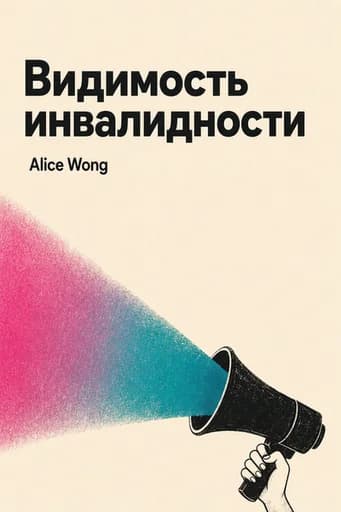
In "Disability Visibility," Alice Wong amplifies 37 powerful disabled voices celebrating the 30th anniversary of the ADA. Featured in TIME and British Vogue, this groundbreaking anthology challenges ableism while exploring intersectionality. What does it mean to simply *be* when society insists on fixing you?
Alice Wong is a disabled activist, writer, and founder of the Disability Visibility Project, renowned for amplifying disability narratives through oral histories and anthologies.
Her groundbreaking work Disability Visibility: First-Person Stories from the Twenty-First Century compiles essays exploring disability justice, identity, and intersectionality, informed by her decades of advocacy and lived experience as a Chinese-American wheelchair user.
A former appointee to the National Council on Disability under President Obama, Wong co-created initiatives like #CripTheVote and Access Is Love while maintaining partnerships with institutions from the San Francisco Museum of Modern Art to Netflix, where she voiced a character based on herself in Human Resources.
Her memoir Year of the Tiger offers further insights into disability activism, earning a Northern California Book Award. Wong’s anthologies have become essential texts in disability studies programs, with Disability Visibility widely praised as a defining collection of contemporary disability culture.
Disability Visibility is a groundbreaking anthology celebrating 30 years of the Americans With Disabilities Act (1990-2020). Edited by activist Alice Wong, it features 37 essays, poems, and interviews from disabled writers, exploring themes like identity, systemic barriers, intersectionality, and joy. Divided into four sections—Being, Becoming, Doing, and Connecting—it amplifies underrepresented voices, challenging stereotypes while advocating for disability justice.
This book is essential for anyone interested in social justice, disability rights, or intersectional activism. Educators, policymakers, and allies will gain critical insights into systemic ableism, while disabled readers will find validation and community. Its accessible format—blending personal narratives with calls to action—makes it ideal for classrooms, book clubs, and lifelong learners.
Yes. Kirkus Reviews calls it “galvanizing” for its diverse perspectives and unflinching honesty. The collection balances raw accounts of discrimination with triumphs in disability culture, offering actionable frameworks for inclusivity. Notable essays include Haben Girma’s guide dog reflections and Harriet McBryde Johnson’s debate on personhood, making it a vital resource for understanding contemporary disability discourse.
Key themes include:
Over half the contributors are disabled people of color, LGBTQ+ individuals, or low-income writers. For example, Leroy F. Moore Jr. discusses police violence against Black disabled communities, while Sandy Ho examines Asian American disability stigma. These narratives reject “single-issue” activism, centering multiply marginalized voices.
Some reviewers note the anthology’s U.S.-centric focus and lack of global perspectives. Others highlight gaps in representing certain disabilities, like rare genetic conditions. However, Wong openly acknowledges these limitations, providing a 15-page resource list for further exploration.
Unlike memoirs like The Diving Bell and the Butterfly, this anthology prioritizes community over individual heroism. It aligns with works by Mia Mingus and Leah Lakshmi Piepzna-Samarasinha but stands out for its genre diversity (e.g., transcripts, fiction) and focus on 21st-century issues like digital activism.
Essays like “The Erasure of Indigenous People in Chronic Illness” and “Disability Solidarity” offer concrete strategies:
Yes. Ariel Henley’s essay critiques facial recognition biases against facial differences, while #HospitalSocks (Cheryl Green) explores Twitter as a tool for community building. Wong’s introduction also highlights the Disability Visibility Project’s podcast, showcasing digital storytelling’s role in modern activism.
With global crises exacerbating disability inequities (climate disasters, AI bias), the book’s lessons on resilience and collective care remain urgent. Its focus on intersectionality also aligns with 2025’s broader social justice movements, making it a timely guide for activists and allies.
The anthology’s 15-page appendix lists:
Почувствуйте книгу через голос автора
Превратите знания в увлекательные, богатые примерами идеи
Захватите ключевые идеи мгновенно для быстрого обучения
Наслаждайтесь книгой в весёлой и увлекательной форме
We are not a monolith.
Disability is not a dirty word.
We need stories like these, stories by us and for us.
Nothing about us without us.
Разбейте ключевые идеи Disability Visibility на понятные тезисы, чтобы понять, как инновационные команды создают, сотрудничают и растут.
Погрузитесь в Disability Visibility через яркие истории, превращающие уроки инноваций в запоминающиеся и применимые моменты.
Задавайте любые вопросы, выбирайте свой стиль обучения и создавайте идеи, которые действительно вам подходят.

Создано выпускниками Колумбийского университета в Сан-Франциско
"Instead of endless scrolling, I just hit play on BeFreed. It saves me so much time."
"I never knew where to start with nonfiction—BeFreed’s book lists turned into podcasts gave me a clear path."
"Perfect balance between learning and entertainment. Finished ‘Thinking, Fast and Slow’ on my commute this week."
"Crazy how much I learned while walking the dog. BeFreed = small habits → big gains."
"Reading used to feel like a chore. Now it’s just part of my lifestyle."
"Feels effortless compared to reading. I’ve finished 6 books this month already."
"BeFreed turned my guilty doomscrolling into something that feels productive and inspiring."
"BeFreed turned my commute into learning time. 20-min podcasts are perfect for finishing books I never had time for."
"BeFreed replaced my podcast queue. Imagine Spotify for books — that’s it. 🙌"
"It is great for me to learn something from the book without reading it."
"The themed book list podcasts help me connect ideas across authors—like a guided audio journey."
"Makes me feel smarter every time before going to work"
Создано выпускниками Колумбийского университета в Сан-Франциско

Получите резюме книги «Disability Visibility» в формате PDF или EPUB бесплатно. Распечатайте или читайте офлайн в любое время.
Have you ever considered that simply showing up in your own body might be a political act? For millions of disabled people worldwide, this isn't a philosophical question-it's daily reality. "Disability Visibility" shatters the tired narratives we've grown accustomed to: the inspiration porn, the tragic victim, the superhuman overcomer. Instead, it offers something far more radical and necessary-authentic voices speaking without apology or explanation. These aren't stories designed to make non-disabled readers feel comfortable or inspired. They're raw, complex, sometimes uncomfortable truths about what it means to navigate a world built without you in mind. As disability rights activist Sandy Ho writes, taking up space as a disabled person is always revolutionary. This anthology proves why.
June Eric-Udorie grew up in church services promising healing through faith. Born with a condition causing involuntary eye movements, she internalized a devastating message: her body was a mistake waiting to be corrected. At fourteen, when a doctor suggested registering as partially sighted, she recoiled. "Claiming disability felt like adding an unnecessary burden to my already complex identity as Black, female, Nigerian, and British." At seventeen, she finally said aloud: "I have a visual disability." This declaration represented a seismic shift from shame to self-acceptance. Now she enters church "happy in the body I exist in... knowing I am not a mistake waiting to be fixed." Her journey mirrors Ariel Henley's experience with Crouzon syndrome, which causes facial differences. After years of medical appointments where doctors circled her "flaws," an art teacher offered a revelation: "Being compared to a Picasso may seem like an insult, but it's an honor. You are a masterpiece." These narratives reject the medical model positioning disabled bodies as problems requiring solutions, embracing instead disability as natural human diversity.
Jeremy Woody's experience being deaf in prison reveals what happens when accessibility becomes optional. Without sign language interpreters, staff couldn't communicate with him. He missed meals because he couldn't hear announcements. Educational programs and medical care remained inaccessible. Even when he developed cancer, interpreters appeared only at the hospital-never in prison. The injustice peaked during disciplinary proceedings. Brought to court in shackles, Woody had no way to communicate his defense. One sympathetic guard tried writing notes, but others refused to uncuff him so he could respond. "Unable to write 'not guilty' or request an interpreter, I was automatically declared guilty," he recalls. This landed him in solitary confinement, where he spent days crying "endlessly from fury and helplessness." His story represents an extreme but not isolated example-similar patterns of exclusion appear throughout criminal justice, education, healthcare, and employment, where physical inaccessibility, lack of accommodations, discriminatory policies, and prejudice compound existing power imbalances.
"Society assumes joy is impossible for disabled people, associating disability only with sadness and shame," writes Keah Brown, creator of the viral hashtag #DisabledAndCute. Her essay challenges the narrative that disability and happiness are mutually exclusive. The turning point came on a snowy day in 2016 when she vowed to nurture joy, actively rerouting negative thoughts by speaking aloud what she liked about herself - a practice that led to creating #DisabledAndCute, which went viral globally within two weeks. This celebration appears throughout the anthology in unexpected forms. Selma Blair stepped onto the 2019 Oscars red carpet with her diamond-adorned cane, rejecting embarrassment about mobility aids. Jamison Hill and his partner Shannon, both with conditions preventing Hill from speaking, communicate via text messages while cuddling. When Hill attempted to whisper "I love you" through clenched teeth, Shannon couldn't understand. Her response: "You don't have to say anything. I love you!" These accounts serve as powerful counternarratives to the tragedy model of disability, demonstrating that disabled lives contain the full spectrum of human emotion - refusing the expectation that disabled people should be objects of pity.
Lateef McLeod began using augmentative and alternative communication (AAC) at age six, progressing from picture boards to modern iPads that offer affordable alternatives to specialized devices costing thousands. Yet technology alone doesn't solve isolation - broader societal change remains essential. The anthology reveals art as vital expression for disabled people. Jamison Hill describes writing as "burning" - that unstoppable flow when words pour out until his knuckles hurt. With bipolar II disorder, proper medication allowed him to "create deliberately rather than through controlled falling." His insight that "mental illness didn't make me creative - it made me ill" challenges romanticized notions linking creativity and mental health. Dance offers another powerful medium. One contributor describes attending a wheelchair dancers' performance that created "the rare feeling of being in a space truly created for disabled people," reversing typical power dynamics. Non-disabled attendees experienced the unsettling reality of being on "the other side of the access divide." These accounts demonstrate that communication transcends information - it's about agency, connection, and self-determination.
"As long as claiming our own ground is treated as an act of hostility, we need our ground," writes s.e. smith about spaces created by and for disabled people. These environments provide vital community where disabled needs are centered rather than treated as inconvenient accommodations. Smith describes crip space as "a fragile natural place requiring protection while remaining open to change," acknowledging that conflicting needs mean not all disabled people feel welcome. The anthology illustrates how disability intersects with race, gender, sexuality, and religion. Sandy Ho confronts cultural stigma as a disabled Asian American woman - from the Chinese term *canfei* (useless) to *can zhang* (disabled and obstructed). Maysoon Zayid's experience as a Muslim woman with cerebral palsy reveals how religious practice and disability accommodation require thoughtful negotiation. Keah Brown explicitly addresses how "as a Black woman with cerebral palsy," her joy represents resistance against multiple systems of oppression. Eugene Grant's discovery of Benjamin Lay - a dwarf person born in 1682 who became a radical abolitionist - suggests that marginalized perspectives generate radical insights about equality benefiting everyone.
In a world treating disability as a medical problem rather than cultural identity, this anthology offers profound connection. Stacey Milbern's reflection on "crip ancestorship" through special boot socks passed down from disability rights leaders captures this beautifully. Though she loved these socks, falling while wearing them sparked deeper thoughts: disabled people often live short lives, yet their spirits and wisdom endure, continuing to learn alongside the living. By collecting diverse voices, this anthology builds a record of disability culture for future generations, challenging isolation and providing belonging to a cultural tradition with its own history and ongoing evolution. The message resonates universally: You are enough. You are not alone. This anthology offers a vision where disabled people aren't waiting to be fixed, aren't performing inspiration for others' comfort, aren't hiding to make the world more palatable-they're simply living fully, complexly, joyfully, angrily, creatively. That's the revolution: not in grand gestures but in the daily act of existing authentically, claiming space, building community, and refusing to disappear. Your presence matters. Your voice deserves to be heard. Your joy is resistance.