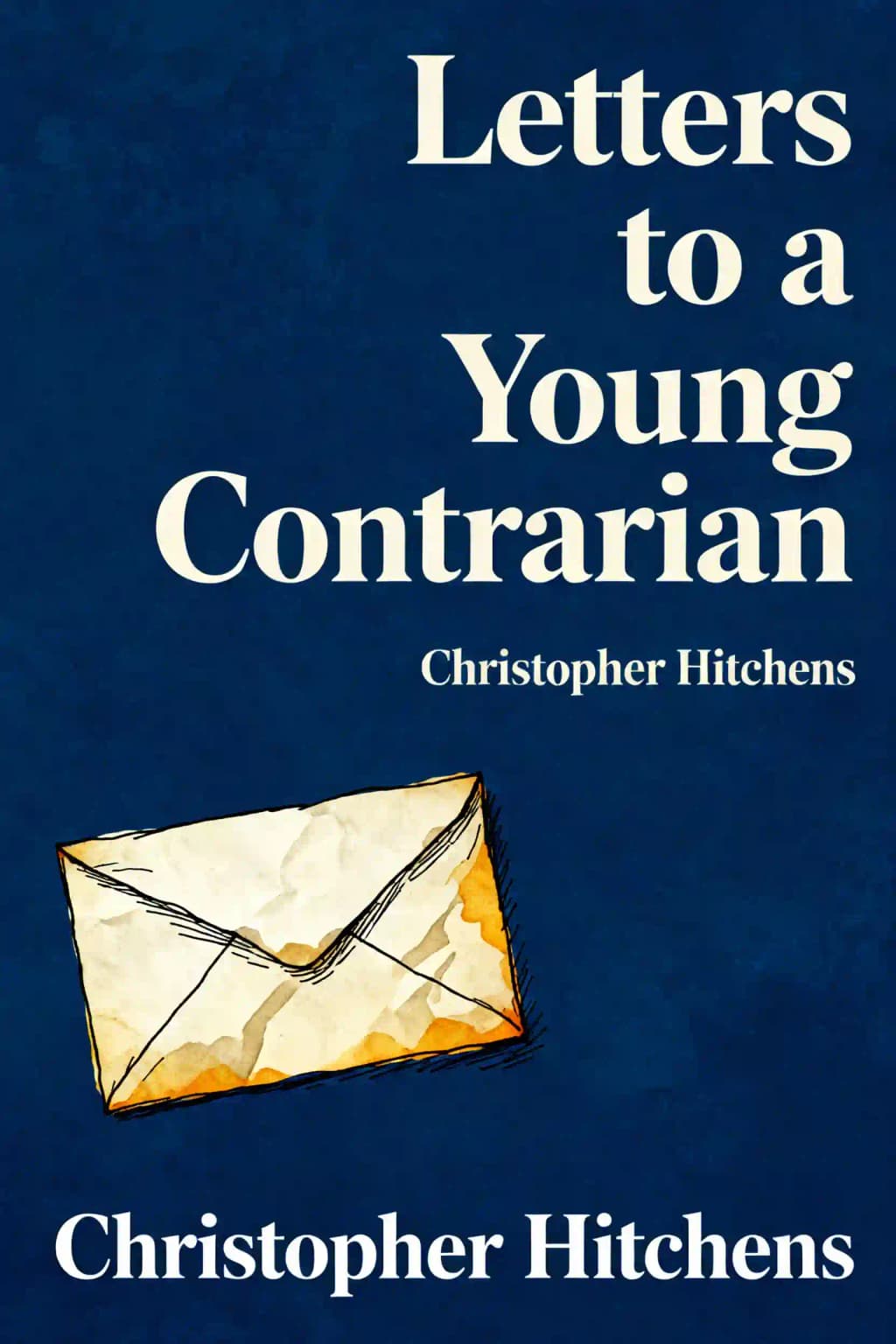
In "Letters to a Young Contrarian," Christopher Hitchens offers a masterclass in intellectual rebellion. Praised by The New York Times for its "indignation and intellect," this manifesto teaches the art of dissent that inspired a generation to question authority, challenge consensus, and think independently.
Christopher Eric Hitchens (1949–2011), author of Letters to a Young Contrarian (The Art of Mentoring), was a bestselling Anglo-American journalist, polemicist, and provocative commentator on politics, religion, and culture.
A graduate of Oxford’s Balliol College, Hitchens built a decades-long career writing for Vanity Fair, The Nation, and Slate, blending sharp wit with unflinching critiques of power structures. His exploration of dissent and intellectual independence in Letters to a Young Contrarian reflects his own legacy as a contrarian thinker, further showcased in works like God Is Not Great: How Religion Poisons Everything—a New York Times bestseller translated into over 30 languages—and the memoir Hitch-22.
Known for debates on faith, foreign policy, and free speech, Hitchens’ columns and books like The Trial of Henry Kissinger cemented his reputation as a defining public intellectual of his era. God Is Not Great alone has sold over 2 million copies worldwide.
Letters to a Young Contrarian by Christopher Hitchens challenges conformity and advocates for intellectual independence. It frames dissent as a vital force for societal progress, urging readers to question authority, embrace skepticism, and cultivate moral courage. Hitchens draws on historical figures like Orwell and Zola to argue that contrarian thinking fosters truth-seeking and democratic resilience.
Aspiring critical thinkers, activists, and readers valuing free discourse will find this book transformative. Hitchens addresses young radicals, scholars, and anyone resisting societal complacency. Its insights resonate with those navigating political, academic, or personal battles against dogma, making it ideal for fans of polemical writing or Hitchens’ broader work.
Yes—its sharp prose and unflinching defense of dissent remain timely. While some critique its dense literary references, the book’s lessons on irony, intellectual integrity, and resisting groupthink offer enduring value. It’s praised for inspiring courage to challenge norms, though readers may need patience with its philosophical depth.
Hitchens defines contrarians as independent thinkers who reject herd mentality, challenge authority, and prioritize truth over consensus. Key traits include skepticism, moral courage, and willingness to endure isolation. Contrarians embrace debate as a tool for progress, refusing to equate dissent with negativity.
He advises cultivating irony, humor, and solitude to sustain independent thought. Embrace opposition as inevitable, act “as if” free even under oppression, and prioritize self-respect over popularity. Hitchens stresses vigilance against dogma and the ethical duty to speak truth despite backlash.
Hitchens condemns religion as antithetical to free inquiry, calling it a tool of control that breeds moral arrogance. He critiques concepts like vicarious redemption for undermining personal accountability, aligning with his broader antitheist stance seen in works like God Is Not Great.
Core themes include dissent’s role in democracy, the moral necessity of skepticism, and the tension between individuality and conformity. Hitchens explores intellectual courage, the value of unpopular truths, and how contrarians historically drive societal change—from civil rights to free speech.
He cites Rosa Parks, George Orwell, and Émile Zola for their defiance against injustice. Albert Camus, Noam Chomsky, and Thomas Paine also appear as models of principled dissent. These examples illustrate how contrarians reshape societies through moral resistance.
He argues that fear of error should not paralyze dissent—wrongness is a step toward truth. Contrarians must prioritize honest inquiry over infallibility, accepting criticism as part of intellectual growth. Vulnerability, he insists, is preferable to complacency.
The “as if” concept urges acting with autonomy even under oppressive systems, akin to Rosa Parks’ defiance. By embodying freedom mentally, contrarians chip away at authoritarian structures. This mindset fosters resilience and prefigures social change.
Critics note its elitist tone and dense allusions, which may alienate casual readers. Some argue Hitchens romanticizes dissent without addressing systemic barriers. Others find his antitheism overly confrontational, though supporters view this as intentional provocation.
It complements God Is Not Great (religion’s dangers) and Why Orwell Matters (defending free speech). Themes of moral courage and anti-authoritarianism echo across his writing, cementing Hitchens’ legacy as a champion of intellectual dissent.
Почувствуйте книгу через голос автора
Превратите знания в увлекательные, богатые примерами идеи
Захватите ключевые идеи мгновенно для быстрого обучения
Наслаждайтесь книгой в весёлой и увлекательной форме
The essence of the independent mind lies not in what it thinks, but in how it thinks.
It's about developing the capacity to see through collective delusions and the courage to name them.
Sometimes one side is right and the other wrong.
Harmony feels good, certainly. But what if that feeling comes at the expense of truth?
Разбейте ключевые идеи Letters to a Young Contrarian на понятные тезисы, чтобы понять, как инновационные команды создают, сотрудничают и растут.
Выделите из Letters to a Young Contrarian быстрые подсказки для запоминания, подчёркивающие ключевые принципы открытости, командной работы и творческой устойчивости.

Погрузитесь в Letters to a Young Contrarian через яркие истории, превращающие уроки инноваций в запоминающиеся и применимые моменты.
Задавайте любые вопросы, выбирайте голос и совместно создавайте идеи, которые действительно находят у вас отклик.

Создано выпускниками Колумбийского университета в Сан-Франциско
"Instead of endless scrolling, I just hit play on BeFreed. It saves me so much time."
"I never knew where to start with nonfiction—BeFreed’s book lists turned into podcasts gave me a clear path."
"Perfect balance between learning and entertainment. Finished ‘Thinking, Fast and Slow’ on my commute this week."
"Crazy how much I learned while walking the dog. BeFreed = small habits → big gains."
"Reading used to feel like a chore. Now it’s just part of my lifestyle."
"Feels effortless compared to reading. I’ve finished 6 books this month already."
"BeFreed turned my guilty doomscrolling into something that feels productive and inspiring."
"BeFreed turned my commute into learning time. 20-min podcasts are perfect for finishing books I never had time for."
"BeFreed replaced my podcast queue. Imagine Spotify for books — that’s it. 🙌"
"It is great for me to learn something from the book without reading it."
"The themed book list podcasts help me connect ideas across authors—like a guided audio journey."
"Makes me feel smarter every time before going to work"
Создано выпускниками Колумбийского университета в Сан-Франциско

Получите резюме книги «Letters to a Young Contrarian» в формате PDF или EPUB бесплатно. Распечатайте или читайте офлайн в любое время.
In a society that rewards groupthink, Christopher Hitchens offers a defiant manifesto for independent thinkers. His slim volume of wisdom has become intellectual oxygen for journalists, activists, and free spirits since 2001, experiencing a remarkable resurgence among Gen Z readers disillusioned with mainstream narratives. The book's enduring relevance speaks to our perpetual struggle between conformity and dissent, between comfortable falsehoods and uncomfortable truths. As we navigate polarization and echo chambers, Hitchens encourages us to stand apart from the crowd-especially when it feels most difficult. What if the most valuable contribution you could make to society isn't agreeing with the majority but questioning it? What if intellectual rebellion isn't just admirable but necessary?