Глава 1
When Death Becomes a Constant Companion
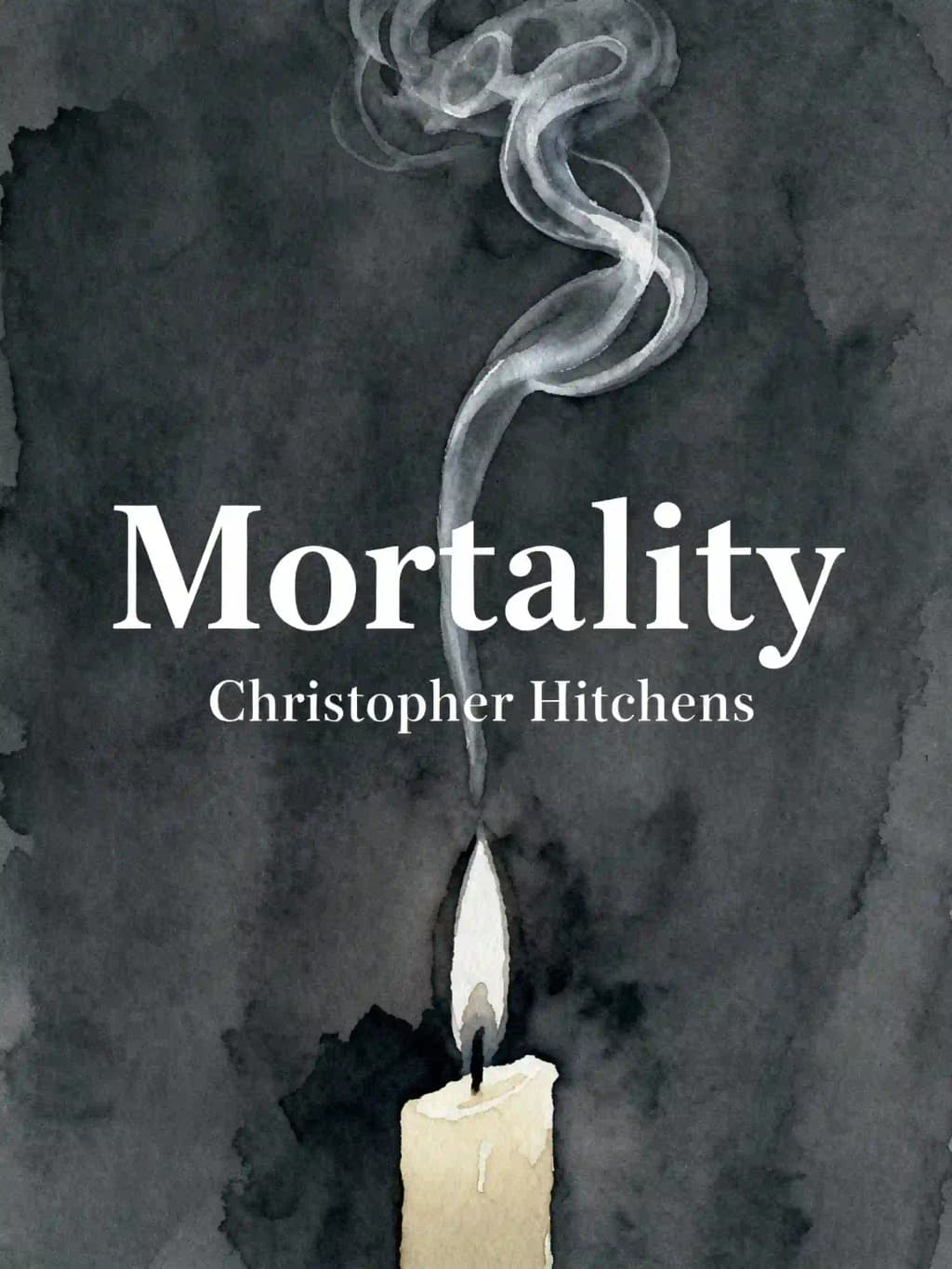
Christopher Hitchens' "Mortality" has become something of a modern secular scripture for those facing their own mortality. Published posthumously in 2012, this slim volume chronicling Hitchens' 19-month battle with esophageal cancer has garnered praise from figures as diverse as novelist Ian McEwan and theoretical physicist Lawrence Krauss. Even Steve Jobs reportedly read it during his own cancer struggle. What makes this meditation on death so compelling is Hitchens' unflinching honesty and characteristic wit-refusing sentimentality or self-pity even as cancer ravaged his body and stole his voice, the very instrument that had made him one of the world's most formidable public intellectuals. In our death-denying culture, "Mortality" stands as a rare example of someone looking directly into the abyss without flinching, without comforting platitudes, and with the same intellectual rigor Hitchens brought to all subjects throughout his career. As we follow his journey from diagnosis to his final days, we witness not just how one man dies, but how he continues to live while dying.
Глава 2
The Sudden Deportation to the Land of the Ill
That June morning in 2010 began like no other awakening in Christopher Hitchens' life. He had experienced hangovers before-legendary ones, in fact-but nothing prepared him for the sensation of "being shackled to my own corpse." His chest felt hollowed out and refilled with cement. Breathing was audible but his lungs wouldn't properly inflate. His heart beat erratically. The simplest movement required careful planning and execution.
From his New York hotel room, Hitchens managed to summon emergency services. Their professional response now seems like a gentle deportation-from the country of the well across the border into the land of malady. Within hours, after emergency work on his heart and lungs, physicians showed him shadowy negatives and directed him to an oncologist. Just the previous evening, he had launched his latest book in New Haven. Despite his dire condition, he refused to cancel appearances on The Daily Show and at the 92nd Street Y with Salman Rushdie that very night of his terrible morning.
He performed both engagements without anyone noticing his condition, though he vomited precisely twice before each show-the desperate clinging to normalcy that citizens of the sick country attempt. This new land has its peculiarities: universal smiles, apparent meritocracy, and no racism, but feeble humor, little talk of sex, and terrible cuisine. It has its own language of medical terms and unsettling gestures-like the official who abruptly examined his neck, discovering his cancer had spread to his lymph nodes, one large enough to be visible on his right clavicle. "Palpable" cancer is never good news, especially when they didn't yet know the primary source.
The irony wasn't lost on Hitchens-a writer and speaker struck with esophageal cancer. The ancient warning "Remember, you too are mortal" had hit him at his peak, attacking his two primary assets: his pen and his voice. This "vulgar little tumor" seemed single-minded in its purpose. On the morning of his biopsy, he acknowledged it was the last day of his old life-no more pretense of youth, only "arduous awareness" ahead. The ambulance crew had gently deported him "across the frontier of the well, in another country" while the alien tumor burrowed into him even as he wrote jaunty words about his prematurely announced death.
Глава 3
The Blind, Emotionless Alien Within
Hitchens described his esophageal tumor as a "blind, emotionless alien," inadvertently giving it animate qualities through the pathetic fallacy. This metaphor, while poetic, captured the peculiar nature of cancer - a collection of one's own cells turned rogue, yet somehow foreign. Cancer needs a living host but can never become alive itself; its malice lies in dying with its host unless extirpated. The relationship is parasitic yet self-destructive, consuming its host without purpose or consciousness. "I'm not fighting cancer," Hitchens wrote, "it's fighting me." This distinction was crucial to his understanding of his condition - he wasn't a warrior in battle but rather the battlefield itself.
Some religious believers interpreted his illness as divine retribution, a perspective that particularly troubled him. One online commenter gloated that God had targeted his throat specifically for blasphemy, predicting his agonizing death followed by hellfire. Others suggested it was punishment for his lifetime of smoking and drinking, conflating natural consequences with divine judgment. Such thinking ignores obvious objections: which primate can know God's mind? Why not a thunderbolt instead of predictable cancer? Why do innocent children get leukemia while tyrants die peacefully? The arbitrary nature of cancer's victims defies any notion of cosmic justice.
The bizarre reality of terminal illness involves simultaneously preparing for death while pursuing survival-a double existence Hitchens described as "living dyingly." His days became split between morning lawyers handling his affairs and afternoon doctors discussing treatment options. This cognitive dissonance was exhausting yet necessary. Among those praying for Hitchens were Catholics, Protestants, Jews, and even Muslims, though their prayers often aimed at his salvation rather than merely his recovery. He appreciated the sentiment but noted the contradictions: each faith would consider conversion to any other insufficient, creating a theological impasse.
The most comprehensive study on intercessory prayer, conducted at Harvard Medical School, found no correlation between prayers offered and improved patient outcomes. Interestingly, it revealed a small negative effect: some patients felt worse when they showed no improvement, believing they'd disappointed their supporters. This "performance anxiety" extended to secular well-wishers too. Similarly, secular friends' encouraging statements like "If anyone can beat this, you can" sometimes depressed him-he'd be letting them down if he succumbed, adding an unnecessary burden of expectation to an already overwhelming situation.
The most meaningful support came from Dr. Francis Collins, director of NIH and Human Genome Project pioneer, who despite his Christianity didn't suggest prayer but offered cutting-edge treatment possibilities, including experimental gene therapies and clinical trials. Their relationship exemplified how science and faith could coexist without compromise - Collins never pressed his beliefs on Hitchens, focusing instead on practical medical solutions. Ironically, those praying for Hitchens' suffering were hoping this Christian physician's efforts would fail-one of many paradoxes in the world of illness and faith that Hitchens observed with his characteristic sharp wit, even as the cancer progressed.
Глава 4
Tumortown: Where Encouragement Becomes Torture
Four decades after Nixon's ambitious "War on Cancer," Hitchens found himself unwillingly residing in what he sardonically dubbed "Tumortown," a metaphorical place where patients paradoxically die not from the disease itself, but from the crushing weight of endless encouragement and unsolicited advice. Well-meaning correspondents flooded him with suggestions ranging from the pseudo-scientific (peach pit extract and alkaline diets) to the fantastical (cryonic freezing and faith healing). Even within the realm of modern medicine, he was constantly bombarded with recommendations for supposedly miraculous doctors or revolutionary clinics that promised salvation.
This period represented both an exhilarating and melancholy time to have cancer. Exhilarating because his skilled oncologist could design sophisticated chemotherapy cocktails that showed promise in shrinking tumors, using combinations of drugs tailored to his specific case. Yet deeply melancholy because breakthrough treatments were emerging at a cruel pace - too late to benefit him. He experienced a particularly bitter moment of hope when learning about an innovative immunotherapy protocol at the National Cancer Institute that genetically engineered T cells to attack malignancies. His tumor possessed the required protein marker, raising his spirits briefly, only to discover his immune cells lacked the crucial molecule needed for treatment. Similarly devastating were the numerous other targeted therapies that seemed promising but for which he didn't qualify, including the stem cell "tissue engineering" he watched with fascination on 60 Minutes.
The shocking novelty of a cancer diagnosis, Hitchens discovered, eventually fades into an almost banal routine. He grew grimly accustomed to death's constant presence, though it was the disease's "snickering" quality - its way of toying with hope - that truly haunted him. Cancer served up new indignities with methodical regularity: mouth sores that made eating excruciating, neuropathy that left his feet numb and unsteady, digestive issues that turned every meal into an ordeal. His existence contracted to childish proportions, measured in tiny sips of liquid nutrition and careful counts of medication.
A particularly memorable example of Tumortown's social awkwardness occurred at a book signing during his tour. A tactless woman, after expressing initial sympathy for his illness, launched into an extended, gruesome narrative about her cousin's liver cancer. As an increasingly uncomfortable line of customers grew behind her, she described in graphic detail how his cancer appeared to vanish, only to return "much worse than before," leading to an "agonizing" death that "seemed to take him forever." She punctuated this horrifying tale with the bizarre non sequitur, "Of course, he was a lifelong homosexual," leaving even the typically quick-witted Hitchens momentarily stunned into silence.
Such cringe-worthy interactions became routine features of life in Tumortown, where well-intentioned people often inflict psychological torture through their clumsy attempts at connection or comfort. The fine line between medical care and actual torture particularly haunted Hitchens, especially given his unique perspective. Having voluntarily undergone waterboarding for a Vanity Fair article before his diagnosis, he suffered from a form of post-torture stress specifically related to asphyxiation. This trauma became dangerously entangled with his cancer symptoms, particularly during medical procedures involving tubes, washing, or liquid nourishment, creating a nightmarish overlap between his past experiences and present treatment.
Глава 5
The Theft of Voice and Identity
Most devastating was losing his voice, which began registering all over the place before threatening to disappear entirely. Having always defined himself through speech-from hailing cabs to commanding debate halls, delivering blistering critiques on television, and holding court at dinner parties-this loss felt like an amputation of personality. His voice had been his signature instrument, capable of delivering withering criticism one moment and sparkling wit the next. When you can no longer enter conversations naturally, people listen "sympathetically," which he couldn't bear. The pity in their eyes was perhaps worse than the silence itself.
As someone who taught writing students to "write like you talk" and find their own voice, he was acutely aware that good writing emerges from the human voice with its nuances and idiosyncrasies. He had always maintained that authentic writing should capture the cadence of natural speech, complete with its hesitations, emphases, and rhythms. In his year of "living dyingly," his chief consolation was friends who visited just for conversation-a privilege he treasured even as he lost the faculty that once defined him. These friends, including Martin Amis and Salman Rushdie, would sit with him for hours, maintaining the intellectual discourse he cherished.
His wife Carol would later write about missing "his perfect voice-from morning's first happy trills to his soothing pianissimo chatterings at night." She missed his writer's voice, his countless notes, emails, letters and faxes-the constant stream of communication that had filled their life together. The loss extended beyond mere speech; it was the erosion of his ability to express love, argue points, share jokes, and participate in the daily dance of domestic life. To lose one's speaking ability is to be deprived of an entire range of human faculty; it is assuredly to die more than a little.
Without his ability to write, his "will to live" would have been hugely attenuated, as writing was not just his livelihood but his very life. He felt his personality dissolving as he contemplated dead hands and the loss of connection to writing and thinking. Richard Dawkins had called him "the greatest orator of our time," praise that now felt like a cruel reminder of what was being stripped away. His voice, once capable of reducing opponents to rubble in debates at Oxford Union or on countless television appearances, was being systematically destroyed by the disease.
Even as his physical voice failed, his literary voice remained strong until the end. His fragmentary jottings at the book's end were written with remarkable energy and enthusiasm in the hospital, proving that his mind remained sharp even as his body failed. After his death, Carol found his notes inside books and papers everywhere-tucked between pages, scribbled in margins, stuffed in drawers-and when she read them, she could hear him again, that distinctive voice rising from the page with all its characteristic wit and insight. Time after time, Christopher had the last word, leaving behind a chorus of written voices that would outlive his physical one.
Глава 6
The Myth of Suffering's Noble Purpose
Nietzsche's famous maxim "whatever doesn't kill me makes me stronger" struck Hitchens as increasingly dubious during his battle with cancer. The irony wasn't lost on him that Nietzsche himself suffered a tragic fate that thoroughly disproved his own philosophy. The philosopher contracted syphilis, likely during his first sexual encounter at a brothel in Cologne, which led to a cascade of devastating symptoms: splitting migraines, progressive blindness, and eventually a complete mental collapse. Far from making him stronger, these afflictions reduced one of history's greatest minds to a shell of himself before his final, poignant breakdown in Turin, where he sobbed while embracing a beaten horse before descending into permanent insanity.
Similarly, philosopher Sidney Hook's experience with severe illness in his later years provided another powerful counterargument to this notion of ennobling suffering. Hook, once a robust intellectual, found himself wishing he had been allowed to die during a particularly excruciating medical episode. He coined the haunting phrase "mattress graves" to describe those trapped in prolonged, purposeless suffering - a term that would prove prophetic for many, including Hitchens himself. This concept of the mattress grave captured the particular horror of being confined not just to a bed, but to a state of existence that seemed to serve no purpose beyond the experience of pain itself.
Hitchens' own experience with cancer treatment provided brutal empirical evidence against the notion of suffering's nobility. The thirty-five days of proton radiation he endured left his torso covered in an agonizing rash that made even the simplest acts excruciating. Each attempt to swallow felt like "a mule kick in the small of my back" - a vivid description that barely captured the full extent of his daily torment. He frequently questioned whether he would have chosen this path had he fully understood the magnitude of suffering that awaited him.
Though he experienced periods of relative stability afterward, the overall trajectory was undeniably downward. He lost nearly a third of his body mass, transforming from a robust public intellectual into an increasingly frail figure. A bout with staph pneumonia nearly killed him, and the growing numbness in his extremities threatened to rob him of his ability to write - perhaps his most treasured capability. Only three factors kept him going: his wife Carol's steadfast refusal to tolerate any defeatist talk, the unwavering support of friends who visited regularly, and the blessed relief provided by regular painkillers.
The daily routine became an exercise in subtraction, with each day representing more life relentlessly subtracted from an ever-diminishing remainder. The blood-drawing process became particularly traumatic as his veins collapsed and became damaged from repeated punctures, leaving his arms looking like those of a long-term drug user. Despite his initial attempts at stoicism and his efforts to boost the morale of medical technicians during these procedures, he eventually abandoned the pretense that this suffering was making him stronger in any meaningful way.
His body, once a reliable instrument for his keen mind, became a treacherous adversary. The loss of nose-hairs - seemingly trivial but actually crucial for filtering air - was just the beginning. He endured the indignity of alternating constipation and diarrhea, but perhaps most devastating was the onset of "chemo-brain" - a persistent mental fog that dulled his legendary wit and intellectual acuity. This cognitive impairment led him to question whether this protracted torture was merely a drawn-out prelude to execution. As for bravery in the face of such suffering, Hitchens suggested with characteristic sardonic wit that we save that term for fights we can't run away from - and in this battle, retreat was impossible.
Глава 7
Between Medical Care and Torture
The difference between a caregiver saying "you might feel just a little prick" with compassion versus with the faintest hint of a taunt represents the entire power dynamic between patient and torturer. This subtle distinction reveals how thin the line can be between medical care and cruelty. Torture isn't merely about pain but about calibration and control - the careful administration of suffering with clinical precision. Modern medicine's euphemisms-"discomfort" instead of pain, "pain management team," "you may experience some pressure"-sometimes eerily echo the torturer's technique of showing instruments before using them, creating anticipatory dread.
During his voluntary waterboarding for a Vanity Fair article, Hitchens made a devastating discovery: it isn't a "simulation" of drowning but actual slow drowning, with torturers making minute adjustments when you try to evade the water. The experience was transformative, making him acutely aware of how medical procedures could mirror torture techniques. Even routine treatments like nebulized breathing became traumatic - the mask over his face, the forced inhalation, all triggered memories of that controlled drowning. The medical necessity didn't diminish the psychological impact.
In one Catholic hospital, the omnipresent crucifixes evolved from religious symbols into something more sinister in his mind, reminiscent of Inquisition practices where the condemned were forced to view the cross until death. This association was strengthened by his knowledge of historical torture methods justified under religious authority. Wilfred Owen's poem about gas attacks in WWI, with its line "obscene as cancer," became personally relevant, capturing the suffocating terror he experienced in both his treatments and subsequent nightmares.
The medical profession must vigilantly patrol its ethical boundaries, particularly given historical precedents. Hitchens equally condemned both religious orders that historically sanctioned torture and his adopted government's more recent torture policies at places like Guantanamo Bay. This vigilance becomes especially critical when treating terminal patients, where the line between extending life and prolonging suffering can blur. The question of consent, both informed and continuous, takes on new urgency when dealing with end-of-life care.
Hitchens had always prided himself on reasoning and stoic materialism-"I don't have a body, I am a body"-yet regularly acted as if an exception would be made in his case, postponing medical attention while feeling unwell. This contradiction between his intellectual position and personal behavior revealed how deeply ingrained the denial of mortality can be, even in a committed rationalist. He found it a strange mercy that his previously untreatable psoriasis disappeared with the powerful chemotherapy toxins he was taking - one affliction inadvertently curing another. Sleep aids seemed a waste of precious life when unconsciousness awaited in abundance, leading him to resist sedation despite his discomfort. This resistance reflected his larger struggle against the inevitable surrender of consciousness that both sleep and death represent.
Глава 8
Living Dyingly: The Art of Remaining Engaged
Despite everything, Hitchens' heart, lungs and liver held up remarkably well throughout his battle with cancer; ironically, as he noted with characteristic wit, he "would have been healthier if I'd been more sickly." He lived to witness his own tributes and retrospectives in the media, though these became increasingly bittersweet as he realized how soon they'd transition from current events to "background" - mere historical footnotes in the endless march of time.
Carol Blue, his devoted wife, chronicled their nineteen months of what he termed "living dyingly," where Hitchens maintained his fierce intellectual engagement with "preternatural intensity." Without harboring false hopes or engaging in magical thinking about his prognosis, he nonetheless responded to every positive medical development with an almost childlike enthusiasm. Even while enduring the brutal side effects of chemotherapy, he demonstrated his indomitable spirit by organizing an elaborate Thanksgiving celebration in Toronto before participating in a highly anticipated debate with Tony Blair about the role of religion in modern society.
His magnetic personality and intellectual prowess remained undiminished, even in the sterile confines of hospital rooms, which he invariably transformed into impromptu studies and literary salons. During one particularly challenging ICU stay following a bronchoscopy, he maintained his scholarly pursuits, scribbling notes not only inquiring about his pneumonia and his children's welfare but also requesting works by Nietzsche, Mencken, and Chesterton - his intellectual companions until the end.
From the moment of his diagnosis during his 2010 book tour, he treasured every opportunity to continue his life's work of debating, lecturing, and engaging with readers. His Washington home became a hub of intellectual discourse, where he and Carol would host marathon eight-hour impromptu dinners that brought together an eclectic mix of ambassadors, political dissidents, eager students, and children. With his perfectly modulated voice unaffected by illness, he would deliver mesmerizing twenty-minute toasts that seamlessly wove together poetry, political manifestos, and wit, often concluding with his signature phrase, "How good it is to be us."
The final chapter came more suddenly than expected - his inner circle believed there would be time for him to complete the longer book taking shape in his mind, catch up on missed films, and visit postponed exhibitions. Carol maintained their legendary Washington apartment - a salon where Supreme Court justices routinely rubbed shoulders with artists and activists - until his final days, preserving the intellectual vitality that had defined their life together.
In a fitting tribute near the end, Hitchens learned that an asteroid had been named in his honor - a celestial body characterized by its volatile nature and star-like qualities, perfectly embodying his own brilliant, unpredictable trajectory. His final writings, remarkably free of mawkish sentiment or self-pity, rank among his most powerful work. In "Mortality," Hitchens provides not just a personal account but a universal roadmap for navigating that challenging territory we must all eventually traverse, maintaining dignity and intellectual honesty until the very end.