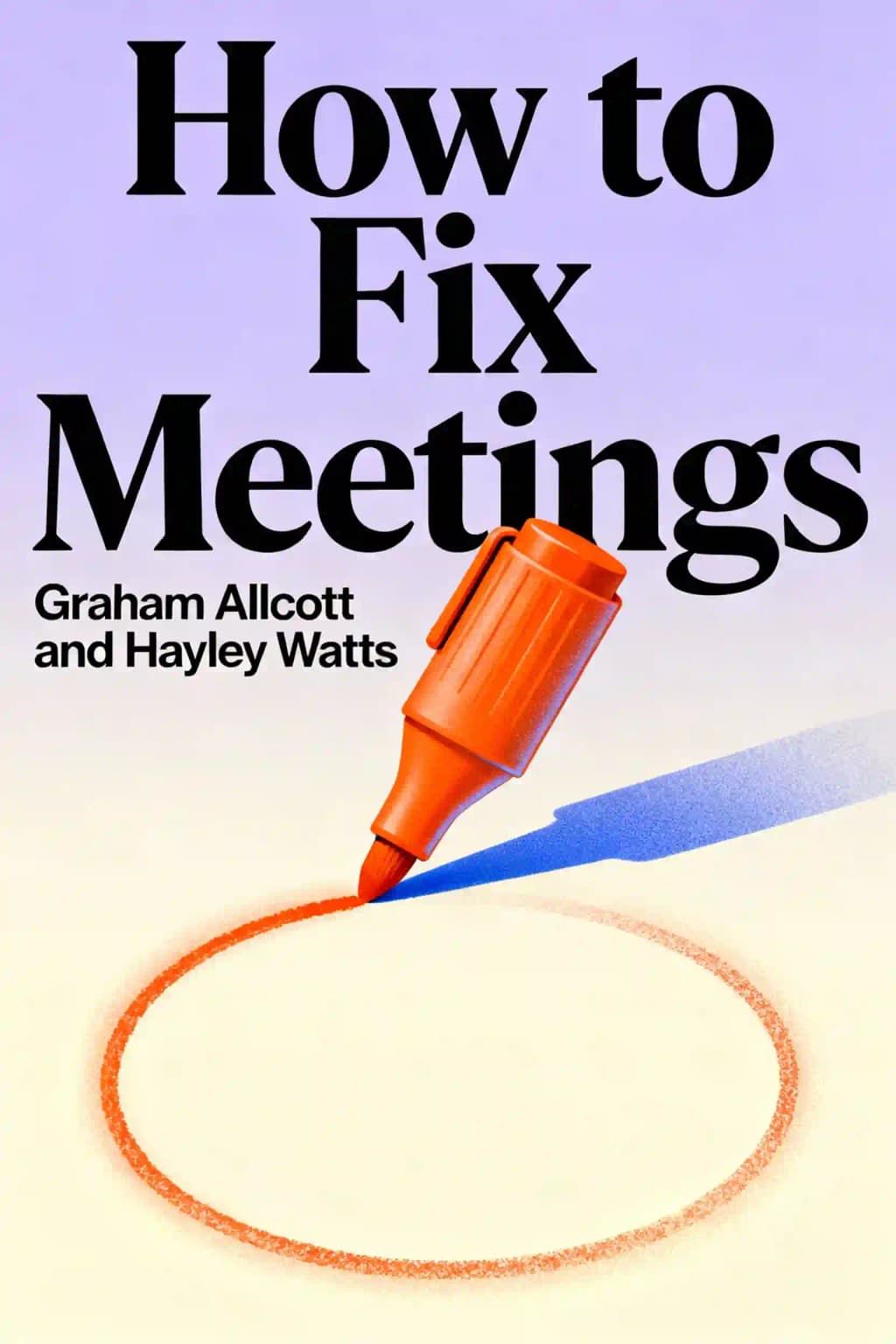
Глава 1
The Meeting Revolution: Transforming Wasted Hours into Productive Magic
Ever found yourself sitting in a meeting, watching the minutes tick by, wondering why you're even there? You're not alone. In today's workplace, the phrase "Let's have a meeting" typically evokes dread rather than enthusiasm. Yet meetings remain essential to organizational success-when done right. This tension between necessity and inefficiency is what Graham Allcott and Hayley Watts address in their transformative approach to workplace gatherings. Their book has become required reading at companies like Google, Amazon, and Microsoft, where executives estimate they spend nearly 23 hours weekly in meetings. Even Elon Musk famously implemented a "walk out if you're not contributing" policy at Tesla after reading similar meeting efficiency principles. The cultural impact is significant-with the rise of remote work, meeting fatigue has become such a widespread phenomenon that "Zoom fatigue" entered our lexicon almost overnight. This book offers the antidote to what Harvard Business Review found is costing U.S. companies $37 billion annually in unproductive meetings.
Глава 2
Why Meetings Are Broken: The Attention Crisis
Meetings represent a staggering organizational expense that many companies fail to fully grasp. According to Wall Street Journal research, employees average 31 hours in meetings monthly, with CEOs spending an even more dramatic 27 hours weekly - effectively more than half their working hours. Companies bear two distinct categories of costs: direct expenses (including salaries, meeting space, technological infrastructure, and travel) and the often-overlooked opportunity costs when more impactful work is neglected. For a medium-sized company of 100 employees, this can translate to over $1 million annually in meeting-related expenses.
The modern attention crisis has reached unprecedented levels, making it our most precious and depleted resource. We're experiencing a perfect storm of attention disruption, exacerbated by ubiquitous technology, constant notifications, and relentless information overload. Research from Microsoft reveals that smartphones sap cognitive resources even when unused or powered off - merely having them nearby reduces available mental capacity by up to 10%. British adults' attention spans have plummeted from twelve minutes a decade ago to just over five minutes today, a decline that mirrors global trends. The spaces between activities - what psychologists call "white space" - are rapidly shrinking, leaving minimal time for essential reflection and processing. This aversion to quietude is so severe that one Yale study found 67% of men would rather receive electric shocks than sit alone with their thoughts for fifteen minutes.
In this fragmented-attention landscape, well-structured meetings become more crucial than ever. Great leaders recognize this and deliberately create meeting environments where giving full attention to colleagues is non-negotiable. These environments foster several critical elements: high standards for participation, healthy intellectual challenges, rigorously scrutinized ideas, calm but productive disagreements, and flourishing empathy among participants. Humans fundamentally thrive when they belong to meaningful endeavors where their contributions are genuinely valued, making undivided attention perhaps the most generous gift we can offer in professional settings.
However, the stark reality is that most meetings fail spectacularly at creating this magic. A comprehensive Harvard Business Review survey revealed troubling statistics: 65% of senior managers feel meetings actively prevent them from completing their work, 71% consider meetings unproductive and inefficient, 64% say meetings impede deep thinking and creative work, and 62% believe meetings fail to bring teams closer together. This pervasive meeting fatigue creates a destructive downward spiral - the busier people become, the less effort they invest in making meetings worthwhile, further degrading their quality and value.
Think Productive, the authors' company, has spent over a decade helping organizations transform their meeting culture. Their philosophy is refreshingly pragmatic - while meetings can indeed change the world when done right, many are unnecessary and wasteful. True productivity means systematically clearing organizational clutter to make space for genuine value-adding activities. This approach starts with two fundamental premises: meetings matter tremendously when well-executed, but many meetings currently taking place don't matter at all and should be eliminated. The key lies in distinguishing between these categories and optimizing the former while eliminating the latter.
Глава 3
The Yin and Yang of Effective Meetings
The ancient Chinese symbol of yin and yang offers profound insights for meetings. Like opposing but interdependent forces, meetings require balance between different energies. Yin represents the passive, receptive, softer energy that brings new ideas, intuition, and team harmony. Yang embodies the active, aggressive energy that drives targets, growth, and goal achievement. Without yin, workplaces would lack creativity and connection; without yang, nothing would get accomplished.
Yin behaviors create the space for meaningful connection and thoughtful discussion. These include practicing zen-like calm by being fully present without digital distractions, cultivating mindfulness to regulate emotional responses, and genuinely valuing people by listening deeply. Whether as a facilitator or participant, bringing yin energy means creating psychological safety, acknowledging subtexts, and having courage to name unspoken issues.
Meetings begin and end with people, and investing in the human element yields tremendous returns. Starting meetings well sets the tone by genuinely welcoming participants, using opening rounds to ensure everyone speaks early, and recapping purpose and progress. Ending meetings effectively frames subsequent action by expressing gratitude, using closing rounds for final thoughts, and recapping the positive outcomes expected from agreed actions.
Yang behaviors represent the action-oriented, outcome-focused side that drives results and protects our most valuable resource: attention. Ruthlessness isn't about being mean-it's about protecting attention through deliberate ignorance. In our information-overloaded world, this means working backward from desired results and saying "no" strategically to preserve focus for what truly matters.
We often sabotage our productivity by saying yes to everything out of duty or excitement. True ruthlessness means questioning each commitment: "Is this worth doing? Does it add enough value? Will it create positive impact?" Unless the answer is a resounding "hell yeah," reconsider. As Warren Buffett notes, "The difference between successful people and really successful people is that really successful people say no to almost everything."
While some meetings are unavoidable, many aren't. Strategic avoidance techniques include: the "one in three" strategy (skipping every third recurring meeting), sending colleagues as representatives, scheduling "sneaky work time" around travel appointments, and remembering Peter Drucker's wisdom that "meetings are a symptom of bad organisation, the fewer the better."
Creating personal policies provides a framework for saying no without making it personal. Examples include: setting open-door hours (which implies closed-door hours exist too), limiting travel days, establishing meeting-free mornings, capping meeting hours weekly, and creating "Project Magenta"-a mysterious calendar block that colleagues won't question.
Глава 4
The 40-20-40 Continuum: Preparation Is Everything
The 40-20-40 Continuum describes how we should distribute our energy around meetings: 40% on preparation, 20% on the meeting itself, and 40% on productive follow-through. Most people focus almost entirely on the meeting, resulting in ineffective outcomes. This principle has three key implications: if you spend one day in meetings, the rest of your week should be meeting-free to handle preparation and follow-up; thorough preparation creates the "magic" in meetings; and productive follow-through must be embedded in organizational culture to ensure meetings drive action and accountability.
Proper preparation prevents embarrassing situations and unprofessional moments. Think about "doing things today that provide a gift to your future self" and consider how User Experience Design principles can transform meetings into more pleasurable, efficient experiences. The six stages of UX design (understanding users, research, analysis, design, launch, and post-launch analysis) offer a framework for creating better meeting experiences that respect participants' time and needs.
The 4 Ps framework provides building blocks for successful meetings: Purpose defines goals and helps determine attendance; Plan structures the meeting flow; Protocols establish ground rules for smooth discussion; and People ensures the right participants attend. Each component is essential-getting any element wrong leads to ineffective meetings that waste participants' attention and time.
Every meeting should have a clear purpose statement that explains why you're meeting and what you aim to achieve. Purpose statements should begin with "By the end of this meeting, we will have..." followed by specific outcomes using action verbs like "decided," "discussed," or "identified." This clarity helps participants prepare appropriately and determines whether the meeting has successfully achieved its goals.
Once you've clarified your purpose, planning ensures your meeting has the necessary structure to achieve it. A detailed agenda is crucial-research shows 63% of American meetings lack one. Effective agendas include specific topics (not vague terms like "Marketing"), time allocations, preparation requirements, and who's responsible for each item.
When planning, consider the meeting's narrative arc using frameworks like "beginning, middle, and end," Kipling's six questions, or the GROW model (Goal, Reality, Options, Way Forward). Also consider timing strategies: starting meetings at odd times (like ten past the hour), addressing latecomers by consistently starting on time, allocating time for two-minute actions at the end, and providing social time separate from business time.
Глава 5
Meeting Formats: Finding the Right Recipe
After designing your meeting with purpose, plan, protocols and people, selecting the right format becomes crucial. The meetings menu offers various formats that can be mixed depending on needs-some meetings might require multiple "courses" while others need just one approach.
Truth amnesties provide powerful opportunities to scrutinize workplace culture by addressing issues that rarely make it onto regular agendas. At Think Productive, team members anonymously write concerns on Post-it notes during away days, discussing each one by asking if it's working, how it could improve, or if it should be scrapped. This blame-free, fast-paced approach has led to significant changes-from revising leave policies to eliminating unnecessary meetings-keeping the culture agile and responsive.
Daily huddles are brief, standing meetings (under ten minutes) that reduce the need for longer team meetings. Held at the same time each day, they allow teams to check in, offer support, and maintain momentum. Think Productive's UK team uses a five-question format covering personal wellbeing, key metrics, priority tasks ("frogs"), challenges ("stucks"), and next-day preparation.
Silent meetings use shared documents for participants to ask questions and express opinions, addressing the problem of certain voices dominating traditional discussions. Everyone types their thoughts in real-time, allowing equal contribution regardless of personality type. This format ensures everyone can complete their thoughts without interruption, creates thinking space for articulating ideas, and makes it easy to identify points of agreement.
Board meetings, often non-negotiable in frequency and attendance, focus on approving strategic decisions and providing oversight. Board members serve as critical friends who challenge assumptions and hold executives accountable while focusing on strategic direction rather than operational details. Proper preparation is essential since board members typically aren't involved in day-to-day operations.
Team meetings provide opportunities to share work updates, solve problems collaboratively, and maintain alignment toward common goals. They help anticipate challenges, keep work on track, and foster engagement, especially for remote workers. To prevent staleness, the purpose statement should be regularly updated based on context, and if a meeting isn't needed, it should be skipped entirely.
One-to-one meetings deserve the same attention to good meeting practices as any other format. These sessions build key relationships and strategically analyze performance. To maximize effectiveness: share discussion topics in advance, vary meeting locations (even for online calls), stick to an agenda that changes format occasionally, and honor the scheduled time without frequent rescheduling.
Even informal catch-ups between two or three people need a clear purpose. These meetings can easily drift into extended casual conversation without addressing the original reason for meeting. While they feel more collaborative, appointing a chairperson helps maintain focus. Begin by listing what you want to achieve, assess if it's realistic given the timeframe, then work through this impromptu agenda.
Глава 6
Mastering Meeting Facilitation: The Chair's Essential Role
The chair's essential role is maintaining balance-achieving the meeting's purpose while keeping everyone on track and ensuring all voices are heard without inappropriate domination. Despite many professionals spending hours weekly chairing meetings, this transferable skill is often overlooked in job interviews. Effective chairing requires outstanding communication, deep empathy and excellent timekeeping-skills that can be learned and improved.
When suddenly chairing a meeting, start by confirming the meeting's continued relevance. For online meetings, ensure everyone can see and hear each other, as camera use increases engagement and idea generation. Begin by reviewing the 4 Ps: Purpose (display the statement for reference), Plan (outline meeting structure and breaks), Protocols (establish online conduct guidelines), and People (proper introductions even when attendees know each other).
A purposeful meeting introduction transforms "We meet because we always do" into "The purpose of this month's meeting is to find ways to help each other achieve this quarter's targets and plan for the September product launch." Even with agendas available, reminding participants of the specific purpose for this particular meeting creates focus and relevance.
Proper introductions benefit everyone, especially newcomers navigating unfamiliar faces and acronyms. Beyond stating names and titles, participants should explain their meeting role and objectives: "I'm Sally and I have overall responsibility for finances. My role today is to assist in planning strategy that keeps us within budget and optimizes resources."
Rather than beginning with status updates on previous action items, start meetings with a positive "opening round" where everyone shares something uplifting in 30-60 seconds. This establishes participation expectations and improves mood. Prompt questions might include "What's going well for you?", "What are you looking forward to?", or for online meetings, "Share something you enjoy about your current space."
Strategic silence in meetings creates meaning rather than emptiness. Following Steve Jobs' "ten-minute rule" of introducing something new every ten minutes helps maintain attention, with proper breaks hourly during longer meetings. Three types of pauses are essential: Practical (scheduled or spontaneous breaks to replenish energy), Strategic (diffusing tension, finding clarity, or breaking circular discussions through small group breakouts or guided reflection), and Reflective (allowing silent moments for thought processing).
Meetings needn't be dull, even with senior leaders present. Fun elements improve focus, engagement and memory retention. Try starting with a brief amusing YouTube clip, encouraging doodling with prizes, using visual note-taking, playing musical chairs mid-meeting, requiring rhyming contributions, giving out prizes for creative participation, banning jargon with penalties, using a "talking object" to prevent interruptions, or incorporating silly games like the After Eight challenge (moving a mint from forehead to mouth without hands).
Глава 7
Participant Power: Taking Responsibility for Meeting Success
Meeting participants share responsibility for meeting success-it's not solely the chair's job. Rather than passively consuming meetings like entertainment, participants should view themselves as team members working toward a common goal. Everyone must manage their attention and energy to engage productively, even when challenging.
Physical movement helps maintain focus during meetings. Standing periodically (especially helpful for those with back pain), changing positions, or moving to different locations during online meetings can refresh attention. Proper hydration and balanced nutrition (avoiding caffeine and sugar spikes) also optimize brain performance.
Contrary to appearing disengaged, doodling actually enhances information retention. Research by psychologist Jackie Andrade found doodlers retained 29% more information than non-doodlers. Sunni Brown, doodling expert, defines it as "making spontaneous marks on paper that help you to think." Even Nike CEO Mike Parker reportedly brings a sketchbook to meetings-using the left page for brainstorming and the right for doodling.
Effective note-taking serves your specific needs rather than creating a jumbled mess. Focus on recording new information requiring future decisions, clear action items with deadlines and stakeholders, progress updates you've requested, unrelated ideas that pop up (to avoid distraction), and unfamiliar jargon or acronyms. Keep actions in one accessible place-consider digitizing paper notes-and don't rely on others to track your commitments.
Even when meetings lack clear purpose statements, create your own purpose for attending. Throughout the meeting, check whether your contributions align with this personal objective for each agenda item. For instance, if you're new to a team and attending to learn about colleagues' work, ask questions that serve this goal and be selective about which actions you volunteer to take.
Be realistic about your capacity when asked to take on actions. It's acceptable to decline by explaining current limitations or requesting time to consider before committing. Alternatively, negotiate more realistic deadlines or offer partial contributions like providing initial thoughts before the next meeting. Clear communication about what you can and cannot do allows the group to determine whether your contribution suffices or if someone else should take responsibility.
Vagueness undermines productive meetings-when details remain unclear during discussions, they become even hazier when implementation time arrives. As a participant, bring specificity by asking clarifying questions: "What's the exact deadline?" "Who's ultimately responsible among these three people?" "What's the priority?" "How exactly will we solve this?" This underappreciated skill brings valuable clarity that benefits everyone involved.
Глава 8
From Discussion to Action: Making Meetings Matter
The ultimate goal of every meeting is to ensure productive follow-through. Without action following a meeting, the gathering itself becomes pointless-like world leaders discussing climate change then doing nothing afterward. If nothing changes as a result of your meeting, you made a mistake having it in the first place. The true value of any meeting lies in the actions that follow, not just the discussion itself.
Meeting actions take two forms: next physical actions (specific tasks with clear ownership) and delegated outcomes (broader responsibilities where individuals determine their own next steps). Even as a participant, you can improve action clarity by asking "Who will do that?", "What's the next physical action?" and "When does it need to be done by?" Vague actions like "Jason, budget" should be replaced with specific ones like "Jason to circulate updated budget figures a week before next meeting, outlining recommendations."
Adding ten minutes at the end of meetings allows participants to start on tasks immediately or at least note their actions clearly. This stealth approach ensures everyone knows what's expected of them and might even give executives the luxury of a bathroom break before their next meeting. This buffer time is invaluable for action clarity and immediate progress.
A second brain is more sophisticated than a simple to-do list-it's a master action repository that helps you make better decisions about what to focus on next. Whether digital or analog, it allows you to organize tasks based on projects, urgency, impact, or your energy levels, giving you certainty that you're focusing on the right things at the right time.
Distinguish between projects (ongoing initiatives like "Managing the team" or "Develop marketing plan") and next actions (specific, completable tasks). Projects require multiple actions to complete and may be ongoing or deadline-driven. Getting clear on this distinction helps you move forward effectively by breaking larger initiatives into actionable tasks.
Create a dedicated "waiting on others" section in your second brain to track tasks dependent on other people's actions. This is particularly important when others' work blocks your progress or when you're chairing meetings and need to follow up on key actions before the next gathering.
In fast-paced environments, priorities shift constantly. Regularly check whether meeting actions remain relevant as organizational circumstances change. Junior staff should verify with managers that work priorities haven't shifted, while senior staff need to make conscious decisions about organizational priorities and communicate changes clearly.
Глава 9
The Meeting Revolution: Creating Change That Matters
In our increasingly fragmented and virtual world, meetings represent one of the few spaces where people genuinely come together to share attention, listen deeply, and cooperate - qualities our world desperately needs more of. From climate change conventions that shape environmental policy to peace treaties that end conflicts, humanity's most significant achievements often emerge from successful meetings. Your meetings matter too, whether they're shaping company strategy, building team culture, or making decisions that affect people's careers and job satisfaction.
The key lies in mastering the delicate balance between meeting time and implementation time - the yin and yang of organizational life. Too many meetings create overwhelm and prevent actual work from getting done, while too few can lead to misalignment and missed opportunities for collaboration. Smart leaders actively eliminate unproductive meetings, combining or canceling redundant sessions and ruthlessly questioning whether each gathering serves a vital purpose. When properly designed and executed, meetings become powerful catalysts for change rather than energy-draining obligations.
Organizations, like people, naturally develop habits and routines as they grow - some helpful, others harmful. Positive disruption means having the courage to challenge these established patterns by asking uncomfortable questions and refusing to accept "this is how we've always done it" as a valid reason. Experiment with innovative meeting formats: try standing huddles for quick updates, silent meetings where everyone reads and writes before discussing, walking meetings for creative conversations, or dedicated meeting-free days to enable focused work. While being the challenger can feel isolating or uncomfortable, you're ultimately improving productivity for everyone by creating space for experimentation, failure, and continuous learning.
BrewDog's provocative corporate value of "Blow sh*t up" perfectly captures the mindset needed to prevent organizational complacency. At Think Productive, regular "Blow sh*t up, kill the sacred cows and truth amnesties" sessions encourage anonymous feedback about unproductive practices and outdated processes. This approach has led to concrete improvements: eliminating Monday morning status meetings that could be handled via email, restructuring weekly team meetings into focused 30-minute sprints, and introducing "think time" between meetings. These changes have saved team members multiple days annually while fostering a culture where questioning the status quo is not just permitted but celebrated.
The ultimate test of whether you're truly revolutionizing meetings is straightforward but demanding: Are your meetings consistently producing meaningful results that move the organization forward? Do participants leave energized rather than exhausted? Is the focus squarely on action and decisions rather than endless discussion? If not, it's time for fundamental change. The encouraging news is that even modest adjustments can yield significant improvements in meeting effectiveness. Begin your revolution today: question one recurring meeting that might be unnecessary, transform one vague action item into a specific deliverable, or introduce one innovative meeting format. Remember that lasting change starts with individual actions - your choice to do meetings differently can spark a broader transformation in how your organization works together.