Глава 1
Unleashing Your Inner Game Changer: The Path to Becoming Smarter, Faster, and Happier
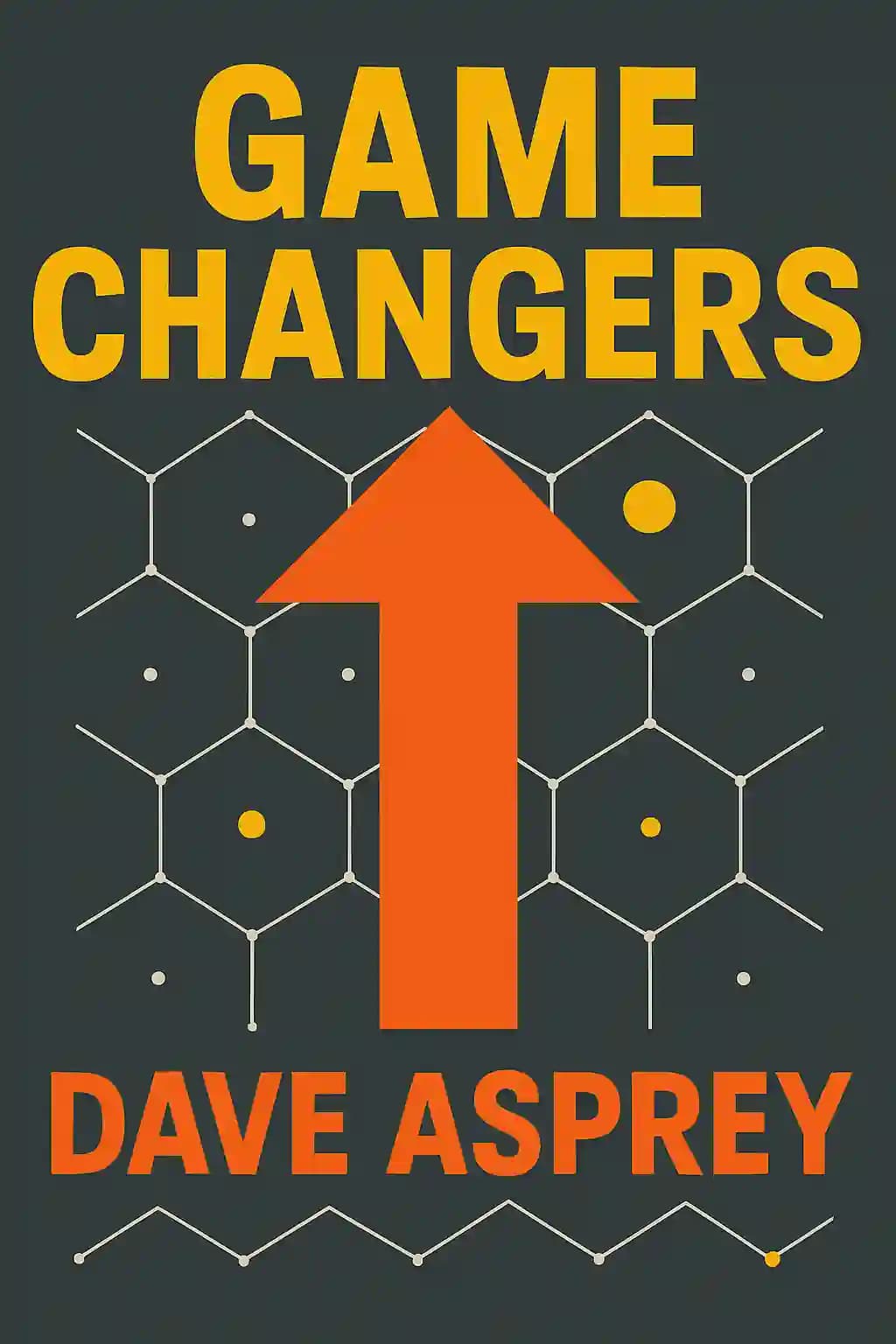
What if the key to extraordinary performance wasn't about pushing harder but about changing the game entirely? Dave Asprey's "Game Changers" distills wisdom from 450 high-performers into a comprehensive blueprint for human optimization. This isn't just another self-help manual-it's a radical rethinking of human potential backed by cutting-edge science and real-world application.
The book has become a favorite among Silicon Valley executives, professional athletes, and celebrities like Tim Ferriss and Tony Robbins who praise its practical approach to performance enhancement. Since its 2018 release, it has influenced countless biohacking communities worldwide and helped establish Asprey as the "father of biohacking." What makes this work particularly compelling is how it emerged from Asprey's personal transformation-losing 100 pounds, increasing his IQ, and building a multimillion-dollar company through methodical self-experimentation.
Rather than chasing money or status, Asprey discovered that true game changers focus on transcending primitive survival instincts to make meaningful contributions. His framework-becoming smarter, faster, and happier-offers a roadmap anyone can follow to excel in their chosen field, whether you're a CEO, artist, parent, or student.
Глава 2
The Power of Prioritization: Focus on Strengths, Not Weaknesses
Your brain consumes more energy per pound than almost any other body part. While there are ways to increase your brain's energy supply, the simplest approach is to stop wasting what you already have through strategic prioritization.
Over 100 high performers cited focusing on strengths rather than weaknesses as their most powerful success tool. This approach isn't just about efficiency-it's about joy. When you concentrate on what energizes you rather than what drains you, you create space for meaningful contribution.
The first step is mastering the power of "no." With only 24 hours daily, choosing to spend time on what truly matters rather than proving yourself through difficult tasks is essential. Research shows willpower functions like a muscle-it strengthens with exercise but fatigues with overuse. A famous study of parole judges found favorable rulings dropped from 65% to nearly zero as the day progressed, rebounding only after breaks, demonstrating how decision fatigue impairs judgment.
Combat this by eliminating unnecessary decisions. Many high performers automate daily choices like meals and wardrobes-Steve Jobs with his black turtleneck, Mark Zuckerberg with identical t-shirts. Creating a "capsule wardrobe" or "capsule diet" with limited rotating options frees tremendous mental energy for meaningful work.
Beyond saying "no," you must actively create rather than passively discover who you are. Brendon Burchard, founder of High Performance Academy, believes our primary motivation is seeking personal freedom-the ability to fully express ourselves. Two enemies block this path: self-oppression (putting ourselves down) and social oppression (others' judgment). The solution is developing a "competence-confidence loop"-the more you understand something, the more confidence you gain to pursue it further.
Finally, eliminate weak language that undermines self-trust. The word "try" presupposes failure-when you say you'll "try" to do something, you're giving yourself permission to fail. As Yoda wisely said, "There is no try. Only do." To eliminate these "weasel words," ask colleagues and family to call you out when you use them, perhaps with a small fine for charity.
Глава 3
Neuroplasticity: Rewiring Your Brain for Higher Performance
For most of history, scientists believed we were born with brains that were either high-functioning or not. Only around the end of the twentieth century did they begin to understand neuroplasticity-the brain's ability to grow new cells and forge new neural connections throughout life. These new connections help you develop better habits, learn faster, and remember more effectively.
Your beliefs and internal stories shape your reality. When your model is wrong, you build broken habits and make decisions that create suffering. Vishen Lakhiani, meditation teacher and founder of Mindvalley, shares how childhood bullying about his appearance led him to internalize the false belief that he was ugly. These beliefs feel like reality because to us, they are reality-until we realize they're false.
Through what Vishen calls "consciousness engineering," we can recognize that beliefs aren't who we are but simply outdated hardware that can be upgraded. Neuroplasticity allows us to swap limiting beliefs for empowering ones, though it isn't easy since these beliefs seem so real we don't realize they exist. Your beliefs become true whether or not they're based in reality-like the placebo effect on steroids. Research by Dr. Martin Seligman found optimistic salespeople were 55% more successful than pessimistic ones.
Beyond beliefs, you can enhance your fluid intelligence-the ability to learn and synthesize new information. Jim Kwik, a world expert in speed-reading and accelerated learning, developed his F-A-S-T method after overcoming childhood brain trauma: Forget what you know and your limitations; be Active in your learning through note-taking; manage your State (physical and mental condition); and approach learning as if you'll Teach it to someone else.
Research by Dan Hurley shows fluid intelligence can increase through working memory exercises. The Dual N-Back test-though frustratingly difficult-improved participants' fluid intelligence by 40% after just five weeks of daily practice. When Asprey used this training, his IQ increased by 12 points, with apparently permanent improvements.
Our brains evolved to process images, not words. By training yourself to think in pictures rather than language, you can dramatically improve memory and learning capacity. Mattias Ribbing, a three-time Swedish memory champion, transformed his ordinary memory through visualization techniques. Though he could initially remember only about ten digits at a time, he can now memorize up to a thousand by converting information into detailed, three-dimensional images.
Глава 4
Beyond Ordinary Consciousness: Accessing Altered States for Transformation
Self-awareness-understanding the subconscious factors that motivate you-ranked as the sixth most important factor for high performance among world-changers interviewed. Only by making normally subconscious elements conscious can you change them and get out of your own way.
Cognitive enhancers represent one pathway to heightened awareness. Modafinil, a non-stimulant wakefulness promoter, doesn't cause jitteriness like traditional stimulants and isn't addictive. Nicotine, separate from tobacco and used orally in pure form, functions as a potent nootropic with benefits including faster motor function, improved handwriting, increased vigilance, and sharper short-term memory. Caffeine, perhaps the most widely used cognitive enhancer, may help prevent cognitive decline and lower Alzheimer's risk by blocking brain inflammation.
Beyond substances, accessing altered states through practices like ayahuasca ceremonies, silent meditation retreats, vision quests, neurofeedback, or advanced breathing techniques offers tremendous value for healing and transformation. At a high-powered dinner party in a $20 million SoHo penthouse, Asprey asked the diverse, influential guests how many had used psychedelics for personal development-every hand went up, from hedge fund managers to artists, CEOs to professors.
Dr. Alberto Villoldo, psychologist and medical anthropologist who spent 25+ years studying Amazon and Incan shamans, discovered indigenous communities with no Alzheimer's, heart disease, or cancer. He attributes Western health problems to chronic stress, which floods the brain with cortisol and adrenaline, preventing access to flow states where creativity flourishes.
The breath itself may be the world's most powerful drug. Dr. Stanislav Grof, the godfather of LSD research, ultimately replaced psychedelic therapy with profound breathing techniques. Through accelerated breathing combined with evocative music, holotropic breathwork allows practitioners to enter non-ordinary states of consciousness where deep healing can occur. Asprey found holotropic breathing even more personally beneficial than ayahuasca, accessing birth trauma memories that explained thirty years of difficulty forming connections with others.
Глава 5
Transcending Fear: The Courage to Innovate
The one key aspect all game changers share is fearlessness. Not that they never experience fear-everyone does-but they refuse to let this instinct prevent them from stepping into the unknown. While the mind constantly scans for threats to keep us "safe," giving in to fear doesn't actually create safety. Instead, avoiding risks makes us weaker.
Fear of failure is deeply wired into our nervous system because throughout evolution, failure often meant death. Though these threats rarely exist today, our biological fear response remains, causing us to avoid situations where we might fail or face criticism.
Rave Mehta, an engineer, entrepreneur, and award-winning pianist, discovered through extensive research that all negative emotions stem from fear, while all positive emotions come from trust. He conceptualizes a universal life force that flows through us like water through a pipe. Fear constricts this pipe while trust opens it. When we achieve a state of ultimate trust, we can become vulnerable without fear of being hurt, which paradoxically strengthens our "emotional immune system."
Mehta identifies three pillars of fear: time (fear pulls us out of the present moment into worrying about the future), attachments (rigid versus gravitational connections to people and things), and expectations (being attached to specific outcomes). The solution isn't abandoning goals but shifting expectations to preferences-still desiring outcomes but remaining open to alternatives. When expectations become preferences, success brings elation while failure doesn't devastate.
True innovators and change-makers inevitably face criticism and resistance because they disrupt the status quo. Dr. Daniel Amen's story exemplifies this principle. Now a renowned brain specialist and bestselling author, Amen faced harsh criticism when he began using SPECT brain scans in psychiatric practice in 1991. The turning point came when his nine-year-old nephew suddenly became violent and depressed. Using SPECT imaging, Amen discovered a golf ball-sized cyst in the boy's left temporal lobe. After surgical removal, his nephew returned to normal, solidifying Amen's resolve to continue despite criticism.
Game changers stay intellectually curious and passionate. Naveen Jain, billionaire founder of seven companies including Infospace and Moon Express, sleeps just four hours nightly because he's obsessed with learning. He believes boredom signals you're already dead intellectually. True success comes from pursuing obsessions rather than money-dream so big people think you're crazy, and when they call you crazy, think even bigger.
Глава 6
The Power of Recovery: Why Downtime Creates Peak Performance
While passion drives game changers, over 100 interviewees emphasized that downtime is critical to their success. Society teaches that pushing to exhaustion brings success, but these high performers prove the opposite-they excel precisely because they prioritize recovery and play. Many learned this lesson through burnout, including Asprey who initially skipped vacations and sleep while pursuing success.
The solution? Making self-care non-negotiable by scheduling "upgrade time" before work and creating a priority system: health first, family second, work third. This reverses most people's approach but ensures optimal performance in all areas. When you build downtime into your schedule, you become more effective at everything else.
Genpo Roshi's journey through burnout reveals the danger of prolonged self-sacrifice. After working with therapists, he recognized his reckless behavior stemmed from feeling drained and entitled after years of service. Dr. Pedram Shojai, the Urban Monk, offers practical solutions for avoiding burnout: identify your priorities, write down 30/60/90-day goals, and weigh all time requests against these goals. His microhabits include the Pomodoro Technique-25-minute focused work sessions followed by 5-minute rejuvenation breaks.
How you begin your day determines how you'll spend it. Hal Elrod, author of "The Miracle Morning" and two-time death-defier, demonstrates this principle through his extraordinary life. After being declared clinically dead for six minutes following a car accident, Hal defied medical predictions by not only walking again but completing an ultramarathon. His success secret? The Five-Minute Rule-allowing yourself exactly five minutes to be negative about setbacks before refocusing on what you can control.
Most people wake up reacting to external demands, immediately putting others' needs before their own. Instead, Hal dedicates his mornings to self-improvement through S-A-V-E-R-S: silence, affirmations, visualizations, exercise, reading, and scribing. These morning practices particularly impact your subconscious, influencing how you think and act throughout the day.
Глава 7
Sexual Energy: The Hidden Performance Enhancer
Sex impacts performance in ways many don't realize, affecting hormone levels, neurotransmitters, brain waves, and happiness. Though often overlooked in discussions of performance enhancement, sex represents one of our three primary biological imperatives alongside fighting and feeding. Mastering sexual energy allows you to redirect it productively rather than letting it drain your potential.
Research shows the same brain regions control both violence and sex-specifically in the hypothalamus, where light-sensitive proteins in mice triggered aggression except during sex. After ejaculation, the aggression returned, demonstrating the neurological connection between these survival mechanisms. This explains why athletes like Muhammad Ali abstained from sex before competitions, channeling that energy elsewhere through "sublimation."
Napoleon Hill's "Think and Grow Rich" identified sexual energy as a man's most powerful force that can be transformed into productivity. John Gray recommends sex once every seven days to optimize hormone levels for both partners, while Taoist practices suggest limiting ejaculation based on age to preserve energy and vitality. In Asprey's personal experiment following the Taoist formula (age-7)/4, he tracked significantly higher life satisfaction when spacing ejaculations by 8 days, and even greater improvements at 30 days.
While men benefit from fewer orgasms, women thrive with more frequent ones. Dr. Emily Morse, a human sexuality expert, helps women overcome low sexual desire through increased blood flow techniques. Dr. Jolene Brighten's research shows women who have 1-2 orgasms weekly enjoy better immune function and lower inflammation markers. Women's orgasms support healthy hormone levels by flooding the body with estrogen and oxytocin, creating a synergistic effect that fosters bonding, trust, and relaxation.
Sex can unlock flow states when we push beyond our boundaries. Just thinking about sex is a powerful way to enter flow states-during neurofeedback training at 40 Years of Zen, clients are taught to imagine brief sexual fantasies when "stuck" trying to create self-induced flow states. Eli Block, a lead orgasmic meditation instructor at OneTaste, teaches that people can access flow states between themselves and partners by tuning into each other's sensations and becoming completely absorbed in the moment.
Глава 8
Sleep Optimization: Quality Over Quantity
Game changers recognize that real innovation doesn't come from an exhausted mind and body. Over a third of podcast guests cited quality sleep as critical to their performance-the fifth most common performance improvement advice. A groundbreaking study analyzing 1.2 million people found that participants who slept 6.5 hours per night lived longer than those sleeping 8 hours. However, this doesn't necessarily mean less sleep is better-healthier people may simply require less sleep, and quality sleep reduces the quantity needed.
There's no moral superiority in being an early riser or night owl-the power comes from discovering your optimal sleep timing and building your life around it. Dr. Michael Breus discovered that many "insomniacs" were actually sleeping at the wrong times relative to their natural circadian rhythms. When he helped patients shift their schedules to align with their natural patterns, their productivity dramatically improved.
Dr. Breus identified four chronotypes: Bears (50% of people) who follow the sun's patterns with steady energy; Lions (15%) who are classic early birds with productive mornings; Wolves (15%) who thrive at night with creative energy peaks after most people clock out; and Dolphins (insomniacs with perfectionist tendencies). Your chronotype is genetically predetermined by the mPer3 gene, which sets your sleep drive.
Simply lying in bed means nothing if your sleep quality is poor. You must treat sleep performance with the same seriousness as athletic or job performance. Dr. Phillip Westbrook, a pulmonologist and clinical professor at UCLA, pioneered research into sleep apnea after observing patients who stopped breathing during sleep. When entrepreneur Dan Levendowski used their ARES device to monitor his own sleep, he discovered he stopped breathing 70 times hourly when sleeping on his back, yet slept normally on his side.
High-performing people under intense pressure often avoid sleep, paying a devastating price. Arianna Huffington learned this lesson dramatically in 2007 when she collapsed from exhaustion, breaking her cheekbone and cutting her eye. Despite outward success as founder of Huffington Post, she realized wealth and power alone create an unstable foundation. Rather than hindering her career, prioritizing 7-9 hours of sleep nightly along with meditation, walks, and yoga led to even greater success.
Глава 9
Movement as Medicine: Beyond Exercise to Functional Fitness
When we think of high performance, we often focus on pushing beyond limits, but proper movement-not just exercise-is crucial. Many high achievers make the mistake of overexercising while remaining sedentary most of the day.
High-risk sports like running can cause injuries when done incorrectly. According to movement expert Kelly Starrett, 80 percent of regular runners get injured yearly not because running is inherently dangerous, but because most people lack proper motor control and range of motion. Our sedentary lifestyles have compromised our ability to move correctly. Sitting too much-even among professional athletes who sit 14-16 hours daily-causes chronic pain and movement limitations.
While many believe endurance exercise like marathon running creates superior health benefits, strength training may actually be better for brain health and overall performance. Research shows endurance athletes have significantly higher cortisol levels than non-athletes, with levels correlating to training volume. This chronic elevation in cortisol creates inflammation and accelerates aging. Studies reveal that cycling increases inflammatory markers, which contribute to diseases like cardiovascular disease, cancer, and Alzheimer's.
In contrast, strength training triggers anabolic hormones that counter oxidative stress and build muscle, bone, and connective tissue. Tufts University research found muscle mass and strength are the top predictors of healthy aging, outranking cholesterol, blood pressure, and heart rate.
Though stretching doesn't always produce visible results, it dramatically improves movement, performance, and resilience. Former Navy SEAL Mark Divine discovered the power of yoga while preparing for deployment to Iraq. Facing intense combat stress, he found that yoga provided mental clarity and physical flexibility that helped him maintain calm under extreme pressure. During his deployment, Divine created his own routine combining yoga poses, functional interval workouts, self-defense moves, and breathing exercises, which became his "center post in the storm of combat."
Глава 10
Nutritional Intelligence: Eating for Optimal Performance
Food is the most critical aspect of performance for over 75% of high performers interviewed-more important than meditation or exercise. What we eat impacts everything we do, providing energy, focus, and brainpower that leaders rely on.
People often eat to fill emotional voids rather than physical hunger. Cynthia Pasquella-Garcia, celebrity nutritionist and founder of the Institute of Transformational Nutrition, discovered this through personal struggle. After battling weight gain, depression, chronic fatigue, and serious health scares despite her Hollywood lifestyle, she realized true transformation requires addressing not just what you eat, but why. Emotional eating happens when you eat for any reason besides physical hunger-celebrating with food, eating when bored, seeking comfort in food when upset, or eating without tasting.
Your grandmother possessed wisdom accumulated through generations of nutritional observation. After World War II, we abandoned this wisdom as food became industrialized. Dr. Barry Sears and Dr. Cate Shanahan both emphasize that our genes have expectations based on traditional foods. When these expectations go unmet, illness follows. As Dr. Mark Hyman says, food isn't just calories; it's information that communicates with every cell and affects gene expression in real time.
The bacteria in your gut wield extraordinary power over your performance, energy levels, weight, and even mood. Dr. David Perlmutter describes our relationship with our gut microbiome as "beautiful, self-supportive, and mutualistic." Though these microbes have inhabited us for millions of years, scientific understanding of them is remarkably recent-90 percent of peer-reviewed literature on the human microbiome has been published in just the past five years.
The overuse of antibiotics has severely damaged this symbiotic relationship, potentially permanently, with research linking diminished microbes to obesity, particularly in children. This connection between antibiotics and weight gain has been known since the 1950s, when the livestock industry discovered that antibiotics fattened animals for slaughter-a practice that continues today, with 75 percent of U.S. antibiotics being fed to cattle to increase their weight while reducing feed costs.
Глава 11
The Biohacking Revolution: Measuring and Optimizing Human Performance
Self-experimentation emerged as a top priority among over 450 highly successful people interviewed. Biohacking requires both measurement and action: quantifying what's happening in your body, determining necessary changes, and implementing them. While technology provides valuable data, our built-in "sensors" called feelings offer real-time feedback-the ultimate test is how you feel, regardless of what lab results might show.
You can target any high-performance state by deciding what to change, measuring your baseline, taking action, and reassessing. With unprecedented access to personal data and technology, you can surpass previous generations' capabilities and correct course when needed. Dr. William Davis, cardiologist and author of the Wheat Belly books, has observed a remarkable shift in healthcare: patients who educate themselves and track their own data typically experience better outcomes than those who rely solely on doctors.
Modern tracking technology has evolved dramatically. Asprey now uses an Oura ring that monitors sleep states, heart rate, heart rate variability (stress level), temperature, breathing, and activity while looking like normal jewelry. This data helps him adjust daily activities based on his biological state-skipping workouts when sleep was poor or practicing meditation when stress levels are high.
Every bodily system benefits from brief, intense stress followed by recovery-this cycling principle makes us stronger. The wise approach is to remove useless chronic stressors while strategically applying beneficial stress. Dr. Ron Hunninghake of the Riordan Clinic has developed a counterintuitive cancer protocol using intravenous vitamin C. While oral vitamin C functions as an antioxidant, IV vitamin C creates an oxidative effect that kills dysfunctional cells including cancerous ones. This is followed by antioxidant supplementation like glutathione to strengthen surviving cells-a classic example of hormesis, using controlled stress to stimulate healing.
Asprey believes stem cell therapy will eventually eliminate most degenerative diseases as costs continue falling rapidly. He recommends doing everything possible to repair old injuries, as the body typically only heals them well enough for reproduction, not for optimal long-term function.
Глава 12
The Happiness Advantage: Why Joy Precedes Success
Among the high performers Asprey interviewed, not one mentioned money as a top priority. Though many have accumulated wealth, it came as a byproduct of pursuing passions and transcending primitive instincts. Mastering base instincts and finding lasting happiness frees energy that can lead to success and wealth.
Once basic needs are met, happiness comes from pursuing meaningful work rather than accumulating wealth. Zen priest Genpo Roshi distinguishes between conditional happiness ("I'll be happy when...") and sustainable happiness that forms your foundation regardless of circumstances. Research from Princeton University identified $75,000 as the annual income threshold where people can more easily feel sustainably happy. Below this amount, people experience more stress about basic needs; above it, additional income doesn't meaningfully increase happiness.
Happy people significantly outperform their less happy peers-they're 31% more productive, have 37% higher sales, and are three times more creative. This translates directly to financial success: retail stores with higher employee life satisfaction generate $21 more earnings per square foot. Vishen Lakhiani explains that happiness is fuel that accelerates your path to success. Most people mistakenly believe they'll be happy after achieving their vision, but decoupling happiness from achievement changes everything.
When deciding what to keep and discard, Joshua Fields Millburn suggests asking whether each item is essential or merely a pacifier fulfilling an emotional need. He warns against seeing "things" as end goals, noting that working solely for money to buy stuff won't create fulfillment. James Altucher, a self-made millionaire, took minimalism further by becoming a nomad. After discovering he'd accumulated thousands of items, he kept only two bags-one with three outfits and another with essential electronics. Rather than owning things, James accesses what he needs through memberships and rentals, calling his approach "choiceism"-eliminating difficult decisions to focus energy on what he loves.
Глава 13
The Transformative Power of Community, Nature, and Gratitude
Game changers consistently cite being part of a community as fundamental to success and happiness. Dr. Paul Zak's research reveals the neurological benefits of human connection through oxytocin. When interacting with someone trustworthy, your brain releases this hormone, signaling the relationship is safe and motivating continued interaction by making you feel good. Oxytocin amplifies empathy-90% of which is learnable-enabling authentic connections by helping you imagine others' emotions.
Face-to-face communication triggers the strongest oxytocin release, followed by videoconferencing, phone calls, texting, and social posting. Beyond strengthening relationships, oxytocin reduces stress and boosts happiness. JJ Virgin's story illustrates the power of building a strong community before you need one. When her son Grant suffered life-threatening injuries in a hit-and-run accident, JJ's network mobilized to help both with his medical care and with launching her book, which she needed to succeed to pay for his treatment.
Spending time in nature emerged as one of the top twenty recommendations from successful people interviewed. Nature exposure nourishes both brain and gut, helps cells create more energy, and treats depression as effectively as pharmaceuticals. Daniel Vitalis, an expert on human wildness, argues we've become a domesticated subspecies (Homo sapiens domestico fragilis)-leaner, thinner, and more fragile than our wild ancestors. He believes we're essentially living in human factory farms focused on productivity rather than well-being. Instead, we should create "human zoos" that approximate natural habitats while maintaining modern conveniences.
Sunlight is an essential nutrient that creates exclusion zone (EZ) water in our cells-the fourth phase of water discovered by Dr. Gerald Pollack that powers cellular energy production. This gel-like water forms in our cells when unfiltered sunlight reaches our skin and eyes for at least twenty minutes daily, improving sleep, mood, and energy levels. Forest bathing decreases sympathetic nerve activity, blood pressure, and heart rate while boosting immunity through exposure to phytoncides-aromatic compounds from evergreen trees that increase natural killer cells.
Gratitude is perhaps the most powerful tool for taking you out of a stressed fight-or-flight state by signaling safety to your primitive defense systems. Dr. Stephen Porges' Polyvagal Theory explains how gratitude physiologically overrides fear. The vagus nerve connects your brain to major organs and is central to your parasympathetic nervous system, which calms you after stress. Strong vagal tone allows quicker recovery from stress, and this can be improved through social interaction and gratitude practices.
When you feel grateful, your nervous system receives safety cues that override fight-or-flight responses. Dr. Elissa Epel's research shows that people with higher mitochondrial enzyme activity (crucial for cellular energy) maintain positive affect throughout the day, especially before bed. Simple gratitude exercises before sleep can boost these enzymes and improve mood. Gratitude opens the doorway to forgiveness, which reprograms your nervous system to no longer react to past trauma. True forgiveness requires finding gratitude even for difficult experiences and people.
Don't leave gratitude to chance-build it into your day like exercise. UJ Ramdas, entrepreneur and behavioral change specialist, emphasizes experiencing gratitude both cognitively and physiologically. His morning routine includes answering three questions: What am I grateful for? What can I make today great? What kind of person do I want to be today? The "primacy effect" means doing this first thing has a disproportionate impact on your entire day.