Глава 1
A Desperate Flight from Tyranny
In August 1994, I stood alone in the Iraqi desert near the Jordanian border, my senses straining for any sign of danger. The swab around my bullet wound grew wet as my stitches opened from movement. Then I heard it-wolf howls, shockingly near, coming from both left and right. Cold dread washed over me as I realized they were hunting as a pack. I ran despite my limp, stumbling and blinded by tears as their baying grew frenzied. Then, as if by prearranged signal, the pack fell silent...
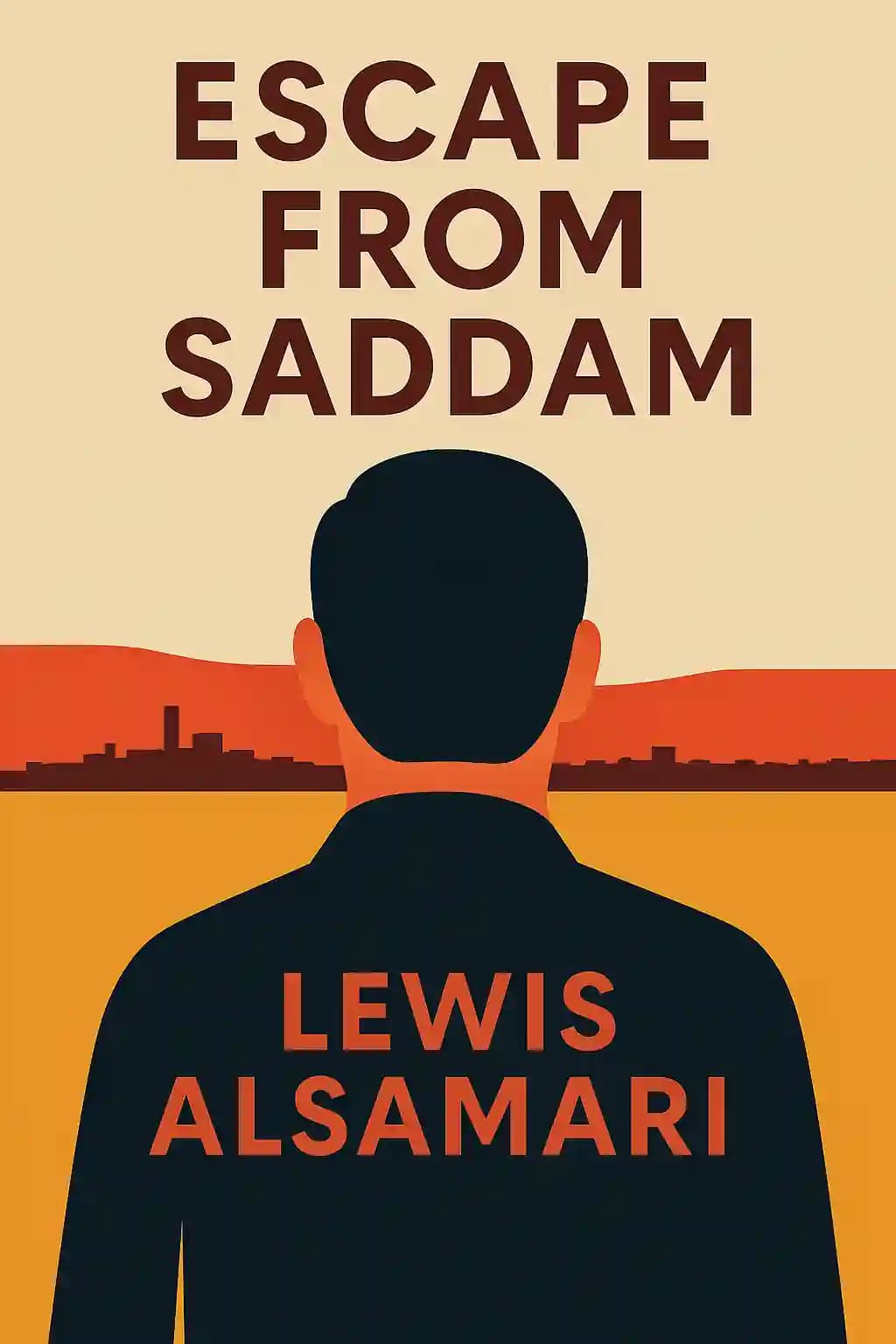
This harrowing moment represents just one chapter in Lewis Alsamari's extraordinary journey from Saddam Hussein's Iraq to freedom in the West. "Escape from Saddam" has been praised by critics as one of the most compelling refugee narratives of our time, offering readers unprecedented insight into life under one of history's most brutal dictatorships. The book resonated deeply with readers worldwide upon its 2007 release, including celebrities like Angelina Jolie, who cited it as influential in her humanitarian work. Beyond its literary impact, Alsamari's story gained additional relevance when he later appeared in Paul Greengrass's acclaimed film "United 93," ironically portraying one of the 9/11 hijackers despite his own history of fleeing tyranny.
Глава 2
Under the Shadow of a Tyrant
In 1982, five-year-old Lewis Alsamari was taken to England when his father received a scholarship to study for his Ph.D. at Manchester University. While the young boy thrived in his new environment, his mother grew increasingly homesick, eventually leading to his parents' separation. His mother returned to Iraq with his siblings, but Lewis remained in England with his father for five formative years.
By 1987, the devastating Iran-Iraq war was finally ending, having cost an estimated $250 billion and 1.5 million lives. Saddam Hussein faced a domestic crisis with thousands of war widows burdening the economy, so he offered Iraqi men 10,000 dinars (approximately $33,000) to marry them. Lewis's father, enticed by this offer, took his son back to Iraq ostensibly for a holiday but abandoned him with his mother in Baghdad. The culture shock was immense for the twelve-year-old who had grown accustomed to Western life.
Life in Saddam's Iraq was defined by horror stories that maintained the regime's grip of fear. Four HIV-positive women were reportedly burned alive in Abu Ghraib prison as part of a "solution" to AIDS, which the regime blamed on a "Zionist plot." Suspected prostitutes were publicly beheaded with their severed heads displayed for days. During one parade, insurgents shouting anti-Saddam slogans were marked with white paint dropped from helicopters, then systematically shot. The entire town of Balad was completely destroyed after a failed assassination attempt on Saddam.
In 1988, Lewis and his friend Hakim witnessed Uday Hussein, Saddam's notoriously psychopathic son, in his black Mercedes on Al-Mansour Street. When Lewis accidentally dropped his Coca-Cola bottle while staring at him, Uday gestured for them to approach his car. He interrogated Lewis about his name and family, taking particular interest in his Alsamari tribe, which had a long-standing feud with the Hussein tribe. After intimidating the boy and dismissing Hakim for his stutter, Uday finally let them go-a terrifying encounter that underscored the arbitrary nature of power in Hussein's Iraq.
Despite his desire to escape Iraq, Lewis remained to finish school at his mother's insistence. At fourteen, his father forced him to live near Mosul at the College of Forestry and Agriculture, a walled compound in Hamam Al-Aleel, a dangerous Sunni stronghold populated by Saddam loyalists who regularly attacked students. After finishing high school with a mark of 86-insufficient for medical school without the extra points awarded to children of Ba'ath Party members or military officers-Lewis planned his escape during the two-month break before university.
Глава 3
The Military Machine
When Lewis's attempts to legally leave Iraq were deliberately sabotaged by his father, he found himself conscripted into military service. The Baghdad military training center loomed before him, with Saddam Hussein's image staring down from its walls. After enduring brutal training and weekly graduation ceremonies, he was assigned to Al-Amarah, four hundred kilometers from Baghdad near the Iranian border.
The unit building mirrored the training compound with observation posts, barbed wire, and Saddam's massive portrait. The unit commander warned recruits to stay prepared for combat and avoid bringing shame upon the regiment. Lewis's training intensified beyond basic weapons handling. He learned to plant land mines-the same weapons that had nearly killed his Uncle Saad in the Iran-Iraq war, leaving him with one leg and a body riddled with shrapnel. They mastered machine guns, tank-mounted weapons, and various grenades. Despite his reluctance, Lewis became proficient at killing techniques-breaking kneecaps, bayonet fighting, and swift execution moves.
Two months into his service, Lewis was selected for "Interrogation Training." In a bare room with two arifs (sergeants), he was ordered to extract information from a bound fellow soldier. When he struck the man too gently, the arif shouted "Harder!" and whipped Lewis across the legs with a cane.
The military experience grew increasingly horrific when Lewis was chosen for transfer to Al-Mansour, the military intelligence compound. This rare opportunity would allow him to wear civilian clothes and earn good money, but joining Al-Istikhbarat meant becoming part of Saddam's terror machine. If he ever attempted escape after joining intelligence, not only would he face torture and death, but his family would suffer horrific consequences. When he asked if he could refuse the transfer, his commanding officer Taha threatened to report him for declining to serve after "the government's generosity" of allowing him time in England.
Monthly leave was the only respite from the brutal army life, but even this was strictly controlled. The six-hour journey to Baghdad was counted impatiently, and Lewis treasured those five or six glorious days at his mother's small house. The night before returning was always filled with bitter despair, knowing he couldn't be even an hour late without losing a day from his next leave.
Глава 4
Desperate Measures
With his transfer to Al-Mansour intelligence unit looming and all leave canceled, Lewis grew increasingly desperate. During one leave attempt, he was detained at a checkpoint when a Red Beret guard accused him of forging papers. He languished in a filthy cell for a week while the army verified his genuine leave papers. Released with barely any leave remaining, he was loaded onto a military truck heading south-away from Baghdad.
At a roadside service area, desperation drove him to steal a robe, disguise himself, and attempt escape on a coaster bus. The plan failed when another passenger demanded his seat, drawing attention to his army boots beneath the robe. The Red Berets caught him, beat him, and returned him to his unit. Facing Captain Taha, he lied that he only wanted to see his family. Though skeptical, Taha reduced his punishment to just three days in solitary instead of three months, but canceled all future leave until his transfer to Al-Mansour.
Those three days in solitary confinement gave Lewis time to plan another escape. He knew he had to act immediately after his release, when guards would least expect it. After showering, he doctored his old leave papers with new dates and stole pliers from the workshop. That night, after lights out, he dressed in his uniform, crept to the perimeter fence, and cut through the barbed wire. Crawling toward some abandoned vehicles outside the compound, he suddenly heard gunfire. Machine gun rounds peppered the area, and a bullet struck his leg.
In excruciating pain, he reached the road and flagged down a taxi. The elderly driver, seeing his condition, took him to a village doctor who immediately recognized he'd been shot rather than accidentally wounded himself. Working in the back of the taxi, the doctor used calipers to hold open his wound, applied antiseptic, and gave him something to inhale for the pain as he prepared to extract the bullet lodged deep in his thigh. The pain was indescribable-ten times more intense than being shot. After stitching and bandaging his wound, the doctor left, and the driver offered to take Lewis to Baghdad for double fare.
Глава 5
The Road to Freedom
Baghdad-the center of Saddam's power-was paradoxically both the place Lewis was trying to escape and the place he had to reach. The taxi driver helped him pass several checkpoints by showing his altered leave papers and making it appear he was merely ill. When they reached his grandparents' house, Lewis paid the driver his last money and watched him disappear, eager to distance himself from the young deserter's troubles.
Lewis's siblings Ahmed and Marwa greeted him with pure joy, unaware of his predicament. Following Middle Eastern tradition, his mother asked no immediate questions despite her puzzled look. After showering and changing into clean clothes, Lewis called his Uncle Saad, who arrived an hour later. When he finally told his story, his mother exploded in anger and fear, forcing Saad to take him for a drive to continue their conversation privately.
In the safety of his car, Lewis admitted to Saad about his bullet wound. Saad had already prepared documents-a passport with an exit stamp to Jordan and a military absence permission card-which would get him through internal checkpoints but not across the border. His solution: the Al-Shamarry, a powerful Bedouin tribe near the Jordanian border who had been crossing between countries for centuries. "If they don't get you across, they don't get paid," Saad explained. When Lewis asked about corrupt checkpoint guards, Saad smiled mysteriously: "That won't be a problem. I'll be coming with you."
Lewis spent his final night in Baghdad at his grandparents' house, packing the few possessions he could take across the desert. In the moonlight, he wandered the courtyard, touching the whitewashed walls and remembering happier times-his childhood animals, harvesting dates from their tree, his grandmother throwing eggs against the door to ward off evil spirits. The next morning, after dawn prayers, Saad arrived in his green Toyota. With tearful goodbyes to his mother and siblings, Lewis climbed into the car, too emotional to look back as they drove away from Baghdad.
Глава 6
Into the Desert
As they drove from Baghdad in Saad's air-conditioned Toyota, Saad instructed Lewis to retrieve his special-issue Beretta from the glove compartment-a medal-winner's gift from Saddam himself that commanded respect. When they reached a checkpoint, the Red Berets were stopping every vehicle. The guard approached, saluted Saad's uniform, and asked their destination. "We are going to see family in Rutbah," Saad replied smoothly. When asked if Lewis was his son, Saad nodded. The guard examined Lewis's fake military pass carefully before noticing the Beretta on the dashboard. Saad defused the tension with a joke-"Are you looking to buy one?"-earning a smile and their passage through the checkpoint.
They arrived at a small Bedouin village and began asking for Abu Mustapha, who would help arrange the border crossing. After initial suspicion from his wife, they were greeted by an impressive figure-a huge man with thick white mustache and white hair wearing a black robe. Following Bedouin custom, they shared tea and sherbet before discussing business.
After they finished eating, Saad directly explained that Lewis had deserted from the army and needed to leave Iraq for Jordan. Abu Mustapha advised against Jordan, recommending Syria instead because the border to Jordan was more heavily patrolled with fewer opportunities for bribes. Saad insisted on Jordan, arguing that Syria would be just as dangerous if Lewis were captured, and Jordan offered better chances of reaching the West. Eventually they reached an agreement, and arrangements were made for Lewis to cross the following night.
Saad prepared to return to Baghdad while Lewis would remain with the Bedouins. Their goodbye was heart-wrenching-neither acknowledging they might never see each other again. Saad gave Lewis a piece of paper with his friend Wissam's contact information in Amman and a black Beretta for protection. His final words haunted Lewis: "Remember, the genuine man never forgets his family. We are sending you to freedom so that one day you may rescue them from this place."
Глава 7
The Border Crossing
As night fell, Abu Mustapha and his relatives arrived wearing headdresses and carrying their fearsome berrnaw rifles "in case of wild animals." They set off into the silent desert-four Bedouin tribesmen, Lewis, and seven sheep. The darkness was absolute, with only moonlight to guide them, though the Bedouin navigated confidently using distant village lights and occasional compass checks.
The desert's silence was broken by wolf howls, which the tribesmen scared off with warning shots. Eventually, patrol vehicle lights circled them before approaching directly. Lewis busied himself with the sheep while Abu Mustapha smoothly handled the suspicious border guards, claiming they were traveling to trade livestock. After they left, the group continued for another hour until reaching the vicinity of the road to Amman, where the guides left Lewis to continue alone.
Terror consumed him as wolves attacked from both sides. He fired blindly into the darkness, hitting at least one animal. The others, distracted by easier meat, began feeding on their injured packmates. Lewis seized his chance and ran toward the road, his leg wound reopening, vomiting from fear. After forty-five minutes of desperate flight, he reached the highway and collapsed. A white border-control vehicle stopped nearby. As voices swirled around him, he managed to rasp, "I need to get to Amman..." before darkness engulfed him.
Regaining consciousness on the roadside, Lewis begged his rescuers not to return him to the border. A family of travelers had stopped-a driver, another man, a woman, and several children in their already-packed car. He fabricated a story about carjackers stealing his vehicle and papers. The compassionate woman offered him water and food, while the reluctant driver complained about lack of space. Desperate, Lewis volunteered to hold onto the roof rack. For nearly an hour he clung to the back of the speeding car, arms aching and body battered by every bump in the road.
Глава 8
Building a New Life
Amman offered temporary sanctuary for Lewis, though he couldn't grow complacent with his fake passport and limited six-month stay. In Hashemite Square, the Iraqi quarter, he found anonymity among the crowds speaking his dialect. He connected with Wissam, his uncle's friend, who offered him shelter and helped him find work at an import-export company.
With his earnings, Lewis moved from the crowded company apartment to his own place in Amman's Palestinian quarter-a former laundry room atop a high-rise building. Though overpriced and sparse, it provided the privacy he desperately needed. His nights were plagued by nightmares of gunshots, wild animals, and Republican Guards lurking around every corner.
One rainy morning, as he headed to work in his suit with umbrella in hand, a woman with stunning green eyes passed him. Breathtaken by her beauty, he uncharacteristically stepped forward and offered to share his umbrella. Her name was Shireen, a Palestinian refugee studying to become a fitness instructor. Though she always politely declined his invitations, their occasional morning walks gave him something to look forward to.
Lewis joined a local gym, eventually working there part-time after his regular job. Gradually, he built a life in Amman-working two jobs, studying through the British Council, and even passing important exams that would help him pursue medicine in England someday. Despite feeling settled, he remained illegal like many Iraqis in Jordan.
One day, celebrating his exam success with friends, Lewis let his guard down. Running boisterously through the streets, they nearly knocked over a policeman who immediately demanded identification. When he discovered Lewis was Iraqi, he demanded his passport and proof of residence-neither of which Lewis could provide without revealing his illegal status. Though the gym owner remarkably lied for him when questioned by police, he gave Lewis his wages plus extra money, embraced him, and told him never to return. His parting words echoed in Lewis's mind: "You can't live like this forever, Sarmed. It's madness."
Глава 9
The Final Leg
With his precarious situation in Jordan exposed, Lewis sought help from Abu Firas, a smuggler who explained his plan: Lewis would need to get to Malaysia where authorities wouldn't scrutinize his fake Iraqi passport. Once there, Western contacts could supply him with a fake United Arab Emirates passport, allowing travel to the UK without visas. Despite concerns about expired Jordanian entry stamps on his Iraqi passport, Abu Firas insisted this was his only option.
On departure day, Lewis donned his suit, checked his documents repeatedly, and headed to the airport. At passport control, an official questioned his entry stamps and claimed he'd overstayed. "We've had our eye on you," he threatened, demanding a fine of one dinar for each day. Unable to pay without sacrificing his escape funds, Lewis stood firm despite threats of deportation. Finally, the official stamped his passport with "NO RETURN WITHIN FIVE YEARS" and let him board his flight.
In Muscat's transit lounge, excruciating stomach pains overwhelmed Lewis. A doctor wanted to hospitalize him but couldn't take him outside the airport without a visa. He administered a tranquilizer, but fearing officials might discover his fake passports if he fell unconscious, Lewis fought sleep until boarding time.
When he finally reached England and claimed asylum, immigration officers questioned him intensely about destroying his passport. After medical examinations and confirming his uncle Faisal would receive him in Leeds, he was finally released twelve hours after landing. Meeting his uncle Faisal was the fulfillment of his journey-a hero he hadn't seen since age six. Though shocked by Lewis's gaunt, exhausted appearance, Faisal took him under his wing, finding him housing and helping him integrate.
Despite improving physically, Lewis suffered from PTSD with terrible nightmares that required medication. Working multiple jobs, he gradually integrated until meeting Rachel in a chance encounter. They fell in love, and he opened up about his past. Eventually they married in a simple ceremony-her Jewish background and his Arab heritage creating a particularly harmonious symbol.
Глава 10
The Genuine Man Never Forgets
Lewis's escape to freedom was only half the story. Soon after settling in England, he received a chilling letter from Saad revealing he'd been brutally interrogated by Al-Istikhbarat military police. They'd cuffed him, pinned his eyes open under bright lights, and beaten him for three days without food or water-all because he wouldn't reveal Lewis's whereabouts. The family was threatened with worse if they didn't comply with demands.
Then came the devastating news-Lewis's family had been imprisoned in Al-Haakimiya, the notorious Al-Mukhabarat prison. The prison was hellish-tiny cells packed with 5-6 people, walls stained with blood, floors covered in filth and vermin. Prisoners lived in squalor, constantly ill from the cigarette smoke and lack of fresh air, fed only rotting rice or bean stew. After weeks of fearing the worst, Lewis learned they'd been released with an ultimatum: unless he returned, they'd be imprisoned indefinitely.
Desperate to save his family, Lewis made a fateful decision. While working in financial departments, he stole 37,500 from William Hill, knowing he'd eventually be caught but hoping the delay would give him time to save his family. He transferred half to Saad in Baghdad, then arranged for Kurdish smugglers to help his family escape through Kurdistan to Jordan with false passports. Through connections, he met Radwaan, a powerful Iraqi smuggler in Romania who provided Spanish passports that would get his family from Jordan to Malaysia and eventually to England.
His mother, brother and sister received cloned Iraqi passports with Kurdish names and traveled north through Samarra, Tikrit, and Mosul into Kurdistan, where bribes from the stolen money got them past checkpoints. They continued through Turkey, Syria and into Jordan. Meanwhile, Lewis traveled to Germany and Romania to meet with Radwaan, securing flawless Spanish passports for their onward journey.
When Lewis reunited with his family in Jordan, they looked haggard and malnourished. Their journey to freedom hit a devastating setback in Malaysia when immigration officials discovered their fake passports. Despite Lewis's efforts, his family was deported to Jordan and eventually back to Iraq, where they faced a mockery of justice-a judge who barely glanced at their charges before sentencing each to three years in Abu Ghraib prison.
Глава 11
The Price of Freedom
Lewis's arrest for the William Hill fraud created unbearable pressure-not because he feared prison, but because he couldn't help his family from behind bars. Released on bail while the case was built against him, he worked frantically with Saad to get his mother and brother out of Baghdad to Mosul, then into Kurdistan and Turkey. When his trial date arrived, he gathered all possible evidence showing the money went toward saving his family, not personal gain. The judge, recognizing his "unique mitigation," suspended his two-year sentence, acknowledging he "cannot begin to imagine" the family's suffering under a regime with "no contemplation of human rights."
Despite his newfound trust in the British system, attempts to reunite his family through proper channels proved futile. MPs refused to exercise their discretion despite having the power to grant family reunion. As months of bureaucratic delays stretched into years, Lewis reluctantly returned to the shadowy world of people-trafficking, using his hard-earned savings to negotiate with smugglers across Europe.
Finally, after years of trying, his mother and brother made the fraught journey to Britain and claimed political asylum. Seeing his mother on British soil-her face transformed, anxiety lifted-was the happiest moment of Lewis's life. He held her for fifteen minutes, their silence saying everything words couldn't.
After receiving his lenient sentence, Lewis reevaluated everything. Having earned a law degree (ironically while the state was practicing law on him), his conviction meant he couldn't practice law. When a friend took a small part in a soap opera, it rekindled his childhood dream of acting. Lewis and Rachel moved to London where he studied at LAMDA before building an acting career that now supports him.
In 2006, he appeared in "United 93" about the 9/11 attacks, but ironically was denied a visa to attend its New York premiere due to his conviction. The irony wasn't lost on him: Bush and Blair broke international law invading Iraq, while he broke laws to save his family-yet only he faced punishment. Despite being denied British citizenship and American entry, such complaints seem trivial compared to Iraq's ongoing violence.
As the Arabic saying goes, "Every day of your life is a page of your history." Lewis can now write those pages himself rather than have them written by uncaring regimes. Through his extraordinary journey from oppression to freedom, he has honored his uncle Saad's words from that desert night: "The genuine man never forgets his family."