Глава 1
When Hope Is All That Remains
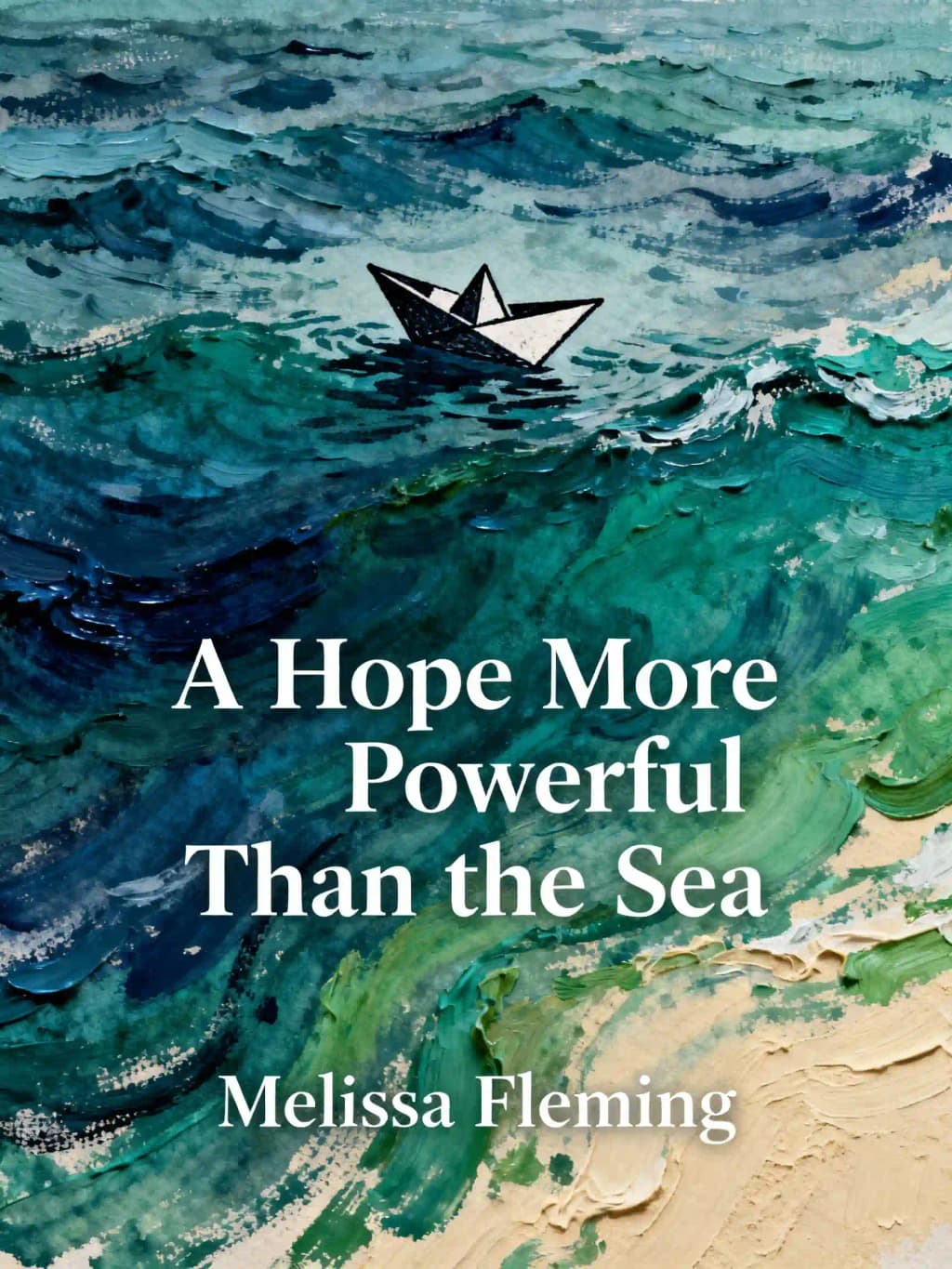
In the vast Mediterranean Sea, a young Syrian woman clung desperately to a child's inflatable ring, holding two baby girls against her chest while surrounded by floating corpses. This was Doaa Al Zamel, whose extraordinary story of survival against impossible odds has captivated millions worldwide. Melissa Fleming's "A Hope More Powerful Than the Sea" chronicles this harrowing journey from war-torn Syria to the deadly waters of the Mediterranean, revealing the human face of the refugee crisis that has defined our era.
The book has garnered praise from humanitarian leaders like Angelina Jolie, who called it "a story that deserves to be heard," and former UN Secretary-General Ban Ki-moon, who described it as "illuminating the ongoing refugee crisis." Beyond its critical acclaim, the narrative serves as a powerful counterpoint to dehumanizing political rhetoric about refugees, showing the impossible choices families face when fleeing violence. As the global refugee population surpasses 100 million people for the first time in history, Doaa's journey reminds us of the extraordinary resilience of those forced to leave everything behind in search of safety.
Глава 2
Childhood Interrupted: Life in Pre-War Syria
Doaa's childhood in Daraa, Syria, was marked by both ordinary struggles and extraordinary dreams. Growing up in her grandfather's house, her family of eight shared a single thirteen-by-sixteen-foot room, with tensions frequently erupting among the women competing for kitchen space. When her mother Hanaa finally delivered an ultimatum to her husband Shokri-"Either you find us another house, or you find yourself another wife"-he took a risky job transporting goods across the Jordanian border to earn extra money.
This decision led to his arrest and four-month imprisonment when authorities discovered he was carrying excess goods with forged documents. The family struggled financially and emotionally during his absence until relatives pooled money to bribe officials for his release. After his return, they moved to their own apartment in a poorer neighborhood. Though initially difficult, the family adapted, especially when Mohammad was born in 2004, bringing the long-awaited son to complete their family.
Unlike her sisters who married young, Doaa harbored different ambitions. She dreamed of becoming a policewoman and living independently, her horizons expanding after a transformative trip to Damascus. She was a shy girl with a fierce independent streak, often standing up to authority figures despite her reserved nature. Her world was small but full of possibility-until December 2010, when the family watched news of Mohamed Bouazizi's self-immolation in Tunisia, the spark that would ignite the Arab Spring and forever change their lives.
What none of them could have imagined was how quickly their ordinary lives would be swept into extraordinary historical currents, transforming Doaa from a quiet schoolgirl into a revolutionary, a refugee, and eventually, a symbol of human resilience in the face of unimaginable adversity.
Глава 3
When Revolution Comes Knocking
It began with graffiti-a simple act of teenage defiance that would ignite a nation. In February 2011, as repressive regimes across the Middle East faced challenges from Tunisia to Egypt, a group of schoolboys in Daraa spray-painted "You're next, Doctor" on their school wall, referring to President Assad's ophthalmology training. The boys were promptly arrested and reportedly tortured, sparking outrage throughout the city.
On March 18, protesters took to the streets demanding their release, only to be met with escalating force-first tear gas and water cannons, then live ammunition that killed four people. These were the first casualties in what would become a devastating war. When the boys were finally released, their visible wounds from electric cables, cigarette burns, and missing fingernails horrified the community. Government attempts to quell the growing unrest only fueled greater anger as security forces flooded the city.
For sixteen-year-old Doaa, the revolution transformed her. On Mother's Day, her family found themselves trapped in violent chaos after their taxi driver abandoned them near burning buildings and protesters. With bullets flying overhead, they pressed against walls and crawled through streets to reach her grandfather's house, a terrifying hour-long journey that should have taken minutes. Despite her mother's warnings, Doaa rushed to the roof where she witnessed security forces firing tear gas and live ammunition at peaceful protesters carrying olive branches.
She watched in horror as people fell dead before her eyes, realizing the government she once dreamed of serving as a policewoman was killing its own citizens. Something shifted in her that day. The once shy girl who feared change now felt compelled to join the growing revolution. Despite her parents' fears, Doaa became increasingly involved in protests, making revolutionary-colored bracelets, creating slogans, helping protesters overcome tear gas effects, and even daringly throwing tear gas canisters back at security forces.
When her father tried restricting her participation, she defied him through tears and hunger strikes until he relented. As demonstrations became part of daily life, Doaa found purpose marching with friends and neighbors. The revolution had awakened something in her-a fierce determination that would later become her salvation in the darkest moments of her journey.
Глава 4
Under Siege: The Darkest Days in Daraa
On April 25, 2011, Doaa's life changed dramatically when she spotted military tanks rolling into Daraa while hanging laundry on her roof. She watched in horror as armed soldiers marched alongside tanks while helicopters circled overhead. Remembering stories of the Hama massacre decades earlier, Doaa feared President Assad would follow his father's brutal example. That night, the family realized the severity of their situation as electricity and water were cut off. The radio confirmed: "Daraa is under siege. The army has been sent to root out the terrorists."
The family endured a terrifying week under siege with limited food and water. Hanaa carefully rationed their meager supplies-bits of cheese, yogurt, jam, and canned vegetables-as they shared one glass of water between them. Security forces conducted intrusive searches up to three times daily, pointing guns at family members while claiming to look for "terrorists." During one raid, soldiers smashed their precious food reserves. In a particularly frightening incident, a soldier shoved his rifle into Doaa's stomach when she closed the door after a search.
Despite the danger, Doaa's revolutionary spirit remained unbroken. When a young soldier ogled her inappropriately during a search, she glared back defiantly. When he demanded to know why she was staring, she replied, "I'm a free person. I can do whatever I want," deliberately using the word "free" to provoke him. Though this outburst terrified her family, her sisters secretly admired her courage.
Eleven days into the siege, authorities announced a one-hour window for women to shop for food. Despite Shokri's concerns about women being searched, the desperately hungry family agreed Hanaa must go. Outside, she discovered soldiers feasting while Daraa starved. In her boldest act, Doaa hid a Free Syrian Army fighter from government forces, cleverly disguising him as furniture during a search.
As the siege ended, SANA announced the government had "completed its mission" against "terrorist groups." Despite this, decomposing bodies lay uncollected in streets and buildings stood pockmarked and abandoned. The world had taken notice-reports of over 200 deaths and 1,000 arrests during the siege spread globally. Human rights groups reported at least 600 people had died across Syria in the seven weeks of crackdowns, with 8,000 jailed or missing.
These experiences under siege hardened Doaa's resolve. The girl who once feared change had become a woman unafraid to stand up to armed soldiers, willing to risk her life to protect others. This courage would be tested again and again in the years to come.
Глава 5
Exile: Leaving Home Behind
Despite the tanks withdrawing, life remained perilous. Shokri stubbornly reopened his barbershop despite snipers making targets of civilians. "My death will come when God decrees it," he told concerned neighbors. Meanwhile, Doaa gauged the city's mood by counting bullet casings outside their home each morning. The family developed a grim ritual of watching evening bombings light up distant neighborhoods, guiltily relieved when explosions missed their area.
As violence continued, the family struggled with severe shortages. In June 2012, Shokri's salon was destroyed by missiles, devastating him and stripping away his livelihood. The prolonged stress manifested physically-Doaa lost her appetite, grew dangerously thin, and developed eye infections requiring risky journeys through fighting zones for treatment. Returning from one such clinic visit, Doaa and her mother were harassed by government officials who followed them in a car, threatening to kidnap Doaa. Later that night, walking home after curfew, they witnessed men disposing of bodies in dumpsters. This terrifying experience convinced Shokri and Hanaa it was time to leave Syria.
Doaa knelt in the backseat, tears streaming as she watched Syria disappear behind her. She had left parts of herself in Daraa, hoping this would ensure her return someday. At the ferry terminal, she faced her lifelong fear of water as they prepared to cross the Gulf of Aqaba. The vessel's rocking terrified her, but she summoned all her courage to board. While her sisters excitedly explored the top deck, Doaa sat frozen at the center, gripping the bench, her face turning "sheer white" with fear.
When they reached Egypt's Nuweiba port, customs officials welcomed them warmly, waiving excess baggage fees despite their overloaded luggage. "You are coming from war and suffering," one told them. "Syria and Egypt are bound together like family." This kindness made Saja whisper that she felt "like a queen," and even little Hamudi smiled for the first time in ages.
After settling in Gamasa, Doaa fell into depression while her family adapted. When Shokri became too ill to work, seventeen-year-old Doaa and fifteen-year-old Saja took jobs at a burlap bag factory to support the family. Despite the physically demanding work-carrying heavy loads on her 88-pound frame-Doaa found purpose in providing for her family and made friends with Egyptian coworkers who showed kindness to Syrian refugees.
Though Doaa received two marriage proposals from Egyptian men, she declined both, determined to someday marry a Syrian. She still yearned for Syria, constantly watching news channels and messaging her friend Amal, though she realized her family needed her support in Egypt. After six months, the family had established a routine. Little Hamudi's nightmares about the war had subsided, and they could afford rent and food with their income and UNHCR vouchers. Though Doaa mourned her lost educational opportunities, she found comfort in her family's improved circumstances.
Глава 6
Finding Love Amid Chaos
Six months into their life as refugees, the Al Zamel family had adapted to Egypt, joined by Doaa's sister Asma and her daughters who had fled the intensifying bombing in Daraa. News from home confirmed they wouldn't return anytime soon-their neighborhood was largely deserted, with many neighbors killed and homes destroyed, including Asma's house which had been hit by a missile after she fled.
In early May, Doaa's cousin Maisam announced that his friend Bassem was coming to stay with him. Twenty-eight-year-old Bassem had owned a successful hairdressing salon in Daraa before joining the opposition. After being imprisoned and tortured for two months, he discovered upon release that his brother had been killed while carrying Bassem's ID, making him vulnerable at checkpoints and forcing him to flee Syria.
When Doaa first encountered Bassem while delivering food to Maisam's apartment, she barely noticed him. Their meaningful interaction came days later when Bassem offered to help Doaa carry a suitcase upstairs. Despite Doaa's stubborn refusal of help, Bassem was captivated by the determined young woman in the red veil, immediately asking Maisam about her and declaring, "I want her to be mine."
The day after a family lunch where Bassem couldn't keep his eyes off Doaa, Maisam approached her to ask what she thought of Bassem, revealing that his friend wanted to propose to her. Shocked by this sudden interest after only two meetings, Doaa firmly rejected the idea. Bassem took the rejection hard, falling into depression, seeing in Doaa a "glimmer of light in the dark of his refugee life."
As Doaa worked herself to exhaustion at the factory, Bassem offered to replace her income so she could stop working. This only angered her more, as she prided herself on self-sufficiency. Soon everyone in Gamasa knew about "Romeo Bassem" and his unrequited love, with even Doaa's sisters and employer encouraging her to reconsider. She remained steadfast: "I cannot love him. And anyway, I don't want to get married outside of Syria."
On July 3, 2013, eight months after the Al Zamels arrived in Egypt, President Morsi was ousted in a military coup led by General Abdel Fattah el-Sisi. Overnight, attitudes toward Syrian refugees deteriorated dramatically. Since Morsi had welcomed Syrians, they were now viewed as Muslim Brotherhood supporters or potential terrorists. Egyptian news anchors began vilifying Syrians, with one state TV host threatening, "If you interfere in Egypt, you will be beaten by thirty shoes."
Bassem grew desperate in his love for Doaa. When Hanaa discovered he had rat poison in his room and was threatening suicide or return to Syria to fight if rejected again, she became deeply concerned. As Doaa recovered from her collapse, she found herself unexpectedly warming to Bassem's genuine care and attention. When he called after her hospital release, she simply said, "I just want to say thank you."
The crisis came when Hanaa herself collapsed, trembling uncontrollably. At the hospital, doctors warned she was mentally exhausted and should receive no bad news. When Bassem called afterward, he confessed his plan to return to Syria to fight, saying "If I die, at least I know I will have you in heaven since I can't have you in this life."
Realizing she couldn't bear losing him, Doaa finally called Bassem and said, "If you are still interested, you can ask my father for my hand." Her fear of trusting someone was nothing compared to her fear of losing the man who might be the love of her life.
Глава 7
A Brief Moment of Joy
The next day, Bassem visited Shokri's barbershop in his best suit to ask for Doaa's hand. Shokri initially dismissed him, certain his daughter didn't want marriage, until Bassem revealed she had agreed. Delighted, Shokri gave his blessing, and they scheduled the engagement ceremony for August 28, 2013, with a celebration party on September 1.
The engagement began with a signing ceremony in the Al Zamels' home. Doaa, in a black dress with a black-and-red veil, stood with women on one side of a window while Bassem and the men gathered on the balcony. A sheikh presented their Katb el-Kitab (Islamic prenuptial agreement), asking Doaa three times if she took Bassem as her betrothed. Each time she firmly answered, "I do," making them husband and wife in God's eyes before they signed the contract.
Despite Doaa and Hanaa's concerns about his finances, Bassem insisted on buying traditional gold jewelry for his bride-a necklace, earrings, and a double ring labeled "Tag Elmalika" (a queen's crown). "That is just how you treat her," Hanaa remarked, "like your queen."
For the engagement party, Doaa wore a shimmering sky-blue dress with a tight bodice and full skirt. After hours at the hairdresser, her waist-length hair was arranged in an intricate style while makeup transformed her appearance. In the taxi home, however, she wept at the unfairness that her older sisters-scattered across Abu Dhabi, Lebanon, and Jordan-couldn't attend due to visa restrictions on their Syrian passports.
When she arrived at her aunt's decorated apartment, over one hundred Syrian and Egyptian guests greeted her with cheers and fireworks. The space was adorned with flowers, streamers, balloons, and paper cutouts of "D" and "B" on the walls. Following tradition, all women except Doaa covered their heads when Bassem entered in his elegant dark suit. Seeing her unveiled for the first time, he beamed: "Is that the same Doaa? You look amazing, though I think you're even prettier without makeup!"
After their engagement, Doaa and Bassem's relationship deepened amid the challenges of refugee life. When Doaa lost her engagement ring, she feared it was an omen they'd never marry, though Bassem reassured her. He became like family to the Al Zamels, with Shokri treating him as a son. As Egypt's political climate worsened, Bassem faced taunts from locals telling him to "go fight in Syria." The couple found solace listening to songs about their homeland, singing together: "Oh, God, oh, my dear country, how I miss my country..."
Life in Egypt deteriorated for Syrian refugees after the military coup. Doaa narrowly escaped being kidnapped when a local youth tried forcing her onto his motorbike. The situation worsened for the entire family. Saja was harassed by men calling "Stop, Syrian girl!" while walking home from school. Hamudi faced bullying from former friends, and Syrian children were eventually forced to sit on the floor at school. With Shokri's barbershop struggling, Bassem partnered with him to help the family survive. Yet despite their combined efforts, they remained trapped in grinding poverty with no path to stability.
Глава 8
The Desperate Gamble
Nine months after their engagement, Bassem approached Doaa with a desperate proposal to escape to Europe by smuggler's boat. Terrified of water and unable to swim, Doaa initially refused, despite Bassem's assurances about rescue by Italian coast guard. For two months, he persisted, showing her photos of friends who had successfully reached Europe and describing opportunities for education, work, and respect they could never find in Egypt.
Meanwhile, their situation in Egypt continued deteriorating-facing hostility, poverty, and no future prospects. Syria had grown even worse, with chemical attacks and the rise of extremist groups like the Islamic State. When Bassem suggested going alone and sending for her later, Doaa finally relented, unwilling to be separated from him. They sold their engagement gifts and borrowed money to raise the $2,500 down payment for the smuggler, who promised safe passage on an ocean liner.
As the departure moment arrived, Doaa's family made desperate last pleas for them to stay. Torn between fear of the dangerous sea journey and hope for a better future, Doaa and Bassem boarded the smuggler's bus carrying only a small duffel bag with essential belongings and documents wrapped in plastic. They joined other refugees on a crowded bus driven by intimidating men dressed in black. After transferring to a pitch-black truck container, they arrived at a barren beach where about two hundred refugees waited.
Their first attempt ended in capture by Egyptian authorities. Their belongings were stolen by officials, and they were sentenced to ten days in a filthy detention center where they were separated but allowed brief daily visits. Upon release, they returned to Doaa's family in Gamasa, where neighbors warned them against attempting another journey.
Their second escape attempt ended similarly when their bus was chased by police. During their second imprisonment, Doaa fell seriously ill with kidney stones and a stomach infection, requiring hospitalization. The hospital nurse, moved by Doaa's story, showed her kindness and gave her money for food. After ten more days in detention, they were released with a warning not to try escaping again.
Despite their traumatic experiences, Doaa convinced a reluctant Bassem to make a third attempt, especially since the smugglers still had their $2,500. On September 6, 2014, they received the call to leave. Doaa carefully packed clothes, toiletries, food and water in her Mickey Mouse backpack, wrapped their documents and money in plastic bags, and secured them under her clothing.
Reaching the water's edge, Doaa hesitated, needing to gather courage before stepping into her worst nightmare. As they waded deeper, she discovered her $50 life jacket was a fake, providing barely enough buoyancy to keep her chin above water. When they finally approached the ship that would take them across the Mediterranean, Doaa felt a chill of panic-instead of the "four-star ship" they'd been promised, they faced a decrepit fishing trawler with peeling blue paint and rusted rims.
Глава 9
The Shipwreck and Four Days at Sea
As Doaa and Bassem boarded the decrepit fishing trawler, she felt relieved to have made it through the first phase despite her fear of water. The rusty boat was already packed with hundreds of refugees who had been waiting at sea for days. Bassem estimated at least five hundred people were aboard when they set off, representing a million-dollar profit for the smugglers if each paid $2,500 as they had.
Chaos erupted when someone shouted "Police!" and bullets hit the boat. They sped away into the darkness, passengers diving for cover. Initially separated from Bassem, Doaa sat trembling among the women, surrounded by the stench of fish and vomit. The passengers-mostly Syrians, with Palestinian families from Gaza and some Africans from Sudan and Somalia-began whispering introductions, seeking community amid their shared misery.
At dawn, the refugees were ordered to switch to another fishing trawler. Doaa reunited with Bassem on the new boat, where they huddled together against the side. The crew handed out expired meat, but Doaa couldn't eat due to the terrible stench from the toilets. She comforted herself thinking they'd be rescued by Italians in just three days.
When the sea calmed, passengers shared snacks and dreams of their future. Doaa met a Palestinian family with two little girls, Sandra and Masa, heading to Sweden where their eldest daughter had been sent ahead. A sense of solidarity formed among the passengers regardless of background, with everyone helping the children.
On their fourth day at sea, the refugees collectively refused to transfer to another smaller, rustier boat. The smugglers relented, agreeing they could stay if they pretended the crew were fellow refugees. The captain assured them they would reach Italy in just nineteen hours, prompting cheers and renewed hope.
As passengers relaxed under the bright sun, some removing life vests for comfort, Doaa drifted to sleep on Bassem's shoulder. She was suddenly awakened by shouting-a blue fishing boat numbered 109 was approaching, carrying men hurling insults and wooden planks at them. "Sending these filthy dogs to the bottom of the sea," one attacker yelled before deliberately ramming their boat. During a second deliberate collision, the boat violently nosedived.
Doaa lost Bassem's hand in the chaos and found herself trapped underwater beneath plastic rice sacks before managing to escape through a tear. She clung to the sinking stern, horrified to see people being pulled into the still-spinning propeller. When Bassem called to her from the water, she finally let go, terrified but with no choice.
In the water, Bassem found a child's inflatable ring and placed it around Doaa's waist, promising not to leave her. For two days, they clung together in the water, surrounded by floating corpses and desperate survivors. Bassem encouraged Doaa to talk about their future, planning their life in Sweden to keep her spirits up. On the second night, however, Bassem's strength began failing. "I'm sorry, my love," he whispered, "I think I'm going to die." Despite Doaa's desperate pleas, he slipped beneath the waves, leaving her alone.
Shortly after, a Palestinian man approached with his eighteen-month-old granddaughter Masa, begging Doaa to take her as he could no longer hold on. Soon after, another man brought his nine-month-old niece Malak, making the same desperate request. Though barely able to keep herself afloat, Doaa took both babies, placing them on her chest as she floated on her back in the tiny ring.
For two more days, Doaa fought to keep the babies alive, singing to them and checking their pulses constantly. By the fourth morning, they were barely moving, sleeping constantly. Drifting in and out of consciousness, Doaa spotted a bird circling her three times-a sign from God, she believed. Soon after, she saw a plane dropping what looked like diamonds, possibly flares. Using a plastic bottle to reflect sunlight, she desperately tried to signal it.
Глава 10
Rescue and New Beginnings
The chemical tanker CPO Japan responded to a distress call about a sunken refugee boat. After finding mostly corpses, the captain launched a lifeboat search operation. Three crewmen searched until they heard Doaa's desperate calls for help. Despite her extreme weakness after four days without food or water, Doaa paddled frantically toward the searchlight, determined to save the babies.
When finally spotted, Doaa appeared to the astonished sailors as a slight young woman on an inflatable ring with two small children clutched to her chest. The crew pulled the barely conscious children to safety first. Though Doaa briefly considered letting herself drift back to die with Bassem, the crew pulled her aboard. Once rescued, she was given water, dry clothes, and medical attention while the crew desperately tried to save the children.
Hours later, a helicopter evacuated them to Crete. Aboard the helicopter, Doaa discovered that little Malak had died despite rescue efforts, though Masa was still clinging to life. At the hospital, Doaa answered police questions about the shipwreck before falling into exhausted sleep. When she awoke, she found her body covered in bruises, her muscles damaged from days holding the children, and her appearance so changed she barely recognized herself in the mirror.
In Greece, Doaa began to process her trauma while staying with an Egyptian family. After connecting Masa with her uncle Mohammad, she experienced a moment of healing. However, her media interviews about the smugglers' responsibility for the shipwreck led to threatening consequences for her family in Egypt. UNHCR helped her family qualify for resettlement as "vulnerable" Syrian refugees.
Despite her grief, Doaa found new resolve fighting for her family's safety, even receiving an award from the Academy of Athens for her courage. She gradually confronted her fear of the sea and eventually reunited with her family in Sweden after a lengthy resettlement process.
In her own words, Doaa reflects: "I've shared just a glimpse of the hardship refugees endure worldwide. We risk our lives with cruel smugglers because we have no choice after facing war and losing our homes. We aren't terrorists-we're humans with hearts that feel and love. Every Syrian family has rebuilt their homes in their hearts after losing everything, with dreams trapped in the past."
Her story raises profound questions about our collective humanity: Why must refugees risk their lives crossing dangerous waters when safer, legal pathways to asylum could exist? What responsibility do we bear as witnesses to their suffering? And perhaps most importantly, how can we honor the memory of those lost at sea-like Bassem and little Malak-by ensuring such tragedies never happen again?
Doaa's journey from Daraa to Sweden represents not just one woman's extraordinary resilience, but a testament to the human spirit's capacity to endure, to hope, and ultimately, to rebuild even after unimaginable loss.