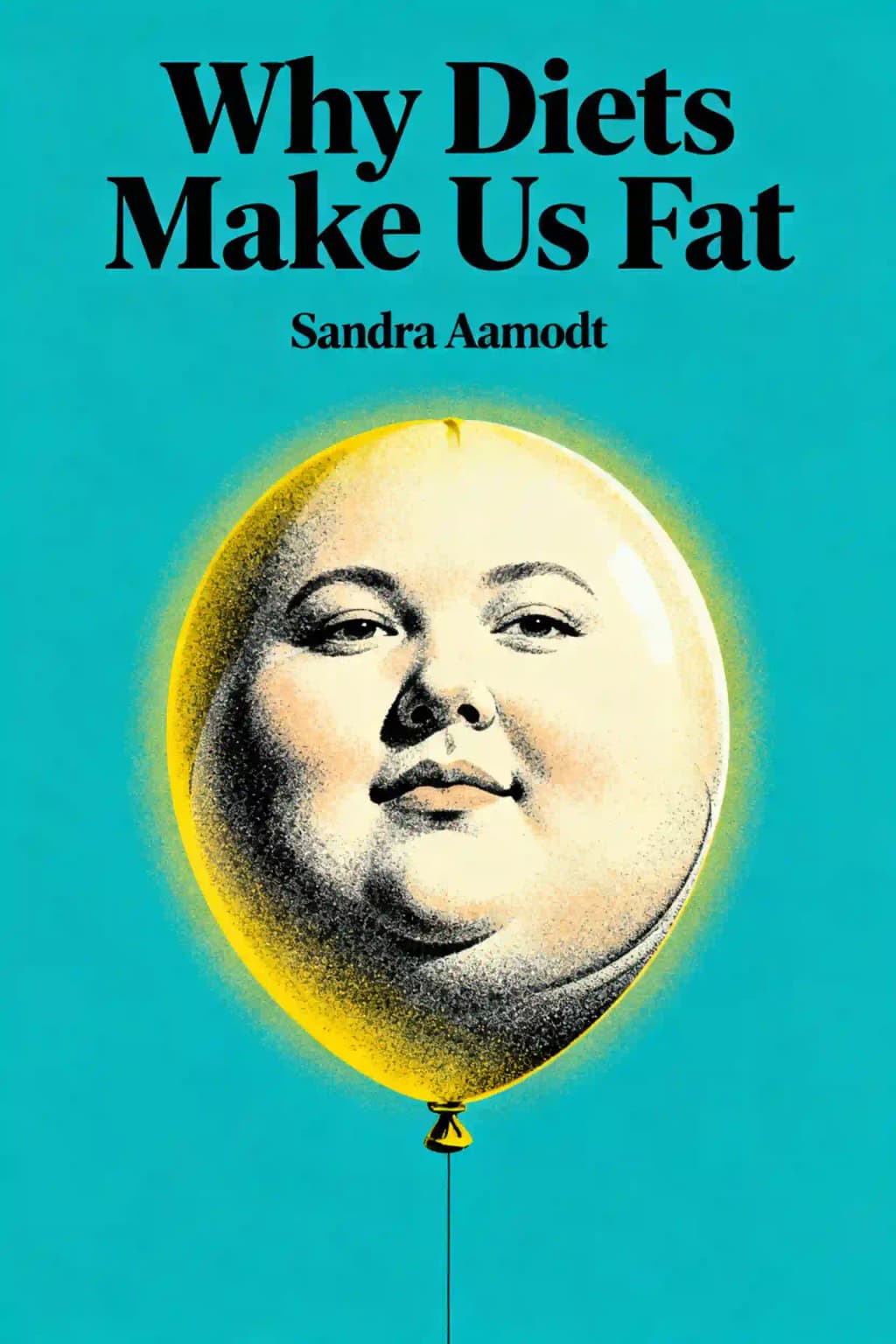
Why Diets Make Us Fat
The Hidden Truth Behind Weight Gain and the Keys to Lasting Weight Loss
Overview of Why Diets Make Us Fat
Neuroscientist Sandra Aamodt demolishes diet culture with shocking science: dieting actually triggers weight gain. Why? Your brain has a weight "set point" it fiercely defends. Health professionals call it revolutionary - finally explaining why willpower fails while offering a sustainable alternative to yo-yo dieting.

Key Themes in Why Diets Make Us Fat
- set point theory
- metabolic adaptation
- intuitive eating
- neuroscience of weight
- yo-yo dieting
Quotes from Why Diets Make Us Fat
Dieting is making us fatter.
Weight gain [is] often irreversible.
Dieting itself doesn't work.
Willpower always fails eventually.
The war on obesity has been a losing battle.
Characters in Why Diets Make Us Fat
- Sandra AamodtAuthor and neuroscientist
- Dennis AsburyCase study subject who lost and regained weight
About the Author
About the Author of Why Diets Make Us Fat
Sandra Aamodt, Ph.D., is a neuroscientist, science writer, and the author of Why Diets Make Us Fat: The Unintended Consequences of Our Obsession with Weight Loss. With a doctorate in neuroscience from the University of Rochester and experience as editor-in-chief of Nature Neuroscience, Aamodt brings scientific rigor to her exploration of dieting’s pitfalls and metabolism’s complexities.
Her work bridges health, neuroscience, and behavioral science, debunking myths about weight loss through evidence-based insights. Aamodt co-authored the bestselling books Welcome to Your Brain and Welcome to Your Child’s Brain, the former named Young Adult Science Book of the Year by the American Association for the Advancement of Science.
Her TED Talk, Why Dieting Doesn’t Usually Work, has garnered millions of views, amplifying her role as a trusted voice in public health discourse. Aamodt’s writing has appeared in the New York Times, the Washington Post, and other major outlets, reinforcing her authority in translating complex research into actionable advice. Her books have been translated into over a dozen languages, reaching a global audience seeking science-backed strategies for sustainable health.
Download Summary of Why Diets Make Us Fat
Get the Why Diets Make Us Fat summary as a free PDF or EPUB. Print it or read offline anytime.
FAQs About This Book
Why Diets Make Us Fat by neuroscientist Sandra Aamodt challenges conventional weight-loss wisdom, arguing that chronic dieting disrupts the body’s natural weight-regulation system. The book explores how repeated dieting leads to metabolic slowdown, increased hunger, and long-term weight gain by fighting against the brain’s “set point.” Aamodt critiques low-fat diet trends and emphasizes intuitive eating as a sustainable alternative to restrictive calorie counting.
This book is ideal for anyone frustrated with yo-yo dieting, health professionals seeking neuroscience-based insights, or individuals interested in the science of metabolism. It’s especially valuable for parents, policymakers, and those skeptical of mainstream diet culture. Aamodt’s accessible writing bridges academic research and practical advice.
Yes—Aamodt’s evidence-based approach debunks pervasive myths about weight loss, offering a fresh perspective on obesity research. The book synthesizes decades of neuroscience and nutrition studies, making it a standout resource for understanding why diets fail 95% of people long-term. Critical praise highlights its relevance for rethinking societal approaches to health.
Sandra Aamodt holds a PhD in neuroscience, served as editor-in-chief of Nature Neuroscience, and has analyzed over 5,000 neuroscience studies. Her prior books, Welcome to Your Brain and Welcome to Your Child’s Brain, established her as a leading science communicator. This expertise underpins her critique of diet-industry pseudoscience.
The set point theory posits that the brain regulates weight within a genetically influenced range through hormonal and metabolic adjustments. Aamodt explains that dieting triggers starvation responses—slowed metabolism, heightened calorie storage—which push weight back toward the set point. This biological “defense system” makes sustained weight loss nearly impossible for most people.
Aamodt links low-fat diet trends to increased refined carbohydrate consumption, which spikes insulin levels and promotes fat storage. By prioritizing fat reduction over nutrient quality, food manufacturers created products that disrupt satiety signals, leading to overeating. The book cites historical data showing obesity rates tripling post-1970s fat-phobic policies.
Aamodt advocates for intuitive eating: tuning into hunger cues, reducing stress around food, and avoiding moral labels like “good” or “bad” foods. She emphasizes consistent sleep, mindful movement, and eliminating restrictive rules to stabilize metabolism. This approach aligns with the body’s natural weight-regulation mechanisms.
Repeated dieting trains the body to conserve energy, reducing basal metabolic rate by up to 15%. Aamodt explains that this adaptation persists post-diet, making regain likely. Over time, muscle loss and hormonal shifts (e.g., leptin reduction) further entrench a higher set point, creating a cycle of weight fluctuation.
Aamodt highlights insulin’s dual role: regulating blood sugar and directing fat cells to store energy. High-carb, low-fat diets cause insulin spikes that block fat release, increase hunger, and promote calorie hoarding. This process, exacerbated by processed foods, traps individuals in a “starve-binge” metabolic pattern.
Unlike prescriptive diet guides, Aamodt’s work focuses on systemic biological and cultural factors driving obesity. It aligns with anti-diet movement principles but adds neuroscientific rigor, distinguishing it from anecdotal approaches. The book complements works like The Obesity Code while critiquing calorie-centric models.
Yes—Aamodt positions intuitive eating as the sustainable alternative to dieting. By rebuilding trust in hunger/fullness cues and reducing food anxiety, individuals can stabilize near their natural set point. Studies cited show intuitive eaters have lower diabetes risks and better psychological health than chronic dieters.
Aamodt argues that diets ignore biological adaptability, treating obesity as a “willpower failure” rather than a mismatch between modern food environments and evolutionary biology. She dismantles calorie-counting myths, showing how restrictive eating triggers rebound overeating and worsens metabolic health long-term.