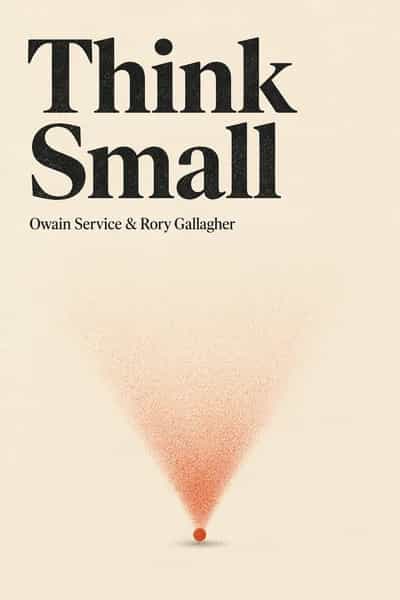
In "Company of One," Paul Jarvis challenges traditional growth obsession, showing how staying small creates sustainable success. Jeremy Day credits this counterintuitive guide for launching his business. What if your greatest competitive advantage isn't scaling up, but purposefully staying small?
Paul Jarvis, bestselling author of Company of One: Why Staying Small Is The Next Big Thing for Business, is a veteran entrepreneur and corporate designer with over 25 years of experience shaping brands for clients like Microsoft, Mercedes-Benz, and Warner Music.
A contrarian voice in entrepreneurship, Jarvis challenges conventional growth-centric models, advocating for sustainable, purpose-driven businesses—a philosophy rooted in his own career as a solopreneur and tech-world innovator. His insights have been featured in Forbes, Fast Company, Bloomberg, and The Financial Times, and he shares actionable advice through his widely read Sunday Dispatches newsletter and Invisible Office Hours podcast.
Jarvis’s expertise blends design thinking with pragmatic business strategy, reflecting his background in creating user-focused digital products and teaching courses on creative freelancing. Company of One, published in 20+ languages, has cemented his reputation as a leading advocate for redefining success through intentional scalability.
Company of One challenges traditional business growth models by advocating for staying small as a strategic advantage. Paul Jarvis argues that prioritizing autonomy, resilience, and efficiency over expansion leads to greater freedom, profitability, and work-life balance. The book provides frameworks like Minimum Viable Profit (MVPr) and iterative product launches to build sustainable, purpose-driven businesses.
Entrepreneurs, freelancers, and professionals seeking alternatives to scale-driven business models will benefit from this book. It’s ideal for those valuing flexibility, solopreneurs aiming to avoid burnout, and corporate employees exploring side hustles. Jarvis’s insights resonate with readers prioritizing lifestyle design over relentless growth.
Yes, particularly for readers disillusioned with hustle culture. Jarvis combines practical strategies (e.g., customer-centric systems) with philosophical critiques of capitalism’s “more is better” mindset. The book’s emphasis on profitability over scale makes it a standout guide for sustainable entrepreneurship.
MVPr refers to the minimum profit required to sustain a business without relying on external funding. Jarvis advises focusing on early profitability by controlling expenses and validating ideas through small-scale launches. This approach reduces risk and ensures financial stability before scaling.
Jarvis emphasizes empathy, transparency, and education. Businesses should prioritize solving customer problems, admit mistakes openly, and teach audiences through content. This builds trust and loyalty, positioning the company as an authority in its niche.
Four core traits define the model: resilience (adapting to challenges), autonomy (controlling workflows), speed (quick decision-making), and simplicity (avoiding unnecessary complexity). These enable small businesses to thrive without traditional growth.
Jarvis argues passion alone is insufficient—success requires solving real customer needs. He advises aligning purpose with market demand rather than chasing trends. This pragmatic approach ensures sustainability and relevance.
Use iterative “baby steps”: release minimal versions to test assumptions, gather feedback, and refine offerings. This avoids overinvesting in unproven ideas and accelerates learning. Jarvis also highlights pre-selling concepts to validate demand before full development.
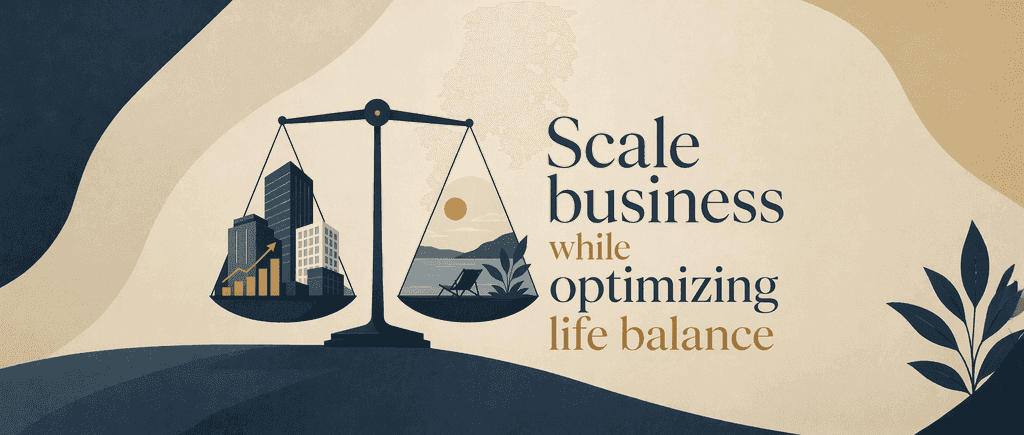
Scalability is redefined as efficiency, not size. Jarvis advocates automating systems, outsourcing non-core tasks, and focusing on high-margin services. Growth is optional and only pursued if it aligns with personal and business goals.
With remote work and AI-driven automation reshaping industries, Jarvis’s principles offer a blueprint for agile, lean businesses. The focus on adaptability and digital-first strategies aligns with current trends toward solopreneurship and niche markets.
Some argue the model limits economic impact and job creation. Others note it may not suit industries requiring scale (e.g., manufacturing). However, Jarvis clarifies the approach is a mindset, applicable even within larger organizations.
While both emphasize lifestyle design, Jarvis focuses on sustainable small businesses, whereas Ferriss promotes outsourcing for passive income. Company of One prioritizes purpose and customer relationships over rapid exits or automation.
Почувствуйте книгу через голос автора
Превратите знания в увлекательные, богатые примерами идеи
Захватите ключевые идеи мгновенно для быстрого обучения
Наслаждайтесь книгой в весёлой и увлекательной форме
More isn't always better.
A company of one isn't anti-growth—it's anti-automatic growth.
Companies of one thrive under constraints, where creativity flourishes.
OVERHEAD = DEATH.
Growth that happens too quickly creates problems.
Разбейте ключевые идеи Company of One на понятные тезисы, чтобы понять, как инновационные команды создают, сотрудничают и растут.
Выделите из Company of One быстрые подсказки для запоминания, подчёркивающие ключевые принципы открытости, командной работы и творческой устойчивости.

Погрузитесь в Company of One через яркие истории, превращающие уроки инноваций в запоминающиеся и применимые моменты.
Задавайте любые вопросы, выбирайте голос и совместно создавайте идеи, которые действительно находят у вас отклик.

Создано выпускниками Колумбийского университета в Сан-Франциско
"Instead of endless scrolling, I just hit play on BeFreed. It saves me so much time."
"I never knew where to start with nonfiction—BeFreed’s book lists turned into podcasts gave me a clear path."
"Perfect balance between learning and entertainment. Finished ‘Thinking, Fast and Slow’ on my commute this week."
"Crazy how much I learned while walking the dog. BeFreed = small habits → big gains."
"Reading used to feel like a chore. Now it’s just part of my lifestyle."
"Feels effortless compared to reading. I’ve finished 6 books this month already."
"BeFreed turned my guilty doomscrolling into something that feels productive and inspiring."
"BeFreed turned my commute into learning time. 20-min podcasts are perfect for finishing books I never had time for."
"BeFreed replaced my podcast queue. Imagine Spotify for books — that’s it. 🙌"
"It is great for me to learn something from the book without reading it."
"The themed book list podcasts help me connect ideas across authors—like a guided audio journey."
"Makes me feel smarter every time before going to work"
Создано выпускниками Колумбийского университета в Сан-Франциско

Получите резюме книги «Company of One» в формате PDF или EPUB бесплатно. Распечатайте или читайте офлайн в любое время.
A successful entrepreneur abandons a thriving city practice to move to a remote town with terrible internet. Sounds like career suicide, right? Yet this counterintuitive move revealed something profound: the business didn't just survive-it thrived. This wasn't luck or accident. It was the result of building something fundamentally different from what we're taught to pursue. While the business world worships at the altar of scale, preaching mantras of "growth at all costs" and "move fast and break things," a quiet revolution is unfolding. Entrepreneurs are discovering that the path to freedom, profit, and satisfaction doesn't require building empires. Sometimes the smartest business decision is the one that keeps you deliberately, strategically small. Think about the last time someone asked about your business. Chances are, their first question was "How big is it?" or "How fast are you growing?" We've internalized the belief that expansion equals success, that stagnation equals failure. But what if we've been asking the wrong questions entirely? A company of one operates on a radically different premise: it questions growth as an automatic response to success. This isn't about being anti-growth or anti-revenue-it's about being anti-automatic growth. Every opportunity to expand gets scrutinized: Will this truly serve the business, or just make it bigger?