Глава 1
When a Billionaire Buys a Megaphone
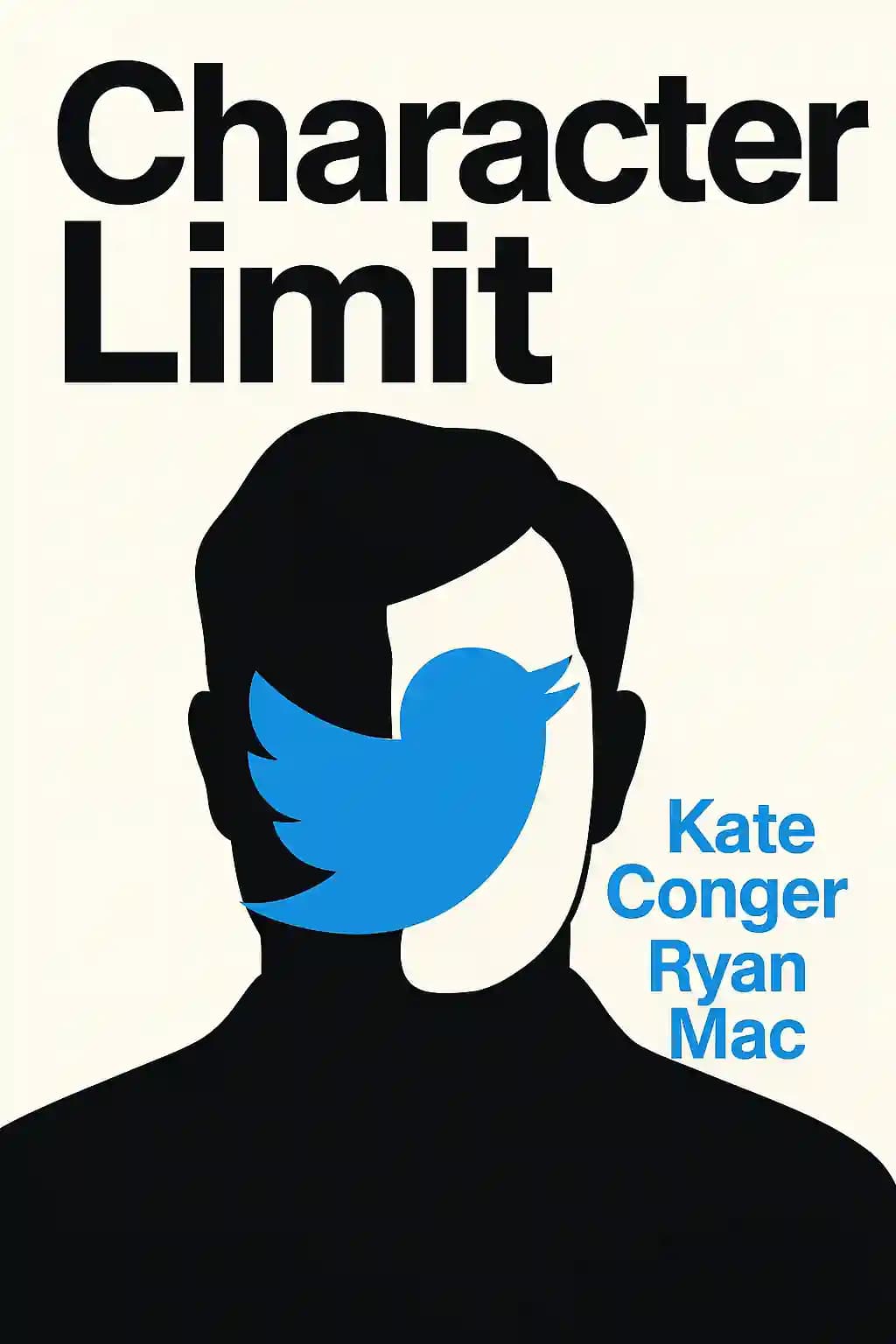
Elon Musk's acquisition of Twitter wasn't just another tech deal-it was the most consequential social media takeover in history. The world's richest man, worth $270 billion, paid $44 billion for his favorite addiction: a platform where he spent hours daily scrolling, laughing at memes, and broadcasting his thoughts to millions. Unlike other billionaires who might buy yachts or sports teams, Musk craved Twitter as a direct channel to hundreds of millions of users. The purchase was both business venture and ideological crusade-Musk viewed Twitter as a weapon wielded by San Francisco liberals suppressing viewpoints he enjoyed.
The takeover captivated Silicon Valley insiders and casual users alike. Celebrities from Stephen King to LeBron James publicly refused to pay for verification under Musk's new regime. The acquisition even inspired a Saturday Night Live sketch featuring Musk impersonator James Austin Johnson declaring, "I have freed the bird!" What began as seemingly impulsive soon revealed Musk's fundamental misunderstanding of Twitter's challenges, which were social and political rather than merely technical. His ownership journey would transform not just a platform used by over 200 million people daily but also Musk himself-pushing him further into political extremism while eroding the carefully crafted image that had made him a tech world hero.
Глава 2
The Visionary and the Platform
In March 2006, Jack Dorsey posted the world's first tweet: "just setting up my twttr." Born in St. Louis in 1976, Dorsey had always been fascinated by information systems and dispatch services. After dropping out of college, he moved to the Bay Area in 1999, eventually joining Ev Williams' podcasting startup Odeo as a freelance coder. When Apple added podcasts to iTunes in 2005, threatening Odeo's business model, Dorsey pitched his concept for real-time status updates-a platform for instant sharing without much thought.
Dorsey had sketched this idea years earlier as "My.Stat.Us," imagining something similar to AOL's instant messaging status updates. Noah Glass suggested the name "twitter" after thumbing through a dictionary of words starting with "tw." The 140-character limit, initially imposed by SMS constraints, became the platform's defining feature, forcing users to be concise and clever.
After being named best startup at SXSW 2007, Twitter grew explosively but suffered frequent outages symbolized by the infamous "fail whale" error screen. These infrastructure problems led to Dorsey being fired as CEO in 2008, with Ev Williams taking his place. While Dorsey went on to found Square (now Block), Twitter evolved into something more significant than its creators had envisioned-becoming instrumental in social movements like the Arab Spring and embracing free speech principles that would later prove complicated to maintain.
Through political maneuvering behind the scenes, Dorsey eventually managed to oust Williams and return to power when Dick Costolo resigned in 2015. Standing bearded and enigmatic before Twitter employees, Dorsey was positioned as the returning visionary founder-his Steve Jobs moment after years in exile. But Twitter's problems had grown more complex during his absence, with harassment, misinformation, and stagnant user growth presenting challenges that would require more than just technical solutions.
Глава 3
The Making of a Mercurial Billionaire
Before becoming a household name, Musk was the eldest of three children from a divided South African family. He made his way to the United States via Canada, earning a degree at UPenn before dropping out of Stanford's PhD program to pursue "the Internet." In 1995, he and brother Kimbal founded Zip2 with $28,000 from their father Errol, whom Musk described as influential yet abusive. At 23, Musk slept in the office, showered at a YMCA, and subsisted on fast food-a bootstrap narrative he frequently highlighted in interviews.
Even then, Musk understood storytelling's value. In a 1998 CBS interview, the gangly, balding entrepreneur proclaimed the internet would become "the be all and end all of media," folding all traditional media into itself. Image-conscious and hungry for publicity, he sold Zip2 to Compaq for $305 million in 1999, personally making $22 million, then founded X.com with grand visions of transforming banking.
Before X.com could challenge credit card corporations, Musk found himself competing with Confinity, founded by Peter Thiel, Max Levchin, and Luke Nosek, whose PayPal product allowed people to email money. When the dot-com bubble burst in 2000, the companies merged under X.com with Musk as CEO. He immediately clashed with the Confinity team, including Thiel, Levchin, and David Sacks, who viewed him as obstinate for insisting on rebranding PayPal as X despite PayPal's established recognition.
While Musk was on his honeymoon with first wife Justine in Australia, the former Confinity team orchestrated his removal, with Sacks drafting a board letter promoting Thiel as CEO. Though Musk publicly downplayed the coup, claiming he preferred early-stage company development, he was furious when Thiel rebranded the entire company as PayPal. The gambit proved successful-eBay acquired PayPal in 2002 for $1.5 billion, netting Musk over $175 million and establishing him as one of Web 1.0's most successful entrepreneurs despite his management failings.
Before eBay completed its PayPal acquisition, Musk founded SpaceX in May 2002, committing $100 million to his childhood dream of making humans multiplanetary. In 2004, he invested $5.6 million in Tesla Motors, becoming its largest shareholder and board chairman. By 2007, Musk had fired co-founder Martin Eberhard and installed himself as CEO, establishing a pattern of taking control of companies he initially only invested in.
As both companies struggled financially and Musk's first marriage collapsed in 2008, SpaceX finally achieved orbit with Falcon 1, securing a $1.6 billion NASA contract. When Tesla filed to go public in 2010, Musk-distrusting reporters and viewing negative coverage as existential threats-personally managed media relations, calling journalists "douchebags" and screaming at staff over unfavorable coverage.
Глава 4
The Twitter Addiction
Craving narrative control, Musk turned to Twitter in 2010. After reclaiming the @ElonMusk handle from a parodist, he announced: "Please ignore prior tweets, as that was someone pretending to be me :) This is actually me." Though initially posting sporadically about philosophy, books, and random thoughts, he soon leveraged the platform to promote Tesla and SpaceX, bypassing traditional media filters.
Twitter amplified both Musk's visionary messaging and his combative side. He attacked journalists who questioned his companies' viability, calling stories "fake" and establishing an unprecedented communications style for a CEO. His communications staff had no control over his tweets but monitored them constantly, preparing for damage control.
By 2017, Musk's Twitter habit had evolved into a full-blown addiction. His tweet output surged by nearly 60 percent from the previous year, averaging over three tweets daily with 1,162 total posts. Unlike most users who merely lurked, Musk tweeted freely, blending juvenile jokes with audacious claims about his companies. When someone suggested he buy Twitter after he tweeted "I love Twitter" in December 2017, Musk playfully responded, "How much is it?"
His Twitter usage intensified during Tesla's production struggles, quadrupling in May 2018 compared to April. He cultivated a parasocial relationship with followers who created accounts to glorify his companies and attack critics. Auto executive Bob Lutz compared Musk's supporters to "members of a religious cult" who worshipped him as "a new visionary god."
Musk's impulsiveness on Twitter eventually led to serious consequences. In August 2018, amid Tesla's "Production Hell," he tweeted: "Am considering taking Tesla private at $420. Funding secured." This extraordinary claim, casually referencing stoner mythology, sent Tesla's stock up 11% but violated securities regulations. Despite Musk's later claims about Saudi funding, no formal agreement existed, and even Tesla board members hadn't been informed.
The SEC sued Tesla and Musk for making false statements. They settled with $20 million fines each, and Musk agreed to step down as chairman and have a "Twitter Sitter" approve his material tweets. Yet the fine represented less than 0.1% of his wealth, and Musk continued tweeting unrestrained, appointing loyalist Robyn Denholm as chair. Further SEC investigations into subsequent tweets yielded little consequence.
After winning his 2019 defamation case against a British cave rescuer whom he had called a "pedo guy" on Twitter, Musk grew even bolder, eventually tweeting: "SEC, three letter acronym, middle word is Elon's"-one of many crude jokes on the platform from a man who considered himself untouchable.
Глава 5
Twitter's Internal Struggles
By January 2020, Twitter CEO Jack Dorsey had grown increasingly detached from the company's day-to-day operations. During "OneTeam," Twitter's second-ever global employee summit costing tens of millions of dollars, employees teased him mercilessly about his dietary habits, sandal-wearing, and relationship with a 23-year-old Sports Illustrated model. The three-day Houston event featured corporate programming, parties, and all expenses covered, designed to foster belonging at what employees considered one of tech's kindest companies.
Despite concerns about Dorsey's commitment, he was front and center at the conference. Marketing chief Leslie Berland-a beloved executive who had joined in 2016 and was known as the "Jack whisperer"-orchestrated his appearances. Embracing his eccentric persona, Dorsey appeared in an astronaut helmet, Moon Boots, and silver pants, leading a fifteen-minute meditation session while his mother watched proudly from the audience.
On the conference's final day, after a speech from popular Twitter user Chrissy Teigen, Dorsey introduced a surprise video call with Elon Musk-the most requested speaker among Twitter employees. Unlike his bombastic online persona, Musk appeared reserved and sometimes barely audible from SpaceX headquarters. He complained about bots and trolls manipulating public opinion on the platform and discussed the Mars Rover, suggesting interplanetary tweets might flow within nine years.
When Dorsey asked for feedback and jokingly offered, "Do you want to run Twitter?", employees laughed at what seemed like an absurd proposition. After the laughter faded, Dorsey pressed: "What would you do?"
Little did they know that just two years later, Musk would be Twitter's owner, implementing dramatic changes that would upend the company culture they celebrated in Houston. The seeds of Twitter's transformation were already being planted, as activist investors began circling the company, concerned about Dorsey's divided attention between Twitter and his payment company Square.
By February 2020, Twitter's board discovered that Jesse Cohn of Elliott Management had secretly accumulated a $1 billion stake (4%) in the company through equity swaps that avoided triggering SEC disclosure requirements. Cohn, a partner at Paul Singer's $71 billion activist fund, contacted board chairman Omid Kordestani with demands that would fundamentally reshape Twitter's leadership.
Cohn's formal letter to Twitter's board on February 21 expressed concerns about Dorsey's part-time leadership. Unlike founders at Facebook and Snapchat who had protected themselves with super-voting shares, Dorsey owned just 2% of Twitter worth $531 million, leaving him vulnerable to activist pressure.
Глава 6
The Pandemic and the Pressure Cooker
As Twitter employees worked from home during the early days of COVID-19, Dorsey desperately sought allies against Elliott's attack. He suggested Laurene Powell Jobs as a potential white knight investor, but despite their friendship, she declined to join the messy boardroom battle.
Salvation came unexpectedly from Egon Durban of Silver Lake, who offered to match Cohn's $1 billion investment to keep Dorsey in place. After a tense meeting where Cohn remained unconvinced by Dorsey's management approach, the parties struck a deal: Dorsey would stay, but Twitter would establish a governance committee to evaluate his leadership, with Patrick Pichette replacing Kordestani as chairman.
Despite Elliott's concerns about his divided attention, the pandemic gave Dorsey even more freedom to work remotely. He traveled extensively to Hawaii, Costa Rica, and French Polynesia while Twitter became the first tech company to announce permanent remote work. Employees complained about hearing roosters crowing during his calls, and by summer, he often kept his camera and microphone off during meetings.
The pandemic also created unprecedented challenges for Twitter's content moderation team. When COVID hit, Twitter faced an unprecedented flood of misinformation without adequate tools to address it. Vijaya Gadde, who had joined Twitter in 2011 as general counsel, became instrumental in crafting Twitter's rule book with Dorsey's sign-off. She turned to Yoel Roth, who had previously helped combat Russian disinformation, to develop Twitter's approach to pandemic misinformation.
Elon Musk emerged as a prominent COVID skeptic on Twitter, declaring "the coronavirus panic is dumb" and falsely predicting near-zero cases by April's end. He argued with medical experts, promoted unproven treatments like hydroxychloroquine, and approached the pandemic with the same contrarian confidence that had served him in rocketry and automobiles. His stance wasn't merely intellectual-it was financial. COVID lockdowns threatened Tesla and SpaceX operations, leading Musk to rage against California's stay-at-home orders, calling them "fascist" and tweeting "FREE AMERICA NOW."
Twitter's solution to misinformation evolved from labels to more complex policies, but Dorsey grew increasingly disillusioned with Twitter's approach. He questioned whether Gadde was going too far by banning people, feeling the company had become a censor doing the bidding of government officials. Their disagreements erupted publicly in October 2020 when Twitter blocked a New York Post article about Hunter Biden's emails under its hacked materials policy. Dorsey publicly criticized the decision, embarrassing Gadde, who took his tweet as a personal rebuke.
Глава 7
The Breaking Point
On January 6, 2021, Dorsey was secretly staying at a luxury resort in French Polynesia when Trump supporters stormed the Capitol. After Trump continued posting inflammatory tweets, Twitter's safety team took action. Roth and Del Harvey recommended permanently suspending Trump, first implementing a 12-hour timeout which Dorsey approved remotely. When Trump returned unrepentant, Twitter permanently banned him on January 8th.
Despite the collective decision, Dorsey later distanced himself from the ban, tweeting that while necessary for safety, "a ban is a failure of ours." For Dorsey, the Trump ban represented crossing a red line he had long promised not to cross, leaving him disillusioned about Twitter's ideals.
In February 2021, Twitter presented ambitious goals to investors: doubling annual revenue to $7.5 billion and reaching 315 million daily active users by 2023. To meet these targets, Dorsey implemented his "Resource Plan" - essentially a spending spree to hire talent and acquire startups. At Analyst Day, a bearded Dorsey candidly acknowledged Twitter's failings: "We're slow, we're not innovative, and we're not trusted."
Meanwhile, Jesse Cohn continued pressing for a succession plan, with the board identifying CTO Parag Agrawal as a potential successor. Dorsey grew increasingly distant, sometimes calling into meetings from exotic locations to discuss Bitcoin while employees placed bets on his departure. By March, Dorsey successfully pushed Cohn off the board, replacing him with Mastercard executive Mimi Alemayehou.
Despite his travels and distractions, Dorsey remained protective of Twitter's integrity, telling product director Esther Crawford, "We don't want to turn Twitter into a casino," while expressing concerns about capitalism's corrupting influence. This philosophical stance would stand in stark contrast to Musk's later approach, which would embrace gamification and monetization of nearly every aspect of the platform.
After being offered the CEO position, Agrawal received a formal letter from board chairman Bret Taylor outlining his compensation: a million-dollar salary, $12.5 million in stock, and severance protection. When Dorsey finally announced his departure with a sarcastic tweet ("Not sure if anyone has heard, but I resigned from Twitter"), he praised Agrawal effusively, claiming the board had "unanimously appointed Parag" after a "rigorous process"-though in reality, the process had been rushed at Dorsey's insistence.
Глава 8
Musk Makes His Move
While Musk's businesses boomed in early 2022, his personal life was chaotic. His Twitter activity had taken a rightward turn as he railed against "woke mind virus" and COVID lockdowns. After secretly accumulating Twitter shares through Morgan Stanley to become the largest shareholder with 9.2% ownership, Musk engaged in revealing text exchanges with Jack Dorsey. Dorsey complained Twitter "should never have been a company" and needed to become a protocol, while admitting his own 3% stake was too small to effect change.
Rather than seeing Musk as a threat, Agrawal viewed him as a potential ally who shared his views on loosening content moderation. During their San Jose Airbnb meeting, Musk shocked them by suggesting he might take Twitter private or start a competing platform. After a weekend of partying in Berlin (where he was rejected from Berghain), Musk initially refused to sign Twitter's standard board agreement restricting his ownership and public criticism. Only after Twitter removed the speech restrictions did Musk agree to join the board-a victory for Dorsey, who told Musk the "board is terrible" and saw him as the opportunity to implement his radical vision for Twitter.
Initial employee reactions to Musk's board appointment were mixed-some saw him as an innovative builder, while others worried about his controversial past statements and treatment of workers. Agrawal defended the decision, believing no reasonable board member would harm the company.
Musk, however, quickly grew frustrated with the limitations of board membership. Used to being the ultimate decision-maker, he chafed at having just one voice among ten and no operational control. When Agrawal gently criticized Musk's public questioning of Twitter's viability, Musk abruptly texted: "I'm not joining the board. This is a waste of time. Will make an offer to take Twitter private."
As Twitter's board faced Musk's hostile takeover threat, they enlisted Goldman Sachs to mount a defense. After Musk texted Taylor that he would "take Twitter private," the board realized his seriousness. Musk sent a formal offer letter valuing Twitter at $44 billion ($54.20 per share-a weed reference), declaring it his "best and final offer." The board implemented a "poison pill" defense to prevent Musk from accumulating more shares, while publicly stating they would "carefully review" his proposal.
Глава 9
The Deal That Couldn't Be Undone
As Twitter's board finalized the sale to Musk, they secured extraordinary terms: Musk would sign personally rather than through his companies, be personally liable for the financing, and face a "specific performance" clause allowing Twitter to sue him to force the deal through if needed. The $1 billion breakup fee would only apply in limited circumstances.
When the board met virtually to approve the sale, the mood was somber-Agrawal felt defeated after just 147 days as CEO, Lane Fox questioned whether shareholder value should be the only consideration, and several directors were furious with Dorsey for his suspected behind-the-scenes collaboration with Musk. Despite this, they unanimously approved the $44 billion deal.
Meanwhile in Austin, Musk confessed to an Indonesian minister: "I think this is the craziest thing I've ever done. I'm going to regret this for the rest of my life." After the announcement, Twitter employees were divided-many outraged, others cautiously optimistic about Musk's potential to revitalize the company. Dorsey publicly endorsed the sale, calling Musk "the singular solution I trust," while privately undermining Agrawal in messages to Musk.
As Musk secured funding for his Twitter acquisition, he needed to raise $33.5 billion beyond the $13 billion in debt financing. He already owned $4 billion in Twitter shares and had secured a risky $12.5 billion personal loan against his Tesla stock. His team aggressively courted wealthy investors, with banker Michael Grimes pushing crypto billionaire Sam Bankman-Fried as a potential major investor who could contribute up to $10 billion.
Larry Ellison committed $2 billion after a simple text exchange, while Marc Andreessen's venture firm offered $250 million "with no additional work required," demonstrating the blind faith Musk's wealthy friends had in his entrepreneurial abilities. Not everyone joined in-Peter Thiel's Founders Fund passed on the opportunity, and even close associates like Kimbal Musk and David Sacks made only personal investments rather than committing their funds.
By May 5, Musk had secured $7.1 billion in outside commitments, including $1 billion from Ellison, $375 million from Qatar Investment Authority, $700 million from Dubai-based Vy Capital, $800 million from Sequoia Capital, $400 million from Andreessen Horowitz, and $500 million from crypto exchange Binance.
Глава 10
Buyer's Remorse
Musk was developing cold feet about the Twitter deal. On May 8, he texted banker Michael Grimes expressing concerns about Putin's upcoming speech on the Ukraine war, claiming "It won't make sense to buy Twitter if we're headed into WW3." He then pivoted to complaints about Twitter's bot problem, suggesting the company was "fundamentally misrepresenting" user numbers to advertisers and investors.
Tesla's plummeting stock complicated Musk's Twitter acquisition plans. After announcing the Twitter deal, Tesla shares fell 12% as investors worried about Musk selling stock to fund the purchase and dividing his attention. By mid-May, Tesla had lost $226 billion in value, threatening Musk's margin loans secured by his Tesla shares.
As his financial position weakened, Musk intensified his focus on Twitter's bot problem, demanding access to the company's "firehose" data. Twitter executives found these requests unreasonable since Musk had previously declined due diligence. On May 13, Musk tweeted the deal was "temporarily on hold pending details supporting calculation that spam/fake accounts do indeed represent less than 5% of users," shocking the market before adding "Still committed to acquisition" two hours later after frantic calls from his advisors.
By May 15, Agrawal had grown frustrated with Musk's posturing about bots, especially since addressing spam was one of Musk's stated reasons for buying Twitter in the first place. After Musk's confusing back-to-back tweets about the acquisition, Agrawal drafted a fifteen-tweet thread explaining Twitter's spam detection methods, despite warnings it would antagonize Musk. Musk responded with a poop emoji and questioned how advertisers could trust Twitter's metrics, winning the public opinion battle as Agrawal went silent for a week.
On July 8, Musk's lawyer sent a letter terminating the merger agreement, claiming Twitter had breached multiple provisions, including withholding data and making management changes like firing key executives. The board, particularly Durban who declared "We're going to make him pay every fucking penny," prepared for legal battle. Twitter retained Wachtell, Lipton, Rosen & Katz, with Bill Savitt-who ironically had previously been fired by Musk during a Tesla lawsuit-leading their legal strategy in the Delaware Court of Chancery.
Глава 11
The Takeover
On Veterans Day 2022, a senior data scientist waits anxiously at Twitter headquarters to meet Elon Musk, the company's new owner. After a promising career studying social media's impacts, including at Facebook, the data scientist initially welcomed Musk's takeover but grew disillusioned watching him fire half the staff, alienate advertisers, and spread conspiracy theories about Nancy Pelosi's husband.
Despite warnings to only share positive feedback with Musk, the data scientist prepares two documents-one with constructive ideas and another boldly criticizing Musk's approach. After a four-hour wait, he gets just five minutes with Musk, presenting ideas for growth and suggesting content moderation should operate independently from ownership. When Musk dismisses this with "Or not," the data scientist announces his resignation, directly criticizing Musk's gullibility in sharing partisan misinformation.
Musk's face drains of color as he growls "Fuck you!" The data scientist calmly responds that Musk should declare bankruptcy and let someone else run the company. As security escorts him out, even one guard seems impressed by his boldness, noting that while everyone criticizes Musk behind his back, no one says it to his face.
This confrontation encapsulated the chaos of Musk's early days at Twitter. He arrived as a self-perceived conquering hero, surrounded by loyalists and cheered by millions of online supporters. But what began as a seemingly impulsive purchase revealed Musk's fundamental misunderstanding of Twitter's challenges, which were social and political rather than merely technical.
As his takeover progressed, Musk grew increasingly paranoid, convinced employees were rebelling against his self-perceived heroic mission, while those close to him worried about his fragile state of mind. His unprecedented individual acquisition of a major social platform-fueled by his extraordinary wealth-stemmed from both business ambition and ideological motivation. Musk saw Twitter not just as a company but as a weapon wielded by San Francisco liberals suppressing views he enjoyed.
Глава 12
The Aftermath and Legacy
Twitter's influence fragmented across the social media landscape, with its core functionality replicated everywhere: Instagram had Threads, Substack had Notes, Mastodon had toots, and Bluesky had "skeets." This dilution didn't seem to bother Musk, who lived in an algorithmic bubble where his verified friends' sycophantic replies were boosted to the top of his mentions.
One year after the acquisition, Musk valued X at $19 billion in stock grants to remaining employees, though Fidelity marked it down to $11.8 billion by February 2024-a 73% drop from the purchase price. Musk's personal wealth fell by $80 billion, and he lost his "world's richest person" status as X cratered and Tesla shares fell.
Former Twitter employees scattered to companies like Google and OpenAI, while Agrawal quietly started an AI company and continued advising Bluesky. Musk, meanwhile, continued his free speech crusade by welcoming back previously suspended accounts of controversial figures while still suspending journalists and suing critics.
In the end, Musk had bought Twitter not to protect a global town square but for himself-and then it was gone. The platform that had once been a vibrant, if flawed, public forum became increasingly aligned with Musk's personal politics and business interests. The blue bird that had symbolized brevity, immediacy, and global conversation was replaced by an X-a symbol of Musk's long-held obsession with the letter that had followed him from his first internet venture to what might be his last.
The Twitter saga revealed the dangers of concentrated wealth and power in the digital age. One man's impulsive decision, fueled by personal grievances and ideological convictions, reshaped a communication platform used by hundreds of millions. What began with a simple tweet-"just setting up my twttr"-ended with a billionaire's quest for control that ultimately diminished the very thing he sought to possess.