Глава 1
The Visionary Maverick: Elon Musk's Relentless Pursuit of Tomorrow
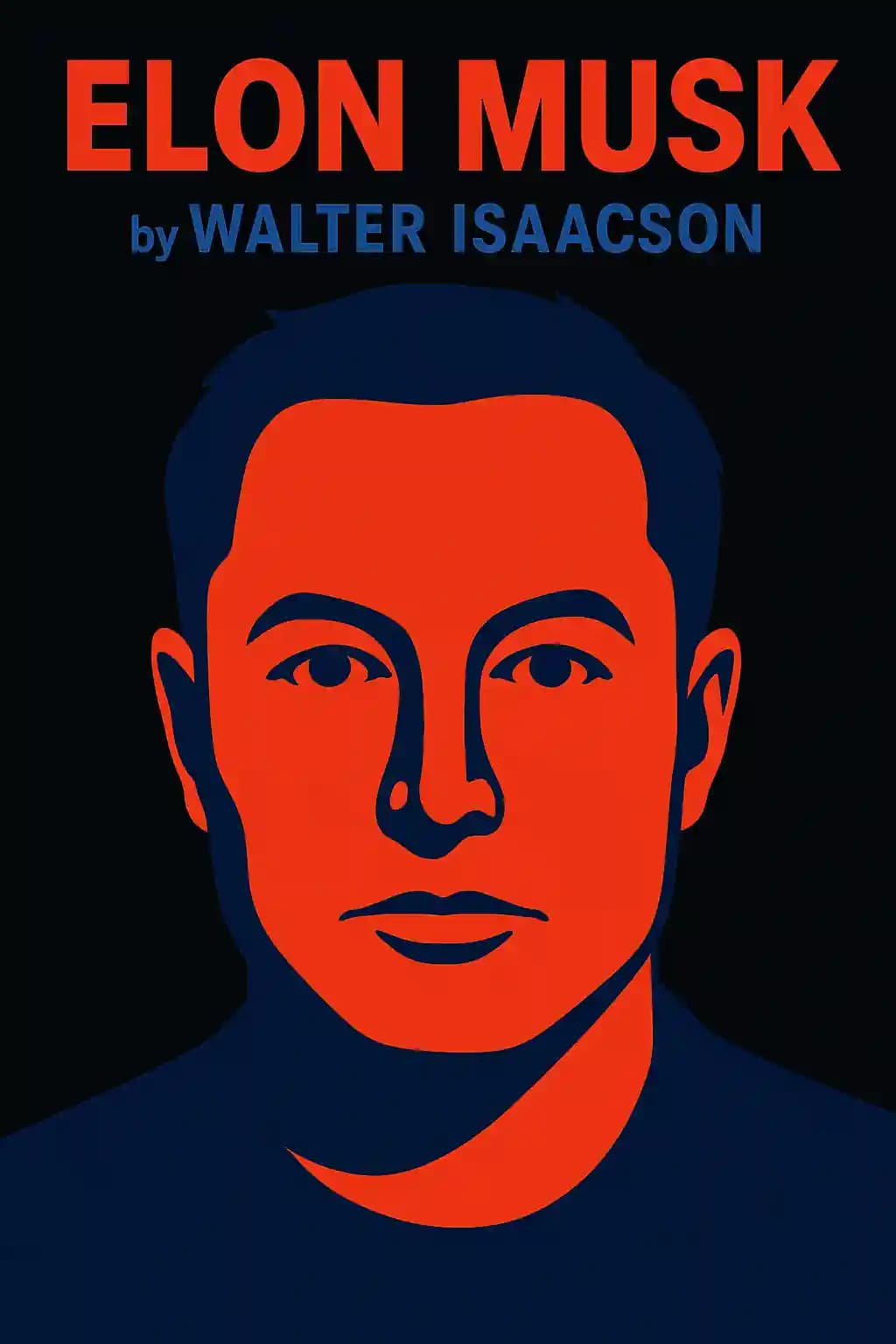
In the scorching South African sun, a twelve-year-old boy endured brutal beatings at a paramilitary veldskool where violence was not just tolerated but encouraged. This small, socially awkward child would walk through pools of blood from murder victims, witness his favorite dog being killed after it attacked him, and endure his father's emotional torture-being forced to stand for hours while being told he was worthless and pathetic. "Adversity shaped me," Elon Musk would later reflect. "My pain threshold became very high." This crucible of childhood trauma forged an emotional shutoff valve that made him simultaneously callous and fearless-traits that would propel him to become the world's richest person and most audacious innovator. As his brother Kimbal puts it, "He is a drama magnet. That's his compulsion, the theme of his life." Time magazine's 2021 Person of the Year, adored by tech enthusiasts and space dreamers worldwide, Musk has become our era's most polarizing business titan-a figure whose companies have revolutionized electric vehicles, space travel, and internet infrastructure while his controversial tweets and management style leave destruction in their wake. His biography by Walter Isaacson became an instant bestseller in 2023, with Bill Gates calling it "the most fascinating biography I've ever read" and Barack Obama including it among his favorite books of the year.
Глава 2
Forged in Fire: The Making of a Maverick
Elon Musk's origin story reads like a superhero's tragic beginning. Born in Pretoria, South Africa in 1971, he inherited adventurous genes from his maternal grandparents, Joshua and Winnifred Haldeman-known as "The Flying Haldemans" after Joshua impulsively traded his car for a plane despite not knowing how to fly. His father Errol, an engineer with a wheeler-dealer spirit, embodied both brilliance and darkness. Errol's emotional abuse would leave permanent scars on Elon's psyche, creating cyclical moods that swung between light and dark, with occasional plunges into what others called "demon mode."
From infancy, Elon was exceptional-crying constantly, eating voraciously, and rarely sleeping. His intellectual curiosity was matched by an inability to connect with peers. One teacher believed he might be "retarded" because he frequently "zoned out," staring out windows and seeming unresponsive. "Ever since I was a kid, if I start to think about something hard, then all of my sensory systems turn off," Elon explains. "I'm using my brain to compute, not for incoming information."
His parents' divorce when he was eight compounded his isolation. After initially living with his mother Maye, who struggled financially as a model and dietician, ten-year-old Elon made a fateful decision he would later regret: moving in with his father. "My dad was lonely, so lonely, and I felt I should keep him company. He used psychological wiles on me," he recalls. Four years later, Kimbal followed: "I didn't want to leave my brother alone with him."
Living with Errol exposed the boys to both opportunity and danger. Errol's home contained two encyclopedias and engineering tools that fascinated Elon, but also subjected them to his Jekyll-and-Hyde personality-jovial one moment, vicious and abusive the next. "His mood could change on a dime," Tosca recalls. "Everything could be super, then within a second he would be vicious and spewing abuse."
This unpredictable environment taught Elon to question reality itself. Errol's tendency to distort facts, present false information, and weave self-aggrandizing tales created a confusing world. "Can you imagine growing up like that?" Kimbal asks. "It was mental torture, and it infects you. You end up asking, 'What is reality?'"
Yet amid this chaos, young Elon found refuge in books, science fiction, and computers. He devoured encyclopedias, taught himself programming, and created his first video game, "Blastar," at thirteen. Douglas Adams's "The Hitchhiker's Guide to the Galaxy" helped him overcome existential depression with its subtle humor, while Isaac Asimov's robot stories introduced him to questions about artificial intelligence that would later obsess him. These early readings connected directly to his future missions-he would later tweet that "Foundation Series & Zeroth Law are fundamental to creation of SpaceX."
Глава 3
Escape Velocity: Breaking Free from South Africa
By seventeen, Elon recognized he needed to escape both his father's increasingly erratic behavior and South Africa's violence and limited opportunities. Taking initiative, he obtained Canadian passport applications for himself, his mother, brother, and sister-deliberately excluding his father. On June 11, 1989, just before his eighteenth birthday, he boarded a flight to Montreal with just $4,000-half from his father and half from his mother's old stock account.
Contrary to myths about arriving in North America with wealth from his father's emerald mine, Elon landed in Canada nearly penniless. He stayed in youth hostels, initially sleeping on his backpack out of South African caution until "I realized that not everyone was a murderer." After a week, he purchased a $100 Greyhound Discovery Pass and headed to Saskatchewan to stay with a distant cousin, working on wheat farms and construction sites.
The family eventually reunited in Toronto, where they crammed into a one-bedroom apartment with such limited funds that Maye cried over spilled milk they couldn't afford to replace. All worked multiple jobs-Tosca at a hamburger joint, Elon as a Microsoft intern, and Maye juggling university work, modeling, and diet consulting.
At Queen's University in Kingston, Ontario, Elon found his first real friend outside family-Navaid Farooq, a fellow international student who shared his interests in computer games, obscure history, and science fiction. Their late-night philosophical discussions about life's meaning provided the intellectual stimulation Elon craved. When Kimbal joined Elon at Queen's, the brothers developed a habit of cold-calling interesting people from newspapers, leading to an internship with Scotiabank's strategic planning executive Peter Nicholson.
This banking experience gave Musk "a healthy disrespect for the financial industry" that would later fuel PayPal's creation. More importantly, it confirmed his unsuitability for working under others-he struggled with deference and couldn't accept that others might know more than he did.
After transferring to the University of Pennsylvania in 1992, Musk pursued a joint degree in physics and business, explaining: "I was concerned that if I didn't study business, I would be forced to work for someone who did." Despite his social awkwardness, he found his tribe among science-minded geeks and even organized massive parties with his roommate Adeo Ressi. Though Musk enjoyed the atmosphere, he remained somewhat detached-staying sober to manage things while others got "wasted." As Ressi noted, "He enjoyed being around a party but not fully in it... I wish Elon knew how to be a little happier."
Глава 4
Silicon Valley Disruptor: Zip2, PayPal, and Early Ventures
After a summer internship in Silicon Valley researching supercapacitors and programming video games, Musk recognized the internet revolution was beginning. He had identified three areas that would "truly affect humanity: the internet, sustainable energy, and space travel." When Netscape's explosive IPO signaled the internet's potential in August 1995, Musk deferred his Stanford enrollment to "catch the internet wave."
With his brother Kimbal, Musk launched Zip2, combining business directories with interactive maps-a concept some traditional publishers dismissed. Operating from a tiny Palo Alto office where they initially slept on futons and showered at the YMCA, they subsisted on Jack in the Box meals and support from their parents. Their breakthrough came when Navteq offered free map database licensing until they became profitable. To impress potential investors, they placed a small computer in a large rack they called "The Machine That Goes Ping." Their persistence paid off when Mohr Davidow Ventures invested $3 million in 1996.
From his earliest days as a founder, Musk established himself as a relentlessly demanding manager with no tolerance for work-life balance. At Zip2, he worked through days and nights without vacations, expecting his team to match his intensity. After other engineers left for the day, Musk would often rewrite their code, publicly criticizing what he called their "fucking stupid code" without concern for hurt feelings. His relationship with Kimbal was particularly volatile, resulting in physical office fights that sometimes ended with the brothers wrestling on the floor.
In January 1999, Compaq Computer acquired Zip2 for $307 million cash, transforming Elon's bank account "from like $5,000 to $22,005,000" at age twenty-seven. Shortly after selling Zip2, Musk founded X.com with Harris Fricker, investing $12 million of his Zip2 proceeds. His revolutionary insight was that money is fundamentally just a database entry, and by creating a system where transactions could be recorded securely in real time with no clearing delays, he could build a platform that would keep money within its ecosystem.
As X.com and Confinity's PayPal competed fiercely for customers in early 2000, Musk and Peter Thiel recognized that only one would survive due to network effects. Despite Musk initially proposing outlandish merger terms (90% ownership), they eventually agreed to a near 50-50 merger with X.com as the surviving entity. After the merger, a fundamental strategic divide emerged-Musk insisted on pursuing his grander vision of X.com as a financial social network, while others wanted to focus on PayPal's success on eBay.
What distinguished Musk at PayPal was his appetite for risk. Unlike most entrepreneurs who try to mitigate risk, Musk amplified it. "He was into amplifying risk and burning the boats so we could never retreat from it," observed Roelof Botha. This made him fundamentally different from Thiel, who focused on limiting risks. In September 2000, tensions reached a breaking point when Thiel and other executives orchestrated a coup while Musk was on his honeymoon in Australia. Though Musk fought to retain control, he ultimately accepted his removal with surprising grace, telling employees he'd decided "the time has come to bring in a seasoned CEO."
Глава 5
Rocket Man: The Birth of SpaceX
After his ouster from PayPal, Musk began exploring new frontiers-both literally and figuratively. He bought a single-engine turboprop and earned his pilot's license, later upgrading to a Soviet-built military jet for acrobatic flying. These experiences fed both his daredevil nature and his understanding of aerodynamics.
During Labor Day weekend of 2001, while driving back to Manhattan with his friend Adeo Ressi, Musk mused about his interest in space. Initially dismissing it as too expensive for an individual, they calculated by the Midtown Tunnel that it might actually be possible with just metal and fuel. That evening, Musk was shocked to discover NASA had no concrete plans for Mars missions. His Google searches led him to a Mars Society dinner where he met Robert Zubrin and filmmaker James Cameron.
The thirty-year-old entrepreneur, freshly ousted from two tech startups, had made an astonishing pivot to building Mars-bound rockets. Beyond his aversion to vacations and childhood love of rockets, sci-fi, and "A Hitchhiker's Guide to the Galaxy," Musk began explaining to bemused friends his three reasons for this seemingly wild venture: First, technological progress isn't inevitable-it could stop or backslide like ancient Egypt or Rome. Second, colonizing other planets would ensure human survival if Earth faced catastrophe. Third, pursuing Mars would rekindle America's pioneer spirit. "Life cannot be merely about solving problems," he believed. "It also had to be about pursuing great dreams."
Musk relocated to Los Angeles to access aerospace engineering talent and began gathering rocket engineers for meetings. Through the Mars Society, he connected with Jim Cantrell, who had worked on U.S.-Russian missile decommissioning programs. Together they planned a trip to Russia to explore buying launch slots or rockets. When negotiations for Russian rockets collapsed after prices kept escalating, Musk's frustration led him to apply first-principles thinking, calculating what he called an "idiot index"-how much more a finished product costs than its basic materials. Finding rockets had an extremely high idiot index, he began spreadsheet calculations on the flight home, shocking his companions by concluding, "I think we can build this rocket ourselves."
In May 2002, he incorporated Space Exploration Technologies (later SpaceX), aiming to launch by September 2003 and reach Mars by 2010-continuing his tradition of wildly optimistic timelines. His strategy focused on smaller, less expensive rockets for launching microsatellites, with the key metric being cost-per-pound to orbit.
Глава 6
Manufacturing Revolution: Tesla's Disruptive Journey
The origins of Tesla Motors emerged from the convergence of several innovators passionate about electric vehicles. JB Straubel, who had converted an old Porsche to electric power using lead-acid batteries, became obsessed with using lithium-ion batteries for electric vehicles. When he met Musk at a Stanford seminar in October 2003, Straubel pitched his electric vehicle idea, and Musk immediately committed $10,000 in funding.
Meanwhile, Martin Eberhard, a Silicon Valley entrepreneur who had created the Rocket eBook, had been methodically calculating the energy efficiency of different vehicles and discovered electric cars were best for the environment. After seeing AC Propulsion's tzero prototype, he enlisted his friend Marc Tarpenning to start Tesla Motors in July 2003.
When AC Propulsion's Tom Gage couldn't convince Musk to invest, he connected Musk with Eberhard. Their initial meeting stretched from thirty minutes to two hours as they shared visions for a supercharged electric car. Musk agreed to lead the initial financing with $6.4 million and become board chair. He insisted that Eberhard connect with Straubel, bringing together all the key players.
Despite Musk's eventual insistence on vertical integration-making key components in-house rather than relying on suppliers-Tesla initially took the opposite approach. Eberhard and Tarpenning decided to cobble together their first car from outsourced components, following the industry trend away from in-house production. They arranged for Lotus to supply modified Elise roadster bodies and AC Propulsion to provide electric engines and powertrains.
As Musk became more involved with Tesla, he couldn't resist making significant design changes to the Roadster. Against Eberhard's resistance, he insisted on enlarging the door opening by three inches (adding $2 million in costs), widening the seats, redesigning the headlights (another $500,000), and using carbon fiber instead of fiberglass for the body. He demanded electric touch door handles rather than standard latches and obsessed over aesthetic details, insisting "we only get to release our first car once." While these changes made the car more beautiful and distinctive, they burned through cash and complicated the supply chain.
Both Eberhard and Musk considered themselves the main founder of Tesla, creating an inherently unstable leadership dynamic. Eberhard believed he was the founder since he conceived the idea, registered the company, chose the name, and found funders. Musk countered that he connected Eberhard with Straubel and provided the essential funding to start the company when they had "no intellectual property, no employees, nothing." This tension would eventually lead to Eberhard's ouster in 2007 when Musk discovered the Roadster's target cost had ballooned from $50,000 to over $110,000 per car.
Глава 7
Trial by Fire: SpaceX's Path to Orbit
SpaceX's move to the remote Kwajalein Atoll (Kwaj) in the Marshall Islands came after frustrating delays at Vandenberg Air Force Base, where bureaucratic rules clashed with Musk's question-everything culture. The scrappy team developed creative money-saving solutions and overcame incredible logistical challenges, like when engineer Bulent Altan traveled around the world in 40 sleepless hours to fix faulty capacitors before their launch window closed.
On March 24, 2006, the day of SpaceX's first launch attempt, Elon and Kimbal Musk began with a stress-relieving bike ride at sunrise before Elon headed to the control center. As the countdown approached, Musk characteristically retreated into future planning, interrogating his bewildered launch conductor about materials for the not-yet-built Falcon 5 rocket. Only when the Falcon 1 lifted off did Musk focus on the present moment, but the celebration was brief. Twenty-five seconds into flight, engineers spotted a fire and loss of thrust. The rocket fell back toward Earth, crashing into the ocean.
After the first launch failure, SpaceX became methodical, testing and documenting each rocket component while balancing caution with Musk's calculated risk-taking. In March 2007, the second launch initially appeared successful, with the rocket reaching space. For five celebratory minutes, champagne flowed at SpaceX headquarters-until they noticed the second stage wobbling on video. The fuel sloshing had caused the rocket to spin out of control, and the payload crashed back to Earth from 180 miles up.
The third launch attempt in August 2008 carried high stakes-a valuable Air Force satellite, two NASA satellites, and even the cremated remains of James Doohan (Star Trek's "Scotty"). With Musk believing this was their final chance ("if we couldn't do it in three, we deserved to die"), the initial liftoff went perfectly. But triumph turned to horror when, one second after separation, the booster spurted upward and collided with the second stage.
Despite this third consecutive failure-amid his divorce and Tesla's financial crisis-Musk refused to surrender. "SpaceX will not skip a beat," he announced hours later. "There should be absolutely zero question that SpaceX will prevail in reaching orbit. I will never give up, and I mean never." The next day, rather than seeking scapegoats, Musk stunned his team by ordering them to build a fourth rocket from components in the factory and launch within six weeks.
On September 28, 2008, SpaceX's fourth launch represented the company's last chance-failure would mean the end of both SpaceX and likely Tesla. When the rocket successfully reached orbit, Musk finally let out a whoop of joy. The Falcon 1 had made history as the first privately built rocket to reach orbit from the ground, designed and constructed almost entirely in-house by just 500 employees. As author Ashlee Vance wrote, "Like Roger Bannister besting the four-minute mile, SpaceX made people recalibrate their sense of limitation when it came to getting to space."
Глава 8
Crisis and Triumph: Tesla's Manufacturing Hell
In February 2008, Tesla celebrated the delivery of its first production Roadster, codenamed "P1," with Musk taking a victory lap around Palo Alto. But this milestone masked severe challenges-the global economy was sliding into recession, Tesla's supply chain was unwieldy, and the company was rapidly running out of money, all while SpaceX had yet to achieve orbit. "Even though I now had a Roadster," Musk recalls, "it was the beginning of the most painful year of my life."
By fall 2008, he was desperately seeking funds from friends and family to meet payroll. Kimbal sold his last $375,000 in Apple stock despite warnings from his banker. Google's Sergey Brin invested $500,000, eBay's first president Jeff Skoll provided personal loans, and even Tesla employees contributed. The stress manifested physically-his partner Talulah witnessed night terrors, vomiting episodes, and dramatic weight fluctuations. "I was working every day, all day and night, in a situation that required me to pull a rabbit out of the hat, now do it again, now do it again," Musk says.
Despite persistent criticism that Tesla was "bailed out" or "subsidized" by the government in 2009, the company never received money from the Treasury Department's Troubled Asset Relief Program that provided $18.4 billion to General Motors and Chrysler during their bankruptcy restructurings. What Tesla did receive was $465 million in interest-bearing loans from the Department of Energy's Advanced Technology Vehicles Manufacturing Loan Program in June 2009, which they repaid with $12 million interest three years later.
A more crucial lifeline came from Daimler. After flying to Stuttgart in October 2008, Musk's team scrambled to create an electric Smart car prototype by retrofitting one with a Roadster motor and battery pack. When grumpy Daimler executives visited in January 2009, they were blown away by the high-performance prototype that "hauled ass" and could "do wheelies." This led to a contract for Tesla to provide battery packs and powertrains for Smart cars, and crucially, a $50 million equity investment from Daimler in May 2009. "If Daimler had not invested in Tesla at that time we would have died," Musk admits.
The Christmas 2008 financing, Daimler investment, and government loan allowed Musk to proceed with the Model S-a mainstream four-door sedan priced around $60,000 that would transform Tesla into a real automotive company. Franz von Holzhausen, a Euro-cool designer from Connecticut with experience at Volkswagen, GM and Mazda, joined Tesla during the brutal summer of 2008. After seeing Fisker's Model S designs at the Santa Monica showroom opening, von Holzhausen boldly declared, "That is really no good. I can make you something great." Musk hired him on the spot, beginning what would become one of his few calm, nondramatic professional relationships.
Глава 9
The Future Factory: Revolutionizing Manufacturing
While American companies were aggressively offshoring manufacturing in the early 2000s-the U.S. lost one-third of its manufacturing jobs between 2000 and 2010-Musk bucked this trend with Tesla. He believed controlling the manufacturing process was crucial and that designing "the machine that builds the machine" was as important as designing the car itself. This design-manufacturing feedback loop gave Tesla a competitive advantage. Unlike Steve Jobs who outsourced manufacturing, Musk spent more time walking assembly lines than design studios, applying his obsessive focus to the factory floor.
In May 2010, Musk acquired Toyota's mothballed Fremont factory for just $42 million (originally worth $1 billion), with Toyota also investing $50 million in Tesla. He redesigned the factory placing engineers' cubicles right beside assembly lines so they would immediately see and hear whenever their designs caused problems. A month later, Tesla went public-the first American carmaker IPO since Ford's in 1956-raising $266 million. At the celebration, Musk made a characteristically pithy toast: "Fuck oil."
When the first Model S cars rolled off the Fremont assembly line in June 2012, hundreds celebrated, including California governor Jerry Brown. But when Musk received his own Model S, he declared it "sucked," criticizing panel gaps and paint quality. He fired three production quality chiefs in succession and assigned his chief designer Franz von Holzhausen to move to Fremont for a year to fix quality issues. The validation came when Motor Trend named the Model S its 2012 Car of the Year, the first electric vehicle to win, praising it as "proof positive that America can still make (great) things."
In 2013, Musk proposed building a battery factory with output greater than all other battery factories in the world combined-what JB Straubel called a "science fiction crazy" idea. Despite having "no clue how to build a battery factory," Musk and Straubel pursued a partnership with Panasonic, where Panasonic would make cells and Tesla would assemble battery packs in a 10-million-square-foot, $5 billion facility. When Panasonic hesitated, Musk staged a charade-setting up lights and bulldozers at a Nevada site and inviting Panasonic executives to watch, signaling Tesla would proceed with or without them. The gambit worked, leading to a meeting in Japan where Musk convinced Panasonic's president Kazuhiro Tsuga to become a 40% partner.
The summer of 2017 through fall of 2018 became what Musk calls "the time of most concentrated pain I've ever had-eighteen months of unrelenting insanity." When the Model 3 began production in July 2017, Musk warned about tough times ahead: "Frankly we're going to be in production hell," he said, giggling maniacally. "Welcome! Welcome! Welcome to production hell! That's where we are going to be for at least six months."
From the production hell experiences at Nevada and Fremont emerged what Musk calls "the algorithm"-five commandments he would repeat "to an annoying degree" at production meetings: 1) Question every requirement and who made it; 2) Delete any unnecessary part or process; 3) Simplify and optimize only after deletion; 4) Accelerate cycle time; 5) Automate last, not first.
Глава 10
The Twitter Saga: Buying the Digital Town Square
In April 2022, Musk was at a pinnacle of success. Tesla sales had grown 71% in the previous year without any advertising, with stock value fifteen times higher than five years prior-worth more than the next nine auto companies combined. SpaceX had launched twice as much mass into orbit as all other companies and countries combined in the first quarter. His companies were valued at staggering amounts: Tesla at $1 trillion, SpaceX at $100 billion, The Boring Company at $5.6 billion, and Neuralink at $1 billion.
Yet despite this unprecedented success, Musk was restless. As Shivon Zilis observed, "It was like he was winning the simulation and now felt at a loss for what to do." Musk acknowledged this trait: "I guess I've always wanted to push my chips back on the table or play the next level of the game. I'm not good at sitting back." Rather than manufacturing a crisis within one of his companies as he typically did during periods of calm, Musk made an impulsive decision that would create an entirely new drama: buying Twitter.
Twitter was the perfect playground for Musk-rewarding impulsivity, irreverence, and unfiltered commentary. He had first used Twitter in 2006 but abandoned it, finding tweets about "what kind of latte somebody had at Starbucks" boring. His friend Bill Lee convinced him to return in 2011 for unfiltered public communication. By 2022, Musk had grown increasingly concerned with what he called the "woke-mind virus" and Twitter's content moderation policies. Though he disdained Trump, he believed permanently banning a former president was absurd.
In January 2022, Musk began secretly buying Twitter shares. After accepting and then rejecting a board seat, he shocked the business world on April 14 by offering to buy Twitter outright for $54.20 per share-a $44 billion valuation. His rationale went beyond business strategy. He believed it could be part of his mission of "preserving civilization" by ensuring free speech and purging what he saw as Twitter's woke culture. For democracy to survive, he felt it was crucial to create an open space for all opinions. But there were also more personal motivations: Twitter was fun, like an amusement park of political smackdowns and intellectual gladiator matches. And psychologically, it represented the ultimate playground-a place where, unlike his painful childhood experiences of being bullied, he could now own the terrain and control the rules.
By June 2022, Musk was wavering on the Twitter acquisition. He brought in Bob Swan to model financial options, but when Swan presented a somewhat positive assessment, Musk challenged him angrily. When Twitter resisted providing usable data about fake accounts, Musk attempted to withdraw from the merger. Twitter sued him in Delaware's chancery court, with a trial set for October. By late September, his lawyers convinced him he would lose in court, and Musk agreed to the original terms of $54.20 per share.
On October 27, 2022, Musk completed the Twitter purchase with a dramatic flourish-entering headquarters carrying a sink ("let that sink in!"). He immediately fired CEO Parag Agrawal, CFO Ned Segal, legal head Vijaya Gadde, and general counsel Sean Edgett. The timing was deliberate-Agrawal had his resignation letter ready but couldn't send it through his now-disabled Twitter email.
The collision was between two radically different workplace philosophies: Twitter prided itself on being a high-empathy environment where "psychological safety" was paramount, with permanent work-from-home options and monthly mental "days of rest." Musk, who laughed bitterly at the concept of "psychological safety," preferred "hardcore" urgency and considered discomfort a weapon against complacency. Within weeks, he had slashed Twitter's workforce from 8,000 to just over 2,000-a 75% reduction representing a complete cultural transformation from one of tech's most nurturing workplaces to an environment of "psychological danger."
Глава 11
Multiplanetary Dreams: The Starship Vision
Despite SpaceX's success with the Falcon 9, Musk remained focused on his ultimate goal: getting humanity to Mars. In September 2017, he announced the development of BFR (later renamed Starship), the tallest and most powerful rocket ever built. At 390 feet high-50% taller than Falcon 9 and exceeding the Saturn V-Starship would carry over 100 tons to orbit with its thirty-three engines, four times Falcon 9's capacity.
In late 2018, Musk and engineer Bill Riley discovered that carbon fiber was causing production problems for Starship. "If we keep going with carbon fiber, we're doomed," Musk declared. Drawing inspiration from early Atlas rockets and his Cybertruck design, Musk proposed switching to stainless steel despite initial resistance from his team. When they "ran the numbers," they found steel could actually be lighter in the conditions Starship would face: its strength increases 50% at cold temperatures, its high melting point eliminated the need for heat shields on one side, and it could be welded together simply-even outdoors.
In 2018, Musk transformed SpaceX's dormant Boca Chica, Texas site into the dedicated manufacturing facility for Starship. When progress seemed slow, Musk would issue seemingly impossible challenges-like "build a dome by dawn"-and stay up with teams until completion. He purchased most homes in a nearby tract development and chose a humble two-bedroom house for himself, with white walls, wooden floors, and posters of sci-fi magazine covers.
"My stomach is twisted in knots," Musk confessed to Mark Juncosa before the experimental Starship launch in April 2023. "It always happens before a big launch. I have PTSD from the failures on Kwaj." After an aborted first countdown, the launch was rescheduled for April 20-a date that amused Musk as "fated" (referencing the 420 meme). On launch day, Musk arrived at 4:30 a.m. after just three hours of sleep. Despite sensor issues, he deemed the risk acceptable. At ignition, the rocket's thirty-three Raptors fired, lifting slowly. "Holy shit, it's going up!" Musk shouted, running outside to witness the ascent. But the rocket began wobbling-four engines had failed-and protocols required detonating it over water three minutes into flight.
The Starship explosion perfectly symbolized Musk himself-his compulsion to aim high, take wild risks, accomplish amazing things, yet leave smoldering debris in his wake. His friends urged him to restrain his impetuous instincts, recalling how Antonio Gracias once locked Musk's phone in a hotel safe overnight (Musk summoned security at 3 a.m. to retrieve it). "I've shot myself in the foot so often I ought to buy some Kevlar boots," Musk joked. Yet the question remains whether a restrained Musk could accomplish as much as Musk unbound-whether being untethered is integral to his success, despite the collateral damage.