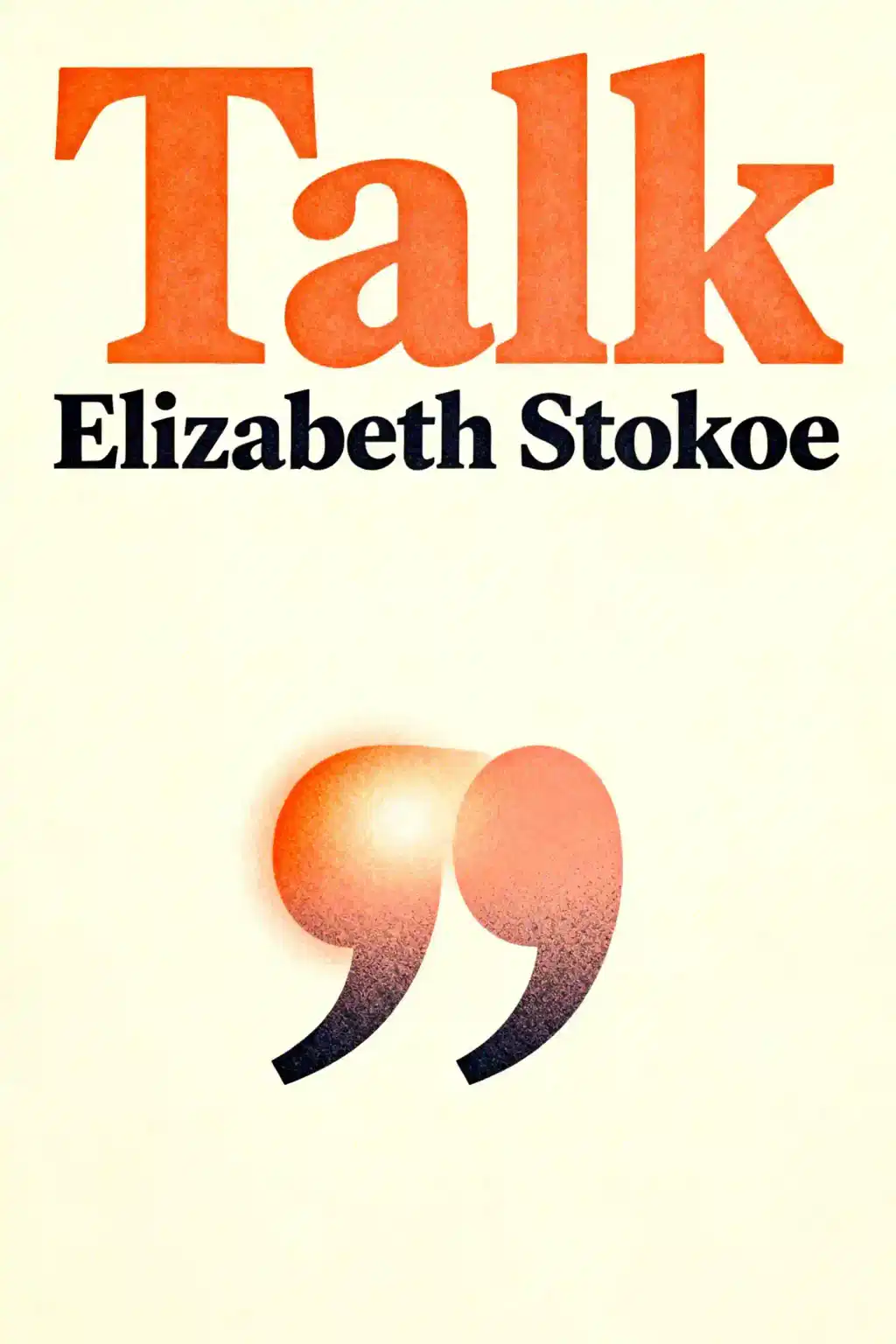
Talk by Elizabeth Stokoe Summary

Overview of Talk
Discover the hidden science behind every "hello" with Professor Elizabeth Stokoe's groundbreaking research on conversation. Featured at TEDx and adopted by businesses worldwide, "Talk" reveals the surprising patterns that shape our daily interactions - and why your word choice might matter more than you ever imagined.
- How small talk’s opening seconds structurally shape relationships and outcomes
- Why “Can we talk?” unconsciously escalates conflict before dialogue begins
- Crisis negotiation succeeds through scripted turn-taking patterns, not psychological profiling
- CARM method proves conversation repair requires specific phrases, not rapport-building
- First-mover effect: How loaded questions derail conversations within 0.5 seconds
- Why 93% of communication isn’t nonverbal – and why this myth persists
- Medical misdiagnosis patterns traceable to doctors’ question formulation errors
- “That’s rude” backfires: Science-backed alternatives to confrontational language
- Dating app success hinges on message sequencing, not profile optimization
- How businesses waste $4.2B annually on ineffective scripted greetings
- Political polarization reversals start with turn-taking rhythm adjustments
- Sales conversion doubles when replacing “Can I help?” with evidence-based opener
About the Author of Talk
Elizabeth Stokoe is a British social scientist, professor, and leading expert in conversation analysis, renowned for her groundbreaking work decoding the hidden patterns of everyday interaction. Her book Talk: The Science of Conversation distills decades of research into how communication shapes outcomes in settings ranging from crisis negotiations to healthcare and dating.
A professor at Loughborough University and industry fellow at Typeform, Stokoe has analyzed over 20,000 real-world conversations, developing the influential "Conversation Analytic Roleplay Method" now used by organizations like the Metropolitan Police.
Her TEDx talk on conversation mechanics went viral, and she’s featured on BBC Radio 4’s The Life Scientific and the Royal Institution’s prestigious lecture series. Co-author of academic works like Discourse and Identity and Crisis Talk, Stokoe bridges academia and practical application.
Her research has been cited in over 150 publications and informs training programs worldwide. Talk has become essential reading across psychology, linguistics, and professional communication disciplines.
FAQs About Talk
What is Talk: The Science of Conversation about?
Elizabeth Stokoe's Talk decodes human interaction using 20+ years of conversation analysis research. It reveals how turn-taking mechanics, filler words like "uh," and strategic phrasing shape outcomes in dating, negotiations, healthcare, and more. The book debunks myths (like overvaluing body language) while offering evidence-based methods to improve communication.
Who should read Talk: The Science of Conversation?
Professionals in sales, mediation, healthcare, or education seeking to optimize dialogues, plus anyone interested in social psychology. Stokoe’s findings help negotiators, therapists, and customer service teams refine interactions using real conversation recordings rather than scripted role-plays.
Is Talk: The Science of Conversation worth reading?
Yes – it replaces vague communication advice with data-driven insights. Readers gain actionable frameworks like using "some" instead of "any" to encourage positive responses, and learn why pauses matter more than body language in conversations.
How does Talk challenge assumptions about body language?
Stokoe argues body language is overrated – only 3% of meaning comes from nonverbal cues in structured interactions. Conversation analysis shows pauses, filler words ("um"), and turn-taking patterns better predict outcomes.
What are the key conversation techniques in Talk?
Three proven methods:
- "Some" framing: Asking "Is there some issue?" yields 78% more disclosures than "any".
- Strategic silence: Leaving 200ms gaps between turns improves mutual understanding.
- Offer sequences: Phrasing requests as collaborative opportunities ("Could we...?") increases acceptance.
Does Talk address cultural differences in communication?
Stokoe’s research shows surprising universality: turns average 2 seconds globally, with 200ms gaps between speakers. While languages differ, the "interactional imperative" to take turns persists across cultures – even in hearing-impaired individuals using adaptive cues.
How does Talk help in professional settings?
The book provides sector-specific fixes:
- Healthcare: Doctors using "What else?" get 40% fewer patient concerns than those asking "Is there some other issue?".
- Sales: Successful pitches use "collaborative projection" ("Could we explore...") over demands.
What criticism exists about Talk?
Some note its focus on micro-interactions over broader social context. While Stokoe’s methods work in structured dialogues (customer service, mediation), critics argue casual conversations may require more holistic analysis.
How does Talk compare to Crucial Conversations?
While both address conflict resolution, Talk focuses on linguistic patterns rather than emotional regulation. Stokoe uses empirical conversation recordings, whereas Crucial Conversations employs anecdotal frameworks.
Can Talk improve personal relationships?
Yes – examples show how adjusting question phrasing reduces conflicts. Partners using "I noticed..." instead of accusatory "You..." statements achieve 62% more productive dialogues in Stokoe’s datasets.
What research methodology does Stokoe use?
Conversation analysis – examining real recordings (therapy sessions, sales calls) rather than experiments. This reveals how people actually talk versus self-reported behavior.
Why does Talk criticize role-play training?
Stokoe proves scripted role-plays teach unrealistic responses. Real crisis negotiators succeed by adapting to unpredictable turns, not memorized lines – a finding replicated across 12 studies.
Feel the book through the author's voice
Turn knowledge into engaging, example-rich insights
Capture key ideas in a flash for fast learning
Enjoy the book in a fun and engaging way
Key Themes in Talk
Quotes from Talk
Talk isn't the chaotic mess it might appear to be.
Even microseconds of timing can carry significant meaning.
Despite popular psychology...our behavior is profoundly shaped by the mechanics of conversation itself.
Many common beliefs about talk are simply wrong.
Silence speaks volumes.
Characters in Talk
Quick Summary Mode - Read or listen to Talk Summary in 9 Minutes

Break down key ideas from Talk into bite-sized takeaways to understand how innovative teams create, collaborate, and grow.

Flash Card Mode - Top 10 Insights from Talk in a Nutshell

Distill Talk into rapid-fire memory cues that highlight key principles of candor, teamwork, and creative resilience.

Fun Mode - Talk Lessons Told Through 22-Min Stories

Experience Talk through vivid storytelling that turns innovation lessons into moments you'll remember and apply.
Personalize Mode - Read or listen to Talk Summary in 0 Minutes

Ask anything, pick the voice, and co-create insights that truly resonate with you.

From Columbia University alumni built in San Francisco
"Instead of endless scrolling, I just hit play on BeFreed. It saves me so much time."


"I never knew where to start with nonfiction—BeFreed’s book lists turned into podcasts gave me a clear path."


"Perfect balance between learning and entertainment. Finished ‘Thinking, Fast and Slow’ on my commute this week."
"Crazy how much I learned while walking the dog. BeFreed = small habits → big gains."
"Reading used to feel like a chore. Now it’s just part of my lifestyle."

"Feels effortless compared to reading. I’ve finished 6 books this month already."
"BeFreed turned my guilty doomscrolling into something that feels productive and inspiring."

"BeFreed turned my commute into learning time. 20-min podcasts are perfect for finishing books I never had time for."
"BeFreed replaced my podcast queue. Imagine Spotify for books — that’s it. 🙌"

"It is great for me to learn something from the book without reading it."
"The themed book list podcasts help me connect ideas across authors—like a guided audio journey."
"Makes me feel smarter every time before going to work"
From Columbia University alumni built in San Francisco
"Instead of endless scrolling, I just hit play on BeFreed. It saves me so much time."
"I never knew where to start with nonfiction—BeFreed’s book lists turned into podcasts gave me a clear path."
"Perfect balance between learning and entertainment. Finished ‘Thinking, Fast and Slow’ on my commute this week."
"Crazy how much I learned while walking the dog. BeFreed = small habits → big gains."
"Reading used to feel like a chore. Now it’s just part of my lifestyle."
"Feels effortless compared to reading. I’ve finished 6 books this month already."
"BeFreed turned my guilty doomscrolling into something that feels productive and inspiring."
"BeFreed turned my commute into learning time. 20-min podcasts are perfect for finishing books I never had time for."
"BeFreed replaced my podcast queue. Imagine Spotify for books — that’s it. 🙌"
"It is great for me to learn something from the book without reading it."
"The themed book list podcasts help me connect ideas across authors—like a guided audio journey."
"Makes me feel smarter every time before going to work"
"Instead of endless scrolling, I just hit play on BeFreed. It saves me so much time."
"I never knew where to start with nonfiction—BeFreed’s book lists turned into podcasts gave me a clear path."
"Perfect balance between learning and entertainment. Finished ‘Thinking, Fast and Slow’ on my commute this week."
"Crazy how much I learned while walking the dog. BeFreed = small habits → big gains."
"Reading used to feel like a chore. Now it’s just part of my lifestyle."
"Feels effortless compared to reading. I’ve finished 6 books this month already."
"BeFreed turned my guilty doomscrolling into something that feels productive and inspiring."
"BeFreed turned my commute into learning time. 20-min podcasts are perfect for finishing books I never had time for."
"BeFreed replaced my podcast queue. Imagine Spotify for books — that’s it. 🙌"
"It is great for me to learn something from the book without reading it."
"The themed book list podcasts help me connect ideas across authors—like a guided audio journey."
"Makes me feel smarter every time before going to work"
"Instead of endless scrolling, I just hit play on BeFreed. It saves me so much time."
"I never knew where to start with nonfiction—BeFreed’s book lists turned into podcasts gave me a clear path."
"Perfect balance between learning and entertainment. Finished ‘Thinking, Fast and Slow’ on my commute this week."
"Crazy how much I learned while walking the dog. BeFreed = small habits → big gains."
"Reading used to feel like a chore. Now it’s just part of my lifestyle."
"Feels effortless compared to reading. I’ve finished 6 books this month already."
"BeFreed turned my guilty doomscrolling into something that feels productive and inspiring."
"BeFreed turned my commute into learning time. 20-min podcasts are perfect for finishing books I never had time for."
"BeFreed replaced my podcast queue. Imagine Spotify for books — that’s it. 🙌"
"It is great for me to learn something from the book without reading it."
"The themed book list podcasts help me connect ideas across authors—like a guided audio journey."
"Makes me feel smarter every time before going to work"

Get the Talk summary as a free PDF or EPUB. Print it or read offline anytime.