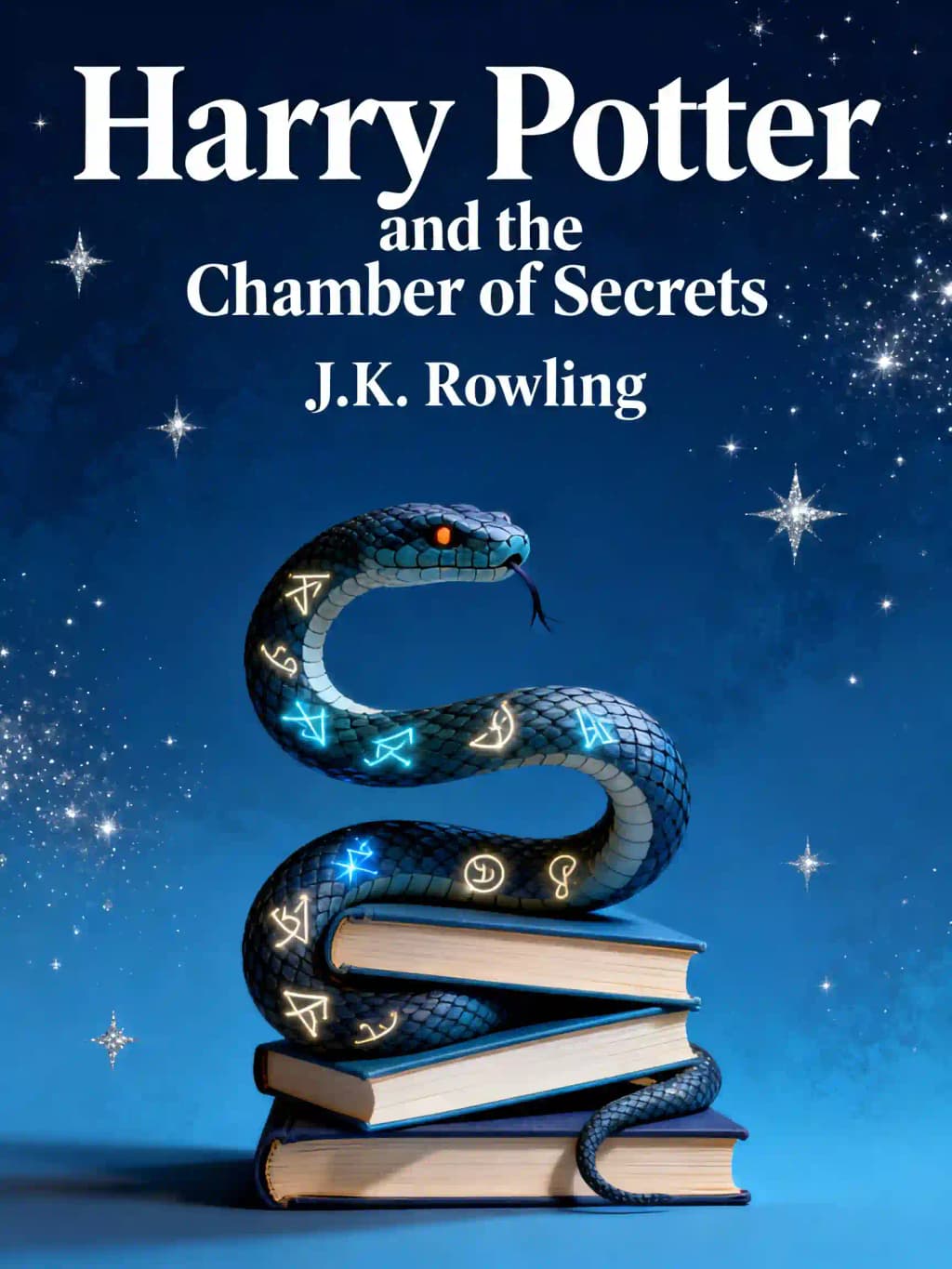
Harry Potter and the Chamber of Secrets
Overview of Harry Potter and the Chamber of Secrets
When Hogwarts' Chamber of Secrets reopens, Harry faces deadly mysteries and possessed diaries. The second installment that transformed reluctant readers worldwide - praised by Stephen King and translated into 80+ languages. What dark secrets will you uncover in Rowling's spellbinding adventure?

Key Themes in Harry Potter and the Chamber of Secrets
- blood purity prejudice
- economic class disparity
- institutional corruption
- unwanted celebrity
- domestic servitude
Quotes from Harry Potter and the Chamber of Secrets
Help will always be given at Hogwarts to those who ask for it.
There is no need to call me 'sir,' Professor.
Books! And cleverness! There are more important things -- friendship and bravery.
Fear of a name increases fear of the thing itself.
Characters in Harry Potter and the Chamber of Secrets
- Harry PotterThe protagonist and a young wizard
- Ron WeasleyHarry's best friend from a magical family
- DobbyA house-elf who warns Harry of danger
- Gilderoy LockhartA flamboyant celebrity wizard and new teacher
- Draco MalfoyHarry's school rival from a wealthy family
About the Author
About the Author of Harry Potter and the Chamber of Secrets
J.K. Rowling (Joanne Rowling), the bestselling author of Harry Potter and the Chamber of Secrets, is a renowned British author celebrated for revolutionizing the fantasy genre.
Best known for her seven-book Harry Potter series, Rowling crafts richly imagined worlds exploring themes of courage, identity, and the resilience of good against evil. Her background as a former researcher for Amnesty International and early experiences with financial hardship deeply inform her narratives’ emphasis on empathy and social justice.
Beyond the Harry Potter universe, Rowling writes the Cormoran Strike crime series under the pseudonym Robert Galbraith, showcasing her versatility across genres. A dedicated philanthropist, she founded the international children’s charity Lumos.
The Harry Potter series has sold over 600 million copies worldwide, been translated into 84 languages, and inspired a global media franchise, solidifying its place as a cultural phenomenon. Explore Rowling’s other works, including Harry Potter and the Philosopher’s Stone and Harry Potter and the Prisoner of Azkaban, for more magical adventures.
Download Summary of Harry Potter and the Chamber of Secrets
Get the Harry Potter and the Chamber of Secrets summary as a free PDF or EPUB. Print it or read offline anytime.
FAQs About This Book
Harry Potter and the Chamber of Secrets follows Harry’s second year at Hogwarts, where a hidden chamber unleashes a deadly basilisk targeting Muggle-born students. With friends Ron and Hermione, Harry uncovers the truth about Tom Riddle’s enchanted diary, confronts the Heir of Slytherin, and battles the monster to save Ginny Weasley. Themes of loyalty, prejudice, and identity are woven into this magical mystery.
This book is ideal for young adult and fantasy readers who enjoy rich world-building, coming-of-age adventures, and stories about overcoming discrimination. Fans of J.K. Rowling’s storytelling will appreciate its darker tone compared to the first book, while newcomers gain insight into wizarding society’s biases and Harry’s evolving heroism.
Yes—it’s a critical entry in the Harry Potter series, expanding the lore with pivotal characters like Dobby and introducing key concepts like Horcruxes. With its blend of suspense, humor, and moral complexity, it remains a standout in YA fantasy and a must-read for understanding Harry’s journey.
The diary represents manipulation and the dangers of unchecked ambition. As a Horcrux, it embodies Voldemort’s fragmented soul, corrupting Ginny Weasley to reopen the Chamber of Secrets. Its destruction by Harry with a basilisk fang foreshadows the series’ broader battle against dark magic.
The Chamber’s legend reflects Salazar Slytherin’s bias against Muggle-born witches and wizards. Attacks on students like Hermione Granger and Justin Finch-Fletchley critique real-world bigotry, while Harry’s defiance of pure-blood ideology reinforces themes of equality.
Dobby symbolizes resistance against oppression. His attempts to protect Harry—despite enslavement to the Malfoys—highlight loyalty and sacrifice. Harry’s trick to free him with a sock underscores the series’ focus on dignity and justice.
Lockhart satirizes vanity and fraudulence. As a fraud who steals others’ achievements, his memory-erasing spell backfiring exposes the consequences of deceit. His incompetence contrasts with genuine heroes like Harry and Dumbledore.
This quote emphasizes personal agency over destiny. It reinforces Harry’s decision to reject Tom Riddle’s legacy and aligns with the series’ broader message that courage and kindness define character more than heritage.
While Philosopher’s Stone introduces Hogwarts, Chamber of Secrets delves deeper into systemic prejudice and Voldemort’s backstory. The tone is darker, with higher stakes and moral ambiguity, marking Harry’s transition from wonder to proactive heroism.
Some critics argue the plot follows a similar structure to the first book, with cyclical “mystery-solving” pacing. Others note its darker themes may feel intense for younger readers, though these elements enrich the series’ overarching narrative.
The film adaptation (2002) popularized iconic scenes like the flying car and basilisk battle. The diary Horcrux concept became pivotal in later books, and Dobby’s character spurred fan advocacy for house-elf rights, cementing the book’s cultural legacy.
Moaning Myrtle’s backstory as the basilisk’s first victim ties directly to the Chamber’s entrance. Harry’s Parseltongue ability, introduced here, becomes crucial in later conflicts. Subtle hints about Ginny’s vulnerability also foreshadow her role in the series.