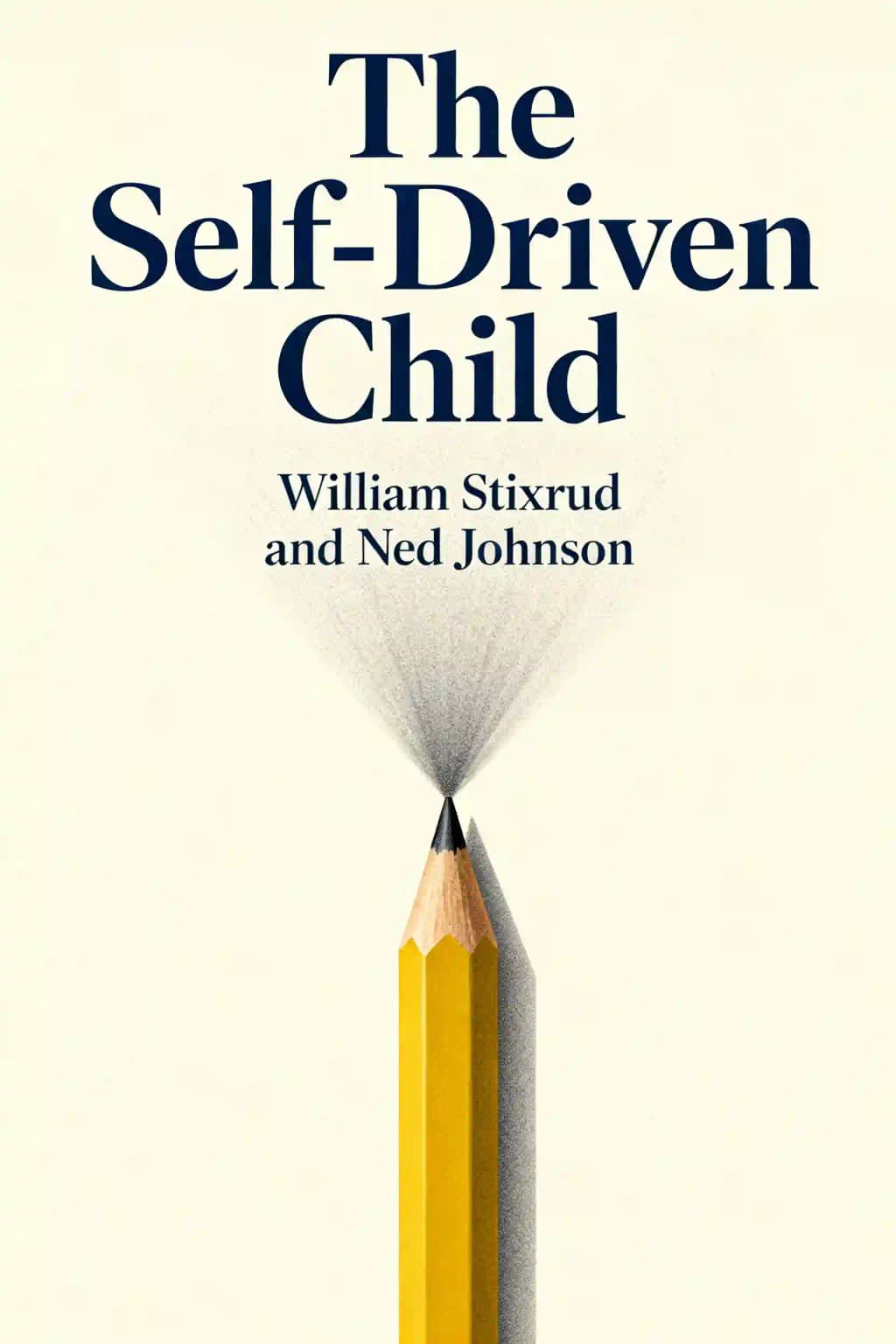
The Self-Driven Child
The Science and Sense of Giving Your Kids More Control Over Their Lives
Overview of The Self-Driven Child
Discover why neuropsychologists call autonomy the secret weapon for raising resilient kids. Endorsed by bestselling author Paul Tough, this revolutionary guide shows how stepping back actually propels children forward. NPR agrees: stop micromanaging and watch your child thrive.

Key Themes in The Self-Driven Child
- internal locus of control
- stress response management
- consultant parenting model
- childhood autonomy
- executive function development
Quotes from The Self-Driven Child
If nothing helps, why try?
Unlike highly heritable conditions like autism, anxiety and depression are significantly influenced by experience.
When parents expend ninety-five units of energy trying to make homework happen, children respond with just five units.
The fighting ultimately proved pointless, while the lost connection remained irreplaceable.
Characters in The Self-Driven Child
- William StixrudAuthor and neuropsychologist
- Ned JohnsonAuthor and test-prep expert
- ZaraCase study of a teen facing academic stress
- JonahCase study of a teen struggling with autonomy
About the Author
About the Author of The Self-Driven Child
William Stixrud, Ph.D., a clinical neuropsychologist, and Ned Johnson, founder of PrepMatters tutoring service, are the bestselling co-authors of The Self-Driven Child: The Science and Sense of Giving Your Kids More Control Over Their Lives.
Their parenting and psychology book merges four decades of clinical expertise with insights from 50,000+ hours of tutoring teens, addressing themes like fostering autonomy, reducing anxiety, and building intrinsic motivation in children. Stixrud is a faculty member at Children’s National Medical Center and George Washington University School of Medicine, combining neuroscience with practical strategies, while Johnson’s work on stress management and learning has been featured in The New York Times, NPR, and The Wall Street Journal.
Their follow-up books—What Do You Say? and the forthcoming The Seven Principles of Raising a Self-Driven Child (2025)—expand on communication frameworks and evidence-based parenting. Praised in China via a 39-million-view podcast adaptation, The Self-Driven Child has sold nearly one million copies worldwide and been translated into 19 languages, cementing its status as a modern guide for raising resilient, self-motivated kids.
Download Summary of The Self-Driven Child
Get the The Self-Driven Child summary as a free PDF or EPUB. Print it or read offline anytime.
FAQs About This Book
The Self-Driven Child by William Stixrud and Ned Johnson empowers parents to foster independence in children by shifting from controlling behaviors to a supportive "consultant" role. It combines neuroscience and behavioral research to advocate for giving kids more control over their lives, reducing anxiety, and promoting intrinsic motivation. Key themes include combating academic pressure, prioritizing unstructured downtime, and building trust.
This book is ideal for parents of K-12 students, educators, and caregivers seeking evidence-based strategies to reduce childhood stress. It’s particularly relevant for families navigating competitive academic environments or dealing with anxious, unmotivated teens. Educators will value its critique of traditional schooling and emphasis on student agency.
Yes. The book offers actionable advice backed by peer-reviewed studies and real-world case studies. Readers praise its practical frameworks, such as the "consultant parenting" approach and emphasis on "radical downtime," which help children develop resilience and self-direction.
- Sense of control: Critical for reducing anxiety and fostering motivation.
- Parent as consultant: Guidance over micromanagement.
- Radical downtime: Unstructured time for brain development and creativity.
- Brain-toxic environments: Overly stressful, controlled settings harming learning.
The authors critique excessive homework and performance-focused education, linking them to burnout. They advocate for balancing academic rigor with autonomy, encouraging curiosity over grades. Solutions include collaborative goal-setting and valuing effort over outcomes.
Radical downtime refers to screen-free periods where children relax, daydream, or engage in self-directed activities. Unlike passive screen time, it enhances cognitive processing, emotional regulation, and creativity, making it essential for mental health.
Parents should act as consultants—offering guidance without imposing decisions—rather than managers. This approach builds trust, strengthens relationships, and helps children develop problem-solving skills. Example strategies include asking open-ended questions like, “Do you have a plan?” instead of dictating solutions.
This term describes high-stress, low-autonomy settings (e.g., rigid schools) that hinder learning. Chronic stress in these environments impairs cognitive function, exacerbates anxiety, and reduces motivation. The book advocates for "high challenge, low threat" alternatives where mistakes are normalized.
Yes. While not anti-technology, the authors distinguish between passive screen use and meaningful engagement. They argue screens often replace radical downtime, which is vital for mental health. Balancing tech with unstructured activities is recommended.
Unlike generic guides, it focuses on teens and integrates neuroscience with actionable steps. It stands out for critiquing systemic issues in education while providing tools to promote autonomy, making it a hybrid parenting manual/social critique.
Some reviewers note the book lacks discussion of moral or ethical frameworks, focusing solely on autonomy. Critics argue that emphasizing self-direction without guiding values might leave children unprepared for complex moral decisions.
- Use the consultant approach: Ask, “Do you want help?” instead of solving problems for kids.
- Prioritize radical downtime: Ensure daily unstructured play or reflection.
- Normalize failure: Frame mistakes as learning opportunities.