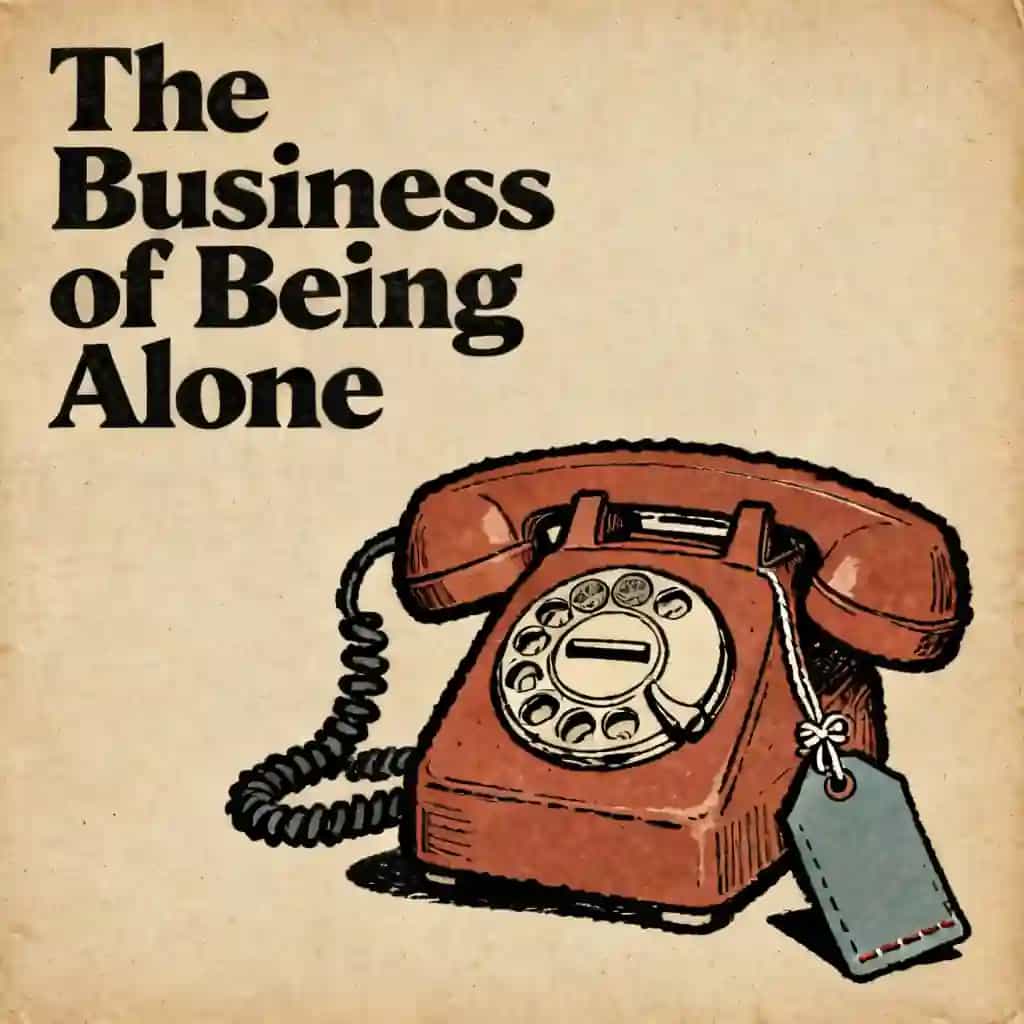
Discover why loneliness emerged around 1800 in this groundbreaking history. Terry Eagleton calls it "compassionate" and "radical" - the first comprehensive English study linking modern isolation to individualism. What health epidemic costs us more than obesity?
Почувствуйте книгу через голос автора
Превратите знания в увлекательные, богатые примерами идеи
Захватите ключевые идеи мгновенно для быстрого обучения
Наслаждайтесь книгой в весёлой и увлекательной форме
Loneliness has become our silent killer. When the UK appointed a Minister for Loneliness in 2018, it acknowledged what many had suspected: we're facing a public health crisis affecting an estimated 40% of Americans, with particularly high rates among young adults. But what if this painful emotional state isn't the timeless human condition we assume it to be? Cultural historian Fay Bound Alberti offers a revolutionary perspective: loneliness as we know it emerged around 1800, coinciding with profound social transformations. Before 1800, the word "loneliness" rarely appeared in English texts, and when it did, it simply meant "oneliness"-the physical state of being alone without psychological weight. Consider Robinson Crusoe, published in 1719. Despite depicting a man stranded on an island for 28 years, the novel never once mentions loneliness-a concept incomprehensible to modern readers who immediately relate to Tom Hanks creating "Wilson" in Castaway to preserve his sanity. This absence wasn't an oversight but reflected a fundamentally different understanding of solitude. The transformation coincided with industrialization disrupting traditional communities, the decline of religious frameworks where God provided constant companionship, and the rise of individualism creating new expectations for personal fulfillment. By the Victorian era, novels became filled with lonely characters seeking psychological growth while facing hostile worlds. What we now consider a universal human experience was actually born from specific historical forces that continue to shape our emotional lives today.
Разбейте ключевые идеи A Biography of Loneliness на понятные тезисы, чтобы понять, как инновационные команды создают, сотрудничают и растут.
Выделите из A Biography of Loneliness быстрые подсказки для запоминания, подчёркивающие ключевые принципы открытости, командной работы и творческой устойчивости.

Погрузитесь в A Biography of Loneliness через яркие истории, превращающие уроки инноваций в запоминающиеся и применимые моменты.
Задавайте любые вопросы, выбирайте голос и совместно создавайте идеи, которые действительно находят у вас отклик.

Создано выпускниками Колумбийского университета в Сан-Франциско
"Instead of endless scrolling, I just hit play on BeFreed. It saves me so much time."
"I never knew where to start with nonfiction—BeFreed’s book lists turned into podcasts gave me a clear path."
"Perfect balance between learning and entertainment. Finished ‘Thinking, Fast and Slow’ on my commute this week."
"Crazy how much I learned while walking the dog. BeFreed = small habits → big gains."
"Reading used to feel like a chore. Now it’s just part of my lifestyle."
"Feels effortless compared to reading. I’ve finished 6 books this month already."
"BeFreed turned my guilty doomscrolling into something that feels productive and inspiring."
"BeFreed turned my commute into learning time. 20-min podcasts are perfect for finishing books I never had time for."
"BeFreed replaced my podcast queue. Imagine Spotify for books — that’s it. 🙌"
"It is great for me to learn something from the book without reading it."
"The themed book list podcasts help me connect ideas across authors—like a guided audio journey."
"Makes me feel smarter every time before going to work"
Создано выпускниками Колумбийского университета в Сан-Франциско

Получите резюме книги «A Biography of Loneliness» в формате PDF или EPUB бесплатно. Распечатайте или читайте офлайн в любое время.