Глава 1
Years in a 6x9 Cell: A Story of Unbroken Spirit
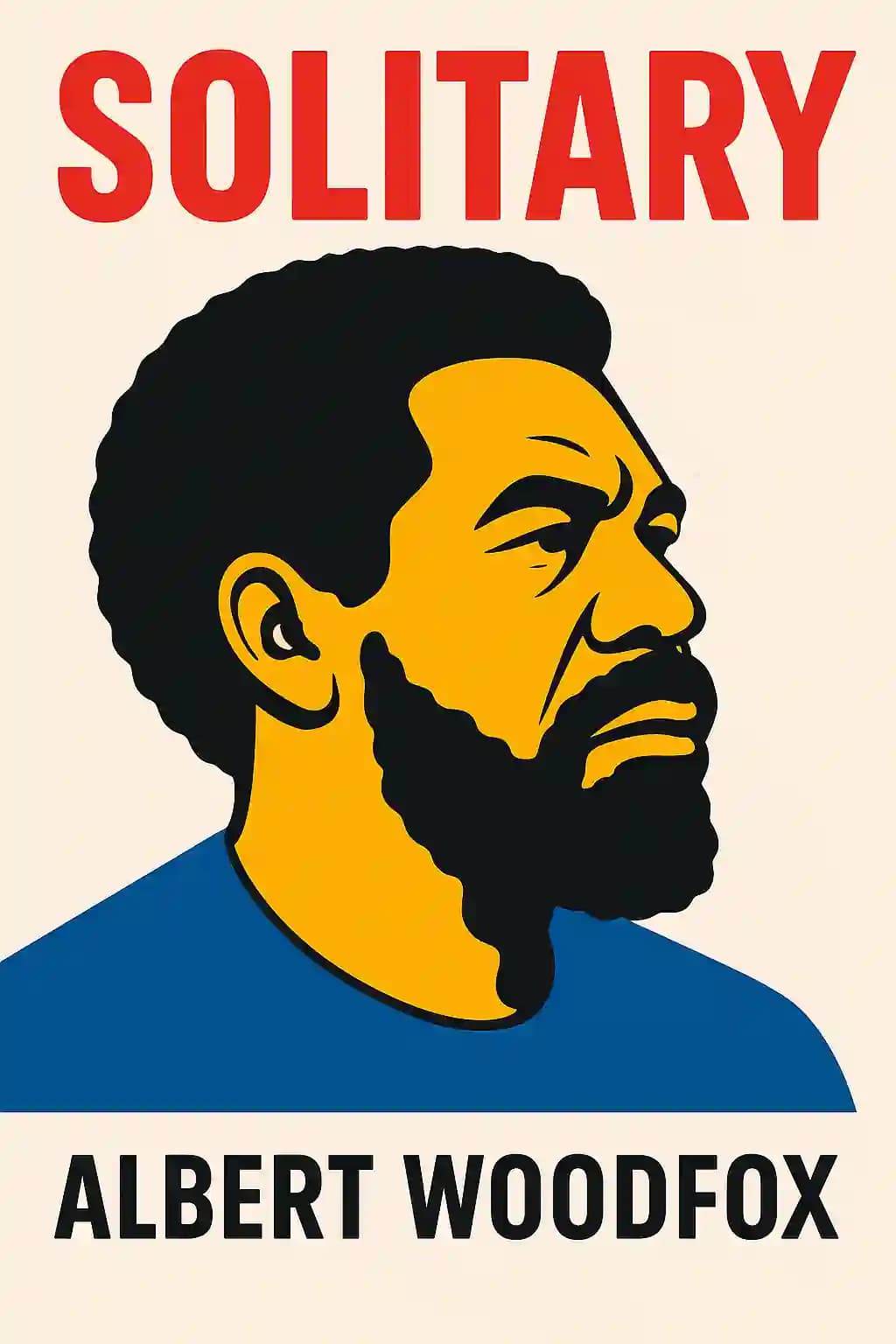
When Albert Woodfox woke on February 19, 2016-his 69th birthday-everything he owned still fit into two plastic garbage bags. After spending 44 years in solitary confinement for a crime he didn't commit, he would finally walk free. His case had become a global human rights cause celebre, with Amnesty International calling his four decades in isolation "cruel and inhumane beyond extreme." Celebrities like Sir Patrick Stewart and Russell Brand had advocated for his release, while publications from The New York Times to The Guardian covered his extraordinary story of resilience. Despite being confined to a 6x9 foot cell for 23 hours daily-the longest solitary confinement in American history-Woodfox never broke. As he often told people who asked how he survived: "I turned my cell into a university, a hall of debate, a law school." His memoir "Solitary" would go on to become a Pulitzer Prize finalist and National Book Award finalist, a testament to one man's triumph over a system designed to crush his humanity.
Глава 2
From Treme Streets to Angola's Walls
Albert Woodfox was born in 1947 in the "Negro" wing of New Orleans' Charity Hospital to seventeen-year-old Ruby Edwards. His early life was marked by poverty and instability, though he found stability when his mother married James Mable, a Navy chef whom Albert considered his real father. The family moved between naval bases, and young Albert learned resilience and responsibility early, even hitchhiking 170 miles to work in tobacco factories by age nine.
Everything changed when Albert was eleven. His stepfather was forced to retire from the Navy, began drinking heavily, and violently abused Albert's mother. Fearing for her life, she fled with Albert and his two youngest brothers to New Orleans' Sixth Ward (Treme), a poor Black neighborhood. They moved into two small back rooms of his aunt's house with no indoor toilet, bathing in a metal tub and using a slop jar at night. Life in the Treme was defined by poverty and segregation, with rows of identical shotgun houses and limited opportunities.
Despite these hardships, Albert's mother prioritized providing for her children, working in bars and sometimes prostituting herself to ensure they had clothes that fit. When money was tight, Albert shoplifted food for survival. He experienced racism firsthand-being called racial slurs, watching police randomly arrest Black men for "loitering," and learning in school that textbooks only depicted white America's reality.
By his early teens, Albert had abandoned school and turned to the streets, where he formed a gang called the 6th Ward High Steppers. They engaged in petty crimes like shoplifting bread, stealing from bakery delivery trucks, and sneaking into theaters. As he put it, he learned everyone had one choice: "to be a rabbit or a wolf. I chose to be a wolf." This decision would lead to a series of escalating crimes and eventually land him in the notorious Angola prison.
Глава 3
The Path to Angola
At 18, Albert's life took a decisive turn when he drove what he thought was his girlfriend's uncle's car to a party in Houma. When a state trooper tried to pull them over, he learned the car was stolen and led police on a 17-mile chase at 108 mph before crashing. Though he took full responsibility to protect his friends, this began his journey through Louisiana's brutal prison system.
Sentenced to two years at Thibodaux jail, Albert escaped after a few weeks through an unlocked door. After being recaptured in New Orleans, he faced new charges and was given a choice: four years at Houma city jail or two years at Angola with a transfer option after 90 days of good behavior. Having seen neighborhood men return from Angola with respect, Albert chose Angola, thinking it would be an honor to go there-a naive notion he would soon regret.
Angola in 1965 resembled the slave plantation it once was. The prison was segregated, with Black prisoners performing 99 percent of fieldwork by hand without proper equipment while white guards on horseback rode along the working lines with shotguns. The sprawling 18,000-acre complex included the main "big yard" and several outlying "camps" separated by crops and swampland.
The prison's very name-Angola-came from the African country where the original plantation slaves were born, a fitting continuation as the legacy of slavery permeated everything about the place. After the Civil War, the plantation had been leased to a former Confederate major who used convicts from city jails as laborers through the legal "convict-leasing" program, essentially continuing slavery under a different name.
Prison life was defined by constant hustling and manipulation. Albert quickly discovered that the myth of honor among thieves was false, though he prided himself on following a personal code: never rat, take your own punishment, and come forward if someone else was blamed for your actions. Angola's racial hierarchy was stark-white prisoners held all administrative and skilled positions while Blacks worked the brutal fields, planting and harvesting crops with no machinery or proper gear.
Глава 4
The Transformation: Finding the Black Panthers
After being released on parole and returning to Angola for parole violations, Albert's life changed forever when he escaped from Orleans Parish Prison in 1969 and fled to New York City. In Harlem, he noticed something he'd never seen before-Black Panthers organizing the community, proud Black people escorting women on "check days" and selling newspapers with a confidence around police unlike anything he'd witnessed.
After being recaptured and returned to Angola in 1971, Albert was a fundamentally different person. He had encountered members of the Black Panther Party during his time in New York prisons and had undergone a profound political awakening. He arrived at Angola with orders to establish a Black Panther Party chapter and a commitment to resist, educate, and agitate.
Working in the dining hall scullery, he witnessed firsthand the segregation of jobs and began speaking to both Black and white prisoners about their shared oppression: "What you're doing is slave labor," he told Black workers, while explaining to whites that despite their privileges, "We are all victims of the same corruption, brutality, beatings, and sexual slavery."
At Angola, Albert reconnected with Herman Wallace, another prisoner from New Orleans who had also been transformed by the Black Panther Party. Despite their opposite temperaments-Herman was an aggressive, bold extrovert while Albert was more reserved and diplomatic-they shared the same goals, morals, and principles. Together, they established Angola's first Black Panther Party chapter.
They held meetings on the football field, teaching men about institutionalized racism and dignity. "In order to be liberated you must first liberate yourselves," Herman would tell them. "You are not property, you are men," Albert would add. They explained how prisoners had been targeted by a discriminatory justice system and needed to unite against the administration to create change.
A profound turning point came when Albert encountered a young rape victim in the prison. Seeing his destroyed spirit, Albert realized rape wasn't just physical violence but "the complete destruction of another human being." This awakened a moral principle within him: to do no harm. Herman and Albert formed an "antirape squad" to protect new prisoners from sexual predators, escorting them to their dorms and warning them not to accept favors that could lead to sexual coercion.
Глава 5
The Frame-Up: April 17, 1972
On April 17, 1972, everything changed at Angola Prison when prison guard Brent Miller, just 23 years old, was found stabbed to death in Pine 1 dormitory. Albert Woodfox had been asleep in his dorm after the morning breakfast when a cascade of emergency whistles began blowing across the yard. Guards, visibly agitated and armed with machine guns and rifles, ran through the prison grounds. The news spread quickly through the prison population - a young security guard had been killed, stabbed 32 times.
When Albert reached the clothing room later that morning, a prisoner named Hayden Dees, known for his connections to prison authorities, dramatically pointed at him and accused him of killing Miller. The accusation created an immediate and violent response. A deputy sheriff pressed a gun against Albert's temple, threatening to "blow my brains out" if he moved. Guards forced him to strip completely naked in a show of humiliation, then gave him only a worn-out, tattered jumpsuit. They placed him in heavy restraints and dragged him to the prison dungeon, where he endured the first of many beatings. Throughout that long night, Albert listened as more prisoners were brought in, their screams echoing through the concrete corridors as they too were beaten and crammed into tiny cells designed for solitary confinement.
The following day brought even worse treatment. Albert was shackled hand and foot and transported to the Closed Cell Restricted (CCR) building - Angola's notorious solitary confinement unit. In the stairwell, multiple guards attacked him viciously while he remained helplessly bound in restraints. They dragged his battered body to cell 15 on B tier, continuing their assault with punches and kicks before finally removing his restraints through the cell bars. The bare concrete cell, measuring roughly 6x9 feet, contained only the most basic elements: a metal bunk without a mattress, a stainless steel toilet, a small sink, and a fixed metal table with bench. No mattress, blanket, or other basic necessities were provided.
Herman Wallace, another member of the Black Panther Party, was placed in the adjacent cell later that day, his body showing clear signs of severe beating. The systematic retaliation against prisoners, particularly Black inmates, continued unabated for days. Men were beaten "unmercifully," often by groups of guards, and packed into tiny cells meant for single occupancy. Medical care was deliberately withheld from injured prisoners, and psychological terror became routine. Guards forcibly cut off prisoners' Afros in a racially motivated display of power, and Albert began receiving threatening notes signed "KKK" deliberately placed on his food trays.
The official response to Miller's murder revealed clear bias from the start. While Deputy Warden Hoyle initially told reporters there was "no explanation" for Miller's murder, Warden Henderson quickly shifted the narrative, publicly blaming "black militants" and claiming to have "four or five prime suspects" - even before all prisoners had been properly questioned or any thorough investigation conducted. On May 5, 1972, Albert Woodfox, Herman Wallace, Chester Jackson, and Gilbert Montegut were formally indicted for Miller's murder, despite a notable lack of physical evidence linking them to the crime. This marked the beginning of what would become one of the longest solitary confinement cases in American history.
Глава 6
The Angola Three: Four Decades in Solitary
Albert's trial was clearly stacked against him from the start. The prosecution's witnesses contradicted each other at every turn. Joseph Richey claimed he saw Leonard Turner, Herman, Chester Jackson, Gilbert Montegut, and Albert run out of Pine 1 after Miller's murder-directly contradicting another witness who never mentioned Turner. The witnesses couldn't even agree on what Albert was wearing, and the supposed murder weapon had fewer than three drops of blood when tested-not enough to type or link to the crime.
Most tellingly, a clear bloody fingerprint found on the Pine 1 door matched neither Albert, Herman, Chester Jackson, Gilbert Montegut, nor any investigators, yet was never compared to other prisoners' prints. All three witnesses against Albert received special treatment-they were moved to better quarters, with Richey and another witness transferred to the comfortable state police barracks. Richey received weekend furloughs and so much freedom he later robbed three banks while still in custody.
Despite having three alibi witnesses who placed him elsewhere during the murder, Albert was convicted and sentenced to life in prison. Herman Wallace was similarly convicted in a separate trial, while Gilbert Montegut was acquitted. Chester Jackson pleaded guilty to manslaughter in exchange for his testimony against the others. Less than a month after Herman's conviction, Warden Henderson began writing letters seeking the immediate release of key witness Hezekiah Brown.
A third prisoner, Robert King, was wrongfully convicted for an unrelated prison murder and joined Albert and Herman in solitary confinement. Together, they became known as the "Angola Three" and would spend decades fighting for justice from within their isolation cells.
Life in CCR (Closed Cell Restricted) was brutal. They were locked down 23 hours daily in cells with rats, mice, and red ant invasions. Their one hour out allowed only showering and walking the tier-no yard time, phone calls, books, or educational programs. Strip searches and restraints were mandatory whenever they left their cells. Despite the brutal conditions, Albert and his comrades refused to be broken. They responded to racist comments with defiance, knowing they'd be beaten but standing on principle.
Глава 7
Resistance and Education: Surviving the Impossible
Albert, Herman, and King transformed their cells from spaces of punishment into something positive-using them to educate themselves, build moral character, and develop principles. They read newspapers whenever possible, subscribed when allowed, and debated world events through passed notes. They even arranged to meet in the dungeon for discussions. Eventually, they began teaching themselves law, borrowing legal dictionaries and checking out law books from the prison library.
They organized collective protests, teaching other prisoners that they had leverage: refusing to return to cells after their hour out, holding onto meal trays, "shaking down" (rattling cell doors), or "knocking down" (banging tables with shoes). They'd get consensus before actions, knowing security would retaliate. Sometimes these protests won small victories like getting toilet paper or having abusive guards removed.
One of their most significant victories came from challenging degrading strip search practices. Albert filed a lawsuit with help from New Orleans Legal Assistance, with another prisoner as co-plaintiff. They won-the judge limited when and how strip searches could be conducted and removed Albert's remaining 300 days in the dungeon from his record.
Albert's proudest achievement in all his years in solitary was teaching a fellow prisoner named Charles ("Goldy") how to read. When he recognized Goldy was hiding his illiteracy like Albert's mother had done, he offered to teach him. Using a dictionary's pronunciation guides, he taught him during their daily hour out of their cells. Within a year, Goldy was reading at a high school level.
Reading became Albert's salvation. The prison library contained radical books donated by universities: works by George Jackson, Frantz Fanon, Malcolm X, Marcus Garvey, and many others on politics, race, slavery, and global independence movements. He read everything he could find-philosophy, geography, economics, biology-and discussed books with King, who loved fiction and Shakespeare.
Глава 8
Justice Delayed: The Legal Battle
After years in solitary, Albert and Herman finally began challenging their convictions. In 1992, Judge Thomas Tanner reversed Albert's conviction on the grand jury discrimination issue, agreeing his attorney should have challenged his indictment from the unconstitutionally selected grand jury. The state appealed and lost. Albert would get a new trial, though he'd have to wait six years for it.
In 1998, Albert's second trial was equally problematic. Prosecutor Julie Cullen used inflammatory tactics, portraying Miller's murder as a "racially motivated Black Panther murder" and a "hate crime." Despite evidence of witness tampering and contradictory testimony, Albert was convicted again.
Meanwhile, support for the Angola Three was growing. In 2000, Scott Fleming joined their legal team pro bono and uncovered crucial evidence that had been deliberately withheld from their defense. He discovered that witnesses had been paid for their testimony and that multiple accounts of who killed Miller were irreconcilable.
In December 2000, King was granted a new trial by the U.S. Court of Appeals for the Fifth Circuit. With no physical evidence linking King to his alleged crime and their key witness having recanted years earlier, prosecutors offered King a plea deal. Though King wanted full exoneration, Albert and Herman urged him to take the deal, telling him, "If one of us is free, all of us are free." King was released in February 2001 after 29 years in solitary confinement and immediately devoted himself to advocating for his comrades.
The Angola Three also filed a civil lawsuit claiming their decades in solitary confinement violated their 8th Amendment protection against cruel and unusual punishment. In 2007, U.S. Magistrate Judge Docia Dalby delivered a landmark ruling that their decades-long solitary confinement could constitute cruel and unusual punishment, noting they "had been in extended lockdown more than anyone in Angola's history, and more than any other living prisoner in the entire United States."
Глава 9
Bittersweet Freedom
In 2013, Herman Wallace's health deteriorated rapidly. After being misdiagnosed when complaining of stomach pain, he was eventually discovered to have advanced liver cancer with only months to live. On October 1, 2013, a federal judge ordered Herman's immediate release, ruling his grand jury had been "improperly chosen in violation of the Fourteenth Amendment." Herman left Angola at sunset on a stretcher, surrounded by supporters. In the ambulance, he asked, "Is everybody smiling?" He died three days later at age 71, having spent 41 years in solitary confinement.
For Albert, the legal battle continued. In June 2015, Judge James Brady issued an extraordinary "exceptional writ"-an extremely rare, unconditional order for Albert's release that barred the state from retrying him. Brady cited five exceptional circumstances justifying his decision, including Albert's age and poor health, limited ability to present a defense due to unavailable witnesses, lack of confidence in the state to provide a fair trial, prejudice from over forty years in solitary confinement, and the fact he'd already been tried twice for a crime from forty years ago.
The state immediately appealed, and the Fifth Circuit kept Albert imprisoned pending the appeal. By January 2016, Albert faced a critical decision. Despite legal victories, the judge inexplicably refused to allow testing the bloody fingerprint from the murder scene against the FBI's database. Prosecutors claimed to have lost key evidence including the clothing they alleged Albert wore and bloody tennis shoes found at the scene.
Albert's lawyers approached him about considering a "nolo contendere" plea-maintaining his innocence while acknowledging the state had enough evidence to convict him. The outcome would be certain: immediate freedom. After 44 years where his word had been everything-keeping him alive, safe, sane, and human-he made the difficult decision to accept the plea for freedom rather than risk another trial.
On February 19, 2016-his birthday-Albert stood before the judge and pled nolo contendere to manslaughter and burglary charges calculated to match his time served. After a paperwork delay, he finally walked free with his brother Michael, having spent more time in solitary confinement than any prisoner in American history.
Глава 10
Legacy of Resilience
After release, Albert lived with his brother Michael for almost a year, facing the complex challenge of reintegrating into a world that had changed dramatically during his confinement. While his mind had remained free through decades of isolation, his body needed extensive time to relearn basic movements without shackles and restraints. The physical adaptation was profound - it took nearly twelve months for his muscles and joints to release the tension patterns developed from decades of restricted movement. Simple actions like walking in open spaces or navigating doorways required conscious effort to overcome ingrained defensive postures.
He's created a tapestry of new memories that stand in stark contrast to his years of confinement. His first visit to Yosemite National Park became a powerful symbol of freedom, where the vast open spaces helped heal decades of spatial constraint. He's become a sought-after speaker at law schools across America and internationally, sharing his firsthand experience to educate future legal professionals about the devastating impacts of solitary confinement. A particularly moving moment came when he met Teenie Rogers, the widow of Brent Miller, whose brave stance against his wrongful conviction helped validate his decades-long fight for justice. Perhaps most meaningful has been reconnecting with his daughter and meeting his great-grandchildren, rebuilding family bonds that prison had severely strained.
Though Albert has established a stable life and bought his own house, the psychological imprints of confinement persist. His sleep patterns remain altered - he typically manages only three to four hours at a time and habitually wakes at 3 a.m., just as he did during his prison years. While he never experiences the disorientation of not knowing where he is upon waking, he continues to battle claustrophobic episodes. The difference now is that he has space to walk them off, using movement as therapy.
Significant reforms have emerged at Angola Prison in the wake of his case. The establishment of the "Woodfox board" represents a crucial step toward accountability, providing oversight for reclassification decisions that previously went unchallenged. The 2018 closure of Camp J - notorious for four decades of systematic abuse - marked a tangible victory for prison reform advocates. When King and Albert make public appearances, they maintain Herman's presence in spirit, creating a powerful trinity in their ongoing mission. Their work extends beyond sharing their personal stories - they actively campaign for congressional hearings on the 13th Amendment's prison labor provisions and persistently advocate for the complete abolition of solitary confinement in all forms.
The moral core of Albert's story transcends his individual triumph over injustice. It demonstrates how salvation emerges from an unwavering commitment to personal growth and human dignity. Despite 44 years of systematic attempts to break his spirit through isolation, violence, and degradation, his inner resolve remained unbroken. He witnessed countless horrors but actively chose to preserve his humanity. While his body bears the physical scars of beatings, psychological marks of loneliness, and wounds of persecution, he also carries the indelible imprints of every act of kindness he received and extended to others.
Albert's reflection captures the essence of his extraordinary journey: "I would not change one thing about my life-not one moment of dedication, not one moment of struggle." This statement reveals not just acceptance but a profound understanding that his struggle served a greater purpose in exposing systemic injustice and inspiring change.