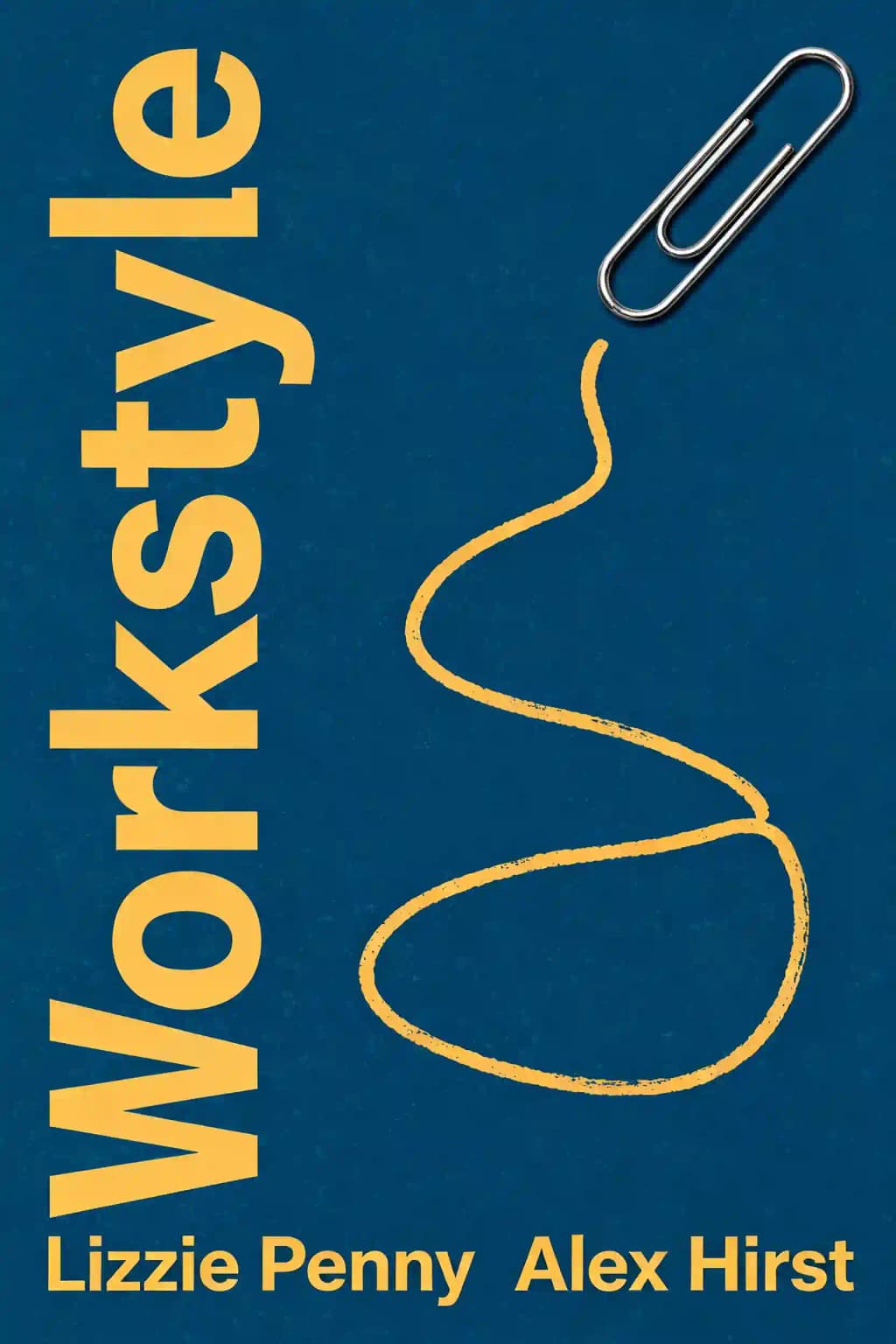
Workstyle
Be Well. Work Better. Do Good
Overview of Workstyle
Tired of the 9-to-5 grind? "Workstyle" - a Sunday Times #1 bestseller - reveals how companies like Amazon and Unilever are revolutionizing work. What if your perfect schedule could boost both wellbeing and productivity? Forbes calls it the book that "will turn your view upside down."

Key Themes in Workstyle
- autonomous working
- work-life integration
- asynchronous collaboration
- individualized productivity
- trust-based culture
Best quote from Workstyle
Everyone has different preferences and needs when it comes to how they work most effectively.
Characters in Workstyle
- Lizzie PennyCo-author of the book
- Alex HirstCo-author of the book
About the Author
About the Author of Workstyle
Lizzie Penny and Alex Hirst are the authors of Workstyle: A Revolution for Wellbeing, Productivity and Society. They are pioneering entrepreneurs and advocates for autonomous working practices.
As co-founders of the social enterprise Hoxby, they have championed the workstyle movement since 2014, empowering thousands globally to design personalized work routines. These routines prioritize well-being and output quality over rigid schedules. Their expertise stems from personal experiences—Penny’s resilience through breast cancer and Hirst’s recovery from burnout—which inspired their critique of the traditional 9–5 model.
Their book, blending self-help and business innovation, redefines workplace flexibility by emphasizing individual autonomy. This philosophy is validated through collaborations with brands like Unilever, Amazon, and Merck. Featured in the Financial Times, The Guardian, and Forbes (which hailed their “freelance revolution 3.0”), Penny and Hirst combine research-backed insights with real-world application.
Their longitudinal studies on autonomy’s link to productivity underpin Hoxby’s success. Hoxby is a multi-million-pound venture transforming workplaces across 20+ countries.
Download Summary of Workstyle
Get the Workstyle summary as a free PDF or EPUB. Print it or read offline anytime.
FAQs About This Book
Workstyle advocates for individualized, autonomous working practices that prioritize personal wellbeing and productivity over rigid 9-5 structures. The book introduces the concept of "workstyle"—a system where professionals design their own schedules and environments based on their unique needs. It blends historical context, case studies, and actionable frameworks to challenge traditional work norms, emphasizing flexibility, equity, and mental health.
This book is ideal for professionals seeking work-life balance, HR leaders redesigning workplace policies, freelancers, and Gen Z/millennial workers prioritizing ethical, adaptable careers. It also appeals to executives at companies like Unilever or Amazon, which Lizzie Penny and Alex Hirst have advised, and anyone interested in neurodiverse-friendly work environments.
The authors identify four archetypes: perfectionist (detail-oriented), prioritizer (goal-focused), multi-tasker (adaptable), and procrastinator (creativity-driven). Each style has strengths and weaknesses, with examples of successful individuals who leverage their natural tendencies. The book provides tools to identify and optimize one’s dominant workstyle.
Unlike employer-mandated hybrid setups, workstyle grants complete autonomy over when, where, and how tasks are completed. It rejects one-size-fits-all flexibility, instead empowering individuals to design systems aligned with their energy cycles, responsibilities, and values—proven to enhance both performance and satisfaction.
- “Workstyle is the complete freedom to choose when and where you work.”
- “The industrial age routine is being dismantled—what replaces it must work for you.”
These lines encapsulate the book’s mission to dismantle outdated practices and promote self-directed work rhythms.
The book offers exercises to audit current work habits, identify pain points (e.g., burnout), and redesign routines. For example, a parent might shift to project-based contracts, while a corporate employee could negotiate asynchronous hours. Case studies show improved productivity and reduced stress.
While praised for its innovative approach, some argue its emphasis on autonomy may clash with industries requiring real-time collaboration (e.g., healthcare). Others note scalability challenges for small businesses. The authors address these by advocating incremental changes and team-level experiments.
It highlights how rigid schedules harm neurodivergent professionals and proposes customizable workflows. For instance, ADHD workers might thrive with shorter, hyper-focused bursts, while autistic individuals benefit from predictable task sequences. Companies adopting these practices report higher retention.
The book traces the 9-5 workday’s origins to 1817 factory reforms and argues it’s obsolete in a digital era. It contrasts this with pre-industrial agrarian rhythms, where tasks were seasonally and individually tailored—a model the authors believe modern work should replicate.
While Atomic Habits focuses on behavior change and Deep Work on concentration, Workstyle tackles systemic workplace structures. It complements these by providing a macro-level framework to implement micro-habits in alignment with personal and organizational goals.
Amid AI disruption and global shifts to gig economies, the book offers tools to navigate unstable job markets. Its emphasis on self-directed work aligns with Gen Z’s demand for purpose-driven, mentally sustainable careers—a trend accelerated by post-pandemic remote work.
- Audit: Track energy levels and productivity peaks for one week.
- Design: Create a schedule around optimal hours, using tools like time-blocking.
- Negotiate: Present data-backed proposals to employers or clients.
- Iterate: Adjust quarterly based on changing priorities.