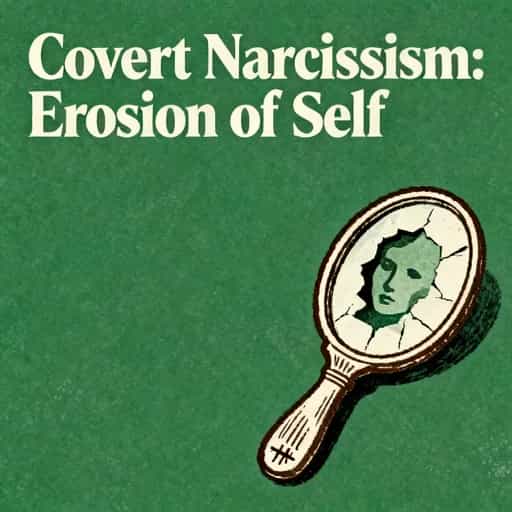
The Covert Passive-Aggressive Narcissist: Recognizing the Traits and Finding Healing After Hidden Emotional and Psychological Abuse by Debbie Mirza Summary

Overview of The Covert Passive-Aggressive Narcissist
Unmasking silent toxicity - this guide illuminates covert narcissism's hidden patterns, earning 4.5 stars for helping thousands recognize psychological manipulation. Readers report breakthrough moments identifying behaviors they couldn't name before, finally validating experiences dismissed by others as "overreacting."
- Covert narcissists mask manipulation through false kindness and victimhood personas
- Love bombing devalues then discards victims in cyclical emotional abuse patterns
- Gaslighting and triangulation silently erode self-worth while maintaining plausible deniability
- Empathic nurturers often become targets by ignoring red flags in relationships
- Healing requires recognizing trauma bonds from intermittent reinforcement tactics
- "Traits of Real Love" framework helps identify healthy versus abusive connections
- Physical symptoms like chronic fatigue signal prolonged narcissistic stress exposure
- Covert narcissists weaponize vulnerability while avoiding direct accountability
- Boundary-setting and reality journals combat gaslighting-induced self-doubt
- Debbie Mirza's recovery roadmap prioritizes nervous system regulation first
- "Responsibility flipping" exposes narcissists' refusal to acknowledge harm
- Post-discard hoovering attempts exploit targets' compassion through fake crises
About the Author of The Covert Passive-Aggressive Narcissist
Debbie Mirza is the bestselling author of The Covert Passive-Aggressive Narcissist and a restorative coach specializing in healing from hidden emotional abuse. Trained by Dr. Martha Beck, she combines personal experience with covert narcissistic relationships and professional expertise to address psychological manipulation and recovery. Her work focuses on empowering survivors through actionable strategies for recognizing covert abuse and rebuilding self-worth.
Mirza’s follow-up book, Worthy of Love, expands on her trauma-informed approach, offering guided exercises for emotional healing. She amplifies her insights via a YouTube channel, online courses, and a private support group, creating accessible resources for those navigating narcissistic abuse.
A sought-after speaker featured on podcasts and at conferences, Mirza blends compassionate advocacy with evidence-based practices. The Covert Passive-Aggressive Narcissist has gained recognition as a foundational text in its field, frequently cited by mental health professionals and survivors for its clarity and transformative impact.
FAQs About The Covert Passive-Aggressive Narcissist
What is The Covert Passive Aggressive Narcissist by Debbie Mirza about?
The Covert Passive Aggressive Narcissist exposes the hidden tactics of covert narcissists, who manipulate and emotionally abuse victims while maintaining a charming public facade. The book identifies traits like gaslighting, guilt-tripping, and reality distortion, while offering strategies for recognizing abuse, rebuilding self-worth, and healing through boundaries and self-care.
Who should read The Covert Passive Aggressive Narcissist?
This book is essential for individuals in toxic relationships, survivors of emotional abuse, or those questioning their reality after interactions with a manipulative partner, family member, or colleague. Mental health professionals and advocates will also gain insights into identifying covert narcissistic behaviors.
Is The Covert Passive Aggressive Narcissist worth reading?
Yes—licensed therapists and survivors praise it as a groundbreaking guide to covert narcissism. It’s endorsed by Dr. Robin Alchin for filling gaps in narcissistic abuse literature and helping victims reclaim their lives.
What are the main concepts in The Covert Passive Aggressive Narcressive Narcissist?
Key concepts include:
- Hidden manipulation: Covert narcissists sabotage self-esteem through subtle insults, blame-shifting, and intermittent affection.
- Reality distortion: Victims lose trust in their perceptions due to gaslighting and false narratives.
- Healing frameworks: Prioritizing self-care, setting boundaries, and seeking trauma-informed support.
How does covert narcissism differ from overt narcissism?
Covert narcissists mask their abuse behind false humility or victimhood, while overt narcissists display grandiosity openly. The book emphasizes covert narcissists’ passive-aggressive tactics, like silent treatment or backhanded compliments, which leave fewer “visible scars.”
What impact do covert narcissists have on victims’ mental health?
Victims often develop anxiety, depression, or PTSD due to prolonged psychological abuse. Physical symptoms like chronic fatigue, insomnia, and autoimmune issues are also common, as stress erodes overall health.
What strategies does Debbie Mirza recommend for healing?
Mirza advocates:
- Trusting intuition: Reconnecting with inner truth to recognize abuse.
- No-contact or gray-rocking: Limiting engagement to stop manipulation cycles.
- Community support: Leveraging therapy or survivor groups to rebuild self-identity.
What are common signs of a covert narcissist?
Signs include:
- Passive aggression: Indirect hostility disguised as jokes or “concern.”
- Victim-playing: Framing themselves as misunderstood to evade accountability.
- Love-bombing then withdrawing: Alternating between affection and cruelty to create dependency.
How does The Covert Passive Aggressive Narcissist address recovery challenges?
Mirza warns against obsessing over the narcissist’s motives, which delays healing. The book shifts focus to self-compassion, validating survivors’ experiences, and dismantling learned self-blame.
What makes Debbie Mirza’s approach unique?
Mirza combines personal recovery insights with clinical perspectives, offering actionable steps instead of theoretical analysis. Her resources—like guided meditations and courses—provide holistic support beyond the book.
How does this book compare to other narcissism guides?
Unlike works focused on overt narcissism, Mirza’s book targets hidden abuse patterns, making it vital for those whose trauma was dismissed as “overreacting.” It’s frequently cited by therapists for its nuanced case studies and survivor-centric tone.
Can The Covert Passive Aggressive Narcissist help with workplace or family dynamics?
Yes—it includes examples of covert narcissism in friendships, workplaces, and parent-child relationships. Mirza explains how to identify manipulative colleagues or family members and protect emotional well-being.
Feel the book through the author's voice
Turn knowledge into engaging, example-rich insights
Capture key ideas in a flash for fast learning
Enjoy the book in a fun and engaging way
Key Themes in The Covert Passive-Aggressive Narcissist
Quotes from The Covert Passive-Aggressive Narcissist
They excel at "death by a thousand cuts".
The perfection was carefully crafted illusion.
Characters in The Covert Passive-Aggressive Narcissist
Quick Summary Mode - Read or listen to The Covert Passive-Aggressive Narcissist Summary in 8 Minutes

Break down key ideas from The Covert Passive-Aggressive Narcissist into bite-sized takeaways to understand how innovative teams create, collaborate, and grow.

Flash Card Mode - Top 8 Insights from The Covert Passive-Aggressive Narcissist in a Nutshell

Distill The Covert Passive-Aggressive Narcissist into rapid-fire memory cues that highlight key principles of candor, teamwork, and creative resilience.

Fun Mode - The Covert Passive-Aggressive Narcissist Lessons Told Through 24-Min Stories

Experience The Covert Passive-Aggressive Narcissist through vivid storytelling that turns innovation lessons into moments you'll remember and apply.
Personalize Mode - Read or listen to The Covert Passive-Aggressive Narcissist Summary in 0 Minutes

Ask anything, pick the voice, and co-create insights that truly resonate with you.

From Columbia University alumni built in San Francisco
"Instead of endless scrolling, I just hit play on BeFreed. It saves me so much time."


"I never knew where to start with nonfiction—BeFreed’s book lists turned into podcasts gave me a clear path."


"Perfect balance between learning and entertainment. Finished ‘Thinking, Fast and Slow’ on my commute this week."
"Crazy how much I learned while walking the dog. BeFreed = small habits → big gains."
"Reading used to feel like a chore. Now it’s just part of my lifestyle."

"Feels effortless compared to reading. I’ve finished 6 books this month already."
"BeFreed turned my guilty doomscrolling into something that feels productive and inspiring."

"BeFreed turned my commute into learning time. 20-min podcasts are perfect for finishing books I never had time for."
"BeFreed replaced my podcast queue. Imagine Spotify for books — that’s it. 🙌"

"It is great for me to learn something from the book without reading it."
"The themed book list podcasts help me connect ideas across authors—like a guided audio journey."
"Makes me feel smarter every time before going to work"
From Columbia University alumni built in San Francisco
"Instead of endless scrolling, I just hit play on BeFreed. It saves me so much time."
"I never knew where to start with nonfiction—BeFreed’s book lists turned into podcasts gave me a clear path."
"Perfect balance between learning and entertainment. Finished ‘Thinking, Fast and Slow’ on my commute this week."
"Crazy how much I learned while walking the dog. BeFreed = small habits → big gains."
"Reading used to feel like a chore. Now it’s just part of my lifestyle."
"Feels effortless compared to reading. I’ve finished 6 books this month already."
"BeFreed turned my guilty doomscrolling into something that feels productive and inspiring."
"BeFreed turned my commute into learning time. 20-min podcasts are perfect for finishing books I never had time for."
"BeFreed replaced my podcast queue. Imagine Spotify for books — that’s it. 🙌"
"It is great for me to learn something from the book without reading it."
"The themed book list podcasts help me connect ideas across authors—like a guided audio journey."
"Makes me feel smarter every time before going to work"
"Instead of endless scrolling, I just hit play on BeFreed. It saves me so much time."
"I never knew where to start with nonfiction—BeFreed’s book lists turned into podcasts gave me a clear path."
"Perfect balance between learning and entertainment. Finished ‘Thinking, Fast and Slow’ on my commute this week."
"Crazy how much I learned while walking the dog. BeFreed = small habits → big gains."
"Reading used to feel like a chore. Now it’s just part of my lifestyle."
"Feels effortless compared to reading. I’ve finished 6 books this month already."
"BeFreed turned my guilty doomscrolling into something that feels productive and inspiring."
"BeFreed turned my commute into learning time. 20-min podcasts are perfect for finishing books I never had time for."
"BeFreed replaced my podcast queue. Imagine Spotify for books — that’s it. 🙌"
"It is great for me to learn something from the book without reading it."
"The themed book list podcasts help me connect ideas across authors—like a guided audio journey."
"Makes me feel smarter every time before going to work"
"Instead of endless scrolling, I just hit play on BeFreed. It saves me so much time."
"I never knew where to start with nonfiction—BeFreed’s book lists turned into podcasts gave me a clear path."
"Perfect balance between learning and entertainment. Finished ‘Thinking, Fast and Slow’ on my commute this week."
"Crazy how much I learned while walking the dog. BeFreed = small habits → big gains."
"Reading used to feel like a chore. Now it’s just part of my lifestyle."
"Feels effortless compared to reading. I’ve finished 6 books this month already."
"BeFreed turned my guilty doomscrolling into something that feels productive and inspiring."
"BeFreed turned my commute into learning time. 20-min podcasts are perfect for finishing books I never had time for."
"BeFreed replaced my podcast queue. Imagine Spotify for books — that’s it. 🙌"
"It is great for me to learn something from the book without reading it."
"The themed book list podcasts help me connect ideas across authors—like a guided audio journey."
"Makes me feel smarter every time before going to work"

Get the The Covert Passive-Aggressive Narcissist summary as a free PDF or EPUB. Print it or read offline anytime.