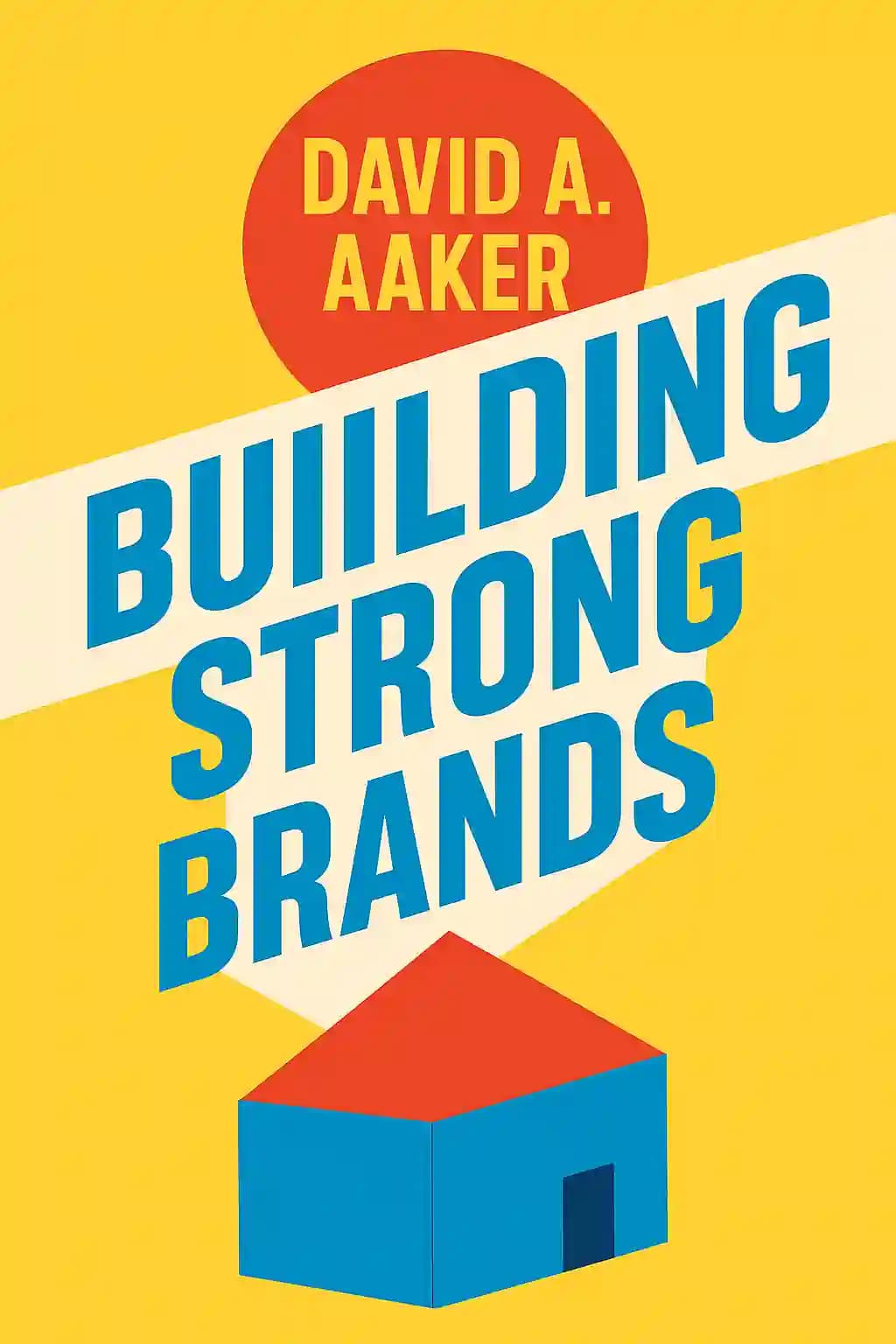
Building strong brands
Overview of Building strong brands
In "Building Strong Brands," marketing legend David Aaker reveals why brands become commodities and how to prevent it. Endorsed by Coca-Cola's former SVP as a "must-read," this million-copy bestseller transformed how industry titans like Chrysler approach the emotional power of brand identity.

Key Themes in Building strong brands
- brand equity assets
- brand identity systems
- brand personality dimensions
- strategic brand management
- customer loyalty frameworks
Quotes from Building strong brands
Aaker defines brand equity as a set of brand assets and liabilities linked to a brand, its name and symbol, that add to or subtract from the value provided by a product or service to a firm and/or to that firm’s customers.
A brand identity is a unique set of brand associations that the brand strategist aspires to create or maintain.
Identity is aspirational and strategic, looking toward the future rather than the past.
Truly dominant brands are built on something deeper—a comprehensive identity system.
This multidimensional approach creates a brand experience that transcends the physical product.
Characters in Building strong brands
- David A. AakerAuthor and marketing expert who created the book
- Ronald McDonaldBrand character supporting McDonald's identity
About the Author
About the Author of Building strong brands
David A. Aaker, author of Building Strong Brands, is a globally recognized authority on brand strategy and marketing, hailed as the “Father of Modern Branding.” Aaker’s work in marketing and brand equity, including his pioneering Aaker Model™, has shaped industry practices for decades.
As Professor Emeritus at UC Berkeley’s Haas School of Business and Vice Chairman of Prophet, a leading brand consultancy, he combines academic rigor with real-world expertise.
His books, such as Brand Relevance: Making Competitors Irrelevant and Aaker on Branding: 20 Principles That Drive Success, explore themes of brand identity, loyalty, and innovation, reflecting his deep understanding of how brands create lasting value.
A frequent LinkedIn Influencer and speaker, Aaker’s insights are trusted by Fortune 500 companies and institutions worldwide. Inducted into the American Marketing Association Hall of Fame in 2015 and recipient of the 2020 Sheth Foundation Medal, his works have been translated into 18 languages and sold over 1 million copies globally.
Download Summary of Building strong brands
Get the Building strong brands summary as a free PDF or EPUB. Print it or read offline anytime.
FAQs About This Book
Building Strong Brands (1996) explores how brands like McDonald’s, GE, and Saturn built lasting equity through strategic identity management. Aaker introduces frameworks like brand identity (aspirational image) and brand position (active messaging), emphasizing emotional benefits, brand systems, and organizational alignment. The book provides tools like the brand equity ten metrics to avoid commoditization and drive growth.
Marketing professionals, brand managers, and business leaders seeking actionable strategies to create resilient brands will benefit most. It’s particularly valuable for those managing multi-brand portfolios or navigating competitive markets. Academics studying brand equity or Aaker’s Aaker Model also gain foundational insights.
Yes, despite its 1996 release, the principles remain relevant for modern branding challenges. Aaker’s focus on brand identity systems and organizational alignment adapts well to digital-era dynamics like cross-platform consistency and purpose-driven branding. However, readers should supplement it with newer works addressing AI and social media’s impact.
Key ideas include:
- Brand identity: A strategic vision combining functional, emotional, and symbolic attributes
- Brand position: The subset of identity actively communicated to audiences
- Brand-as-person/organization/symbol: Frameworks to humanize brands and differentiate through personality
- Brand equity ten: Metrics like loyalty, perceived quality, and awareness to quantify brand value
Aaker defines brand identity as the aspirational image a brand seeks to create, encompassing four perspectives:
- Product (attributes, quality)
- Organization (corporate culture)
- Person (personality, relationships)
- Symbol (visual/audio trademarks)
This system avoids overreliance on single attributes and guides long-term strategy.
Aaker’s brand equity ten measures loyalty, perceived quality, associations, awareness, and market behavior (e.g., price elasticity). These metrics help track equity across products and markets, ensuring strategic decisions align with brand health.
The book advises managing intertwined brands and subbrands as a cohesive system to achieve clarity, synergy, and adaptability. It warns against siloed strategies and demonstrates leveraging brand assets into new markets (e.g., Healthy Choice’s expansion).
Some argue the 1996 examples feel dated in digital contexts, and newer works better address social media’s role. However, Aaker’s core concepts remain widely applied, and updates like Brand Relevance (2010) build on these foundations.
While Managing Brand Equity (1991) establishes brand value as a strategic asset, Building Strong Brands offers practical tools for implementation—making them complementary. The latter introduces newer frameworks like identity systems and organizational alignment.
Aaker analyzes campaigns from Saturn (emotional loyalty), Kodak (adapting to digital disruption), and McDonald’s (global consistency). These cases illustrate pitfalls like overfocusing on attributes and solutions like symbolic storytelling.
The book’s emphasis on identity consistency and organizational culture applies to challenges like omnichannel messaging and employee advocacy. Its systems approach also aids in managing brand extensions in evolving markets like AI-driven products.
- “A brand’s identity is central to its strategic vision and primary driver of associations”
- “Avoid letting organizational pressures dilute your brand’s position”
- “Brilliant execution matters more than logical positioning alone”