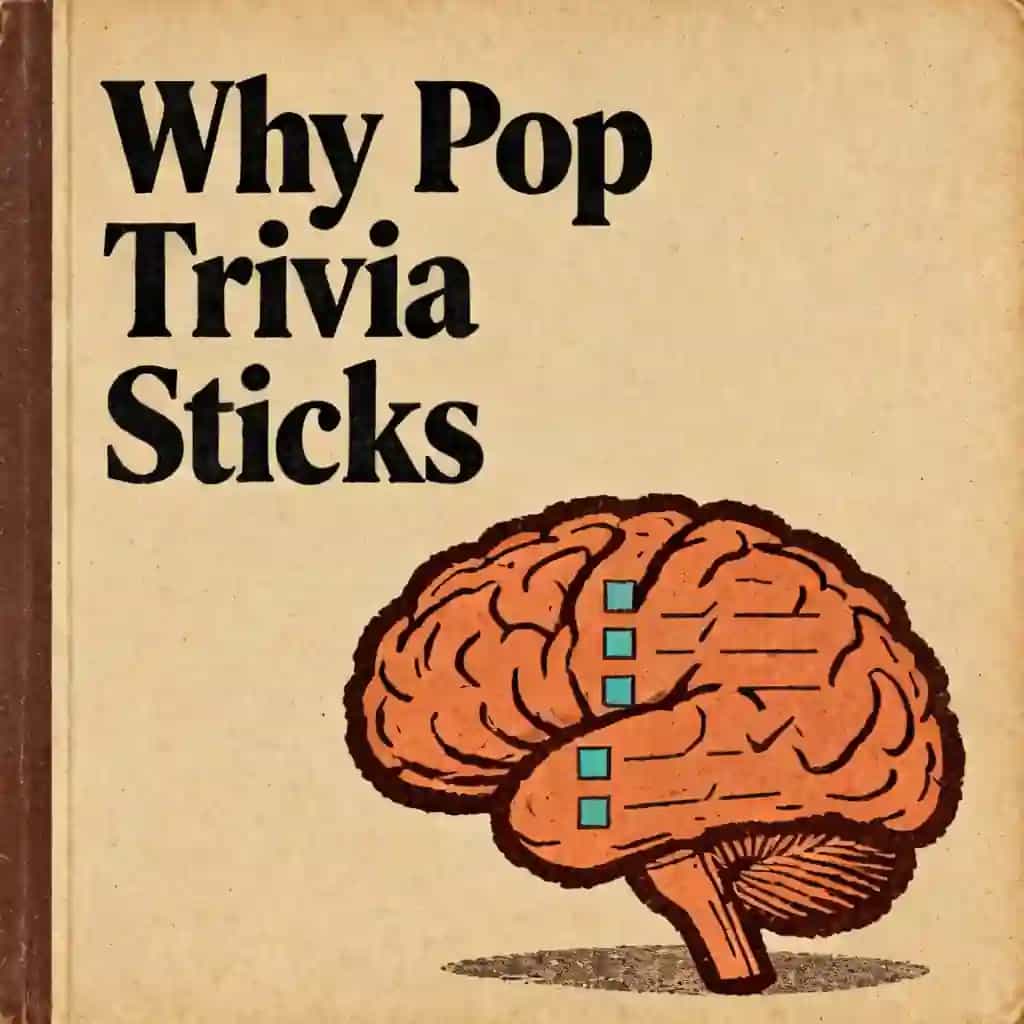
Pop culture trivia and why we care about it
Why do we remember random movie facts but forget important dates? Explore the science of trivia and how to bridge the gap between fan and expert.

Melhor citação de Pop culture trivia and why we care about it
Knowledge curation is never neutral. When we outsource our 'knowing' to search engines, we stop building that 'cognitive reserve' and essentially turn our brains into bookmarks instead of libraries.
Generated by Freedee_182AAD9C
General and pop culture Trivia

Perguntas frequentes
Wikipedia operates under a strict manual of style that prioritizes "verifiability" over "truth." To prevent "original research," the platform requires information to be backed by reliable secondary sources, such as major news outlets or academic journals. If a fact is considered too niche, obscure, or hasn't been reported by a mainstream source, editors may delete it during "edit wars," even if the information is accurate.
The "Google Effect" refers to the tendency of our brains to prioritize remembering where to find information rather than the information itself. Because we can easily outsource our knowledge to search engines, we risk turning our brains into "bookmarks" instead of "libraries." This reduces our cognitive reserve and makes our personal knowledge base more fragile if we lose access to digital tools.
Retrieval Practice, also known as the "Testing Effect," is the act of actively pulling information out of your brain rather than passively rereading it. This process creates a "workout for your neurons" and strengthens the neural pathways to that data. The script suggests that "desirable difficulty"—the struggle to remember something—is actually the moment when the most significant learning and memory reinforcement occurs.
According to the script, a high-quality trivia fact should possess three specific traits: it must sound unbelievable but be 100% true (like a whale's heart being large enough for a human to swim through), it should be diverse enough to bridge multiple categories like history and science, and it must be "vivid" enough to create a lasting mental image for the listener.
Yes, seeking out trivia is linked to an evolutionary survival mechanism. Historically, tracking information about the environment was a matter of life or death, leading the brain to develop a reward system for acquiring knowledge. When we bridge a "Curiosity Gap" by learning a new fact, the brain releases dopamine, providing a "micro-win" that makes the act of learning addictive and satisfying.
Criado por ex-alunos da Universidade de Columbia em San Francisco
"Instead of endless scrolling, I just hit play on BeFreed. It saves me so much time."


"I never knew where to start with nonfiction—BeFreed’s book lists turned into podcasts gave me a clear path."


"Perfect balance between learning and entertainment. Finished ‘Thinking, Fast and Slow’ on my commute this week."
"Crazy how much I learned while walking the dog. BeFreed = small habits → big gains."
"Reading used to feel like a chore. Now it’s just part of my lifestyle."

"Feels effortless compared to reading. I’ve finished 6 books this month already."
"BeFreed turned my guilty doomscrolling into something that feels productive and inspiring."

"BeFreed turned my commute into learning time. 20-min podcasts are perfect for finishing books I never had time for."
"BeFreed replaced my podcast queue. Imagine Spotify for books — that’s it. 🙌"

"It is great for me to learn something from the book without reading it."
"The themed book list podcasts help me connect ideas across authors—like a guided audio journey."
"Makes me feel smarter every time before going to work"
Criado por ex-alunos da Universidade de Columbia em San Francisco
"Instead of endless scrolling, I just hit play on BeFreed. It saves me so much time."
"I never knew where to start with nonfiction—BeFreed’s book lists turned into podcasts gave me a clear path."
"Perfect balance between learning and entertainment. Finished ‘Thinking, Fast and Slow’ on my commute this week."
"Crazy how much I learned while walking the dog. BeFreed = small habits → big gains."
"Reading used to feel like a chore. Now it’s just part of my lifestyle."
"Feels effortless compared to reading. I’ve finished 6 books this month already."
"BeFreed turned my guilty doomscrolling into something that feels productive and inspiring."
"BeFreed turned my commute into learning time. 20-min podcasts are perfect for finishing books I never had time for."
"BeFreed replaced my podcast queue. Imagine Spotify for books — that’s it. 🙌"
"It is great for me to learn something from the book without reading it."
"The themed book list podcasts help me connect ideas across authors—like a guided audio journey."
"Makes me feel smarter every time before going to work"
"Instead of endless scrolling, I just hit play on BeFreed. It saves me so much time."
"I never knew where to start with nonfiction—BeFreed’s book lists turned into podcasts gave me a clear path."
"Perfect balance between learning and entertainment. Finished ‘Thinking, Fast and Slow’ on my commute this week."
"Crazy how much I learned while walking the dog. BeFreed = small habits → big gains."
"Reading used to feel like a chore. Now it’s just part of my lifestyle."
"Feels effortless compared to reading. I’ve finished 6 books this month already."
"BeFreed turned my guilty doomscrolling into something that feels productive and inspiring."
"BeFreed turned my commute into learning time. 20-min podcasts are perfect for finishing books I never had time for."
"BeFreed replaced my podcast queue. Imagine Spotify for books — that’s it. 🙌"
"It is great for me to learn something from the book without reading it."
"The themed book list podcasts help me connect ideas across authors—like a guided audio journey."
"Makes me feel smarter every time before going to work"
"Instead of endless scrolling, I just hit play on BeFreed. It saves me so much time."
"I never knew where to start with nonfiction—BeFreed’s book lists turned into podcasts gave me a clear path."
"Perfect balance between learning and entertainment. Finished ‘Thinking, Fast and Slow’ on my commute this week."
"Crazy how much I learned while walking the dog. BeFreed = small habits → big gains."
"Reading used to feel like a chore. Now it’s just part of my lifestyle."
"Feels effortless compared to reading. I’ve finished 6 books this month already."
"BeFreed turned my guilty doomscrolling into something that feels productive and inspiring."
"BeFreed turned my commute into learning time. 20-min podcasts are perfect for finishing books I never had time for."
"BeFreed replaced my podcast queue. Imagine Spotify for books — that’s it. 🙌"
"It is great for me to learn something from the book without reading it."
"The themed book list podcasts help me connect ideas across authors—like a guided audio journey."
"Makes me feel smarter every time before going to work"