Struggling to remember those obscure facts during trivia night? Learn how iconic pop culture moments can become your secret weapon to winning.

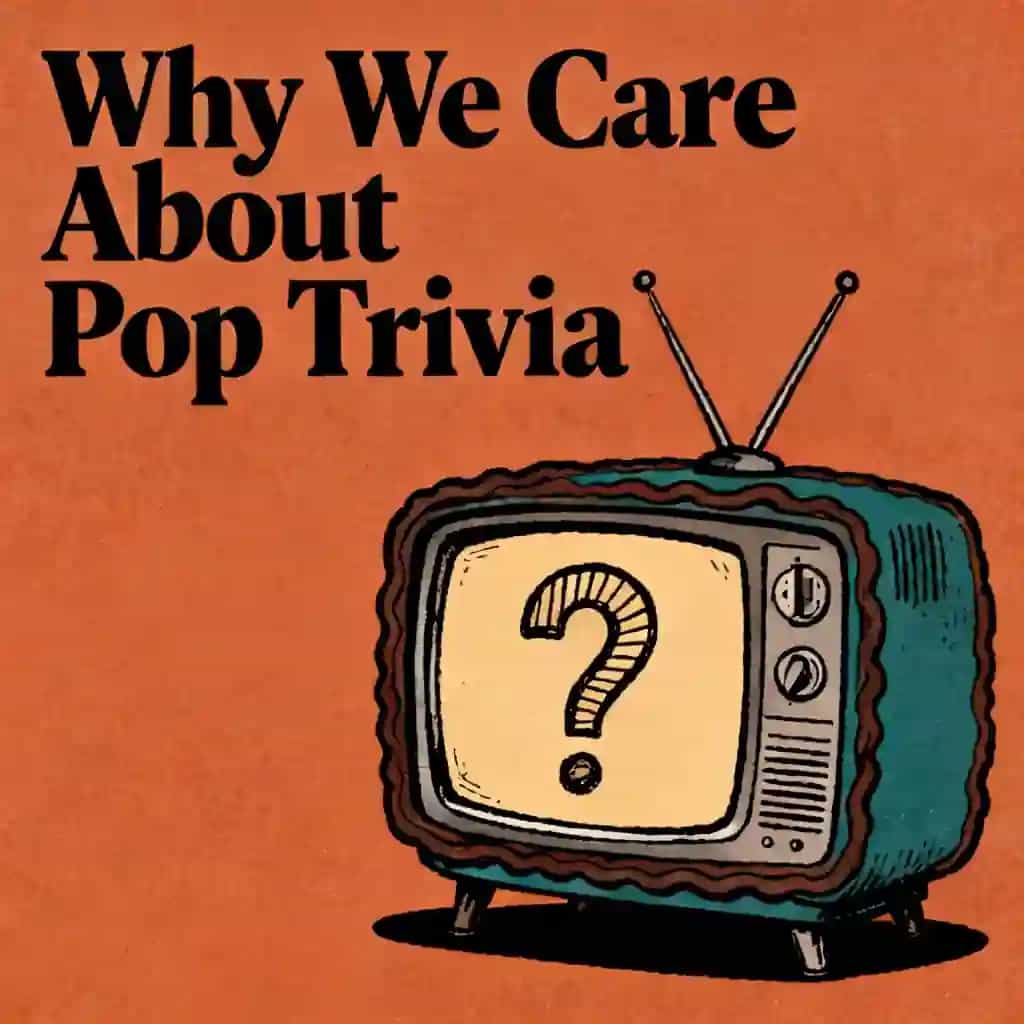
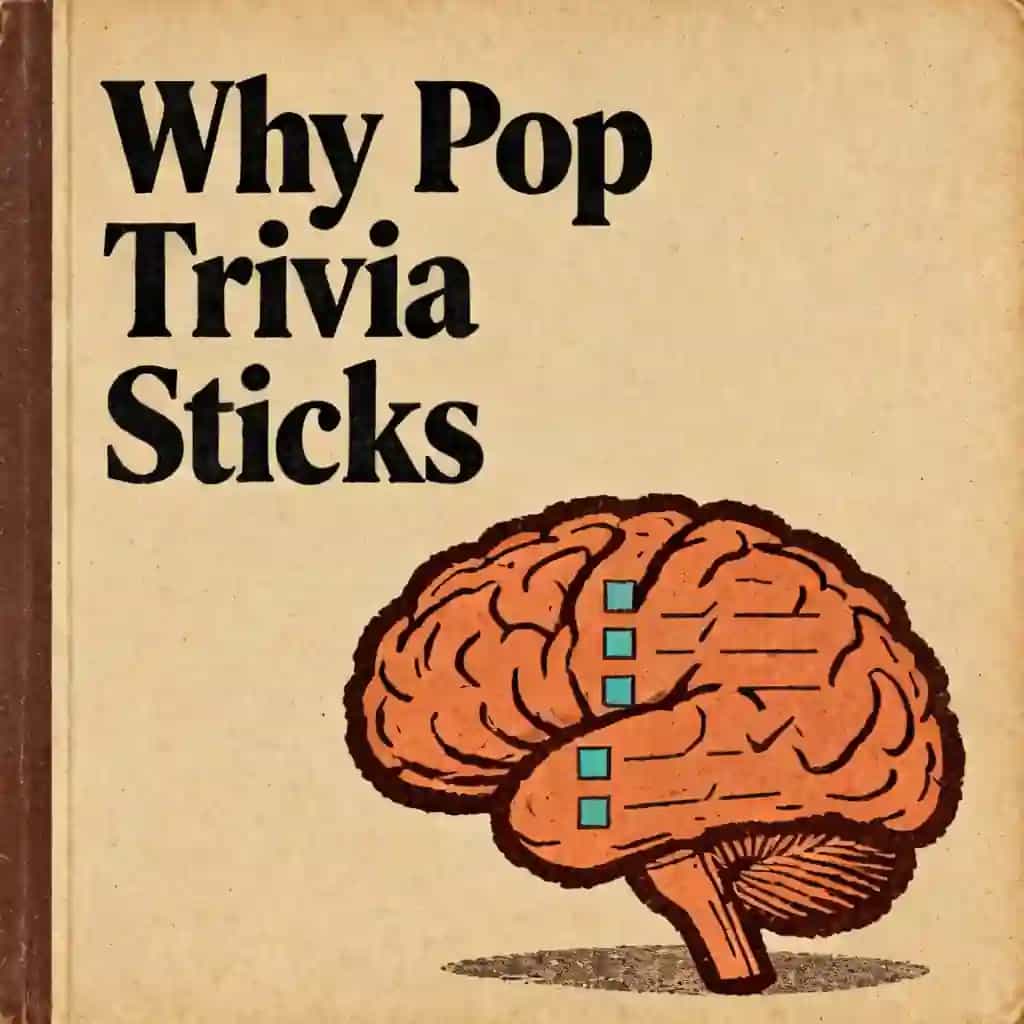
Trivia isn't just about what you know; it is about how you organize that knowledge. You have to build a mental map—animals, history, space, pop culture—and when a category is announced, you pull up that folder in your brain.
Criado por ex-alunos da Universidade de Columbia em San Francisco
"Instead of endless scrolling, I just hit play on BeFreed. It saves me so much time."
"I never knew where to start with nonfiction—BeFreed’s book lists turned into podcasts gave me a clear path."
"Perfect balance between learning and entertainment. Finished ‘Thinking, Fast and Slow’ on my commute this week."
"Crazy how much I learned while walking the dog. BeFreed = small habits → big gains."
"Reading used to feel like a chore. Now it’s just part of my lifestyle."
"Feels effortless compared to reading. I’ve finished 6 books this month already."
"BeFreed turned my guilty doomscrolling into something that feels productive and inspiring."
"BeFreed turned my commute into learning time. 20-min podcasts are perfect for finishing books I never had time for."
"BeFreed replaced my podcast queue. Imagine Spotify for books — that’s it. 🙌"
"It is great for me to learn something from the book without reading it."
"The themed book list podcasts help me connect ideas across authors—like a guided audio journey."
"Makes me feel smarter every time before going to work"
Criado por ex-alunos da Universidade de Columbia em San Francisco

Lena: Imagine you’re at a high-stakes trivia night, the score is tied, and the final question flashes on the screen: "What does ALF actually stand for?" The room goes silent.
Miles: Oh, that’s a classic! Most people just think of the fuzzy puppet, but the answer is a total secret weapon: Alien Life Form. He’s actually Gordon Shumway from the planet Melmac.
Lena: No way, really? I always just called him ALF! It’s wild how these details from forty years ago, like the Space Shuttle Challenger disaster or the release of *The Legend of Zelda* in 1986, still define our general knowledge today.
Miles: Exactly. Whether it’s remembering that baby carrots were a 1986 innovation or knowing which streaming service carries *Severance*, pop culture is the ultimate connector across generations, from Boomers to Gen Z.
Lena: It really is. So, let’s dive into the iconic moments and obscure facts that will make you a definitive trivia expert.
Lena: You know, Miles, that ALF fact is the perfect example of what makes trivia so addictive—it is that "hidden in plain sight" quality. We have all seen the show, but how many of us actually registered the acronym? It is like being told that a blue whale’s heart is so massive a human could literally swim through its arteries. You have seen the whale in documentaries, you know it is big, but that specific, visceral detail—swimming through an artery—that is what sticks.
Miles: Exactly, Lena. That is the "no way, really?" factor we were talking about. And if you are sitting at that corner table in a pub, trying to claw back points in the science round, that is the kind of fact that makes you look like a genius. It is not just "the heart is big," it is "the heart weighs 400 pounds, about the size of a small car." When you can drop a specific number like that, the other teams just sort of deflate. They know they are playing against a pro.
Lena: It is all about the layers, right? Like, I was reading about the Anglo—Zanzibar War. Most people might know it was short, but the "pro" trivia move is knowing it ended on August 27, 1896, and lasted somewhere between 38 and 45 minutes. That is less time than it takes to get a pizza delivered! Imagine being a soldier in a war that is over before you have even finished your morning coffee.
Miles: Right! And the Sultan’s palace was shelled, he surrendered, and boom—history’s shortest conflict. It is those "shortest" or "longest" categories that always trip people up because they sound like urban legends. If a quizmaster asks for the shortest war and you say "about forty minutes," you are golden. It is that precision that separates the casual fans from the legends.
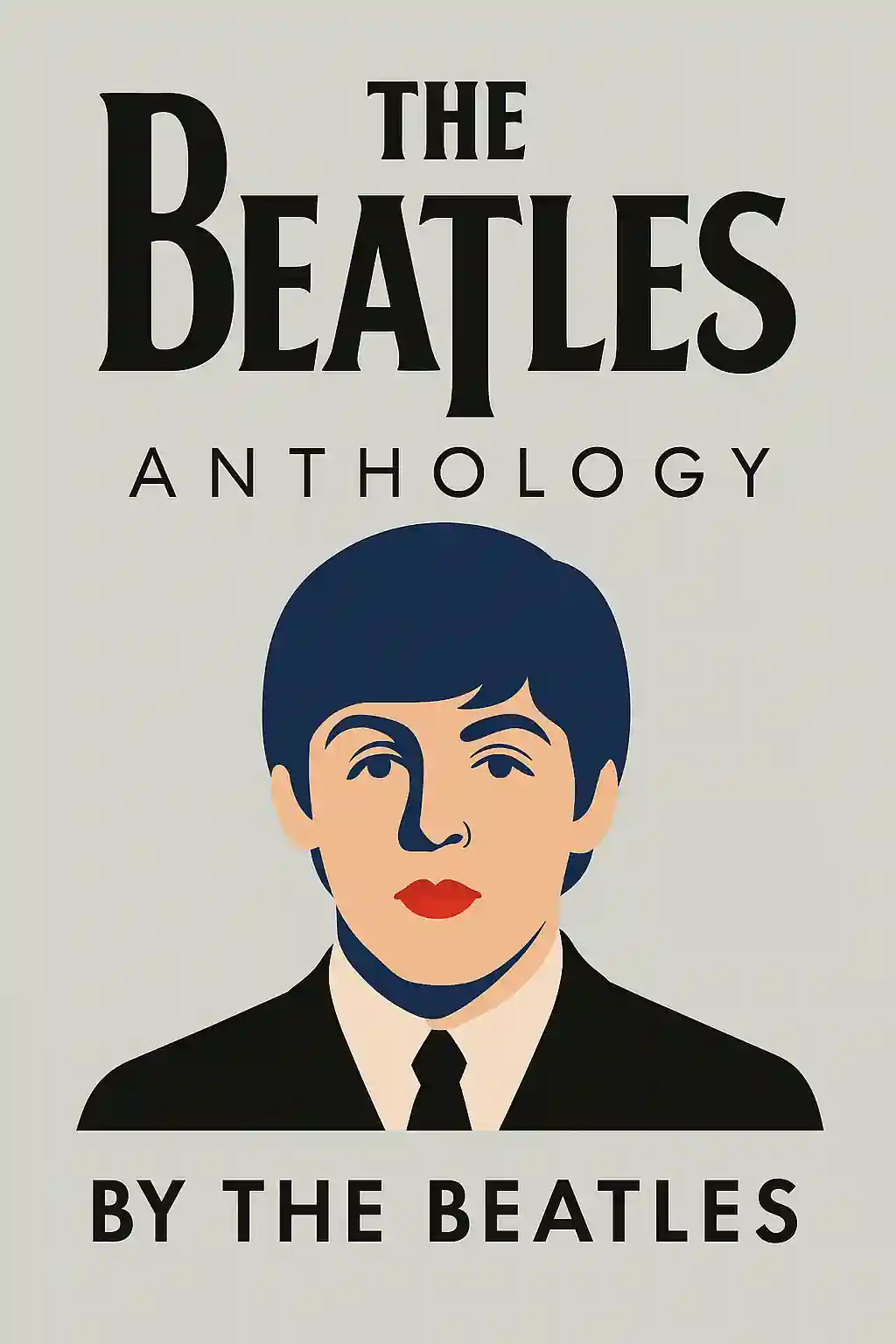
Lena: It reminds me of the "Fifth Beatle" debate. Everyone wants to say Brian Epstein or George Martin, and they are not necessarily wrong in a historical sense—but the deep-cut trivia answer? That would be Jimmie Nicol. He filled in for Ringo Starr for exactly thirteen days in 1964 during their world tour. Most people have never even heard his name, but he lived the dream for two weeks.
Miles: Thirteen days of being a Beatle. That is incredible. And you see, that is why we call these "secret weapons." If the question is "Who was the drummer who replaced Ringo for part of the 1964 tour?" and you have Jimmie Nicol ready to go, you have basically won the music round. It is about digging past the surface level. We all know the Beatles, we all know the Great Wall of China—or we think we do.
Lena: Oh, don't even get me started on the Great Wall. That is the ultimate "fake" trivia fact, isn't it? The idea that it is the only man-made structure visible from space with the naked eye.
Miles: It is a total myth! Astronauts have confirmed it over and over. It is too narrow, and it blends in perfectly with the natural landscape. You would need a telescope or a high—powered camera lens to see it. If you are at trivia and that comes up as a "true or false," and you confidently mark "false," you are going to see a lot of confused faces at the other tables.
Lena: It is so satisfying to debunk those. It gives you a certain authority. It is like knowing that butterflies taste with their feet. It sounds like something out of a fairy tale, but they actually have chemoreceptors on their legs to figure out if a plant is the right place to lay their eggs. You see a butterfly land on a flower, you think it is resting—no, it is checking the menu.
Miles: "Checking the menu," I love that. And that is the energy we need. Trivia isn't just about what you know; it is about how you organize that knowledge. You have to build a mental map—animals, history, space, pop culture. When a category is announced, you pull up that folder in your brain. If it is "Biology," you grab the blue whale heart and the butterfly feet. If it is "History," you grab the 38—minute war.
Lena: And if it is "Strange Origins," you go straight for the ketchup. Did you know that in the 1830s, a doctor in Ohio named John Cook Bennett marketed ketchup as a medicine? He literally sold it in pill form and claimed it could cure diarrhea and indigestion.
Miles: Wait, so people were taking ketchup pills for stomach aches? That is wild. I mean, I love fries, but I’m not sure I’d trust a Heinz capsule to fix my gut.
Lena: Right? It was a total patent medicine. It took a while before it became the condiment we know today. But that is exactly the kind of "unusual uses" fact that catches people off guard. It bridges the gap between food history and medical history.
Miles: It’s those connections that make the facts stay in your head. You’re not just memorizing a date; you’re picturing a guy in a top hat swallowing a tomato pill. That image is what makes you remember it under pressure. When the clock is ticking and the quizmaster is staring you down, you need those vivid mental cues to bring the info to the surface.
Lena: Moving from the dinner table to the cosmos—there is something about space trivia that just feels more profound, doesn't it? It is so abstract that the facts have to be really punchy to land. For instance, I always thought space was just... nothing. A vacuum. But astronauts who have actually been out there—on spacewalks, specifically—say it has a very specific smell.
Miles: Oh, I've heard this! It’s not just "metallic," right? It’s more specific than that.
Lena: Exactly. They describe it as a mix of seared steak, hot metal, and welding fumes. Like a barbecue that went slightly wrong in a machine shop. They think it is caused by high—energy particles interacting with their suits. Imagine coming back into the airlock, taking off your helmet, and smelling a burnt ribeye.
Miles: That is so cool. I mean, if I’m at a trivia night and the question is "What do astronauts say space smells like?" and I can list "seared steak and hot metal," I am feeling pretty good about our chances. It is such a weirdly human detail for something as vast as the universe.
Lena: It makes it tangible. Speaking of vastness, let’s talk about the scale of things. This is a classic comparison question: are there more stars in the universe or grains of sand on all the beaches and deserts on Earth?
Miles: Most people would guess sand, right? I mean, think about the Sahara or the entire coast of Australia. That is a lot of grains.
Lena: You would think! But the math says otherwise. There are roughly 10 to the 18th power grains of sand on Earth, but the observable universe has between 10 to the 21st and 10 to the 24th power stars. The stars win by a landslide—or a sand-slide, I guess.
Miles: That is a "mind—blowing scale" fact. It is perfect for those rounds where the quizmaster is trying to stump you with estimation questions. And it actually pairs well with the fact that a day on Venus is longer than its year.
Lena: Wait, how does that even work?
Miles: Venus rotates so slowly on its axis that it takes 243 Earth days to complete one rotation. But it only takes 225 Earth days to orbit the Sun. So, by the time you've finished one "day" on Venus, a whole year has already passed. You could have two birthdays in one day!
Lena: That is the ultimate "counterintuitive" fact. It defies our basic understanding of how planets should work. And honestly, it is the kind of thing that makes people second-guess themselves during a "True or False" round. They think, "No, that’s impossible, a day has to be shorter than a year." But in the Upside Down of space, the rules are different.
Miles: Speaking of things that are surprisingly heavy—let’s look up at the clouds. You see a big, fluffy cumulus cloud drifting by, and it looks like a piece of cotton candy, right? Totally weightless.
Lena: I mean, it is floating! It has to be light.
Miles: You’d think so. But an average cumulus cloud weighs about 1.1 million pounds. That is roughly 550 tons, or the equivalent of 100 elephants.
Lena: 100 elephants floating over my head? That is terrifying! How does it stay up there?
Miles: It is just because the water droplets are so tiny and spread out over such a huge area that the air density keeps it aloft. But the actual mass of all that water? It is massive. That is a "secret weapon" for any meteorology or physics round. "How many elephants equal the weight of a cloud?" Boom—one hundred.
Lena: I’m going to be looking at the sky very differently now. But you know, even down here on Earth, things are constantly changing in ways we don't notice. Like the Eiffel Tower. It is this massive iron structure, but it actually has a summer growth spurt.
Miles: Because of thermal expansion, right?
Lena: Exactly. On a hot summer day in Paris, the iron expands so much that the tower can grow up to 6 inches taller than it is in the winter. It is literally stretching toward the sun.
Miles: That is a great engineering fact. It is a simple scientific principle—heat makes things expand—but seeing it applied to one of the most famous landmarks in the world makes it memorable. It is like the fact that our own ears and noses never stop growing.
Lena: Wait, what? I thought we stopped growing after our teens!
Miles: Our bones do, but the cartilage in our ears and noses keeps expanding throughout our entire lives. That is why elderly people often seem to have larger features. It is not an optical illusion; they are actually bigger than they were when they were fifty.
Lena: So we are all just slowly turning into the BFG. Good to know. But hey, if we are talking about human biology, here is one that always gets a laugh—and a bit of a "gross" reaction. Humans share about 50% of our DNA with bananas.
Miles: 50%? That seems high. I don't feel very... yellow. Or peelable.
Lena: It is because at the cellular level, the basic building blocks of life—how we process energy, how our cells divide—are surprisingly universal. We share a common evolutionary ancestor from billions of years ago. So, the next time you’re eating a banana, just remember: you’re basically eating a very distant cousin.
Miles: That is a "biology shocker" for sure. It’s the kind of fact that makes the whole room go "No way," which is exactly what you want when you’re trying to dominate a science round. It sounds like a joke, but it is backed by genetics.
Lena: Let’s pivot to something a bit more modern. If you are a fan of pop culture, you know that *Stranger Things* has basically taken over the world since it launched about ten years ago. But what I love about it is how deep the trivia goes. It is not just about the plot; it is about the 80s nostalgia and the Dungeons & Dragons lore.
Miles: Oh, the D&D connection is huge. I mean, the kids call themselves "The Party," and they name every monster after something from their game. The Demogorgon, the Mind Flayer, and of course, the big bad from Season 4—Vecna.
Lena: And Vecna is a great trivia deep—dive. In the show, he is Henry Creel, Subject 001. But in D&D, he is a legendary lich, this powerful undead wizard. The Duffer Brothers—the twins who created the show—really did their homework on that.
Miles: They did. And did you know they were born on February 15, 1984? They are literally "80s kids" themselves. That is why the show feels so authentic. It is not just a costume; it is their childhood. They even cite *Stand by Me* and *The Goonies* as their primary inspirations.
Lena: It’s interesting you mention the cast, because they have become icons. Millie Bobby Brown as Eleven—or Jane, as we find out later—is the heart of the show. But the trivia that really gets people is her love for Eggo waffles. That wasn't just a random choice; it became a massive marketing moment.
Miles: Right! And if you are in a "TV food" round, knowing that Eleven’s favorite food is Eggos is an easy point. But a harder one? Knowing the name of the ice cream shop where Steve and Robin work in Season 3.
Lena: Scoops Ahoy! That nautical theme was everywhere that year. And let’s not forget the music. *Stranger Things* has this incredible ability to take an old song and make it a global hit again. Like "The NeverEnding Story" by Limahl in Season 3, or Kate Bush’s "Running Up That Hill" in Season 4.
Miles: And Metallica! Eddie Munson shredding "Master of Puppets" in the Upside Down. That was a huge moment. If you are doing music trivia, knowing that Eddie is the leader of the Hellfire Club and that he plays guitar is a solid start, but knowing he’s obsessed with *Lord of the Rings*—he even calls himself "Eddie the Head" sometimes—that is the expert level.
Lena: It is also worth noting how the show handles its villains. The Demogorgon was a physical predator, the Mind Flayer was a hive mind, but Vecna? He is psychological. He preys on trauma. His first victim was Chrissy Cunningham, the cheerleader. If a trivia question asks for the order of his victims, that is a tough one. Chrissy was first, then Fred Benson, then Patrick McKinney.
Miles: And Max Mayfield almost became the fourth, but "Running Up That Hill" saved her. That is a great "climax" fact. But what about the setting itself? Hawkins, Indiana. It is fictional, of course, but it is built on top of a massive conspiracy at the Hawkins National Laboratory.
Lena: Led by Dr. Martin Brenner, or "Papa." And here is a bit of trivia for the real fans: Eleven isn't the only one with a number. We met Eight, or Kali, in Season 2. She was part of a gang of outcasts in Chicago. A lot of people forget about her because she was only in one episode, but she is a huge part of the lore.
Miles: She really is. And the show is so packed with Easter eggs. Every episode has a reference to something from the 80s. I heard a rumor that a superhero is referenced in every single episode of *Seinfeld*, but in *Stranger Things*, it is more about the movies. *The Thing*, *The Lost Boys*, *E.T.*—they are all woven into the background.
Lena: It creates this "shared experience" across generations. Even if you weren't alive in 1983—when the first season takes place—you feel like you know that world. And that is why it works so well for trivia. It is a mix of specific plot points and general 80s knowledge. Like knowing that the arcade the kids go to is called the Palace Arcade.
Miles: Or that the town’s newspaper is the *Hawkins Post*, where Nancy Wheeler had that internship. It is all about those small details. And for the listeners who want to take their fandom to the next level, there are actually official *Stranger Things* role—playing games and even a coloring book for Season 3.
Lena: A coloring book? I might need that for my next "adult coloring" session. But seriously, the merchandising is wild. You can find everything from Demogorgon figurines to "Hawkins High" letterman jackets. It shows how a single show can become a cultural cornerstone.
Miles: It’s the "blockbuster" effect. Just like *Star Wars* or *The Godfather*, it moves past the screen and into our lives. And if you are at trivia night, being the person who knows that "Enzo" is actually the name of the Russian guard who helps Hopper in Season 4—that makes you the hero of your team.
Lena: We've touched on *Stranger Things*, but it is part of a much longer tradition. Cinema has been shaping our culture for over 130 years. And if you want to win a "History of Entertainment" round, you have to start in Paris, March 1895.
Miles: The Lumière brothers. They are usually credited with the first public screening of a motion picture. But there is a great "trick" question here: who was the guy who invented the tech but didn't think people would want to watch movies together?
Lena: Thomas Edison! He had the Kinetoscope, which was a "peep show" device—only one person could watch at a time. He completely missed the communal potential of cinema. The Lumières, on the other hand, realized that watching a train arrive at a station—*Arrival of a Train at La Ciotat Station*—was way more fun if the whole room was screaming together.
Miles: And they did scream! There is that famous story about the audience fleeing the theater because they thought the train was actually going to burst through the screen. That is the ultimate "first movie" anecdote.
Lena: From there, it just exploded. We moved from silent films into the "talkies" in 1927 with *The Jazz Singer*. That was the death knell for the silent era. A lot of actors lost their careers because their voices didn't match their "look," or they had thick accents that didn't work for the studios.
Miles: Right, like Greta Garbo survived because her Swedish accent added to her mystery, but others weren't so lucky. And then came the Golden Age. The 1930s and 40s. The era of the "studio system."
Lena: Where the big five—MGM, Paramount, Warner Bros., 20th Century Fox, and RKO—owned everything. They owned the actors, the directors, and even the theaters. It was a literal assembly line for dreams. And it produced some of the biggest trivia hits: *Gone with the Wind*, *Casablanca*, *The Wizard of Oz*—all released in the same general era.
Miles: 1939 was a massive year for movies. If you get a question about the "greatest year in film history," 1939 is almost always the answer. But then the system started to crumble in the 50s. Television became the new rival.
Lena: I love how the movie industry reacted to TV. They didn't just give up; they went bigger. They introduced CinemaScope—that widescreen format—and 3D movies to try and lure people out of their living rooms. It was an arms race of spectacle.
Miles: And then came the 70s. The "New Hollywood" era. Directors like Coppola and Scorsese took the reins. *The Godfather* in 1972 changed everything. It made movies feel "adult" and complex again. But then, five years later, the "blockbuster" was born.
Lena: 1977. *Star Wars*. That is the moment the industry shifted from making individual movies to making "franchises." It wasn't just a film; it was toys, shirts, sequels. It changed the financial DNA of Hollywood.
Miles: And it is still happening. Today, we are in the era of the "streaming revolution." Netflix and Amazon are the new studios. But even as the tech changes, the classics still hold weight. You can still win a trivia point by knowing that the first Academy Awards were held in 1929 at a modest dinner, not the massive spectacle we see today.
Lena: Or knowing that the word "blockbuster" actually comes from World War II. It was a type of bomb that could bust an entire city block. After the war, the term was adopted by the film industry to describe movies that were so popular they "busted" the lines around the block.
Miles: That is a fantastic etymology fact. It connects history, war, and entertainment. And it is the kind of detail that makes a trivia answer feel "complete." You’re not just giving a word; you’re giving a story.
Lena: Sometimes the best trivia isn't about space or history; it is about the things sitting right in front of us. Like a deck of playing cards. We have all played poker or solitaire, but have you ever looked closely at the Kings?
Miles: I know where you’re going with this. There is one who is... "different," right?
Lena: The King of Hearts. He is the only one in the standard deck without a mustache. The Kings of Clubs, Diamonds, and Spades are all rocking some serious facial hair, but the King of Hearts is clean-shaven. He is also often called the "Suicide King" because it looks like he’s pointing his sword at his own head.
Miles: "The Mustache—Free King." That is a perfect "visual observation" question. Most people have seen those cards thousands of times and never noticed. It is like the M&M’s thing. Everyone knows the brand, but do they know what the "M" stands for?
Lena: It is a partnership, right?
Miles: Exactly. It stands for Mars and Murrie. Forrest Mars Sr.—the guy from Mars, Inc.—and Bruce Murrie, who was the son of the president of Hershey’s. They teamed up because Hershey’s had the chocolate, and Mars had the idea for the candy coating that wouldn't melt in your hand.
Lena: "Melts in your mouth, not in your hands." One of the most famous slogans in history. And it was originally designed for soldiers in World War II so they could carry chocolate without it turning into a gooey mess in their pockets.
Miles: That is another "war to consumer product" pipeline. It is fascinating how much of our daily life is shaped by military needs. Even the Slinky! It was invented by a mechanical engineer named Richard James who was trying to develop springs that could support sensitive instruments on ships.
Lena: And he dropped one, and it "walked" down a stack of books. A toy was born. And here is a "secret weapon" for a measurement round: an original Slinky, when fully extended, can stretch to 87 feet. That is the length of a full—size basketball court.
Miles: 87 feet! I’m pretty sure I’ve never gotten mine past five feet before it tangled into a permanent knot.
Lena: Story of my childhood. But hey, if we are talking about "household" trivia, let’s go to Scotland. Every country has a national animal—the bald eagle for the US, the lion for England. But Scotland? They went with the unicorn.
Miles: A mythical creature? That is so on—brand for Scotland.
Lena: It really is. It has been their symbol since the 15th century. It represents purity, power, and the fact that it is the "natural enemy" of the lion. It is a bit of a historical dig at England. If you are in a "Geography" or "Heraldry" round, and the question is "What is the national animal of Scotland?" and you say "Unicorn," people are going to think you’re joking. But it is 100% true.
Miles: I love it. And speaking of places that sound fake but are real—have you ever been to Hell?
Lena: Only on Mondays, Miles.
Miles: Haha, fair. But there is a real village called Hell in Norway. And the irony is that it is absolutely freezing there. It gets down to sub—zero temperatures for about four months a year. So, in Norway, Hell literally freezes over on a regular basis.
Lena: That is a great "humorous twist" fact. It is perfect for those "Real or Fake" geography rounds. And it is actually a beautiful village, despite the name.
Miles: It just goes to show that the world is much weirder than we give it credit for. Whether it’s a village in Norway or the King of Hearts' missing mustache, there is a story behind everything.
Lena: As we move into more recent trivia, the 1990s are having a huge moment right now. It is that "thirty—year cycle" of nostalgia. If you are at a trivia night, you can bet there will be a 90s music or TV round.
Miles: Oh, for sure. You’ve got to know your *Friends* trivia. For instance, how many times did Ross Geller get divorced?
Lena: Three! Carol, Emily, and Rachel. He is the king of the "divorce" round. And what about the first music video ever played on MTV? That is a classic 90s—adjacent fact, even though it happened in 1981.
Miles: "Video Killed the Radio Star" by The Buggles. It is the ultimate trivia answer for anything related to music history. But if you want to get more current, you have to look at the 2000s and 2010s. Like, what was the "Mannequin Challenge" song?
Lena: "Black Beatles" by Rae Sremmurd! That was everywhere in 2016. It is wild how these "viral moments" become permanent fixtures in our collective memory. It is the same with movies. What is the highest—grossing film of all time?
Miles: It is a toss—up depending on if you adjust for inflation, but *Avatar* usually holds the crown. Although *Avengers: Endgame* gave it a serious run for its money. And speaking of the MCU, who is the only person besides Captain America who can lift Thor’s hammer, Mjolnir?
Lena: Vision! In *Age of Ultron*. He just casually picks it up and hands it to Thor while everyone else is staring in shock. It is one of those "blink and you miss it" moments that becomes a huge trivia point.
Miles: And let’s not forget the "mistakes." Like the coffee cup in the final season of *Game of Thrones*. That was a massive pop culture moment. It wasn't supposed to be there, but it became more famous than the actual plot of the episode.
Lena: It showed that even the biggest productions are human. And it is those "behind—the—scenes" blunders that make for great trivia. Like knowing that it took eight hours to get Jim Carrey into his Grinch makeup every day. He said it felt like being buried alive!
Miles: I can imagine. But that dedication is what makes those characters iconic. Whether it’s the Grinch or Snoop Dogg—who, by the way, is best friends with Martha Stewart. That is a duo I never expected, but now I can't imagine them apart.
Lena: They are the ultimate "odd couple." And that is a great trivia question for a "Celebrity Connections" round. "Who is Snoop Dogg’s best celebrity friend?" Martha Stewart. It’s so wholesome.
Miles: It really is. And it shows that pop culture is always evolving. It takes these disparate elements—a rapper, a home decor mogul, a coffee cup in Westeros—and knits them into a story we all share.
Lena: So, Miles, we've covered a lot of ground today. From blue whale hearts to *Stranger Things* lore. But if our listeners are actually going to use this at their next trivia night, they need a strategy, right?
Miles: Absolutely. Knowing the facts is only half the battle. You have to know *how* to play. My first tip? Listen to the entire question. Quizmasters love to add a twist at the very end. They might start by talking about the Great Wall of China being visible from space, but then ask, "Which astronaut officially debunked this myth in 2003?"
Lena: That is a classic "gotcha" move. You have to stay patient. And my tip would be to categorize your brain. When you hear a topic, mentally open that folder. "Animals? Okay, butterflies taste with their feet, owls are called a parliament, flamingos eat upside down."
Miles: "A Parliament of Owls." I love that one. It sounds so dignified. And don't forget the "True or False" traps. If something sounds too weird to be true—like ketchup being medicine or the Eiffel Tower growing in summer—it is probably the answer they are looking for.
Lena: Right! Trivia is built on the "unbelievable but true." If you’re unsure, lean toward the more surprising option. And if you’re on a team, divide and conquer. Have one person be the "90s Pop Culture" expert, another for "Science and Nature," and someone else for "History and Geography."
Miles: And most importantly—have fun with it! Trivia is about the joy of learning weird stuff. It is about that "Aha!" moment when the answer clicks. Whether you win the trophy or just get a free round of drinks, you’re coming away with a better understanding of the world.
Lena: Exactly. And you have these "secret weapons" in your pocket now. You can walk into any pub and feel like a legend. Just don't get too cocky—there’s always someone who knows the middle name of every character on *The Office*.
Miles: (Laughs) True. There is always a bigger fish. Or a bigger whale heart.
Lena: As we wrap things up today, I’m struck by how much these "pointless" facts actually matter. They aren't just for winning games; they are the "cultural glue" that connects us. When you share a weird fact about a Slinky or a *Stranger Things* Easter egg, you’re finding common ground with someone else.
Miles: It’s true. It is a way of saying, "Hey, I noticed this weird thing about the world, did you notice it too?" It turns a room full of strangers into a community. Even if it is just for a few hours on a Tuesday night.
Lena: And that is the real power of pop culture and general knowledge. It is a universal language. It doesn't matter where you’re from or how old you are; we can all agree that space smelling like seared steak is fascinating.
Miles: It really is. So, to everyone listening, I hope you found a few new "gems" for your next trivia night. Or maybe just a fun story to tell at dinner.
Lena: Take a moment to reflect on which of these facts surprised you the most. Was it the ketchup pills? The 38—minute war? The fact that you’re 50% banana? Whatever it was, hold onto that curiosity.
Miles: The world is full of these little mysteries. Keep looking for them. And hey, maybe the next time you see a butterfly, you’ll give its feet a little more respect.
Lena: (Laughs) Definitely. Thank you so much for joining us on this deep dive into the world of trivia. It has been a blast.
Miles: It really has. Keep learning, keep questioning, and we'll see you in the winner's circle.
Lena: Thanks for listening.