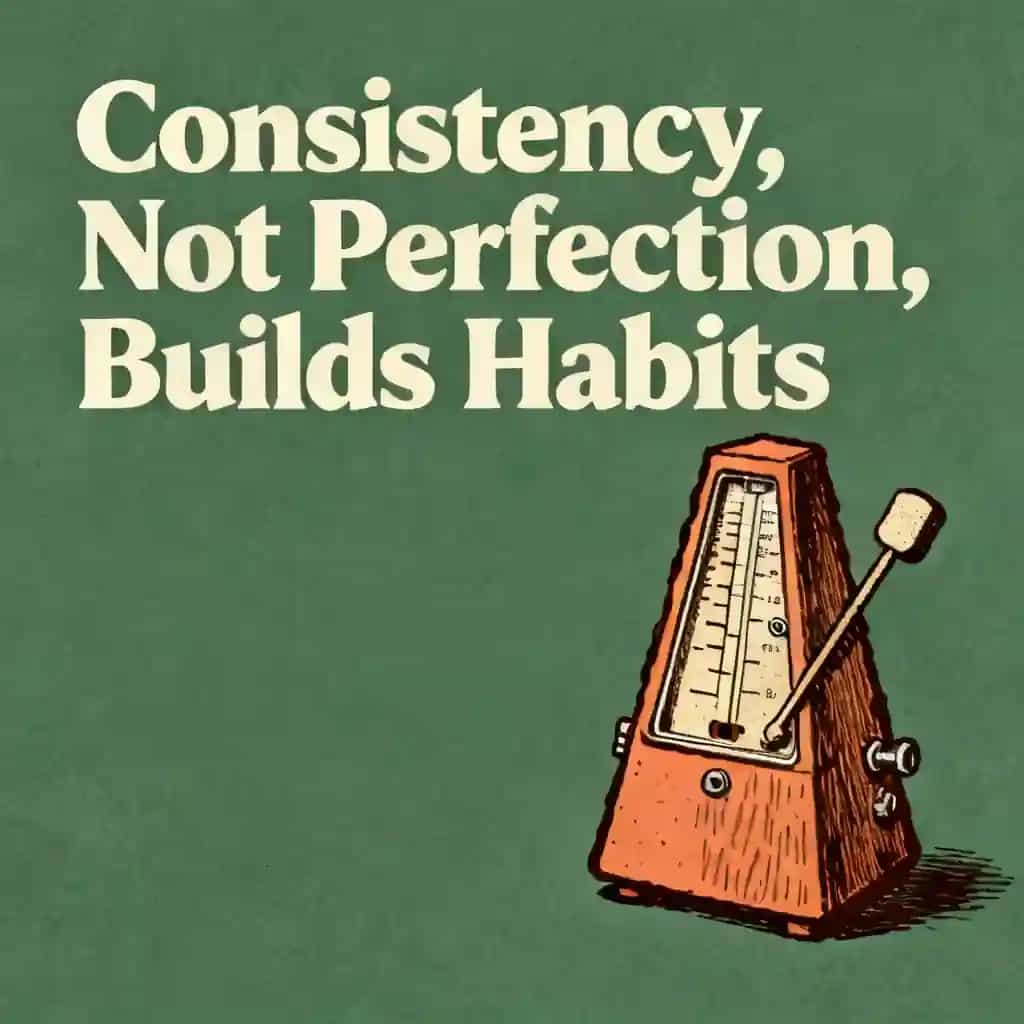
Struggling with consistency? Learn why willpower fails and how to design a system that makes reaching your health goals feel effortless.

The most disciplined people actually use less willpower in their daily lives, not more; they just encounter fewer temptations because they have structured their lives to avoid them.
Criado por ex-alunos da Universidade de Columbia em San Francisco
"Instead of endless scrolling, I just hit play on BeFreed. It saves me so much time."
"I never knew where to start with nonfiction—BeFreed’s book lists turned into podcasts gave me a clear path."
"Perfect balance between learning and entertainment. Finished ‘Thinking, Fast and Slow’ on my commute this week."
"Crazy how much I learned while walking the dog. BeFreed = small habits → big gains."
"Reading used to feel like a chore. Now it’s just part of my lifestyle."
"Feels effortless compared to reading. I’ve finished 6 books this month already."
"BeFreed turned my guilty doomscrolling into something that feels productive and inspiring."
"BeFreed turned my commute into learning time. 20-min podcasts are perfect for finishing books I never had time for."
"BeFreed replaced my podcast queue. Imagine Spotify for books — that’s it. 🙌"
"It is great for me to learn something from the book without reading it."
"The themed book list podcasts help me connect ideas across authors—like a guided audio journey."
"Makes me feel smarter every time before going to work"
Criado por ex-alunos da Universidade de Columbia em San Francisco

Nia: You know, I was looking at some research from Caltech that came out about three years ago, and it turns out the whole "21 days to form a habit" thing is actually a total myth. For the gym specifically, it can take an average of six months!
Blythe: Right? It’s wild because we usually beat ourselves up after just three weeks. But the real secret isn't actually about having more willpower or "discipline." It’s about moving away from motivation—which is super unreliable—and building what experts call a "system."
Nia: Exactly. I love that idea because it takes the pressure off. If you’re struggling to stay consistent with your training or your homework, it’s not because you’re "undisciplined"—it’s likely just that your plan doesn't match your actual, messy reality yet.
Blythe: That's fascinating. It’s about treating your health and goals like logistics rather than inspiration. So, let’s dive into how to design a "chaos-proof" system that actually sticks.
Nia: So, if it is not about willpower, what are we actually doing when we "try harder"? Because I definitely feel like I am flexing a muscle when I force myself to sit down and do my statistics homework instead of scrolling through social media. It feels physical, you know?
Blythe: Oh, I totally get that. It feels like you are gritting your teeth, right? But here is the thing—the science has shifted so much on this in just the last few years. There was this famous theory back in the nineties called "ego depletion"—the idea that willpower is like a battery or a muscle that just gets tired the more you use it. People used to think if you used up all your "discipline" resisting a donut at lunch, you would have none left for the gym or your homework later that night.
Nia: I remember hearing that! It was such a perfect excuse, honestly—like, "Sorry, I can't study, I already used my brain's willpower tokens on not yelling at my boss today." But you are saying that is not actually how it works?
Blythe: Exactly. Recent research—especially some big replication studies that came out around 2025 and 2026—suggests that the "ego depletion" effect is way smaller than we thought. In fact, it might be more about your *beliefs* than your biology. If you believe your willpower is limited, you act like it is. But if you see it as a system you design, everything changes.
Nia: That is a huge relief, actually. But it also raises a question—if it is not a muscle getting tired, why do some people seem so much better at this than others? Like, how does that one person in the library stay focused for four hours while I am checking my phone every six minutes?
Blythe: That is the million-dollar question. And the answer from researchers like Denise de Ridder is fascinating. They found that people who score high on "self-control" scales actually use *less* willpower in their daily lives, not more. They aren't constantly fighting off temptations—they just encounter fewer temptations because they have structured their lives to avoid them.
Nia: Wait, so they aren't "stronger"—they are just better at "situation selection"? That sounds like cheating, but in the best way possible.
Blythe: It is totally cheating! It is strategic laziness. They aren't resisting the phone—the phone is in another room. They aren't resisting the junk food—it is not in the house. They aren't "forcing" themselves to go to the gym—they have a bag packed by the door and a friend waiting for them at 5:00 PM. They have essentially outsourced their discipline to their environment.
Nia: I love that. It turns it from a character flaw into a design flaw. If I am failing to do my homework, it is not because I am "weak"—it is because my desk is covered in distractions or my phone is right next to my textbook.
Blythe: Precisely. And the research from the University of Toronto actually back this up—they found that the most disciplined people are the ones who have turned their desired behaviors into habits that feel as automatic as brushing your teeth. You do not need willpower to brush your teeth, right? You just do it.
Nia: Right. I don't stand in the bathroom debating whether I have the "strength" to brush my teeth today. I just... find myself doing it.
Blythe: Exactly. And that is the goal for the gym and your homework. We want to move those things from the "high-effort, high-willpower" category into the "brushing my teeth" category. It is about building neurological patterns in a part of the brain called the basal ganglia. Once a habit is stored there, it requires almost zero conscious effort to execute. It becomes the path of least resistance.
Nia: Okay, so we are moving from "struggle" to "structure." But how do we actually start building those neurological highways? Because right now, my highway to "scrolling on the couch" is like an eight-lane interstate, and my highway to "doing squats" is more like a muddy hiking trail.
Blythe: (laughs) That is a great analogy. To pave that trail, we have to understand the mechanics of how the brain actually learns. It is not about one big "push"—it is about thousands of tiny "votes" for a new identity.
Nia: You mentioned the basal ganglia earlier—the part of the brain that handles automatic stuff. I have heard about this "Habit Loop" before—Cue, Routine, Reward. But I always struggle with the "Reward" part. Like, if I finish a hard workout, the "reward" is often just being sweaty and tired. That doesn't exactly feel like a dopamine hit in the moment.
Blythe: That is such a common sticking point. The problem is that our brains are wired for *immediate* rewards, but the things we want—looking good, getting better grades, being healthy—are "delayed" rewards. Your brain is thinking, "Okay, I did the squats... where is the prize?" And when the prize is 'better health in six months,' the brain basically says, 'That doesn't count.'
Nia: Exactly! It feels like I am working for a paycheck that won't clear for half a year. No wonder I want to quit after a week.
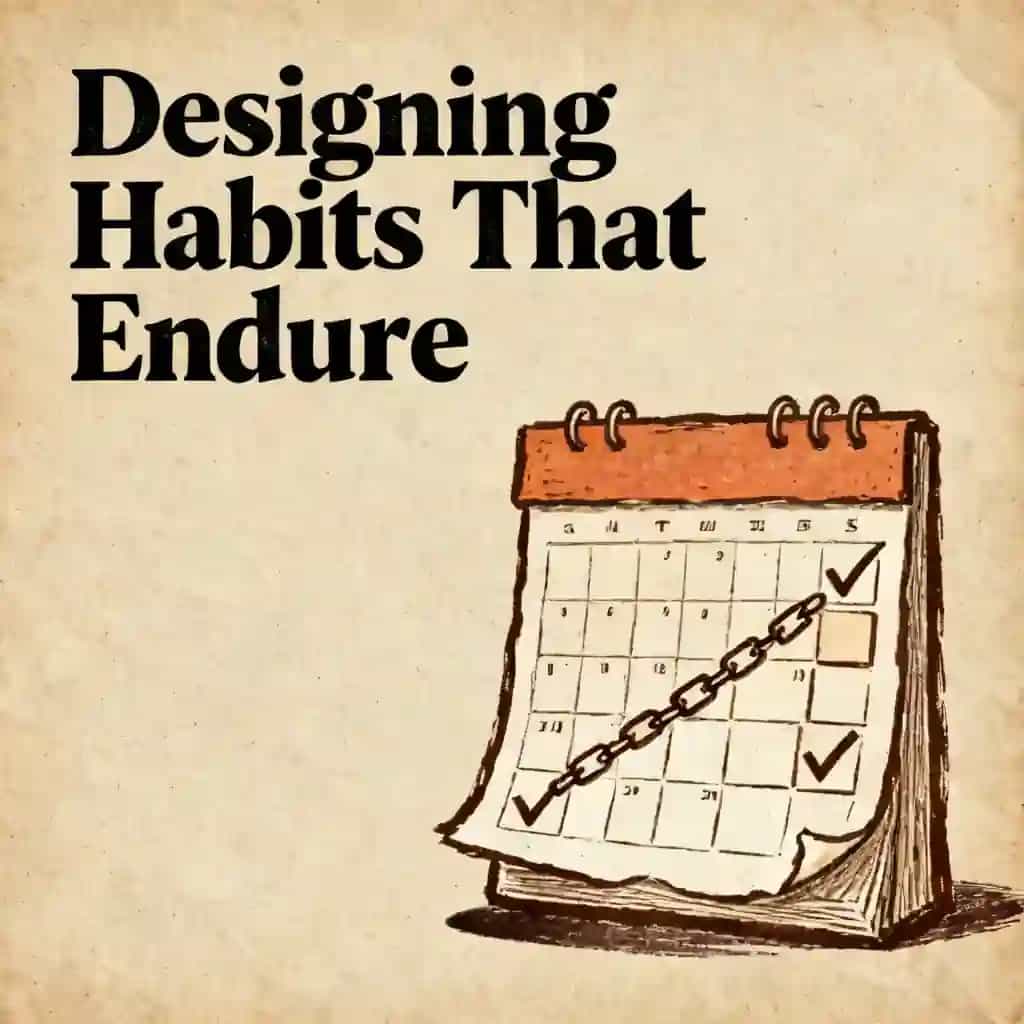
Blythe: Right. So, to hack the loop, we have to make the reward immediate. And it can be something incredibly small. Researchers found that even the simple act of checking a box on a habit tracker can trigger a tiny hit of dopamine. That is why apps like Habitica or even just a paper calendar with big red X's are so effective. The "reward" becomes the visual of the streak growing.
Nia: So the "streak" is the reward, not just the exercise itself?
Blythe: In the beginning, yes. You are essentially "bridging the gap" between the effort today and the results tomorrow. There is this concept called "reward prediction error" that is huge in neuroscience. If your brain predicts a reward and gets it, the dopamine reinforces the behavior. If you attach an immediate, reliable reward—like a specific cup of tea after you finish your homework, or listening to your favorite podcast *only* while you are at the gym—you are teaching your brain that this "routine" is worth repeating.
Nia: Oh, I have heard of that—"temptation bundling," right? Only allowing yourself the "want" activity while you are doing the "need" activity.
Blythe: Yes! Katy Milkman's research at the University of Pennsylvania showed that pairing something you need to do with something you want to do increases follow-through by almost 40%. It is brilliant because you are using the dopamine from the "want" to power through the "need."
Nia: That makes so much sense. But what about the "Cue"? Sometimes I feel like my life is so chaotic that I don't have a consistent "cue." Like, if my schedule changes every day, how do I find a trigger that actually works?
Blythe: This is where "Habit Stacking" comes in. Instead of using a time of day—like "I will study at 4:00 PM"—you anchor the new habit to an existing one that is already automatic. The formula is: "After [Current Habit], I will [New Habit]."
Nia: So, something like... "After I pour my morning coffee, I will open my textbook for five minutes"?
Blythe: Exactly. Or, "After I close my laptop from work, I will immediately put on my gym shoes." You are piggybacking on a neural pathway that is already an eight-lane highway. Your brain already knows how to pour coffee or close a laptop. By linking the new action to the old one, you remove the "decision" part of the process. You don't have to think, "When should I start?" The coffee *is* the signal to start.
Nia: It is like building a train. The old habit is the locomotive, and you are just attaching a new car to the back.
Blythe: I love that! And the best part is, once that "new car" becomes part of the train, you can attach *another* one. But—and this is a huge but—you have to start "stupidly small." This is the "Two-Minute Rule" that researchers like BJ Fogg and James Clear talk about.
Nia: Two minutes? That feels like it wouldn't even count. How is two minutes of homework going to help me get an A?
Blythe: It is not about the homework yet—it is about the *habit*. The goal in the first two weeks isn't to get the work done; it is to master the art of "showing up." If you try to start with an hour of studying, the "activation energy" required is too high. Your brain will find an excuse. But anyone can do two minutes. Two minutes of studying, or putting on your gym shoes and driving to the parking lot, even if you don't go inside.
Nia: Wait, so I can literally just drive to the gym, sit in the car for two minutes, and go home? And that counts as a "win"?
Blythe: According to the research, yes. Because you are casting a vote for your new identity. You are becoming "someone who goes to the gym." Once you are in the habit of going there, doing the workout is actually much easier. The hardest part of any habit is the "start." The Two-Minute Rule removes the barrier to starting. It makes it "too small to fail."
Nia: That is such a mindset shift. I usually think if I don't do a "perfect" 60-minute workout, it was a waste of time. But you are saying the "perfect" workout is the one that actually happens, even if it is tiny.
Blythe: Exactly. Consistency beats intensity every single time. A five-minute walk every day is infinitely better for habit formation than a three-hour gym session once every two weeks. Your basal ganglia needs repetition to build those pathways. It doesn't care how "intense" the repetition is; it just cares that it happens over and over again.
Nia: Let's talk more about dopamine, because I feel like it is such a buzzword lately. People talk about "dopamine detoxes" and how social media "hacks" our brains. But how does it specifically work when I am trying to, say, look better or get stronger?
Blythe: It is so misunderstood! Most people think dopamine is the "pleasure" chemical—like the feeling you get when you eat a piece of cake. But neuroscientists like Wolfram Schultz found that dopamine is actually the "anticipation" chemical. It spikes *before* you get the reward, when you see the cue.
Nia: So, if I see my gym bag, and I have a good habit established, my brain actually gets a hit of dopamine *before* I even start working out?
Blythe: Yes! That is exactly what happens. Your brain learns to predict the reward. And this is where it gets really cool—dopamine is what provides the "drive" or the "urge" to act. When you have a solid habit loop, the cue—like seeing your running shoes—triggers a dopamine spike that says, "Hey, a reward is coming! Get moving!"
Nia: That explains why, on some days, I actually *want* to go to the gym. My brain is already anticipating that post-workout feeling or the satisfaction of checking the box on my tracker.
Blythe: Precisely. But there is a "dark side" to this, too. If you expect a reward and you don't get it, your dopamine levels drop below baseline. That is called a "negative prediction error." It feels like a crash. This is why, if you have a habit of eating a sugary snack at 3:00 PM and you skip it, you feel incredibly restless and cranky. Your brain was "counting" on that dopamine hit.
Nia: So, how do we use this for something "boring" like homework? How do I make my brain "anticipate" a statistics problem?
Blythe: You have to attach it to something that *does* provide that spike. This is why "Gamification" is so powerful. Apps like Habitica turn your habits into an RPG game. When you finish a task, your character gets experience points or gold. That immediate, visual "leveling up" provides a tiny dopamine hit that your brain can latch onto while the long-term "reward" of a good grade is still months away.
Nia: That makes a lot of sense. I have used those apps before, and it is weirdly motivating to see a little digital character get a new sword because I finished my laundry.
Blythe: (laughs) It sounds silly, but it is literally "hacking" your neurochemistry. You are providing the "anticipation" that the task itself lacks. Another thing to consider is the "Dopamine Baseline." If you spend all day on high-stimulation activities—like TikTok or video games—your baseline level of dopamine stays very high. When you then try to do something "low-stimulation," like reading a textbook, it feels physically impossible to focus.
Nia: Oh, I have felt that! It is like my brain is "numb" to anything that isn't flashing lights and quick cuts.
Blythe: Exactly. Your brain has adapted to a "high-dopamine" environment. To fix this, you don't necessarily need a "detox," but you do need to "protect" your morning dopamine. One of the best things you can do for your focus is to avoid your phone for the first 30 to 60 minutes after you wake up.
Nia: That is so hard, though! My phone is my alarm.
Blythe: I know, right? But think about it—the second you check your phone, you are flooding your brain with random information and dopamine hits before you have even decided what *your* priorities are for the day. If you use that first hour for a "keystone habit"—like a 10-minute walk or just five minutes of planning your day—you set a much more stable baseline for the rest of the day.
Nia: A "keystone habit"... that is a cool term. Like the stone that holds the whole arch together?
Blythe: Exactly. Research shows that some habits have a "ripple effect." For example, people who start exercising regularly often find themselves eating better, smoking less, and even using their credit cards less. The discipline from one area "spills over" into others because you are proving to yourself that you are the kind of person who follows through.
Nia: So, by consistently going to the gym, I might actually find it easier to stay on top of my homework?
Blythe: Absolutely. Every time you complete a habit, you are "casting a vote" for a disciplined identity. And as those votes add up, the "identity shift" makes everything easier. You stop saying, "I am trying to be healthy," and you start saying, "I am an athlete." And athletes... well, they go to the gym. It is just what they do.
Nia: Okay, so we have the "internal" stuff down—dopamine, identity, the habit loop. But you mentioned earlier that the most disciplined people actually just have better environments. Let's get practical. If I want to look good and do my homework, how do I "redesign" my room or my life to make that happen without me having to "think" so much?
Blythe: This is my favorite part because it is so "low-effort, high-reward." Psychologist Wendy Wood, who has studied this for decades, found that "friction" is the ultimate habit-killer. Friction is anything that stands between you and the action you want to take.
Nia: Like... having to hunt for my gym shoes in the back of the closet?
Blythe: Exactly! That is a friction point. If you have to spend five minutes finding your gear, that is five minutes where your brain can say, "Eh, let's just stay on the couch." To build "healthy" habits, you want to *reduce* friction for the good stuff and *increase* friction for the bad stuff.
Nia: "Increase friction for the bad stuff"... give me an example of that.
Blythe: Okay, let's say you spend too much time on your phone when you should be studying. A "friction" move would be putting your phone in a different room or even in a "phone locker" with a timer. If you have to physically get up and walk to another room to check Instagram, you are much less likely to do it mindlessly. You have introduced a "pause" where your conscious mind can step in.
Nia: That is smart. It is like making the "wrong" choice harder to make.
Blythe: Precisely. For the gym, "reducing friction" might mean sleeping in your workout clothes. I know it sounds extreme, but if you wake up already dressed for the gym, you have removed one of the biggest morning friction points. You just roll out of bed, put on your shoes, and go.
Nia: (laughs) I have actually tried that! It works, but it definitely feels a bit weird at first. What about homework? My desk is usually a disaster.
Blythe: That is a huge friction point. A cluttered desk sends a signal to your brain that "this is going to be stressful and disorganized." One "environment design" trick is to "Plan Tomorrow Tonight." Spend five minutes before you go to bed clearing your desk and opening your textbook to the exact page you need to study.
Nia: Oh, so when I sit down the next day, there is zero "setup" time? I just... start?
Blythe: Exactly. You are "pre-loading" the decision. You have already decided what you are going to do and where you are going to do it. This is what researchers call an "Implementation Intention." It is a specific plan: "At [Time], in [Location], I will [Action]." Studies show that people who write these down are significantly more likely to follow through than people who just "intend" to do it.
Nia: "I will do my statistics homework at 10:00 AM at my desk." That feels so much more solid than just saying "I should study tomorrow."
Blythe: It is! It removes the "ambiguity" that procrastination loves. Procrastination lives in the gaps where you haven't decided exactly *what* to do next. If you remove the gaps, you remove the procrastination. Another great environment tip is "Visual Cues." Your brain is highly visual. If you want to drink more water, put a giant bottle of water right in the middle of your desk. If you want to read more, put a book on your pillow.
Nia: I have heard that one—"Put the vitamins next to the coffee maker."
Blythe: Yes! You are using your existing habits as "anchors" for your visual cues. You are already going to make coffee, so the vitamins are right there in your line of sight. It takes zero willpower to "remember" to take them because the environment is doing the remembering for you.
Nia: It is like leaving "notes" for your future self.
Blythe: Exactly. You are being a "good architect" for your future self. You know that "Future Nia" might be tired or unmotivated, so "Present Nia" is setting up the world to make the right choice the easiest choice. It is about being kind to your future self rather than judging them for being "lazy."
Nia: I love that perspective. It is so much more empathetic. Instead of "Why am I so lazy?", it is "How can I make this easier for myself when I'm tired later?"
Blythe: Right! And that leads into one of the most important rules for staying consistent: the "Never Miss Twice" rule.
Nia: "Never Miss Twice"... I have heard people talk about this in the context of "streaks." But what happens when life actually gets in the way? Like, I get sick, or I have a huge project due, and I literally cannot go to the gym. Does that mean I've failed?
Blythe: Absolutely not. This is where most people's habit systems collapse—they have an "all-or-nothing" mindset. They think if they miss one day, the "streak" is broken, so they might as well give up for the rest of the week. But researchers found that missing one day has almost zero impact on the long-term formation of a habit.
Nia: Wait, really? I always felt like missing one day was the beginning of the end.
Blythe: Nope! The science says one miss is just a "blip." But *two* misses... that is the start of a new habit. Specifically, the habit of "not doing it." The "Never Miss Twice" rule is about preventing that new, negative habit from taking hold. If you miss Monday, Tuesday becomes your "must-do" day. Not because you are "punishing" yourself, but because you are protecting the neural pathway.
Nia: That takes so much pressure off. It is like... "I messed up, it's fine, let's just get back on the horse tomorrow."
Blythe: Exactly. It removes the "shame spiral." Shame is the enemy of consistency because it makes you want to avoid the activity altogether. If you feel bad about missing the gym, you are less likely to go back because you associate the gym with that feeling of "failure."
Nia: That is so true. I have definitely "ghosted" the gym for a month because I was embarrassed that I hadn't been in a week.
Blythe: We have all been there! But if you adopt the "Never Miss Twice" rule, you realize that "perfection" isn't the goal—"maintenance" is. On the days when you really can't do a full workout or a full study session, you do the "Minimum Viable Version."
Nia: The "Minimum Viable Version"... is that like the Two-Minute Rule again?
Blythe: Yes! If you are too busy to study for two hours, study for ten minutes. If you are too tired for a full gym session, do five minutes of stretching. The point is to keep the "identity" alive. You are still "someone who studies" or "someone who trains," even if the volume is lower that day. You are "keeping the seat warm" for your future, more motivated self.
Nia: I like that. It is like... even if I am just doing the bare minimum, I am still "in the game."
Blythe: Precisely. There is this great concept called "Reward Prediction Error" again. If you show up on a day when you really didn't want to, you are actually sending a very strong signal to your brain. You are saying, "This behavior is so important that we do it even when things are tough." That actually strengthens the habit even more than the "easy" days do.
Nia: That is a cool way to look at it. The "hard" days are actually the most valuable days for building the habit.
Blythe: They are! They are the "heavy lifting" for your brain. And to help with those hard days, we should talk about "Accountability." Because sometimes, we need a little outside "push" to stay in the game.
Nia: Yeah, I definitely find it easier to study if I am in a library with other people who are working. Is that a real thing?
Blythe: It is! It is called "Body Doubling." It is a huge strategy, especially for people with ADHD or anyone who struggles with focus. Just having another person in the room—even if they aren't helping you—makes you more likely to stay on task because of the "social expectation."
Nia: So, my "study buddy" doesn't even have to be in the same class? We could just be sitting at the same table working on different things?
Blythe: Exactly. You are using "social friction" to your advantage. You don't want to be the one person scrolling on their phone while everyone else is working. You are using your brain's natural desire for social "fitting in" to power your productivity.
Nia: That is a great "hack." What about the gym? I know people always say to get a "workout partner."
Blythe: A workout partner is great because it adds a "social cost" to skipping. If you miss a workout, you aren't just letting yourself down—you are letting your friend down. Our brains are much more sensitive to "social disappointment" than "self-disappointment."
Nia: (laughs) That is so true and kind of sad, but very useful to know.
Blythe: It is just how we are wired! We are social creatures. So, use that! Join a class, hire a trainer, or just tell a friend, "I'm going to the gym at 5:00 PM, text me to make sure I'm there." That tiny bit of external pressure can be the difference between staying on the couch and getting out the door.
Nia: We have talked a lot about systems and loops, but I want to go deeper on that "Identity" piece you mentioned. You said something about "casting votes" for the person you want to become. That feels so much more powerful than just "tracking a habit."
Blythe: It is the most sustainable way to change, period. Most people focus on the "Outcome"—like "I want to look good" or "I want to get an A." But outcomes are outside of your control, and they take a long time to achieve. If you only focus on the outcome, you will get discouraged when you don't see immediate results.
Nia: Right. I don't look like a fitness model after one week, so I feel like I'm failing.
Blythe: Exactly. But if you focus on the "Identity"—the *type* of person you are—the reward becomes the action itself. Every time you go to the gym, you are being "an athlete." Every time you sit down to do your homework, you are being "a dedicated student." The "win" happens the moment you start the behavior, not six months later when you see the result.
Nia: So, I am "winning" every single day that I stick to the system?
Blythe: Yes! And that is where the real confidence comes from. Confidence isn't just a "feeling"—it is evidence. You are providing your brain with daily "proof" that you are the kind of person who follows through. Researchers like Nate Zinsser talk about this as "building a mental bank account." Every small win is a deposit.
Nia: And when things get tough, I can "withdraw" from that account? Like, I can tell myself, "I've done hard things before, I can do this too."
Blythe: Exactly. But you have to be careful about how you talk to yourself. There is a huge difference between saying "I should study" and "I am a student." "I should" implies a struggle against your true nature. "I am" implies that the behavior is just an expression of who you are.
Nia: That reminds me of that study you mentioned earlier—the one about "cognitive reappraisal." Changing how you think about the "temptation."
Blythe: Yes! Instead of seeing homework as a "chore" that is taking away your free time, you see it as "training" for your future career. Instead of seeing the gym as "punishment" for what you ate, you see it as "nourishment" for your body. This "Mindset Shift" changes the neurochemical response to the activity. It makes it feel "meaningful" rather than just "effortful."
Nia: I love that. "Meaningful effort" feels so much easier to sustain than "mindless struggle."
Blythe: It really does. And a big part of that is practicing "Daily Gratitude." I know it sounds a bit "woo-woo," but there is actual science behind it. Writing down three things you are grateful for each day—even small things related to your goals—rewires your brain to look for the "positives" rather than the "friction."
Nia: So, like... "I'm grateful that I had the energy to do my squats today"?
Blythe: Exactly. Or, "I'm grateful I understood that one complex stats problem." You are reinforcing the "Identity" of someone who is making progress. You are focusing on the "gain" rather than the "gap."
Nia: The "gain" rather than the "gap"... tell me more about that.
Blythe: Most of us focus on the "gap" between where we are and where we want to be. "I'm not fit yet," "I still have ten chapters to read." That gap is infinite and discouraging. But if you focus on the "gain"—how far you have come from yesterday—you see constant progress. You see the "votes" piling up.
Nia: That is a much more motivating way to live. It turns the whole process into a series of small victories.
Blythe: And that is the secret to "looking good" and "doing well" long-term. It is not about one massive transformation; it is about a thousand tiny wins that eventually become unrecognizable as the person you used to be.
Nia: I want to touch on something really important—the "ADHD exception." Because I know a lot of people feel like standard habit advice just doesn't work for them. Their brains feel more "chaos-driven" than "system-driven."
Blythe: That is such a vital point. Standard habit advice assumes a "neurotypical" brain—one with consistent motivation and reliable working memory. But for ADHD brains, or even just people in high-stress situations, those things aren't guaranteed.
Nia: Right! Some days I am super motivated, and other days it is like my brain is just... "off." How do you build a system for *that*?
Blythe: You have to build for the "low-stimulation" days. People with ADHD often have lower baseline levels of dopamine, which means they need *higher* levels of stimulation to get started. This is where "Gamification" and "Novelty" become even more important.
Nia: So, maybe changing my workout routine more often so I don't get bored?
Blythe: Exactly! For a neurotypical brain, consistency is key. But for an ADHD brain, "Novelty" is a form of dopamine. If you do the same workout every day, your brain will eventually stop responding to it. You might need to rotate your exercises, or listen to a new audiobook while you study, or work in a different coffee shop every week.
Nia: "Strategic Novelty"... I like that. It keeps the "anticipation" fresh.
Blythe: Another huge thing for the "chaos factor" is "External Scaffolding." If your internal "willpower muscle" is unreliable, you need external systems that "hold the line" for you. We talked about accountability partners, but there are also "Technological Enforcement" tools.
Nia: Like those app blockers you mentioned?
Blythe: Yes, but even more "hardcore" versions. There are tools—like "Accountable AI"—that don't just "remind" you to work; they actually "lock" your distracting apps until you provide *proof* that you did the work. Like, you have to upload a photo of your finished homework or a GPS check-in at the gym before you can access Instagram.
Nia: Whoa, that is intense! But also... kind of exactly what I need sometimes. It removes the "option" to fail.
Blythe: Exactly. It is "outsourcing" your discipline to a computer. And for many people, that is the only way to break a deep-seated phone addiction or a procrastination habit. It is not "weak" to use these tools—it is "strategic." You are acknowledging your brain's vulnerabilities and building a "scaffold" around them.
Nia: It is like wearing a brace on a weak ankle. You are still doing the walking; you are just giving yourself the support you need to succeed.
Blythe: I love that analogy. And it also applies to "Executive Function." If you struggle with the "planning" part of homework, use a "Body Double" or a coach to help you break the big task into tiny, manageable steps. Don't try to "will" yourself into being organized—use a system that *is* organized.
Nia: So, the goal is to make the "right" behavior the "easiest" behavior, regardless of how much motivation I have that day.
Blythe: Precisely. Whether you are neurotypical, have ADHD, or are just living a crazy busy life, the goal is "Automation." We want to move these behaviors from "high-conscious effort" to "low-conscious habit." And that takes time—remember, 66 days on average!—but with the right systems, it is a predictable, repeatable process.
Nia: 66 days... that feels like a long time, but it is also very finite. Like, I can do 66 days if I know there is a light at the end of the tunnel.
Blythe: And remember, you don't have to be perfect for those 66 days! You just have to be "consistent enough." Use the "Never Miss Twice" rule, keep your habits "stupidly small," and focus on being the *type* of person who shows up. If you do that, the "looking good" and the "good grades" will follow naturally as a "side effect" of your identity.
Nia: Okay, we have covered so much ground. I want to make sure everyone listening has a clear "Playbook" they can start using today. If someone wants to look good and stay on top of their homework, what are the first three things they should do?
Blythe: I love a good action plan! Step one: Identify your "Keystone Habits" and make them "Stupidly Small." For the gym, that might be "Put on my workout shoes and do 5 minutes of movement." For homework, it might be "Open my textbook and read one page." Don't focus on the results yet—focus on the *start*.
Nia: Okay, start tiny. What is step two?
Blythe: Step two: Design your Environment for "Zero Friction." Tonight, before you go to bed, set up your "Visual Cues." Lay out your gym clothes where you will literally trip over them. Clear your desk and open your notebook to the page you need to study tomorrow. Put your phone charger in another room.
Nia: "Pre-loading" the decision. Got it. And step three?
Blythe: Step three: Build your "Accountability Scaffold." Tell one friend what you are doing, or find a "Body Double" for your next study session. If you are really struggling with distractions, download an app blocker that requires "proof" of work. Don't rely on your willpower—rely on your systems.
Nia: Start small, clear the path, and get a teammate. That feels totally doable. But what about the "Identity" piece? How do we keep that in mind?
Blythe: I would say, add a "Gratitude Practice" at the end of every day. Just two minutes. Write down: "I am grateful that I [Small Action]." It reinforces that you are "someone who follows through." You are celebrating the "gain" and building that "mental bank account."
Nia: I love that. It is like the "closing ceremony" for your day.
Blythe: Exactly! And remember the "Never Miss Twice" rule. If you have a bad day—and you *will* have a bad day—don't let it turn into a bad week. One miss is a blip; two is a new habit. Just get back to the "Minimum Viable Version" the next day.
Nia: This has been so helpful, Blythe. It really shifts the whole conversation from "discipline as a character trait" to "discipline as a design project."
Blythe: It really is! You are the architect of your own life. And the best part is, the more you build these systems, the more "effortless" they become. Eventually, you won't even be "trying" to go to the gym or "trying" to do your homework—you will just be doing them because that is who you are.
Nia: That is the dream, right? Automatic success.
Blythe: (laughs) Exactly. And it is a dream that is backed by neuroscience. You have the tools, you have the science, and you have the identity. Now, you just have to cast that first "vote."
Nia: I'm ready. I think I'm going to go lay out my gym shoes right now.
Blythe: There you go! That is a vote right there. "Present Nia" is taking care of "Future Nia."
Nia: She definitely is. And "Future Nia" is going to look great and have all her statistics homework done.
Blythe: I have no doubt! It is all about the system, Nia. Trust the process, and let the dopamine do the work for you.
Nia: You know, as we wrap things up today, I'm thinking about how much of this really comes down to that "Identity" piece. It is so easy to get caught up in the "gym aesthetic" or the "GPA," but those are just milestones on a much longer journey.
Blythe: You've hit the nail on the head. The goals are the "destination," but the habits are the "vehicle." And if you build a really great vehicle—one that is fueled by dopamine and designed for your specific brain—you are going to get to all sorts of amazing places that you haven't even thought of yet.
Nia: That is a beautiful way to think about it. It is not just about "looking good" now; it is about building the "capacity" to achieve anything you want for the rest of your life. The discipline you build in the gym and in your studies is the same discipline that will help you in your career, your relationships, and your personal growth.
Blythe: Absolutely. It is a "universal skill." And it starts with that one small action today. So, to everyone listening, I want to leave you with one final question to reflect on: What is one "tiny vote" you can cast for your new identity in the next ten minutes?
Nia: I love that. Whether it is just filling up a water bottle, moving your phone, or opening a book—do it now. Your future self is already cheering you on.
Blythe: They really are. And remember, the science is on your side. You are not "lazy," you are just a "work in progress" with a system that is still being optimized. Be patient, be consistent, and never miss twice.
Nia: Thank you so much for joining us today! This has been such an enlightening conversation. I feel like I have a whole new toolkit for my messy, chaotic life.
Blythe: It was a blast, Nia! I'm so excited to hear how everyone’s "Chaos-Proof Systems" turn out. Just remember: small wins compound into big transformations.
Nia: They really do. Thanks again for listening, everyone. Take a moment to think about that "one tiny vote" and how you can make your environment work *for* you instead of *against* you. You've got this!
Blythe: You definitely do. Start small, stay curious about your own brain, and watch what happens in 66 days.
Nia: We’ll leave you to your first "two-minute" habit. Thanks for being here, and take care of yourselves.