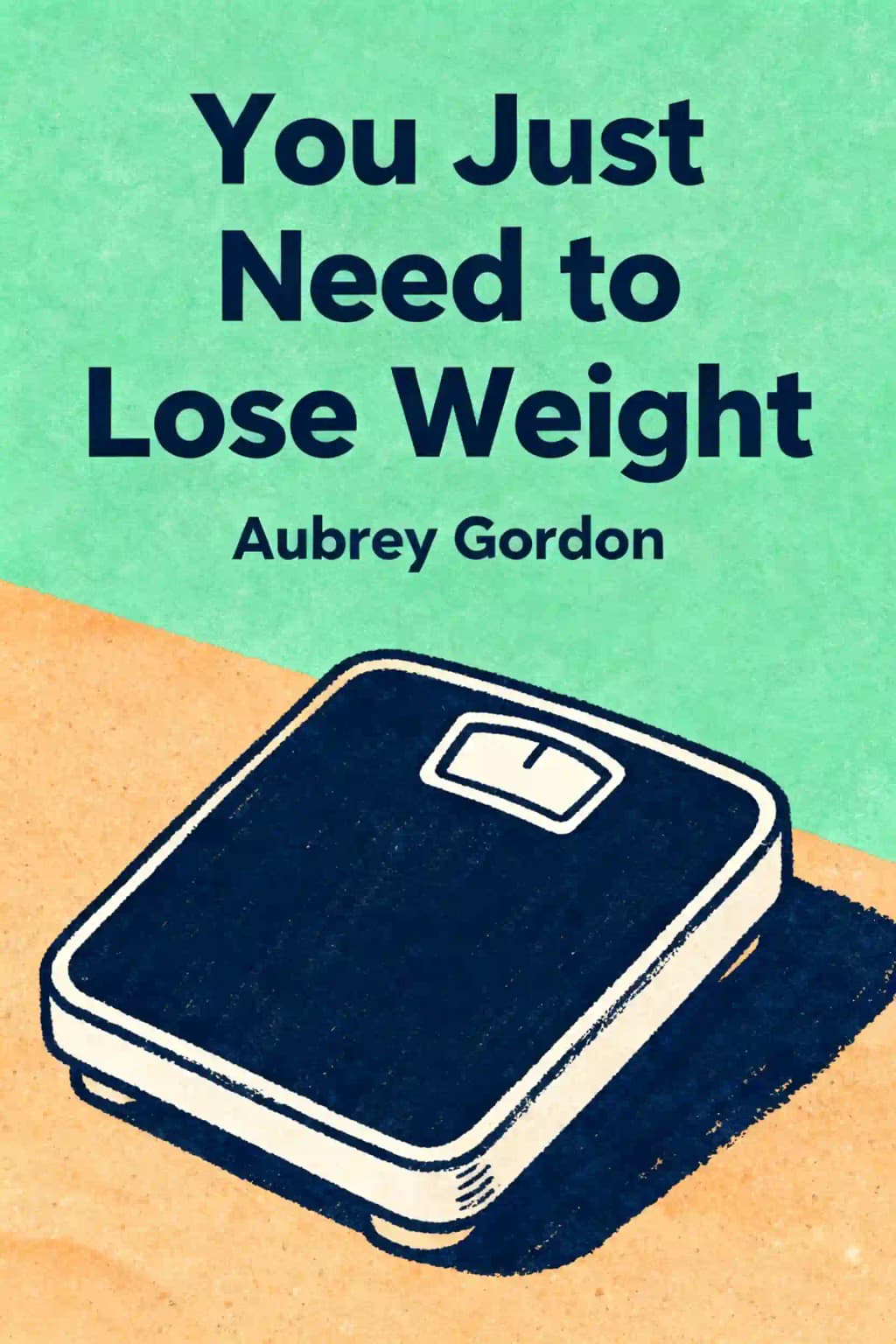
Aubrey Gordon demolishes 20 anti-fat myths in this New York Times Bestseller that's transforming how we view bodies. Jameela Jamil calls Gordon "one of the great thinkers of our generation" - a voice challenging medical bias and sparking a revolution beyond tolerance toward justice.
Aubrey Gordon, bestselling author of You Just Need to Lose Weight and a prominent fat justice advocate, combines personal experience with rigorous research to dismantle anti-fat bias in her nonfiction works.
A former LGBTQ community organizer, Gordon began writing anonymously as Your Fat Friend in 2016, later revealing her identity ahead of her critically acclaimed debut, What We Don’t Talk About When We Talk About Fat.
She co-hosts the podcast Maintenance Phase, which deconstructs health fads and diet culture myths, and writes a regular column for SELF Magazine. Gordon’s work has been featured in The New York Times, Vox, and Lit Hub, establishing her as a leading voice in body liberation discourse.
Her influence extends to the 2023 documentary Your Fat Friend, which premiered at the Tribeca Film Festival to explore systemic discrimination against fat people.
You Just Need to Lose Weight debunks 20 widespread myths about fatness, such as “obesity is a choice” or “BMI measures health,” using research, historical context, and personal narratives. Aubrey Gordon challenges anti-fat bias in healthcare, media, and daily life, advocating for systemic change rather than individual weight loss.
This book is essential for anyone seeking to understand fat justice, including healthcare workers, educators, or individuals impacted by weight stigma. It’s also valuable for readers interested in dismantling systemic oppression or fans of Gordon’s podcast Maintenance Phase.
Yes—the book combines rigorous research with accessible writing, offering actionable tools to counter fatphobia. It’s praised for its intersectional approach, addressing how race, disability, and gender intersect with anti-fat bias.
Key myths include:
Gordon argues diet culture profits from weight cycling and insecurity, not sustainable health. She cites studies showing 95–98% of weight-loss efforts fail long-term, emphasizing systemic barriers like food deserts and medical bias over individual choices.
Yes—Gordon blends anonymized stories from fat communities with her own experiences, like facing discrimination in healthcare. This approach grounds statistical arguments in human realities, enhancing emotional impact.
The book cites 350+ sources, including peer-reviewed studies on weight stigma’s psychological effects and meta-analyses debunking “obesity epidemic” claims. Gordon also critiques flawed methodologies in pro-dieting research.
Unlike her first book (What We Don’t Talk About When We Talk About Fat), which focused on personal essays, this title prioritizes myth-busting and activism strategies. Both emphasize fat liberation, but You Just Need to Lose Weight is more action-oriented.
Some reviewers argue the book minimizes individual health risks linked to obesity or undervalues weight loss for certain conditions. Gordon counters that focusing on weight diverts attention from accessible healthcare for all body sizes.
Gordon details how fat patients are denied diagnostic testing, prescribed weight loss over treatment, and subjected to condescending care. She advocates for practices like weight-neutral care and anti-bias training for providers.
With rising debates about BMI in insurance policies and Ozempic’s popularity, Gordon’s critique of quick-fix weight solutions remains urgent. The book equips readers to counter misinformation in real-time discourse.
Sinta o livro através da voz do autor
Transforme conhecimento em insights envolventes e ricos em exemplos
Capture ideias-chave em um instante para aprendizado rápido
Aproveite o livro de uma forma divertida e envolvente
These aren't harmless misconceptions but powerful social weapons.
Fat people are constantly expected to explain our bodies to thin people.
Exercise, though beneficial for health, produces minimal weight loss.
Threatening parenthood has historically been used as a weapon.
Weight stigma affects nearly 70% of Americans yet remains largely unchallenged.
Divida as ideias-chave de You Just Need to Lose Weight em pontos fáceis de entender para compreender como equipes inovadoras criam, colaboram e crescem.
Destile You Just Need to Lose Weight em dicas de memória rápidas que destacam os princípios-chave de franqueza, trabalho em equipe e resiliência criativa.

Experimente You Just Need to Lose Weight através de narrativas vívidas que transformam lições de inovação em momentos que você lembrará e aplicará.
Pergunte qualquer coisa, escolha a voz e co-crie insights que realmente ressoem com você.

Criado por ex-alunos da Universidade de Columbia em San Francisco
"Instead of endless scrolling, I just hit play on BeFreed. It saves me so much time."
"I never knew where to start with nonfiction—BeFreed’s book lists turned into podcasts gave me a clear path."
"Perfect balance between learning and entertainment. Finished ‘Thinking, Fast and Slow’ on my commute this week."
"Crazy how much I learned while walking the dog. BeFreed = small habits → big gains."
"Reading used to feel like a chore. Now it’s just part of my lifestyle."
"Feels effortless compared to reading. I’ve finished 6 books this month already."
"BeFreed turned my guilty doomscrolling into something that feels productive and inspiring."
"BeFreed turned my commute into learning time. 20-min podcasts are perfect for finishing books I never had time for."
"BeFreed replaced my podcast queue. Imagine Spotify for books — that’s it. 🙌"
"It is great for me to learn something from the book without reading it."
"The themed book list podcasts help me connect ideas across authors—like a guided audio journey."
"Makes me feel smarter every time before going to work"
Criado por ex-alunos da Universidade de Columbia em San Francisco

Obtenha o resumo de You Just Need to Lose Weight como PDF ou EPUB gratuito. Imprima ou leia offline a qualquer momento.
A stranger corners you at a party, demanding to know why you look the way you do. Your doctor dismisses your symptoms without examination, insisting weight loss will cure everything. Family members monitor your plate at dinner, offering unsolicited advice wrapped in concern. This isn't a dystopian future-it's the daily reality for millions of fat people navigating a world that treats their bodies as public property, open for commentary, correction, and control. We live in a society where nearly 70% of Americans are categorized as "overweight" or "obese," yet anti-fatness remains one of the last socially acceptable forms of discrimination. The assumption underlying all this scrutiny? That fatness is simply a choice, a moral failing, a problem demanding an immediate solution. But what if everything we've been told about fat bodies is wrong?