Capítulo 1
Breaking Free from the Narcissist's Web: A Journey to Thriving
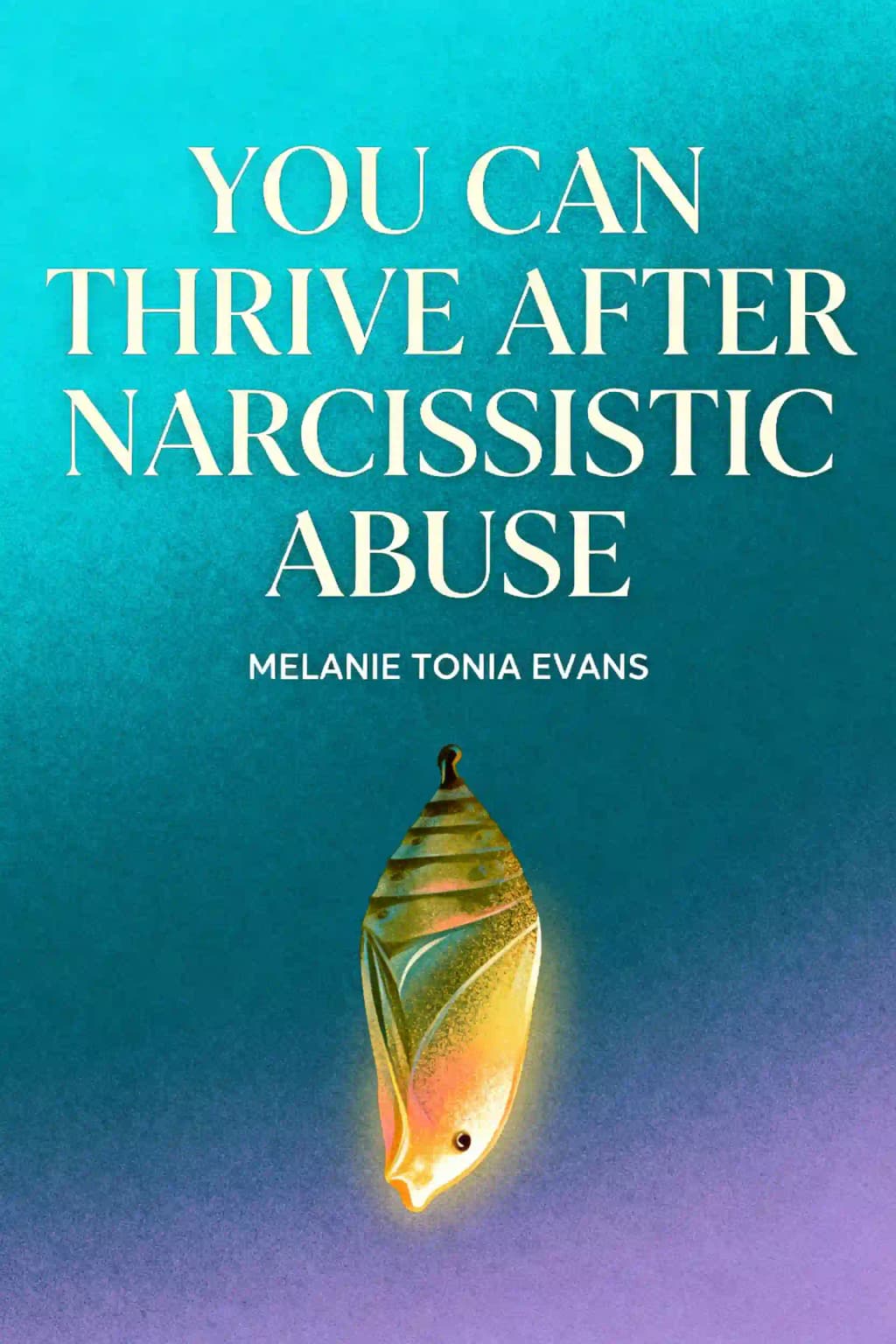
Imagine waking up one day to discover that the person you trusted most has been systematically dismantling your sense of self. Your reality feels distorted, your confidence shattered, and you're left wondering if you'll ever feel whole again. This psychological devastation is the hallmark of narcissistic abuse-a phenomenon that Melanie Tonia Evans not only survived but transformed into a revolutionary healing approach that has helped over 20,000 people worldwide reclaim their lives.
"You Can Thrive After Narcissistic Abuse" has become a lifeline for abuse survivors, with celebrities like Lady Gaga and Taylor Swift publicly acknowledging their own struggles with narcissistic relationships. The book's impact extends beyond self-help circles into mainstream psychology, where Evans' Quanta Freedom Healing method is challenging traditional trauma treatment approaches. In a culture increasingly aware of toxic relationships, Evans' work stands at the intersection of quantum physics, psychology, and spiritual healing-offering hope where conventional therapy often falls short.
Capítulo 2
The Silent Epidemic: Understanding Narcissistic Abuse
Narcissistic abuse represents an unrecognized public health epidemic affecting countless lives across all demographics. Unlike normal relationship difficulties, this form of abuse creates trauma so profound that victims describe it as worse than death-feeling their very being is no longer their own. The perpetrators aren't merely self-absorbed individuals with inflated egos; they're people fundamentally wired differently, lacking normal empathy and remorse.
Modern neuroscience suggests extreme trauma can be passed epigenetically through generations. Research on Holocaust survivors found stress-related gene changes in both parents and children, indicating suffering can be inherited within our DNA. These inherited wounds are unconsciously projected onto others with devastating consequences in relationships, families, and even nations.
Five major signs distinguish narcissistic personality disorder: emotional insecurity masked by false confidence; an extreme sense of entitlement; circular arguments that leave victims questioning their sanity; pathological lying that the narcissist often believes themselves; and relentless projection-blaming victims for the narcissist's own behaviors. This last trait is particularly devastating, as victims find themselves accused of everything the narcissist does, leaving them isolated and questioning their own sanity while the narcissist appears calm and credible to outsiders.
Contrary to popular belief, narcissists don't suffer from too much self-love but from its absence. Their core identity becomes damaged, leaving a terrifying inner critic that constantly tells them they're defective and worthless. To survive, they create a false self and feed on "narcissistic supply"-attention, acclaim, money, possessions, and the ego boost of knowing others are hooked on them. This supply temporarily drowns out their inner critic, allowing them to feel momentarily alive. But like an addiction, the effect doesn't last, driving them to seek fresh sources in an endless cycle of destruction.
Capítulo 3
Why We Become Targets: The Vulnerability Patterns
While many online support groups portray narcissists as evil predators who target anyone, this view disempowers victims by focusing on avoiding narcissists rather than healing our vulnerabilities. The truth is that some people simply aren't susceptible to narcissistic manipulation. Taking personal responsibility for healing isn't victim-blaming-it's about finding freedom from unconscious belief systems that cause pain.
Nine common traits make us vulnerable to narcissistic abuse. These aren't weaknesses but unhealed wounds that narcissists expertly exploit. Most victims are actually intelligent, high-integrity individuals with strong resilience. Our susceptibility often stems from childhood experiences where we received conditional love or learned to prioritize others' needs over our own.
If you struggle with assertiveness due to fears of criticism, rejection, abandonment or punishment, you'll hand away your power. When your worth depends on others' opinions rather than your own self-assessment, you become vulnerable. Taking financial responsibility for irresponsible people drains your energy and resources. If you constantly try to prove your worth through self-sacrifice and generosity to a fault, narcissists will be drawn to you.
People who feel others will only love them when they tend to others' needs first tolerate unacceptable behavior to maintain safety. If you're your own harshest critic, you'll attract relationships with people who deem you "never good enough." Without skills to self-soothe and heal emotional triggers, trying to control others to manage your own feelings makes you vulnerable to being controlled. As empaths who feel others' energy intensely, without defining our own needs, we won't receive the care we crave.
These susceptibilities aren't character flaws but indicate disconnection from ourselves in self-harming ways. Like many victims, we've been taught these traits are virtues, focusing outward rather than developing healthy self-connection. Narcissistic abuse serves a profound purpose: it reveals how we've failed to become our own source of love, approval, and security.
Capítulo 4
The Addiction That Defies Logic
The addiction to narcissists manifests as an intense physiological process where the pull feels so extreme you believe you'll die without reconnecting. This overwhelming compulsion mirrors the desperation seen in severe drug withdrawal, yet it stems from emotional rather than chemical dependencies. Dr. Candace Pert's groundbreaking research explains how our brain creates neuropeptides-specific amino acid chains for each emotion-that cells become addicted to. These neuropeptides act as molecular messengers, flooding our system during emotional experiences and creating cellular binding sites that increasingly demand more of the same chemical cocktail.
When regularly experiencing victimization and powerlessness, our brain pushes us toward the source of these chemicals, creating an addiction more powerful than synthetic drugs. The cycle becomes self-perpetuating: each traumatic interaction strengthens neural pathways, making it progressively harder to break free. Even brief contact with the narcissist can trigger a cascade of familiar neurochemicals, reinforcing the addiction despite conscious awareness of its destructiveness.
The narcissist becomes our toxic supplier, and our body craves the very emotional pain destroying us. This biological dependency explains why victims often return to abusive relationships an average of seven times before leaving permanently. The trauma bonding creates a paradoxical attachment where the source of our greatest pain becomes our perceived source of comfort. Traditional therapy often proves insufficient because "the more intense the visceral, sensory input from the emotional brain, the less capacity the rational brain has to put a damper on it," as trauma expert Bessel van der Kolk explains. This explains why logical interventions like cognitive behavioral therapy alone may fall short.
True healing requires accessing and shifting the trauma at a cellular level, as the logical mind operates on a different wavelength than the subconscious mind where trauma resides. This involves addressing both the psychological and physiological aspects of the addiction through approaches like somatic experiencing, EMDR, or neurofeedback. As Dr. Bruce Lipton explains, "The subconscious mind is a million times more powerful than the conscious mind and we operate 95 to 99 percent of our lives from subconscious programs." When trauma becomes embedded in our neural pathways, merely thinking differently isn't enough-the brain follows the body. Recovery necessitates rewiring these deep-seated patterns through consistent practice of new emotional responses and physical self-regulation techniques.
Understanding this biological basis helps explain why traditional approaches focusing solely on cognitive understanding often fail to create lasting change. The healing journey must incorporate body-based interventions that address the physiological addiction alongside psychological support. This might include practices like meditation, breathwork, or movement therapies that help regulate the nervous system and create new neural pathways for healthy emotional responses.
Capítulo 5
Breaking Free: The Vital First Step
The most critical yet incredibly difficult step in healing from narcissistic abuse is detaching from the abuser-shifting focus from what they're doing to healing ourselves. This detachment, whether through No Contact or Modified Contact, is as essential as sobriety is to an addict. Without this unwavering commitment to separation, genuine recovery becomes impossible, as the cycle of abuse continues to reinforce trauma bonds and emotional dependence.
While logically understanding No Contact is necessary, the emotional reality is devastating and physically challenging. When breaking contact, victims experience intense peptide withdrawal symptoms, including anxiety, depression, insomnia, and full-force PTSD responses. The mind, driven by biochemical addiction, invents countless reasons to reconnect - from "checking if they've changed" to "getting closure" or "retrieving belongings." These justifications, though they feel compelling, are often manifestations of withdrawal rather than genuine needs.
Narcissists expertly exploit victims' vulnerabilities through a manipulation tactic called "hoovering," targeting specific emotional wounds to pull them back into the relationship. They might suddenly appear caring, shower victims with gifts, threaten self-harm, or create emergencies requiring immediate attention. Whether through guilt ("I can't live without you"), pity ("I'm going through such a hard time"), jealousy ("I've met someone new"), or obligation ("Think about the children"), they know exactly which buttons to push to regain control. Each hoovering attempt is carefully calibrated to the victim's specific vulnerabilities.
No Contact means completely severing all communication channels with the narcissist. This includes changing phone numbers, blocking them on all social media platforms, email accounts, and removing all physical reminders from your life - photos, gifts, letters, and shared possessions. Partial measures prove ineffective as victims end up constantly checking for contact attempts or leaving backdoors open for communication. When committed to recovery, we must apply No Contact to our thoughts as well, using the principle of "less thinking, more shifting" to release trauma from our bodies rather than obsessing over the narcissist's actions, motives, or potential future scenarios.
When complete separation isn't possible due to shared businesses, living arrangements, or co-parenting responsibilities, Modified Contact offers an alternative approach. This means detaching emotionally while limiting interaction to only what's absolutely necessary through structured, businesslike communication. The "grey rock" technique-being deliberately bland, uninteresting and providing no emotional drama-deprives narcissists of their needed supply, eventually forcing them to seek it elsewhere. This involves responding only to essential matters, using brief, factual responses, and avoiding any personal disclosure or emotional engagement. Establishing clear boundaries, possibly through legal means, third-party mediation, and structured communication channels (like parallel parenting apps or email-only contact) is essential for successful Modified Contact. Documentation of all interactions becomes crucial, as does having a support system in place to maintain emotional stability during necessary contact periods.
Capítulo 6
The Thriver Way: A Revolutionary Healing Approach
The Thriver approach fundamentally reverses conventional wisdom by focusing inward rather than fixating on or blaming the abuser. This counterintuitive method recognizes that external events and relationships reflect unresolved internal trauma-"so within, so without." By shifting focus from attempting to control or change the narcissist to deep self-partnering and inner healing work, survivors begin experiencing immediate emotional relief and renewed sense of personal power.
True healing requires purposeful inner work within the subconscious mind to create fundamental identity shifts and transform core wounds. This approach moves beyond mere cognitive understanding or intellectual analysis to address emotional trauma stored in the body's cellular memory. Guided visualizations become essential tools for communicating with the subconscious by entering a theta-brainwave state - similar to deep meditation - allowing access to deep-rooted belief systems formed in childhood. These visualization exercises might include connecting with your inner child, releasing trapped emotions, or reimagining traumatic scenarios from a place of power.
The comprehensive ten-step healing process begins with releasing immediate pain and overwhelming feelings of loss and betrayal. When in the grip of narcissistic abuse, intense emotions like grief, rage, and abandonment can block recovery by keeping us stuck in fight-or-flight. Step 1 involves mindfully connecting with painful feelings as they manifest in the body - perhaps as chest tightness, stomach knots, or throat constriction. The process teaches how to draw that dense emotional energy out of our cells into a metaphorical "holding bay," then consciously release it to a Higher Power for recycling into love and light. This energetic clearing creates space to receive Source Energy-the Light of Higher Consciousness-bringing resolution beyond what the rational mind can achieve alone.
Step 2 addresses one of the most insidious hooks in narcissistic abuse: when the narcissist becomes our symbolic source of love, approval, survival and security - essentially taking on a god-like role in our psyche. As relationship expert Katherine Woodward-Thomas wisely notes: "We are only upset with others not providing us with something, to the extent that we are not providing that for ourselves." This crucial step involves carefully identifying specific areas where we've become emotionally dependent on the narcissist and creating powerful "True Self Declarations" for each one. For example, replacing "I need their approval to feel worthy" with "I fully approve of and validate myself." These declarations, when combined with visualization and somatic release work, help rewire neural pathways and establish healthy self-reliance.
Capítulo 7
From Victim to Creator: The Transformational Journey
Step 3 focuses on forgiving yourself and reconciling with significant losses that accompany narcissistic abuse. Self-forgiveness must precede forgiving others-as Louise Hay says, "I forgive myself and I set myself free." The Thriver approach means accepting that what happened was for your personal evolution-it happened "for" you, not "to" you. By embracing this perspective, you can move from breakdown to breakthrough.
Step 4 involves purging the pain caused by the narcissist's behavior, which previously kept victims trapped in anger, resentment, and despair. This release breaks the energetic ties that allow narcissists to continue affecting you. As Nelson Mandela wrote, "As I walked out the door toward my freedom, I knew if I did not leave all the anger, resentment and bitterness behind that I would still be in prison."
Step 5 addresses our need to defeat or thwart the narcissist. When we remain hooked into narcissists, believing we need their apology or repentance, we stay dangerously attached and vulnerable to abuse. The greatest win comes from reclaiming your true self and detaching from experiences that don't harmonize with it. As Cyrus Stuart Ching wisely noted: "Never wrestle with a pig. You get dirty, and besides, the pig loves it."
Step 6 breaks the pattern of taking responsibility for the narcissist. Most narcissistic abuse victims are naturally empathetic-they're givers paired with takers. These kind people often struggle to say "no" and habitually help others, inadvertently enabling abuse by taking responsibility for those who refuse responsibility for themselves. Healing requires recognizing that we aren't responsible for those unwilling to take responsibility for themselves.
Capítulo 8
Spiritual Empowerment and Facing Fear
Step 7 marks a profound transition from mere survival to conscious creation, where we begin the essential work of releasing dense energetic patterns attached to judgment, victimhood, and self-limitation. This transformation requires us to shed layers of conditioned responses and false beliefs that have kept us tethered to lower vibrational states. As Marianne Williamson powerfully noted in her famous passage, our deepest fear isn't our inadequacy but our unlimited potential. Many individuals, particularly those healing from narcissistic abuse, unconsciously resist this radical change despite consciously desiring it, finding strange comfort in familiar pain patterns rather than embracing their inherent power.
The transformational work involves a methodical process of self-examination, identifying those aspects of ourselves that remain invested in victimhood. This might manifest as constantly retelling our trauma stories, seeking validation through suffering, or maintaining a defensive posture against life. Through meditation, journaling, and energy work, we can systematically release these limitations and create space for our highest expression to emerge.
Step 8 confronts us with our most primitive and deeply embedded fears - persecution, abandonment, betrayal, and replacement. Narcissists, operating from their own profound insecurity, instinctively target these vulnerabilities when they sense their control slipping. Their attacks often follow predictable patterns: attempting to alienate children through parental alienation, spreading malicious rumors to destroy reputations, manipulating mutual friends and family members, or launching legal battles to drain financial resources. Understanding that these attacks are actually opportunities for healing transforms them from threats into catalysts for growth.
When you anchor yourself in authentic power and unwavering integrity, rather than expending energy trying to expose or combat the narcissist, you access an unshakeable inner strength. This isn't about winning battles but transcending the entire war paradigm. Practical examples include maintaining dignified silence in the face of provocations, focusing on personal growth rather than revenge, and choosing responses that align with your highest values regardless of external chaos.
Step 9 represents the ultimate energetic purification, where we completely sever ties with the narcissist at all levels - physical, emotional, mental, and spiritual. This involves sophisticated energy work including cord-cutting rituals, chakra clearing, and timeline healing. However, Quantum Law principles reveal that simply cutting cords isn't enough - we must address the original wounds and belief systems that created the energetic vulnerability in the first place. This might involve healing ancestral patterns, addressing childhood abandonment wounds, or releasing karmic contracts.
Many survivors report remarkable shifts after completing this deep healing work. Beyond the cessation of "random" encounters with their former abuser, they experience profound changes in all relationships, career opportunities, and their ability to manifest desires. The vibrational gap becomes so vast that the narcissist literally cannot exist in their new energetic field, demonstrating the practical power of spiritual transformation in creating lasting freedom.
Capítulo 9
Coming Home to Yourself: The Ultimate Liberation
Step 10 represents the culmination of the entire recovery journey, where we transition from "Who We Were Being" into "Who We Really Are." True self-love and acceptance aren't something we need to create-they're fundamental parts of our true nature requiring no extra effort. Within our natural DNA coding is the innate ability to see and accept ourselves exactly as our Higher Self recognizes us: as beings worthy of love simply because we exist. This inherent worthiness exists independently of achievements, relationships, or external validation.
At this stage, we leave trauma and the narcissist's effects far behind, becoming authentic love-not as pushovers but as truthful beings capable of difficult conversations and healthy boundaries. We develop the strength to say "no" without guilt, to express our needs clearly, and to walk away from situations that don't serve our highest good. This self-loving state inoculates us against narcissists as we're no longer diminishing ourselves for outside approval. We recognize manipulation attempts immediately and maintain our integrity without defensive reactions. Our motto becomes "I will be REAL-regardless-and then all of life will follow," willing to lose the false version of life we thought we wanted to gain the true life awaiting us.
True thriving means being fulfilled before external desires manifest-feeling great regardless of outer circumstances. We find joy in simple moments, appreciate our own company, and feel complete without external validation. We trust ourselves to reject "less than" situations while remaining comfortable with uncertainty. This might mean turning down seemingly attractive opportunities that don't align with our values, or staying single until we meet someone who truly matches our energy. We understand our unlimited potential yet don't need it realized to be happy. Our self-worth is stable, unshaken by success or failure.
Though we still occasionally regress, encountering old triggers or temporary self-doubt, we recover quickly, even appreciating these "slips" as opportunities to evolve further. These moments become teachers rather than setbacks, showing us where we still have room to grow. We develop a profound sense of inner peace, knowing that we're exactly where we need to be on our journey. This stage isn't about reaching perfection, but about embracing our complete humanity with compassion and wisdom. We learn to parent ourselves lovingly, celebrate our progress, and trust in our ability to handle whatever life presents.
Capítulo 10
Healing Generations: The Ripple Effect
Our evolution has no final destination-it's an ongoing process of clearing fear and bringing in Light. A parent's trauma affects their offspring both biologically and environmentally, perpetuating patterns of abuse, victimhood, and power struggles. Yet when one person frees themselves from inner wounds to become self-actualized, a profound ripple effect touches everyone around them.
The old paradigm of hiding our emotions from children ("I'm fine, nothing is wrong") damages their inner being by teaching them to distrust their intuition and modeling emotional suppression. Instead, being authentic with children-without using them as emotional counselors-shows them that emotions are sacred and acceptable. When children witness our self-love and healing process, they learn to respect their own feelings and often follow our lead.
When we heal our wounds, our parenting transforms profoundly. We stop holding children responsible for our emotions, trying to fix or lecture them, competing for their affection, requiring them to be certain ways for our wellbeing, carrying guilt about past mistakes, or shaming their identities. Instead, we accept their growth lessons with love rather than judgment, model emotional independence, demonstrate authenticity through vulnerability and humility, and maintain healthy boundaries that address behaviors rather than identity.
The Thriver lifestyle transcends mere survival, becoming a path to release limitations and experience glorious freedom and abundance. Moving from survival to creation requires releasing trauma energy that once kept us focused on mere existence, making that energy available for creation instead. The most powerful way to help others thrive is to free yourself from trauma and become more of your true self. When we do this, we naturally impact everything around us-we parent lovingly, work cooperatively, and lead inspirationally.
As one community member shares, "Give to self first, then the natural path will lead you to giving to others. It's the Law, Quantum style." When we become our true selves, everything unfolds in divine order, creating space for new opportunities. Together, we're changing the dynamic of abuse for future generations, one healed person at a time.